There’s a certain magic to checking into a place that has seen over a century of travelers, where the floorboards creak with tales and the walls hum with echoes of bygone eras. In the vast, wild embrace of the Adirondack Park, this isn't just a romantic notion; it’s a palpable reality in a collection of venerable inns. Forget the sterile predictability of chain hotels; these are the establishments that demand your attention, your curiosity, and perhaps, a willingness to embrace imperfection alongside grandeur.
How does one truly differentiate between a genuinely preserved historical gem and a property merely trading on its age? It's a question I've pondered countless times. In the Adirondacks, the answer often lies in the details: the hand-carved fireplaces, the original wide-plank floors, the sheer audacity of a structure that has defied fire, flood, and changing tastes. You’ll find everything from Gilded Age extravagance to rustic sporting camps, each demanding a different kind of visitor. Let's delve into what makes these places tick, what to expect, and which might surprise you.
Long Lake's Enduring Sentinel: The Adirondack Hotel's Rustic Resilience
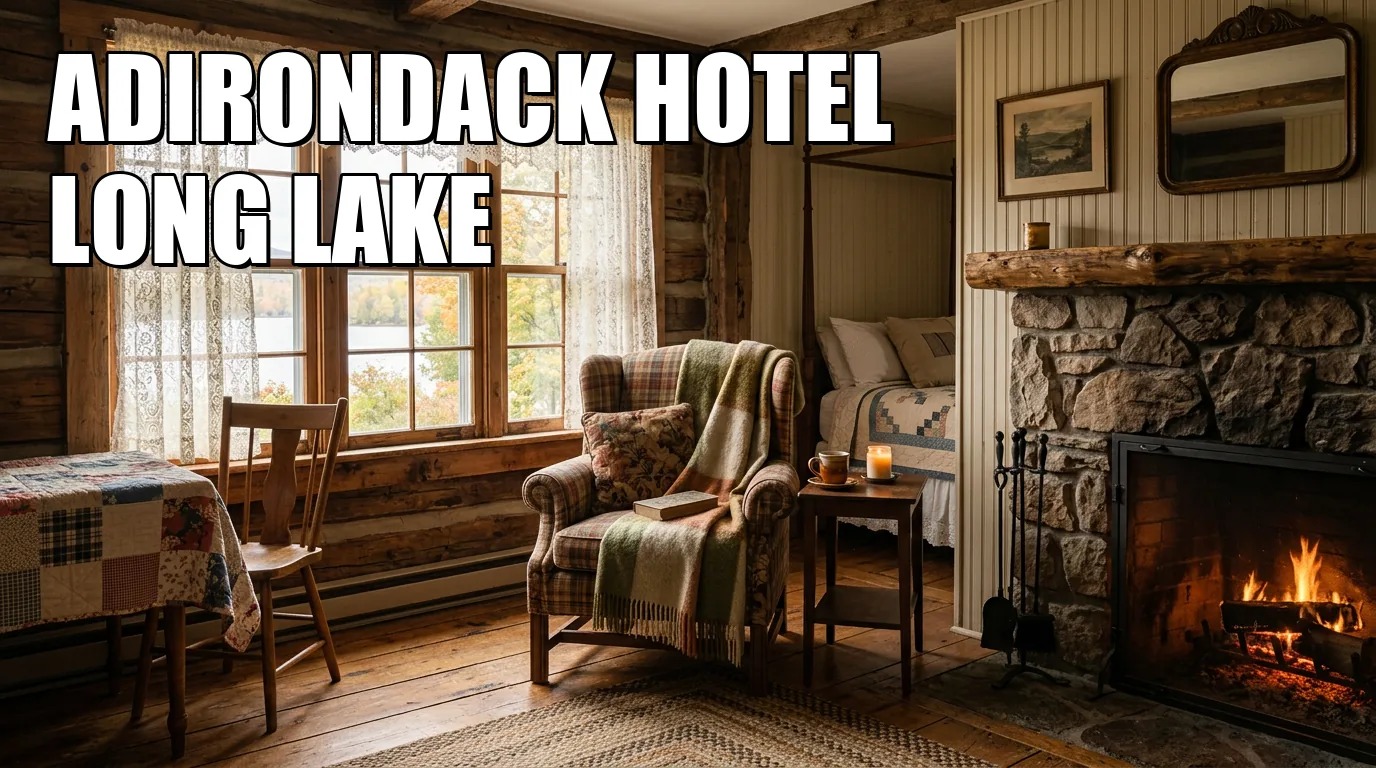
If you're seeking a tangible piece of Adirondack history, the Adirondack Hotel on Long Lake offers an authentic, if somewhat unvarnished, experience. Built in 1850, it holds the remarkable distinction of being the oldest continuously operating hotel in the entire Adirondack Park. While the original structure tragically succumbed to fire in 1898, its 1899 reconstruction, followed by a significant four-story Victorian addition in 1914, established the charming, slightly sprawling character you see today. Stepping into the lobby, you're immediately greeted by the imposing presence of a record-size taxidermied moose and a famously photographed black bear – a quirky, endearing welcome committee that sets the tone for the hotel's blend of rustic charm and old-world hospitality.
Consider the guest list: none other than Albert Einstein and Helen Keller reportedly once graced these halls. While such anecdotes add undeniable luster, a stay here is less about chasing celebrity ghosts and more about immersing yourself in a living piece of history. The hotel's 20 recently renovated rooms offer an all-season price structure, but a careful look at their offerings reveals a fascinating glimpse into a past where privacy wasn't always paramount. For instance, while the Sadie Suite on the second floor offers two queens, a sofa bed, and a private bath for $250 per night, rooms like numbers 7, 9, 11, 27, 29, and 31, priced at a more accessible $100 per night, utilize shared bathrooms. This detail is crucial for modern travelers; it's a nod to a bygone era, and while perfectly clean, it’s a practical consideration that typical glossy brochures might gloss over. Booking requires a two-night minimum, easily arranged by calling (518) 624-4700.
Mirror Lake Inn and Lake Placid Lodge: Two Takes on Lakeside Luxury
Lake Placid, a magnet for visitors and Olympic history buffs alike, boasts two titans of luxury lodging, each with a distinct historical narrative. The Mirror Lake Inn Resort & Spa, founded in 1878, has been in the same family since the 1930s, now helmed by Olympic medalist Andrew Weibrecht. Its classic country-inn style and AAA Four-Diamond Award for over 40 consecutive years tell a story of consistent excellence. They’ve managed to retain a rustic aesthetic from the late 1800s while subtly incorporating modern amenities like soundproofing and updated plumbing—a delicate balancing act few places achieve without losing their soul. A standard Lookout Room starts around $339 per night, but this includes a surprising number of amenities without resort fees, from a private sandy beach to complimentary boats and daily homemade chocolate chip cookies. It's an honest value proposition, especially when considering the sheer volume of "extra" charges many high-end resorts now levy.
Just down the road, the Lake Placid Lodge presents a different, more dramatic, narrative of luxury. Initially an 1882 Great Camp, a devastating fire in 2005 leveled the main building, leading to a meticulous 2008 reconstruction. The cabins and Lakeside building, however, date back to the 1940s. What makes this place truly remarkable, even after a rebuild, are the details: hand-built furniture, distinctive stone fireplaces crafted by Adirondack artisans, each with a unique personality. This isn't just about expensive materials; it's about a commitment to a particular aesthetic and level of craftsmanship that few properties attempt. With standard rooms starting between $799-$899 per night (including full breakfast), and premium cabins reaching upwards of $2,100 per night, it's an unapologetic indulgence. You're not just paying for a room; you're buying into an idealized vision of Adirondack luxury, painstakingly recreated, and it delivers a sense of secluded grandeur that few places, historic or otherwise, can match. Is it a tourist trap? Absolutely not. It’s an investment in an experience, but certainly not for every budget.
The Pines Inn: From Nude Sunbathing to Ski Pioneer
Every destination has its wild child, and in Lake Placid, that honor surely goes to The Pines Inn, originally the St. Moritz Hotel. Built in 1907 and renamed in 1923, this place was the spot to "see and be seen" in the Roaring Twenties and beyond. Imagine this: during the 1930s and 40s, alongside hosting luminaries like Helen Kane (the original "boop-boop-a-doop" girl) and Albert Einstein, the St. Moritz ran a summer promotion for—wait for it—nude sunbathing on its roof. This isn't something you read in standard travel guides, is it? It paints a picture of a vibrant, daring past, far from the staid image many historic hotels project.
Beyond its cheeky history, The Pines Inn played a pivotal role in Lake Placid's winter sports scene. In the early 1950s, manager William Rosco pioneered the first ski packages with Whiteface Mountain, making it a hub for Olympic bobsled teams and even Robert Kennedy during JFK's 1960 presidential campaign. Today, The Pines offers a much more budget-friendly approach, with standard rooms ranging from approximately $77-$162 per night. While some suites offer four-poster beds and period furnishings, it's important to set expectations. This isn't the meticulously restored luxury of Lake Placid Lodge. It’s a place that wears its history with a bit more wear and tear, offering free parking and WiFi, which are practical advantages, but its "historic" charm is more about its incredible stories than pristine preservation. Arrive with an open mind, ready for a charmingly aged experience rather than polished perfection, especially if you're visiting during the peak summer and fall foliage weekends when prices naturally nudge towards the higher end of their range.
Hotel Saranac: A Phoenix of Florentine Grandeur in Saranac Lake
What happens when a grand, historic hotel closes its doors, only to be resurrected with a multi-million-dollar facelift? You get the Hotel Saranac, Curio Collection by Hilton. Built in 1927, this edifice was conceived by local architects William Scopes and Maurice Feustmann in a confident Colonial Revival style. It proudly proclaimed itself the first fireproof hotel in the Adirondacks—a bold claim for the era, backed by steel framing and concrete floors, a testament to forward-thinking design. But the true showstopper, even today, remains the second-floor lobby, modeled after the Grand Salon of Florence's Davanzati Palace. It's a breathtaking space, transporting you directly to European sophistication in the heart of the Adirondacks.
After closing in 2013, a comprehensive $35-million renovation brought it roaring back to life in 2018, earning it a spot on the National Register of Historic Places in 2019. The 102 guestrooms and 20 suites now boast a "Great Gatsby" era design, replete with dark-wood furniture, crisp linens, and retro-inspired travel posters. It’s a carefully curated experience, blending historical reverence with modern comfort and the reliability of a Hilton brand. Expect prices to fluctuate wildly: from a low average of $132 in May to a high of $311 in December, underscoring the critical importance of seasonal timing when planning your visit. If you can swing a weekday in the shoulder seasons (late spring or early fall), you'll likely capture the best rates and fewer crowds, allowing you to truly appreciate the Florentine-inspired grandeur without feeling rushed. Check-in is at 4:00 PM, and check-out is at 11:00 AM.
Unplugging at Blue Mountain Lake: Hemlock Hall and the Blue Mountain Lake Inn
For those genuinely looking to disconnect, to experience the Adirondacks as visitors did a century ago, the Blue Mountain Lake region offers two particularly compelling, deeply authentic choices. Hemlock Hall, established in 1898, began as a Gilded Age hunting camp—a true rustic Great Camp, marked by its distinctive chocolate brown and teal-trimmed buildings. Fifty years later, it transitioned into a family resort, now encompassing the original main lodge, motel units, and ten cabins, all spread across eight acres with 500 feet of waterfront. What makes Hemlock Hall unique is its Modified American Plan, which includes lodging, breakfast, and dinner, along with access to all their waterfront amenities (kayaks, canoes, paddle boats). A shared bath room runs $223 per night, while private bath rooms and cottages can reach $370 per night for the private Waters Edge cottage. Crucially, during peak summer, they enforce Saturday-to-Saturday reservations. This isn't a place for a quick overnight; it's designed for an immersive, multi-day family retreat, where the focus is on natural beauty and communal meals, rather than Wi-Fi signals.
Just a stone's throw away, the Blue Mountain Lake Inn doubles down on this "unplugged" ethos. This 1880s Victorian boarding house proudly advertises itself as "un-remodeled," a rare and refreshing claim in an age of constant upgrades. With five bedrooms and four bathrooms (including one two-room suite), it leans heavily into old-fashioned, quaint accommodations. Prices for the Osprey and Loon Suite run from $330 to $396 per night, inclusive of taxes and gratuity, and breakfast is always part of the deal. Here, "historic" genuinely means stepping back in time; you’re embracing original Victorian furnishings and a palpable sense of peace that encourages genuine disconnection. You won't find flat-screen TVs in every room, nor will you likely have reliable cell service, but you will find yourself directly across from a public beach, within easy reach of the Adirondack Experience Museum. It’s not just a place to sleep; it’s an invitation to rediscover a slower pace of life, a deliberate choice for travelers who value authenticity over modern creature comforts.
Choosing an Adirondack historic inn isn't about picking the "best" one, but rather the "right" one for your particular journey. Do you crave the polished grandeur of a rebuilt Great Camp, or the slightly faded charm of a former nude sunbathing hotspot? Perhaps a week-long, all-inclusive family experience at a rustic hunting camp is more your speed, or a true digital detox in an un-remodeled Victorian boarding house. Each of these inns, from the Adirondack Hotel's enduring spirit to Hotel Saranac's urban elegance, offers a distinct window into the region's rich past. Understand their quirks, appreciate their histories, and you'll find a stay in any of them is far more than just a night away—it's a journey through time.