Stepping into a Baroque Revival edifice in America feels less like entering a solemn historical space and more like walking onto a grand, theatrical stage. This architectural style, flourishing in the late 19th and early 20th centuries, wasn't merely about echoing European grandeur; it represented a confident, often exuberant assertion of identity and prosperity in a rapidly expanding nation. While many guides might lump it into a generic "classical revival" category, the truth is, Baroque Revival possesses a unique flamboyance—a dramatic flair that begs for attention and, crucially, rewards it with surprising details.
Why did American architects and patrons embrace such an ornate, often audacious style? Unlike the restrained classicism that preceded it, Baroque Revival offered a canvas for unparalleled decorative excess and a dynamic interplay of light, shadow, and movement. It wasn't just about symmetry; it was about spectacle. This wasn't a meek nod to history; it was a full-throated declaration of power and aspiration, particularly potent for religious institutions seeking to inspire awe and civic buildings aiming to project authority. Let's peel back the layers on three of the most compelling examples, often overlooked in the typical tourist rush, to understand what makes them truly stand apart.
Brooklyn's Edible Masterpiece: St. Barbara's Unexpected Spanish Flourish
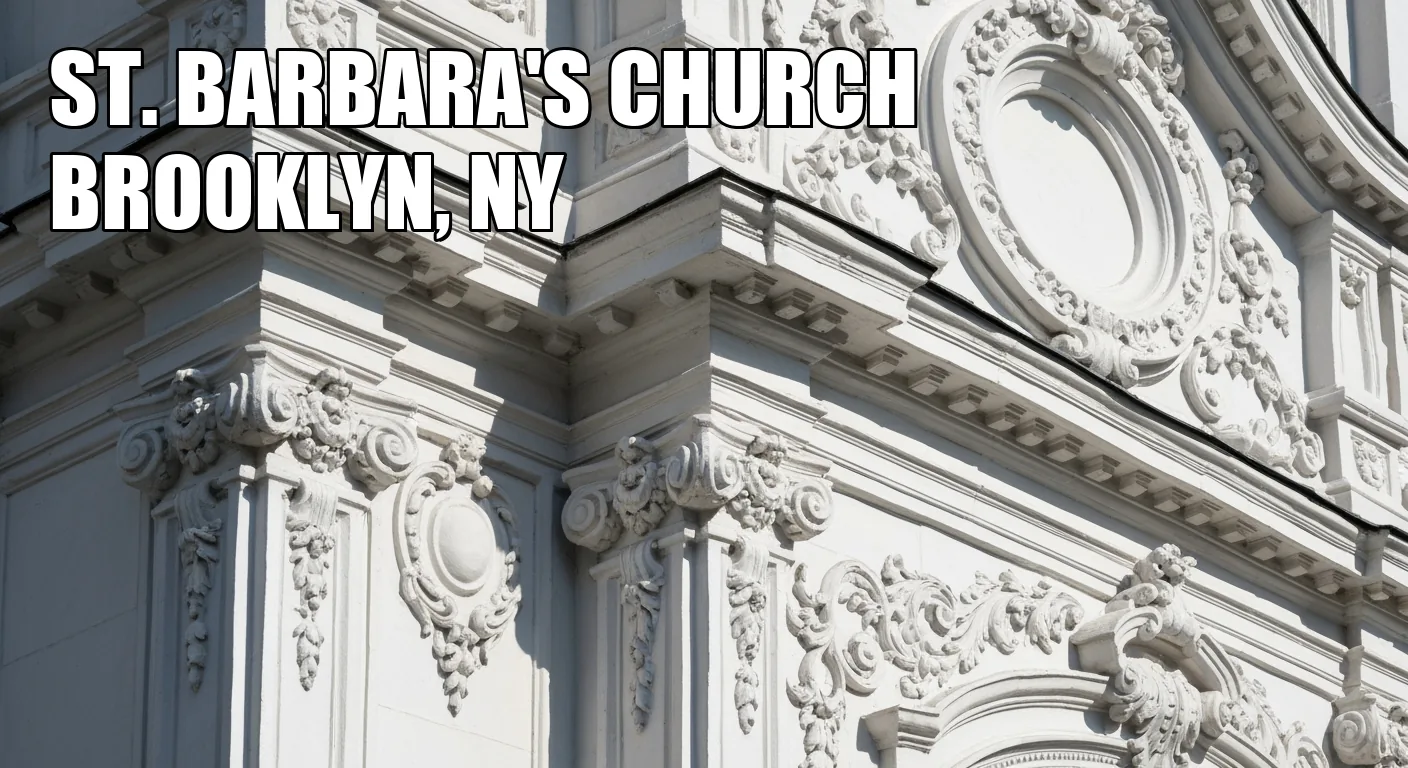
Head to the intersection of Bleecker Street and Central Avenue in Bushwick, Brooklyn, and you’ll encounter St. Barbara's Roman Catholic Church, a sight that genuinely stops you in your tracks. Designed by the prolific firm Helmle & Huberty between 1907 and 1910, this isn't your average New York brownstone church. What immediately commands attention is its truly elaborate white terra-cotta ornamentation, a direct and dazzling homage to Spanish Baroque aesthetics. You'll find intricately sculpted pilasters—those flattened columns that protrude slightly from a wall—alongside detailed entablatures, the horizontal supports resting atop columns, all crowned with figurative cherubim. This isn't just decoration; it's a narrative in clay, telling a story of faith and artistic ambition.
The architects, known for their skill in re-interpreting classical forms, pushed the boundaries here, creating a facade that feels almost alive. Two soaring towers, reaching 175 feet high, punctuate the sky, featuring tiered, almost cake-like layers of ornamentation. The American Institute of Architects once playfully dubbed this "edible wedding cake icing," and frankly, it's a description that perfectly captures the whimsical yet monumental quality of the design. Couple these with an octagonal dome and striking red tile roofs, complete with decorative copper cornices, and you have an exterior that shouts drama, evoking the immense spatial grandeur synonymous with Baroque ecclesiastical architecture. You might expect something more austere from a Brooklyn church, but St. Barbara's delivers theatricality in spades.
Visiting St. Barbara's demands a practical approach. Bushwick is a vibrant, evolving neighborhood, and while public transit is readily available—the L train to Jefferson Street or Central Avenue is your best bet—parking can be a challenge. I’d recommend a weekday morning visit, perhaps between 10 AM and noon, to fully appreciate the exterior details without the weekend crowds. The church itself, while active, might not always be open for casual interior viewing outside of service hours, so check their website for mass schedules if you wish to see inside. What you'll find, even from the sidewalk, is a stunning contrast to its industrial surroundings, a testament to a bygone era's commitment to architectural splendor.
A Vermonter's Roman Vision: The Cathedral of Saint Joseph's Bold Simplicity
Journey north to Burlington, Vermont, and you’ll discover a very different, yet equally compelling, Baroque Revival narrative at the Cathedral of Saint Joseph on Allen Street. Completed in 1887, this magnificent structure was the brainchild of the Rev. Joseph Michaud, an astounding self-taught architect from Montreal. He wasn't relying on a firm with a pedigree; Michaud, having studied in Rome, drew inspiration from the Chapel of the Palace of Versailles and, crucially, from Giacomo della Porta's iconic Il Gesù in Rome—the foundational model for Jesuit churches and a benchmark of Counter-Reformation Baroque. This context is vital: Il Gesù’s design aimed to reinforce Catholic doctrine after the Protestant Reformation, using architectural grandeur to inspire devotion.
Michaud's genius lay in his interpretation. He simplified the voluted facade—that distinctive scroll-like ornamentation linking nave to side aisles, common in Roman Baroque—to emphasize silhouette and grand proportions rather than the more excessive decoration seen elsewhere. Constructed primarily of red sandstone, the Cathedral of Saint Joseph showcases a classical Baroque vocabulary: clean pilasters, pronounced pediments—the triangular gable above a door or window—and a carefully ordered facade composition. This isn't the riotous ornamentation of St. Barbara's; it's a more restrained, yet still undeniably monumental, expression of the style. The visual impact comes from its sheer scale and the dynamic interplay of its architectural elements, making it the largest church in Vermont, capable of seating over 1,200 worshipers, a remarkable feat for its time and place.
Burlington offers a much more relaxed visiting experience than New York City. The Cathedral is easily accessible, and while parking can be found on surrounding streets, a short walk from downtown Burlington, perhaps after enjoying the waterfront, is perfectly feasible. Weekday afternoons often provide the quietest opportunity for reflection and detailed viewing. Unlike some larger metropolitan churches that feel overwhelmed by tourism, Saint Joseph maintains a serene, reverent atmosphere. Its relatively understated exterior might lead some to overlook its Baroque roots, but a closer look at its proportions and the subtle power of its design reveals Michaud's profound understanding of the style's core principles.
Manhattan's Hidden Gem: St. Ignatius Loyola's Marbled Grandeur and Jesuit Legacy
Tucked discreetly on Park Avenue on Manhattan's Upper West Side, the Church of St. Ignatius Loyola, completed in 1900, offers an entirely different flavor of Baroque Revival, one that prioritizes interior opulence. Designed by Schickel & Ditmars, this church, like Saint Joseph, took its cues directly from Jesuit Baroque Renaissance churches in Rome, most notably the Chiesa del Gesù. As the Jesuits' first major apostolate—a mission or area of missionary work—in this burgeoning neighborhood, the church was intended as a spiritual beacon, and its architecture certainly reflects that ambition.
While its exterior is stately, the true Baroque spectacle at St. Ignatius Loyola unfolds within. Prepare to be dazzled by the sumptuous interior decoration, which showcases multiple varieties of Italian and American marbles. Think pink Tennessee, Numidian, Siena, and Algerian marbles, all arranged in elaborate mosaics that shimmer under the nave's soaring arches. This isn't just expensive material; it’s a deliberate, theatrical use of color and texture, creating an immersive experience that overwhelms the senses—a hallmark of true Baroque design. Three recessing rows of polished pink granite columns support graceful arches in the central nave, creating a dynamic spatial sequence that pulls your eye forward, toward the altar, in a manner that feels both dramatic and deeply reverent.
Furthermore, don't miss the marble mosaic Stations of the Cross panels. Designed by the Venetian artisan Paoletti and executed by Salviati & Company, these represent a direct homage to the ornate decorative traditions of Baroque ecclesiastical spaces. They utilize the same richly colored and textured materials that define the style's visual language, turning devotional scenes into vibrant, almost living artworks. Visiting St. Ignatius Loyola is straightforward on the Upper East Side. It's best experienced outside of Sunday service hours to fully appreciate the interior details. Aim for a weekday between 11 AM and 3 PM. Expect a calm, respectful atmosphere. While admission is free, a small donation is always appreciated for upkeep. Be aware that photography might be restricted during services. The nearest subway is the 6 train at 86th Street, an easy walk to the church.
Beyond the Facade: Navigating the Realities of Visiting These Architectural Icons
What becomes clear when you visit these Baroque Revival treasures is that the style isn't monolithic. It's a spectrum, ranging from St. Barbara's almost playful exuberance to Saint Joseph's more stately gravity, and St. Ignatius Loyola's interior-focused splendor. Each offers a unique lens through which to view American architectural ambition, contrasting sharply with the often-repeated narrative of American architectural pragmatism. These buildings actively challenge the notion that American historical architecture is somehow less 'grand' or 'authentic' than its European counterparts.
One common pitfall for architectural tourists is approaching these sites like museums. Remember, these are active places of worship. This means respecting services, being mindful of noise, and often, accepting limited access during specific hours. Many guides fail to emphasize this, leading to frustration for visitors expecting unrestricted access. Always check their official websites or call ahead for the most current visiting hours and any special event closures. While some might consider them "tourist traps" due to their prominence, I'd argue they are anything but; they are living testaments to faith and art, constantly evolving with their communities.
My final piece of advice? Don't just look at these buildings; *experience* them. Stand back to take in the overall massing and dynamic composition, then lean in close to marvel at the minute decorative details. Notice how the light plays across surfaces, how the spaces unfold, and how the materials tell their own story. The Baroque Revival, in its American manifestation, invites you to engage, to be surprised, and to reconsider what you thought you knew about historic architecture in the United States. It's a rich, often unexpected layer of our architectural heritage, waiting to be discovered.