
America's Carriage Houses: Beyond the Gilded Gates
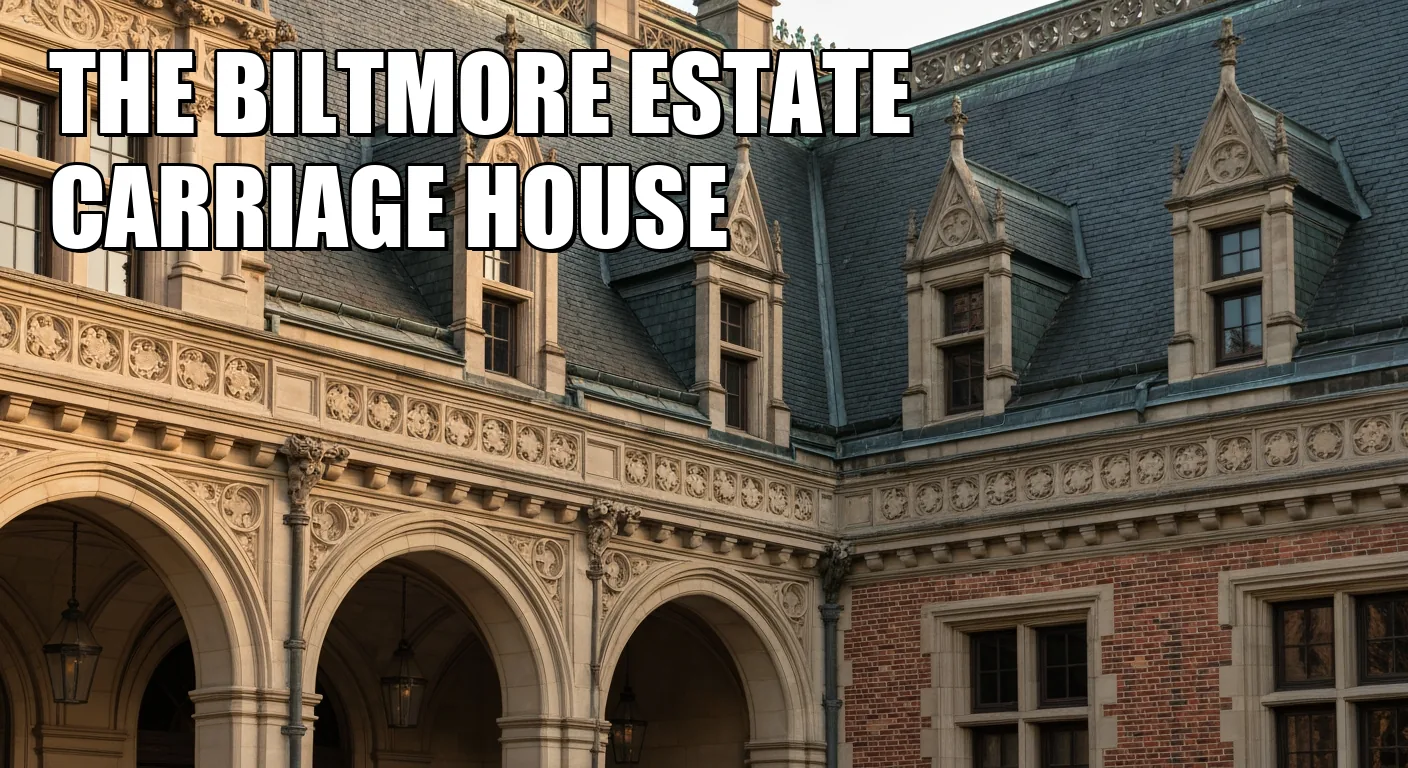
For years, my travels across the United States have consistently drawn me to the less trodden paths of history, away from the obvious landmarks and toward structures with deeper, more nuanced tales. Among these, the historic carriage house stands out, a fascinating architectural type often overshadowed by the main residence it once served. These aren't just quaint remnants of a bygone era; they are robust, adaptable buildings that have witnessed—and often directly participated in—some truly astonishing transformations.
What, precisely, is a carriage house? At its core, it was the garage of the 19th century, a vital annex to a prominent estate designed to shelter horses, carriages, and the essential retinue of stable hands and coachmen. But to dismiss them as mere utilitarian sheds would be a grave oversight. Wealthy families invested significant sums in their construction, ensuring they often mirrored the main house's architectural style and craftsmanship, albeit sometimes with a charmingly practical twist. From elegant Greek Revival structures to elaborate Victorian designs and even radical modern conversions, these buildings offer a unique lens through which to view American domestic architecture and social history.
What Made These Structures So Indispensable?
Consider the daily life of a 19th-century elite family. Without a personal automobile, the carriage was their primary mode of transportation, a clear indicator of status and necessity. This meant not only a place to keep the vehicle itself, but also stables for the horses, quarters for the staff who cared for them, and storage for hay, tack, and equipment. The spatial organization of a well-designed carriage house reveals a meticulous understanding of logistics and social hierarchy. Clean harness rooms were kept strictly separate from the pungent horse stalls, and living quarters for the coachman and his family were often discreetly tucked away on an upper floor, sometimes accessible only by a hidden staircase. This intricate functional planning speaks volumes about the Gilded Age's emphasis on both display and efficiency. The materials chosen—often matching the main house's brick, stone, or clapboard—were not accidental; they reinforced the overall grandeur of the estate. It's this blend of necessity and architectural ambition that makes exploring these structures so compelling. They weren't just for horses; they were miniature, self-contained ecosystems supporting an entire lifestyle.Rhode Island's Ingenuity and Early Adaptive Reuse
Providence, Rhode Island, offers a prime example of an early, remarkably successful adaptive reuse with the Tully D. Bowen House Carriage House. Built around 1850 by the noted architect Thomas Alexander Tefft, this structure isn't merely well-preserved; it exemplifies how foresight in design can pave the way for entirely new purposes. Tefft, renowned for his refined Italianate vocabulary, crafted the carriage house from brick and brownstone, perfectly matching the main residence. The careful proportions and material selection clearly articulated the Bowen family's considerable wealth, yet the building’s inherent robustness proved its greatest asset. Unlike many of its contemporaries that might have fallen into disrepair, this carriage house, alongside the main mansion, underwent a significant conversion in 1941, transforming into residential apartments. This wasn't a clumsy retrofit; it was a thoughtful adaptation that retained its original architectural character, demonstrating that preserving history doesn't always mean freezing it in time. It challenges the conventional wisdom that historical buildings must remain untouched; sometimes, the best preservation is intelligent repurposing that allows a structure to continue serving a community, albeit in a different guise. It's a testament to the quality of mid-19th-century construction that it could so seamlessly transition to apartment living, proving these buildings were built to last, often far beyond their original intended lifespans.The Boston Area's Greek Revival and Shingle Style Fusion
Journeying to Milton, Massachusetts, one encounters the Forbes House Carriage House, a structure that immediately announces its architectural pedigree. Erected in 1833 for Margaret Perkins Forbes, mother of Captain Robert Bennet Forbes, this building perfectly mirrors the Greek Revival elegance of the main mansion. Its façade, complete with projecting pilasters and a pedimented gable, mimics a classical Greek temple, a common and highly fashionable aesthetic choice of the era. The use of flushboard siding, skillfully painted to simulate carved stone, further highlights the period's commitment to classical ideals, even when employing more modest materials. However, the story here doesn't end with Greek Revival purity. An intriguing layer was added in the 1870s when esteemed Boston architects Peabody & Stearns appended a Shingle Style barn addition. This later wing, featuring heavy timber construction and a shingled cupola, showcases beautiful original wooden horse stalls with stained and varnished bead board. This stylistic evolution within a single complex is quite telling; it reflects the changing tastes of the Forbes family as new architectural trends emerged, demonstrating that even historic estates weren't immune to updating. Visiting today, one can appreciate this stylistic dialogue, understanding how the functional requirements of a working stable could be incorporated into varying architectural expressions across different decades.Portland's Preservation Battle and the Ladd Carriage House
One of the most dramatic narratives of survival among American carriage houses belongs to the Ladd Carriage House in Portland, Oregon. Built in 1883 for prominent banker William S. Ladd, this two-and-a-half-story structure is a splendid example of the Stick-Eastlake style, characterized by its distinctive horizontal board siding and decorative period detailing. It once served as a robust stabling facility, emblematic of Portland's burgeoning late 19th-century wealth. Yet, its story truly takes a compelling turn in the 20th century. By 1926, an architect named Morris H. Whitehouse oversaw significant renovations, cleverly dividing the carriage house into specialty shops and studios, even converting the former hayloft into a vibrant dance floor and apartment. This early reinvention was a creative response to changing urban needs, transforming a utilitarian structure into a dynamic mixed-use space. However, its greatest challenge arrived much later, when a nearby church proposed demolition to make way for a parking garage and apartment tower. This sparked a passionate preservation movement, with "Friends of Ladd Carriage House" successfully rallying to save the building. It’s a powerful illustration of the constant tension between urban development and the protection of historic structures, a fight that, thankfully, this particular carriage house won, securing its place as a cherished Portland landmark.New York City's Gilded Age Stable Rows and Their Surprising Rebirth
Venture into the exclusive Upper East Side of Manhattan, and you might stumble upon an architectural curiosity: the William C. Whitney Carriage Houses at 110 and 112 East 66th Street. Constructed in 1890 for William C. Whitney, a financier and Secretary of the Navy, these twin structures are quintessential Romanesque Revival examples. Their defining features—rounded brick arches and heavy wooden doors—immediately evoke an era when entire blocks of Manhattan were dedicated to housing the equine companions of the city’s wealthiest residents. These weren’t just stables; they were grand expressions of Gilded Age opulence, often with comfortable living quarters for the coachmen directly above the horses. What truly makes these Whitney properties remarkable is their current life. One now serves as a professional office for a plastic surgeon, while the other is a single-family dwelling. Imagine the journey from housing magnificent steeds and ornate carriages to accommodating medical consultations or intimate family life. It’s a testament to the robust construction and inherent adaptability of these buildings that they could be so completely re-imagined. This area, once part of an unofficial "stable row," now hosts some of the city's most desirable real estate, with these carriage houses standing as elegant, albeit transformed, survivors of a vanished era, silently telling tales of extreme wealth and remarkable urban evolution.Pennsylvania's Massive Timber Barn Becomes a Modern Estate
Out in Gwynedd Valley, Pennsylvania, the All Around Farm Carriage Barn offers a masterclass in large-scale adaptive reuse, proving that even monumental rural structures can find new purpose. This circa 1870 stone-walled structure originally formed part of a grand summer estate, showcasing the heavy timber construction and exceptional craftsmanship typical of the era. Its sprawling 9,750-square-foot, U-shaped plan once encompassed stables, equipment storage, and ancillary spaces, a testament to the self-sufficiency required of such large country properties. Over the decades, the barn had a varied life, serving as car storage during World War II and later becoming an internationally recognized show barn for professional horseman Junie Kulp. When new owners acquired the neglected but structurally sound edifice, they commissioned Archer & Buchanan Architecture, Ltd. The transformation is nothing short of breathtaking: the architects not only converted the center of the "U" into a luxurious 4-bedroom residence with all modern amenities but also meticulously restored the original stables with wash stalls and tack rooms. This ingenious design allows the current owners to maintain horses on the property, creating a seamless blend of historical function and contemporary living. It's an extraordinary example of how to honor a building's past while creating an entirely new, vibrant future, highlighting that preservation doesn't mean stagnation.When Radical Modernism Meets Historic Preservation in Manhattan
Perhaps the most startling transformation among these examples comes from a discreet carriage house off Park Avenue in Manhattan. Dating back to 1897, this building originally possessed the essential form of a carriage house: large openings for vehicle access, high ceilings, and an open floor plan. However, its recent history is a story of radical architectural intervention, guided by none other than David Adjaye. His firm, Adjaye Associates, transformed this abandoned structure into a cutting-edge contemporary residence for a prominent art collector. What Adjaye achieved here is truly extraordinary. While the exterior façade was meticulously preserved to maintain its landmark status, the interior underwent a complete demolition, including the excavation of a deep cellar that effectively made a six-story building appear much smaller from the street. Inside, a central fountain acts as an open-air atrium, and a striking floating staircase ascends to a lush roof garden. The primary interior material—hand-poured black concrete—doesn't just provide structural support; it also creates dramatic gallery spaces for an extensive art collection. This project isn't merely adaptive reuse; it's a profound reinterpretation, demonstrating that historical shells can house utterly avant-garde interiors, offering a compelling dialogue between past and future. It challenges our preconceived notions of what "preservation" truly means, pushing the boundaries of what is possible when design meets history.What Lies Beyond the Main House? Miles City and the Bartow-Pell
Looking further afield, the William Harmon House Carriage House in Miles City, Montana, built around 1891, demonstrates how secondary structures on grand estates often outlast changing ownership and functional adaptations. This masonry structure, complementing the main residence’s Queen Anne style, has been part of a property that transitioned from a private home to apartments and back to single-family use. Its survival through these cycles speaks volumes about the enduring quality of late 19th-century Montana construction. It reminds us that often, the carriage house, being a more utilitarian structure, could sometimes weather the economic storms and changing tastes that occasionally doomed or drastically altered the grander main houses. And for a truly granular look at original function, one must consider the Bartow-Pell Mansion Carriage House in the Bronx, New York. Constructed no later than 1842, it’s New York City’s last remaining masonry carriage house in its original design. Built into an artificial hillside, it appears two stories from certain angles, showcasing ingenious site adaptation. Its interior layout reveals fascinating details: separate carriage rooms, five-foot-wide horse stalls with gutters draining urine into a cellar cistern, and an attic hayloft with cupola ventilation. These specific details paint a vivid picture of 19th-century self-sufficiency and meticulous functional planning, giving visitors a tangible connection to the practicalities of a pre-industrial existence. Today, it serves as an exhibition and educational space, preserving not just the structure, but the story of how such buildings actually operated. The journey through America’s carriage houses is a journey through architectural adaptability and historical resilience. From the elegant symmetry of Greek Revival to the robust forms of Romanesque Revival, and from humble stables to high-concept art galleries, these structures have continuously reinvented themselves. They prompt us to look beyond the obvious, to appreciate the ingenuity of past builders, and to marvel at the creative vision that allows these often-overlooked buildings to thrive in the 21st century. So, the next time you visit a historic estate, take a moment to peer past the main residence; you might just uncover a world of unexpected stories within its unassuming, yet utterly captivating, carriage house.Carriage House Architecture: A Complete Heritage Guide to America's Historic Structures
What is the history of the carriage house?
Carriage houses date back to 18th-century England but became popular in the United States during the mid-to-late 1800s, particularly in New York and New England. These structures originally housed horse-drawn carriages, equipment, and provided living quarters for coachmen and stable staff.
What was a carriage house?
A carriage house was a freestanding outbuilding originally designed to store horse-drawn carriages, related equipment, and stable horses, with the upper floor typically serving as living quarters for coachmen and other male servants. Today, these buildings are commonly converted into guest houses, home offices, studios, or residential apartments.
What is the history of the coach house?
Coach houses are essentially the same as carriage houses—the terms are used interchangeably in American architecture. The structure emerged in 18th-century England and became widespread in the United States during the Victorian Era as part of wealthy estates.
What is the history of the carriage?
Carriages evolved from ancient chariots that originated around 3,000 BC in Mesopotamia, developing through the 15th century in Europe into more sophisticated horse-drawn vehicles. By the 17th-19th centuries, carriages became essential transportation for the wealthy and gave rise to specialized carriage houses across America.
Who lived in carriage houses?
Coachmen (carriage drivers) and their families were the primary inhabitants of carriage houses, along with stable boys and other male servants who maintained the horses and vehicles. These were considered upper-level servant positions in wealthy households, though the staff varied based on the size and resources of the estate.
Part of 🏛 Architecture Styles

Architecture Styles
Gothic Revival Architecture: What the Street Can—and Cannot—Tell You
A three-level field test separates visible Gothic Revival evidence from a style hypothesis and the dates, authorship or alterations that require records.

Architecture Styles
Greek Revival Without Columns: A Confidence Test
Greek Revival can survive without a portico. Use roofline, entablature, entrance, wall plane, date and later alterations to state confidence.
Architecture Styles
Prairie Style Architecture: How to Spot the Style in American Houses
A practical guide to Prairie Style architecture in the United States, with the roof, window, massing, and site cues readers should compare from the street.