Historic Mansions

America's Communication Canvas: A Road Trip

Find Nearby Hotels

Book Flights

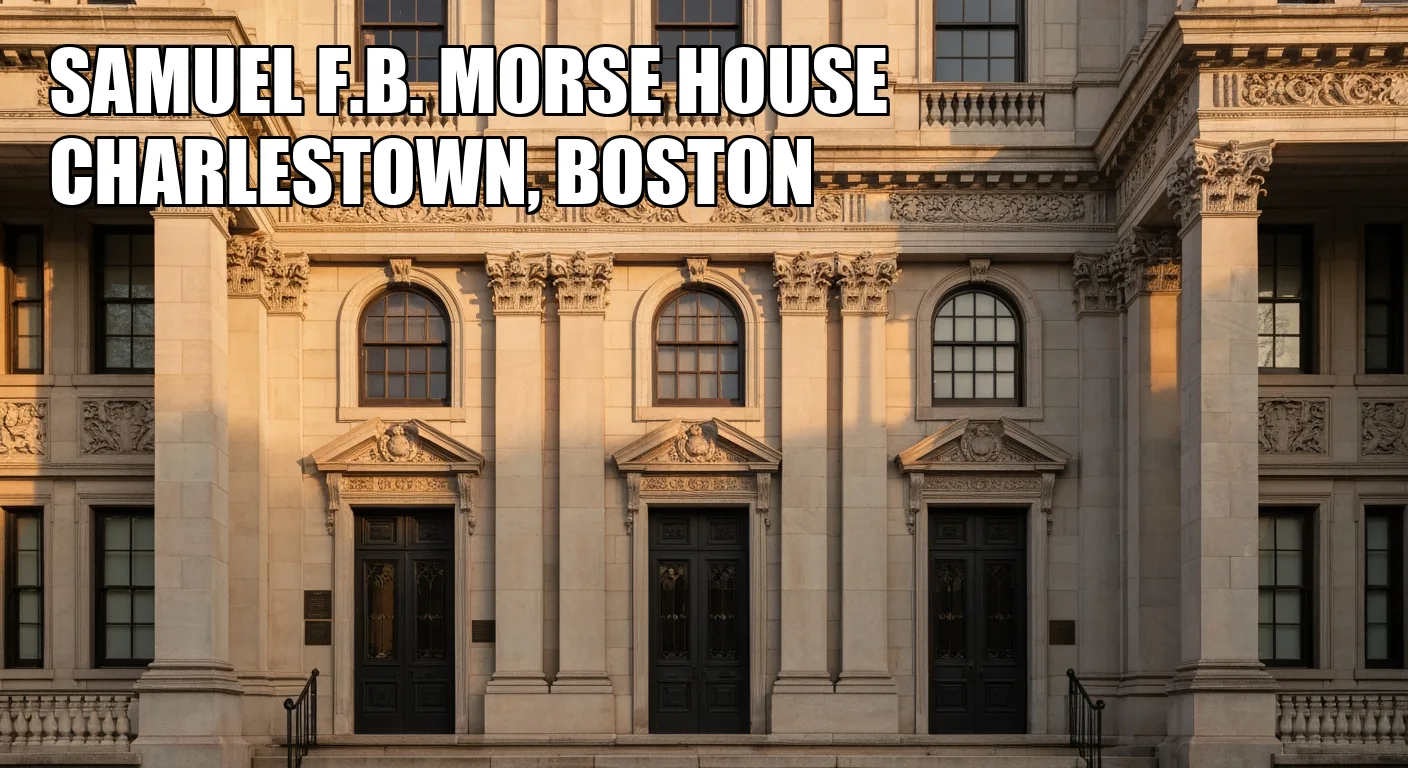
Sometimes, the most profound stories aren't found in the grand, well-trod landmarks, but in the subtle hum of a forgotten machine, the faint echo of a message sent across miles of wire, or the quiet intensity of a laboratory where the world was irrevocably changed. I've spent decades chasing these whispers of history, trekking across America to understand not just *what* happened, but *why* and *how* it shaped us. This summer, I’m inviting you on a deeply personal journey, a 14-day road trip that charts the very evolution of how we connect, from the first tentative taps of a telegraph key to the seamless flow of the digital world. This isn't just a list of sites; it's an immersion into the ingenious, often messy, process of human innovation, revealing insights that typical guides often miss. Have you ever stopped to consider how truly revolutionary it was when Samuel Morse first sent a message across a wire, seemingly instantaneously? It's a concept so ingrained in our lives today, it’s hard to imagine a world without it. Our adventure begins in Boston, a city teeming with revolutionary fervor, and specifically, Charlestown, home to the often-overlooked Samuel F.B. Morse House. While most flock to the Freedom Trail, this summer residence offers a more intimate glimpse into the mind of the inventor, a place where he painstakingly perfected the Morse Code alphabet. Here, the Boston Tech Heritage Society hosts an escape workshop where you’ll decode period messages—an activity that suddenly makes the abstract concept of dots and dashes incredibly tangible and fun. Prepare to download the TimeLooper app; its AR overlay of Morse's original 1840s workshop, complete with animated lab equipment, truly brings his world to life, making you feel less like a tourist and more like an observer in his creative process. Just down the road, the Old State House stands as a stark reminder of how quickly revolutionary ideas, once communicated, can ignite a populace. While it might seem a stretch to link this political landmark to communication technology, consider the sheer power of the printed word that spread news of its speeches and debates, fueling the nascent mass media of newspapers. For 2025, booking your spot for the Revolutionary Voices archival exhibition at least three months in advance is absolutely crucial; this isn’t just a static display, it’s a peek behind the curtain at the very documents that spurred a nation. And for a truly unexpected visual, the HistoryView app will project holographic newspaper presses right into the historic space, a vivid demonstration of how those words were literally churned out. After all that historical gravitas, a bowl of New England clam chowder at Faneuil Hall Marketplace feels like a well-earned, quintessential Bostonian reward. Rhode Island, a short drive from Boston, might not immediately spring to mind as a cradle of communication, but its industrial might laid the groundwork for mass production, which, in turn, fueled the spread of information. At the Slater Mill Historic Site in Pawtucket, America's first successful textile mill, the connection becomes strikingly clear: this wasn't just about cotton threads, but the ability to mass-produce the cloth for newspapers and broadsides. Standing amidst the whirring machinery, you can practically hear the clatter that transformed raw materials into vehicles for public opinion. Their "dye-your-own cotton broadside" activity, using 19th-century block-printing techniques, is far more engaging than any static museum exhibit. The IndustrialAR app truly earns its keep here, simulating the full 1820s mill operation and helping visitors grasp the immense scale and complexity of early industrialization. It's a loud, vibrant experience that often surprises those who only associate the state with charming seaside towns. Continuing our deep dive into the evolution of information dissemination, a visit to Providence reveals another, more direct link to the power of the press. The Providence Journal Center, home to one of the nation's oldest continuously published newspapers, reminds us that while the medium changes, the desire for timely news does not. Their "Front-Page Live" session, where you can pitch and print your own headline, requires booking six weeks out, but it’s a brilliant, hands-on demonstration of journalistic decision-making in real-time. It’s a subtle but powerful reminder that before the internet, before radio, the daily newspaper was the pulse of the community. And after wrestling with headlines, few things hit the spot like Rhode Island calamari, best enjoyed at Hemenways Seafood Grill overlooking the water. Our route then winds westward to Rochester, New York, a city that played a surprisingly central role in the telegraph’s commercial ascendance. The Western Union Telegraph Building & Museum isn’t just an old office; it was a global communications nexus, the very heart from which international telegrams pulsed. Walking through its restored halls, you almost expect to hear the urgent click-clack of keys. Their AR-enhanced digital telegram experience, allowing you to record a message and watch it "transmit" via a recreated 1930s switchboard, is a fantastic way to grasp the tangible mechanics of a network that once spanned continents. The museum’s proprietary WUTech AR, with its interactive switchboard tutorials, turns a complex piece of engineering into an engaging puzzle. For dinner, The Owl House provides a delicious, modern counterpoint to the day's historical deep dive. What truly accelerates the message, however, isn't always an electrical current. The Erie Canal Museum, also in Rochester, presents a fascinating tangent often overlooked in the story of communication. This monumental waterway, a feat of 19th-century engineering, didn't just move goods; it accelerated message delivery along shipping routes before widespread telegraphy. Imagine letters and critical intelligence traveling by packet boat, a journey that felt impossibly fast in its day. Taking a kayak tour of the original basin, with live narration explaining these aquatic communication lines, offers a unique perspective that no dry exhibit can replicate. This tour absolutely demands a two-month advance reservation, especially in summer. It’s a gentle, rhythmic experience that sharply contrasts with the electric speed of the telegraph, reminding us of the human ingenuity that solved communication challenges long before wires existed. Leaving the waterways behind, we journey south to Murray Hill, New Jersey, where the very foundation of modern telephony was laid. Bell Labs Murray Hill Visitor Center might seem unassuming from the outside, but within its walls, minds like Shockley, Bardeen, and Brattain invented the transistor. This wasn’t just an incremental improvement; it was a seismic shift, the tiny solid-state device replacing bulky vacuum tubes, paving the way for every communication gadget we now take for granted. Their "Transistor Genesis" lab tour, where you actually get to build a simple solid-state radio, is an exclusive 2025 summer offering, requiring booking four months ahead due to its popularity. It’s a genuinely hands-on experience, providing a visceral connection to a pivotal moment in history. The NanoLens app, visualizing electron flow through semiconductor junctions, makes the abstract science beautifully clear. Highlawn Pavilion provides not just excellent local fare, but also panoramic views that offer a moment of quiet reflection on the revolutionary work performed just a few miles away. Our journey through communication would be incomplete without a stop at one of America’s most profound symbols of connection: the Statue of Liberty and Ellis Island in New York City. While not a direct technological site, these landmarks represent the human desire for communication, for connection across oceans and cultures. Here, communication wasn't about technology, but about the letters, the telegrams, the hopes, and fears that traveled with millions of immigrants. The "Voices of Liberty" audio-theater program, a special 2025 summer offering in the Statue’s crown, reenacts immigrant telegrams and letters, giving powerful human context to global networks. This experience is extremely popular, so reserve your spot a full six months in advance. The Ellis ARchive app, tracing immigrant journey maps, adds another layer of personal connection. Afterwards, a pastrami sandwich at Katz's Delicatessen isn't just a meal; it's a taste of the city's rich immigrant history, a place where countless stories have been shared. Washington, D.C., as the nation's capital, has always been a hub of information and influence, making the National Museum of American History (NMAH) an essential stop. This isn't merely a repository of artifacts; it’s a living timeline, housing Alexander Graham Bell's original telephone and early computing devices. To truly appreciate the tactile history, request access to their private after-hours "Sound & Signal" workshop at least five months out. Handling Bell's prototypes and early modems, you gain an understanding of the sheer ingenuity and painstaking effort that went into developing these groundbreaking tools. The HistoScope app, with its layered 3D models of telephone evolution, provides a fantastic visual aid, peeling back the layers of innovation. After such an intellectually stimulating day, Old Ebbitt Grill, established in 1856, offers a classic American dining experience that feels perfectly in sync with the historical atmosphere. As we transition from the analog giants, our path leads us south to Morgantown, West Virginia, and into the nascent digital age. The West Virginia University Early Computer Lab isn’t a flashy Silicon Valley startup; it’s a site of quiet, pioneering work on parallel processing in the 1960s. Here, behind closed doors, researchers grappled with challenges that would eventually unlock the potential of modern computing. To actually recreate a simple batch-processing job using restored CDC mainframe terminals is an experience that humbles and illuminates. It makes you realize how far we've come from punch cards and magnetic tapes to our current handheld devices. The ComputeAR app excels here, overlaying code execution flows directly onto the original hardware, bringing abstract computing concepts into a visually understandable format. For a taste of local flavor and a chance to reflect on the day's mind-bending history, Mountain State Brewing Co. offers regional craft beer and hearty comfort food. Our journey culminates on the Pacific coast, in the heart of the modern digital revolution: Mountain View and San Francisco, California. The Computer History Museum in Mountain View isn't just about computers; it chronicles the epic shift from telegraph to internet, revealing the interconnectedness of all these communication threads. Their "Tech Time Machine VR experience," operating early ARPANET nodes and witnessing the first email transmission, is a 2025 special exhibit, with tickets going on sale in January. This is more than just a historical recount; it's an immersive plunge into the very moments that birthed our connected world. The in-museum CodeLens overlay provides fascinating insights into source-code evolution. For lunch, Cascal offers Latin-inspired Californian cuisine that feels as innovative as the technology on display. Finally, we arrive at the majestic Golden Gate Bridge in San Francisco. While seemingly just an engineering marvel, it stands as a profound symbol of connectivity, a testament to what human ingenuity can achieve when it seeks to bridge divides. A guided "Bridge to the Future" twilight walk, enhanced with an AR helmet that projects structural stress tests and design iterations, offers a unique perspective on this iconic structure. You’ll need to book this four months in advance, and believe me, it’s worth the foresight. It’s a powerful metaphor for our journey: from the first fragile wires of the telegraph to the global network that now encircles the earth, our drive to connect remains an enduring human constant. Toasting this incredible journey with fresh seafood at Scoma's Fisherman's Wharf, with the bridge silhouetted against the fading light, feels like a fitting end to an expedition that has truly spanned centuries of innovation. Planning such an ambitious journey, especially for Summer 2025, demands foresight and careful execution. Remember, for the most exclusive workshops and behind-the-scenes tours – like the Bell Labs private tour or the NMAH Sound & Signal workshop – you’ll need to make reservations anywhere from four to six months ahead. Many institutions are rolling out special "Summer Innovations Series" schedules for 2025; check their websites typically starting in January for exact dates and booking windows. Before you even hit the road, download the suite of AR apps mentioned: TimeLooper, HistoryView, IndustrialAR, WUTech AR, NanoLens, Ellis ARchive, HistoScope, ComputeAR, and CodeLens. They genuinely enhance the experience, transforming passive observation into active engagement. Driving an east-to-west loop via I-90 and I-80, then I-95 and across I-70, provides a sensible route, but be mindful of the significant driving times between major hubs – expect to allocate three to six hours of driving between many of these locations. And for accommodations, consider locally owned boutique inns; they often provide a richer sense of regional heritage and character than generic chain hotels, completing the immersive feel of your trip. This expedition isn’t just about visiting sites; it's about understanding the unseen threads that bind our past to our present, and how each innovation, however small, contributed to the tapestry of our connected world.

Timeless Trails: Your Guide to America’s Historic Destinations

What are some underrated historical sites in America?
Consider visiting the Carter G. Woodson National Historic Site in Washington, D.C., the Allegheny Portage Railroad National Historic Site in Pennsylvania, and Fort Raleigh National Historic Site on Roanoke Island for rich yet lesser-known historical experiences.
Where is the most historical place in the USA?
Boston, Massachusetts—home to the Freedom Trail, Faneuil Hall, and numerous Revolutionary War sites—is often regarded as the most historically concentrated city in the United States.
What are the top 10 historical places to visit in the world?
Among the world’s most celebrated are the Great Wall of China, Machu Picchu (Peru), the Pyramids of Giza (Egypt), the Colosseum (Italy), Petra (Jordan), Taj Mahal (India), Angkor Wat (Cambodia), Stonehenge (UK), Acropolis (Greece), and Chichen Itza (Mexico).
Where can I take someone who loves history?
Washington, D.C.’s National Mall—including the Smithsonian museums and national monuments—offers an immersive journey through U.S. history for any history enthusiast.
Which U.S. state has the least national historic landmarks?
North Dakota has the fewest National Historic Landmarks of any U.S. state.
What is the oldest landmark in America?
The Castillo de San Marcos in St. Augustine, Florida, completed in 1672, is the oldest masonry fort in the continental United States.
Does Jamestown still exist?
Yes; Historic Jamestowne remains an active archaeological site and museum on Virginia’s James River, open to visitors year-round.
What is the oldest colony in America?
St. Augustine, Florida, founded by the Spanish in 1565, is the oldest continuously inhabited European-established settlement in the continental United States.
Did Pocahontas really save John Smith?
Most historians agree that the dramatic rescue scene was likely embellished by John Smith and is not supported by contemporary Powhatan accounts.
Is the Plymouth Rock the actual rock?
Plymouth Rock serves as a symbolic marker of the Pilgrims’ landing; the original stone was broken and relocated, so the inscribed boulder today is as much commemorative as it is authentic.
What is the best time of year to visit historical sites in the USA?
Spring and fall offer mild weather, fewer crowds, and seasonal events at many historic sites across the country.
How much does it cost to visit national historic sites?
Entry fees vary by site, but many National Park Service–managed historic sites charge between $0 and $25 per vehicle, with annual passes available.
Are pets allowed at national historic landmarks?
Pets are typically allowed on outdoor grounds if leashed, but they are prohibited from most indoor museum areas.
What should I pack for a historical site tour?
Bring comfortable walking shoes, water, weather-appropriate layers, sun protection, and a charged camera or smartphone.
Can I use the America the Beautiful Pass at historical sites?
Yes; the America the Beautiful annual pass covers entrance fees at all National Park Service historic sites that charge an entry fee.