Photo by Elena Vasquez for Cornerstone Mansion · January 9, 2026
As a seasoned traveler who’s traversed the byways and boulevards of this nation, I’ve often found myself gazing upward, not at towering skyscrapers, but at the elegant, often overlooked crowns of our most venerable public buildings: the cupolas. These architectural adornments, far from being mere decorations, tell stories of national aspiration, political wrangling, and sheer engineering grit. They’re functional, yes—often providing light or ventilation—but more profoundly, they serve as potent symbols. Forget your run-of-the-mill tourist brochures; I'm here to peel back the layers and share what these structures truly represent, offering a guide that goes beyond the surface.
So, what makes a cupola truly *significant*? It's not just about height or grandeur. It's about the era in which it was conceived, the controversies it weathered, the specific symbolism it embodies, and sometimes, the sheer audacity of its construction. We’re talking about structures that, for centuries, have anchored skylines and imaginations, giving physical form to abstract ideals. Let's delve into five examples that, in my experience, offer the richest insights into America's architectural and historical narrative.
The Capitol's Resilient Crown: A Nation Divided, Yet United in Iron
Perhaps no other architectural feature in the United States commands as much immediate recognition or carries such profound symbolic weight as the cupola gracing the U.S. Capitol Dome. Commissioned in 1854 and finally completed in 1866, this colossal cast-iron structure wasn't just another building project; it was an act of audacious defiance. Thomas U. Walter, the Philadelphia architect behind its design, clearly looked across the Atlantic for inspiration, drawing cues from European Renaissance masterpieces like St. Peter's Basilica in Rome and even elements of St. Paul's Cathedral in London. Yet, what makes *our* dome uniquely American isn't just its neoclassical grandeur—it’s the stark contrast between its construction and the political turmoil swirling beneath it.
Imagine the scene: The nation tearing itself apart in the Civil War, men fighting and dying on battlefields across the country, yet here in Washington D.C., work on the dome continued, a deliberate, powerful statement of national permanence. Abraham Lincoln himself insisted on its completion, understanding that the sight of the rising dome, even amidst such strife, was a tangible symbol of an enduring Union. This wasn't merely a construction effort; it was a psychological operation. The dome stands an impressive 287 feet high, a double-dome design encircled by 36 Corinthian columns, a truly monumental achievement in 19th-century engineering, weighing in at approximately 8.9 million pounds of cast iron. It's a testament to vision over immediate despair, a grand gesture that asserted continuity when everything else felt fractured.
And then there's the Statue of Freedom, which crowns the entire edifice. Installed on December 2, 1863, its very design sparked a significant, often overlooked, controversy. Thomas Crawford’s original vision for the statue included a Phrygian liberty cap, an emblem historically associated with freed slaves. This detail, however, drew the ire of Jefferson Davis, then Secretary of War and later President of the Confederacy, who demanded its removal. Crawford, under pressure, replaced it with a military helmet adorned with an American eagle, a less provocative, but arguably less poignant, symbol. When you visit the Capitol, perhaps on a guided tour, try to envision the statue without its helmet, and consider the layers of historical compromise embedded in even its most lofty elements. Planning a visit? Expect robust security and considerable crowds, especially during peak tourist season (spring and fall). Aim for an early morning weekday visit to experience a semblance of calm before the main throngs descend.
Massachusetts's Golden Beacon: A Legacy Forged in Copper and Pine
Shifting our gaze north, the Massachusetts State House in Boston presents an altogether different narrative of architectural evolution and pragmatic ingenuity. Charles Bulfinch’s design, completed in 1798, immediately asserted itself as one of America's finest examples of Federal architecture, distinguished by its elegant dome. Originally, it was sheathed in wooden shingles, a practical choice at the time, but one that soon proved problematic. Chronic leaks became a persistent headache for early state officials, a mundane, yet critical, issue that often goes unmentioned in historical accounts.
The solution? None other than Paul Revere and Sons stepped in during 1802, copper-plating the dome to provide a much-needed, durable barrier against New England's notoriously harsh weather. It wasn’t until 1874 that the dome received its now-famous gold leaf, an upgrade that cost a princely $2,900 at the time, transforming it into Boston's most recognizable architectural symbol. The cupola itself is crowned by a distinctive pine cone, a subtle yet powerful nod to the pivotal role of the timber industry in early New England’s economy. This detail, often missed by casual observers, speaks volumes about the region's foundational enterprises and its identity.
Yet, even iconic gold-leafed domes are not immune to the ravages of time and weather. The Massachusetts State House has undergone multiple gildings and extensive restoration work, with a second gilding in 1997 costing a staggering $300,000. More recently, in 2023, the cupola faced a dramatic challenge when an 8-foot column broke away and fell to the roof, necessitating temporary repairs involving bracing and even chicken wire. This incident, while alarming, underscores the constant battle involved in preserving these historical treasures. A comprehensive $20.3 million restoration project is now underway. If you plan a trip to Beacon Hill, you might see scaffolding, but don't let that deter you. The golden dome remains a breathtaking sight, especially when catching the late afternoon sun, and the surrounding area offers a delightful stroll through history. Parking in this area of Boston can be challenging and expensive, so consider public transport.
The Library of Congress: A Beaux-Arts Symphony in Stone and Light
Stepping into the Thomas Jefferson Building of the Library of Congress feels less like entering a government institution and more like walking into a grand European palace. Its dome and cupola are a magnificent testament to Beaux-Arts Renaissance Revival architecture, completed in 1897, but with a design history that stretched back decades to John L. Smithmeyer and Paul J. Pelz’s initial plans in 1873. The project was riddled with complications, architectural changes, and political maneuvering, a common thread in large-scale public works. It was Edward Pearce Casey, son of the Brig. Gen. Thomas Lincoln Casey who oversaw its construction, who truly brought the interior to life, managing over 50 American artists to create a breathtaking experience.
What captivates here isn’t just the exterior, but how the cupola culminates in the spectacular octagonal dome, measuring 140 feet in diameter. The innovative coffered design, with its rosettes decreasing in size towards the central oculus, masterfully creates an illusion of even greater height, drawing your eye upward into a celestial vision. Albert Weinert sculpted its intricate elements, but it's Edwin Howland Blashfield’s breathtaking "Evolution of Civilization" fresco at the dome’s collar that truly defines the space. Twelve colossal figures representing pivotal civilizations and their contributions to human advancement gaze down upon visitors, creating an immersive journey through human intellect. This isn't just architecture; it's a celebration of knowledge itself, an homage to the very purpose of the Library.
When you explore the Library of Congress, take your time in the Main Reading Room (viewable from an overlook for most visitors). The light filtering down from the cupola, illuminating Blashfield's work, is a truly transformative experience. It serves as a powerful reminder of the aspirational ideals of public knowledge and intellectual exploration that fueled its creation. Unlike many government buildings, the Library offers a different kind of solemnity, one rooted in scholarship. Admission is free, but security checks are thorough, so arrive with ample time. Visiting outside of school holidays will generally afford you a more contemplative experience.
The Smithsonian Castle's Romanesque Echoes: Towers on the Mall
Before the grand Beaux-Arts flourishes, before the monumental Neoclassical statements, there was the Smithsonian Institution Building, affectionately known as "The Castle." Completed in 1855, this structure represents a pioneering leap into American Romanesque Revival architecture, courtesy of designer James Renwick Jr. Its distinctive red Seneca sandstone, quarried from Montgomery County, Maryland, immediately sets it apart on the National Mall. The building isn't dominated by a single, monolithic dome; instead, it features multiple towers, each topped with its own distinctive cupola, offering a more whimsical, yet equally significant, architectural statement.
Renwick masterfully blended Romanesque and Gothic Revival elements—think rose windows, vaulted ceilings, and tall, thin windows—all complementing the varied designs of the cupolas. These aren't just aesthetic flourishes; the cupolas served practical functions, providing crucial ventilation in an era before widespread air conditioning, while also punctuating the building's silhouette with visual interest. However, The Castle faced its own dramatic challenge: a catastrophic fire on January 24, 1865, which ravaged the upper story and severely damaged the north and south tower cupolas. This necessitated extensive reconstruction, a testament to the nation's commitment to preserving its nascent scientific and cultural institutions, even in the shadow of war.
The Castle’s cupolas, with their varying heights and shapes, offer a different kind of historical lens. They evoke a sense of scholarly discovery and pioneering spirit, a building designed to house and nurture knowledge in a burgeoning nation. Today, The Castle serves as the Smithsonian’s information center and administrative offices, a fitting gateway to the vast museum complex. While you can't typically ascend the cupolas, observing them from the ground, noting their distinct forms and the warm hue of the sandstone, offers a unique appreciation for 19th-century American design. It's an easy walk from other Smithsonian museums, and requires no admission fee, making it an accessible historical stop on your Mall itinerary.
Ohio’s Maverick Cupola: A "Chinese Hat" of Deliberate Design
Finally, we arrive at a truly idiosyncratic masterpiece, one that challenges conventional expectations: the Ohio State House cupola. Constructed between 1839 and 1861, this building’s design journey was fraught with multiple architects and evolving visions. What makes it genuinely remarkable is its deliberate deviation from the prevailing trend of grand, traditional domes, a decision that has sparked both admiration and bemused critique over the centuries. Isaiah Rogers, the architect who completed the final stages, famously reverted to an earlier design scheme, opting for a two-story drum capped with a low, conical roof.
This distinctive cupola, standing 70 feet tall and 75 feet wide, earned it the rather unflattering moniker of "a Chinese hat" from some contemporary critics. Yet, this "hat" is precisely what makes the Ohio State House so historically significant. It’s one of only 11 state capitols in the entire United States that lacks an external dome, a striking architectural distinction resulting not from oversight, but from conscious, final design choices. It embodies a spirit of independence, a willingness to forge a unique identity rather than simply replicate popular European forms. The overall building height reaches 158 feet from ground to cupola pinnacle, commanding attention without needing a soaring dome.
For the intrepid architectural enthusiast, the Ohio State House offers a refreshing counter-narrative. It prompts a critical re-evaluation of what constitutes beauty and significance in public architecture. Is it always the grandest, most imposing structure, or can it be the one that dares to be different? This cupola is a physical manifestation of architectural compromise and a testament to the varied tastes and influences that shaped American civic design. When visiting Columbus, carve out time for a tour of the State House; its interior is just as fascinating as its exterior. Weekday visits are generally best, as it's an active government building. You'll find metered parking nearby, but public transit is also an option.
These five structures, each crowned by its unique cupola, collectively weave a rich tapestry of American history and architectural innovation. From the U.S. Capitol’s wartime grandeur to Ohio's defiant individuality, they offer far more than just aesthetic appeal. They are tangible links to our past, embodying the ideals, challenges, and persistent spirit of a nation forever building towards its future. Look up, truly look up, and you’ll discover stories you never knew were etched in the sky.
Architecture Styles You Can Read From the Street
Use visible details like rooflines, columns, and ornament to identify building styles faster.
A cupola is a small, dome-like structure that projects upward from a building's roof, typically resting on a circular, polygonal, or square base. The term derives from Latin and Greek words meaning 'small cup,' and cupolas can serve both decorative and functional purposes, including providing ventilation, natural light, and serving as lookout points.
What is the history of the cupola?
Cupolas originated in Islamic architecture during the 8th century, initially placed atop minarets and mosque structures. They spread from the Middle East to Russia (where onion domes became popular in the 17th-18th centuries), Spain via the Moors, and Vienna through Baroque influence, eventually becoming integrated into English domestic architecture in the late 17th century.
When did cupolas become popular in the United States?
Cupolas became prevalent in U.S. architectural design during the post-Revolutionary Federalist era and were especially popular in 19th-century domestic architecture, where they helped distinguish otherwise plain houses and provided practical benefits like ventilation and light.
What is the history of the dome in architecture?
Domes first appeared as solid mounds in ancient Mesopotamia, India, and the Mediterranean for small structures like huts and tombs. The Romans introduced large-scale masonry hemispheres, Byzantine architects developed pendentive domes for better lighting, and domes regained popularity during the European Renaissance and Baroque periods.
What is the history of Queen Anne architecture?
Queen Anne style emerged in the 1880s-1910 period in the United States as a Victorian architectural response, serving as an eclectic culmination of all previous Victorian styles. It replaced the French Second Empire as the 'style of the moment,' gaining popularity particularly among the upper class as a distinctive, ornate design aesthetic.
What is the difference between Victorian and Queen Anne style?
Queen Anne style is technically a type of Victorian architecture that emerged later (1870-1910) and is more eclectic and asymmetrical than earlier Victorian styles like Second Empire. While Victorian is a broader umbrella term, Queen Anne specifically features folk-inspired designs with irregular shapes, turrets, and decorative excess, originally designed for the upper class unlike Folk Victorian which was for common people.
What is Queen Anne building architecture?
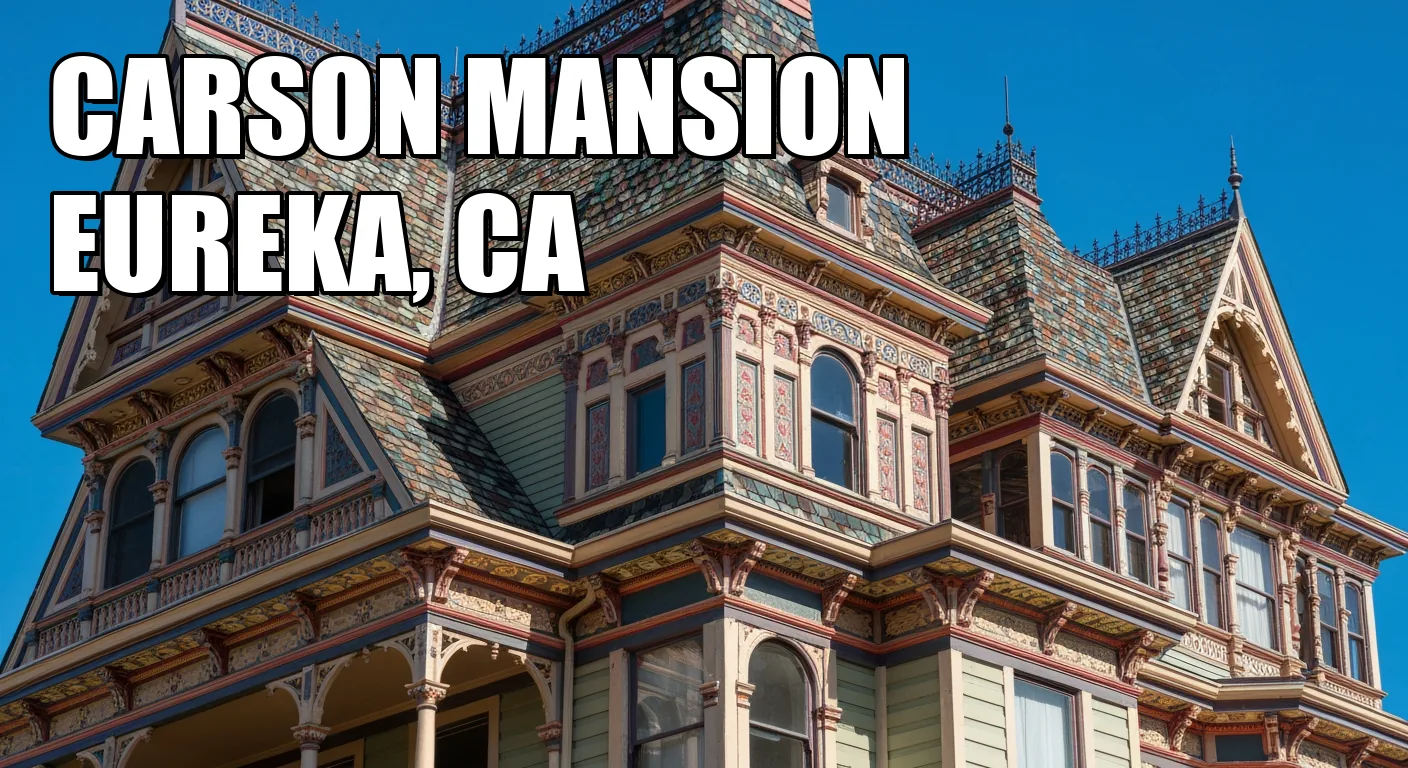
Queen Anne architecture features asymmetrical facades, towers and turrets, large projecting bay windows, wrap-around porches often on multiple levels, stained glass windows, decorative woodwork, complex roofs with multiple gables and dormers, curved walls, and ornamental details applied extensively throughout the structure.
What makes something Queen Anne style?
Queen Anne style is defined by its eclectic combination of asymmetry, picturesque irregularity, elaborate ornamentation, visible turrets and towers, complex rooflines with decorative crestings and finials, ornate carved details, and a folk-inspired layout with rooms flowing in irregular patterns rather than formal arrangement.
What is the history of Queen Anne (the monarch)?
Queen Anne (1665-1714) was the last Stuart monarch of Great Britain and Ireland, reigning from 1702-1714. She is famous for the Acts of Union that unified England, Scotland, and Ireland into Great Britain, and despite being pregnant 17 times, most pregnancies resulted in stillbirths with no surviving children to adulthood.
Which cities have the best Queen Anne architecture in America?
Worcester, Massachusetts, Denver, Colorado, Hartford, Connecticut, Chicago, Illinois, and Boston, Massachusetts are among the best cities for viewing Queen Anne architecture in the United States.
What are the most famous cupolas to visit in the United States?
Notable cupolas include Mount Vernon's octagonal cupola designed by George Washington, the U.S. Capitol's cast iron dome (designed by Thomas U. Walter, 288 feet tall), and Seminary Ridge's 70-foot cupola in Gettysburg, Pennsylvania, which served as a Civil War lookout.
How can I tour the U.S. Capitol and see its famous dome?
Capitol tours begin at the U.S. Capitol Visitor Center (open Monday-Saturday 8:30 a.m.-4:30 p.m.) with a 13-minute intro film followed by stops in the Capitol Rotunda where you can view the historic dome and its fresco 'The Apotheosis of Washington.' Tours typically last 90 minutes and are accessible for people with disabilities.
What practical purposes do cupolas serve beyond decoration?
Historically, cupolas provided ventilation to attics and main spaces, helped dry hay in barns while preventing fire, served as lookout points for incoming ships and traffic, and supplied natural light and air circulation. Modern copper cupolas continue to lower energy costs through improved attic ventilation.
What is the best time of year to visit historic cupola buildings in New England?
Fall and spring are ideal seasons for visiting New England's historic properties, as weather permits better viewing and photography of exterior architectural details without harsh winter conditions or summer crowds.
Can I tour the historic Cupola House in Edenton, North Carolina?
Yes, the 1758 Cupola House offers 45-minute guided tours Friday-Saturday at 11:30 a.m., 12:30 p.m., and 2:30 p.m., and Sundays at 12:30 p.m. and 2:00 p.m., with admission of $12.50 for adults and $5.00 for children (ages 6-15).
Are there free Capitol building tours available in 2025?
While U.S. Capitol tours are typically available, recent federal funding lapses have caused temporary closures; visitors should check the official VisitTheCapitol.gov website for current tour availability and reservation requirements before planning their visit.
Why This Page Exists
Maison builds place guides to help readers plan a real visit or understand a real site. When a page makes present-day access, booking, or visitor claims, those details are revised against public-facing source material and editorial review. For the wider standards behind that work, see methodology.
The Cornerstone Brief
One historic place, once a week — what it is, why it matters, whether it's worth going. No filler, no paid placements.
Coming soon. Unsubscribe any time.
We use cookies to enhance your experience. By continuing to visit this site you agree to our use of cookies.