Photo by Margaret Ainsley for Cornerstone Mansion · February 13, 2026
For decades, I've chased shadows and unearthed untold stories across this nation, drawn to the places where history’s wounds still ache. There’s a peculiar allure to a "scream house" – a location soaked in tragedy, now rumored to host restless spirits. We go not just for the shivers, but to touch the past, to confront the uncomfortable truths of human suffering, and perhaps, to glimpse something beyond our understanding. What follows is a guide to some of America's most infamous homes, filtered through the lens of someone who’s seen countless historical markers and peered into far too many dark corners. Forget the glossy brochures; this is what it's *really* like.
Villisca's Unsolved Echoes: Staying Overnight with Ghosts of 1912
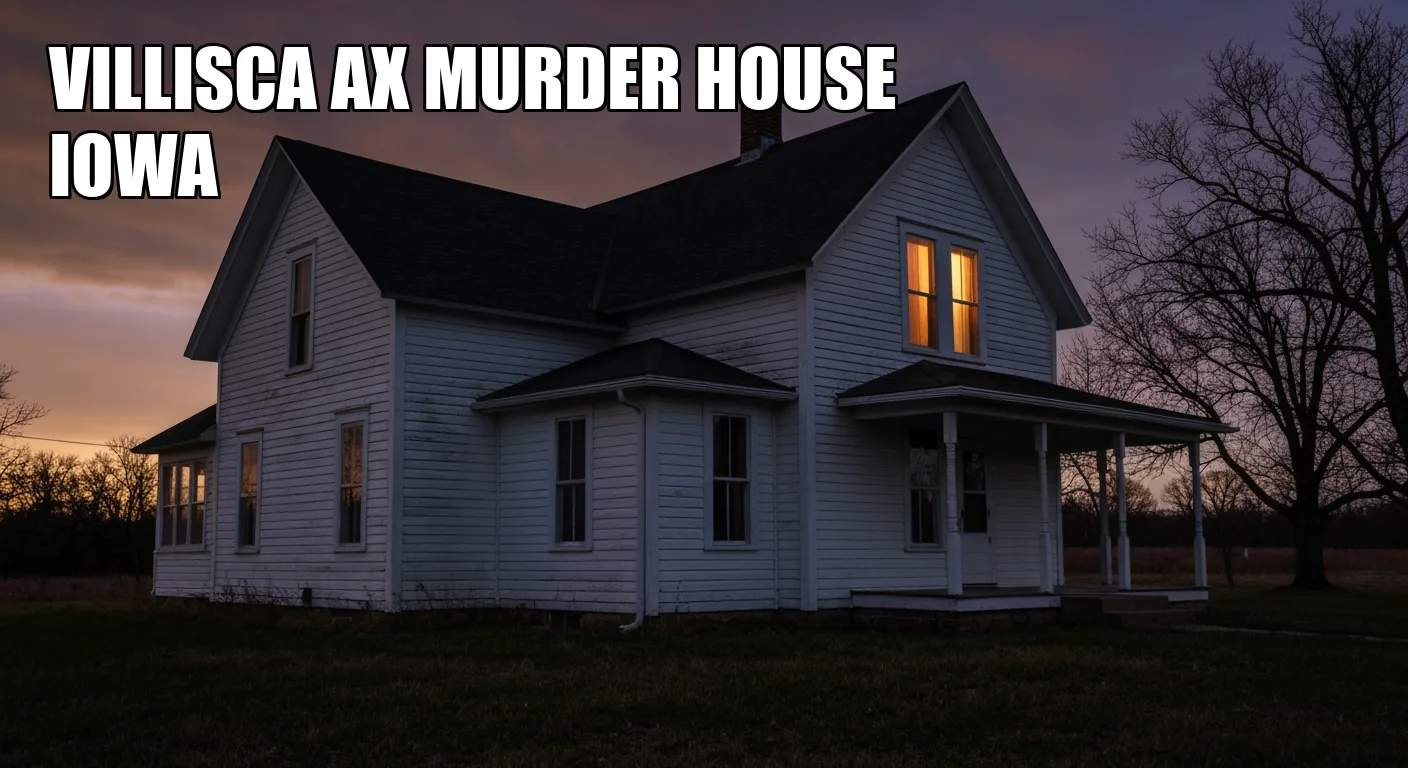
The chilling silence of Villisca, Iowa, belies the horror that unfolded on a summer night in 1912. Eight souls—the Moore family and two young guests—were brutally bludgeoned in their sleep, their killer never found. This isn't just a historical footnote; it’s a gaping wound in American criminal history, an enduring mystery that has transformed a modest farmhouse into a magnet for those seeking answers, or at least, an encounter with the lingering unknown. The sheer savagery, committed while everyone slept, leaves an unsettling impression that no historical text can quite convey.
Visiting the Villisca Ax Murder House isn't your typical museum tour; it’s an immersion. While daytime self-guided or private guided tours (priced at around $300 for up to 10 people, with additional guests at $20 each) offer a glimpse into the home's preserved state, the real draw, and where the house earns its "scream" reputation, is the overnight stay. Imagine sleeping in the very rooms where these horrific events transpired. The house, intentionally kept without modern plumbing or electricity (though modern beds and restroom facilities are provided for overnight guests), forces a confrontation with the past in a way few other sites can.
Many visitors, myself included, find themselves drawn to the Children's Room, also known as "the dark room" or parlor bedroom, where the Stillinger sisters met their tragic end. This particular spot is legendary for its reported paranormal activity: whispers, the sounds of children playing, and the chilling belief that the train whistle at 2 a.m. triggers a residual event, echoing the night of the murders. Renting an EMF detector (available as an add-on) might appeal to the truly curious, though sometimes the human imagination is the most powerful detector of all. What I found particularly striking was not just the potential for spectral activity, but the profound sense of concentrated dread and inexplicable sadness that permeated certain areas, a psychic residue that felt far more tangible than any fleeting apparition.
Does the house capitalize on tragedy? Undeniably. Is it a "tourist trap"? Not entirely. The raw, unvarnished state of the house, combined with its genuine historical significance, elevates it beyond mere spectacle. It offers a unique, if profoundly unsettling, opportunity to connect with an unsolved mystery that has haunted the American consciousness for over a century. Just be prepared for a night where the only light might be from your flashlight, and the only sounds are those you can’t quite explain.
Amityville's Shadow: A Tourist's Dilemma with a Famous, Private Horror
The name "Amityville" instantly conjures images of malevolent forces, a house with glowing red eyes, and a family fleeing in terror. This notoriety stems from the brutal murders committed by Ronald DeFeo Jr. in 1974, where he slaughtered his parents and four siblings as they slept. The sheer depravity of the crime is undeniable, a stark reminder of the darkness that can lurk within seemingly ordinary homes. DeFeo’s claim of "voices in his head" only added to the macabre folklore that would soon engulf the property.
However, the Amityville Horror House became a global phenomenon not solely because of the murders, but due to the subsequent, sensationalized account of the Lutz family, who briefly occupied the house a year later. Their terrifying 28-day ordeal, documented in a best-selling book and multiple films, transformed 112 Ocean Avenue into *the* iconic haunted house. George Lutz's consistent 3:15 a.m. awakenings, reports of green slime, strange odors, and the chilling imaginary friend "Jodie" with glowing red eyes, captured the public's imagination like few other stories. It was a masterclass in combining true crime with supernatural dread.
This is where reality sharply diverges from expectation for the average traveler. Despite its immense fame, the Amityville Horror House is, unequivocally, a private residence. It is not open to the public for tours, overnight stays, or even a peek inside. In an effort to deter relentless tourists, the address was even changed from 112 to 108 Ocean Avenue. You can drive by, perhaps catch a glimpse of the façade from a distance, but that’s the extent of your access. Expecting to walk through the infamous red room or the boathouse where Missy Lutz reportedly saw her demonic friend will lead only to disappointment.
So, is it worth seeking out? For true crime buffs and film history enthusiasts, perhaps a drive-by for a photo op offers a moment of connection to a cultural touchstone. But for those hoping for a genuine paranormal experience or even a structured historical tour, this location is a non-starter. What remains is a powerful testament to the influence of media, how a story can overshadow a place, and how the myth can become more accessible than the reality itself.
Axe, Acquittal, and Apple Pie: The Lizzie Borden House Experience
"Lizzie Borden took an axe and gave her mother forty whacks..." The nursery rhyme, crude yet indelible, encapsulates one of America's most infamous murder mysteries: the brutal 1892 slayings of Andrew and Abby Borden in Fall River, Massachusetts. Lizzie, Andrew's daughter, was tried and acquitted, yet her name remains inextricably linked to the crime, ensuring the house's perpetual notoriety. The true genius of the place, from a macabre tourism perspective, is its embrace of this ambiguity.
Today, the Lizzie Borden House operates as both a museum and a bed-and-breakfast, a rather unique business model built directly upon an unsolved double homicide. Daytime tours (around 90 minutes, available 10 a.m. to 4 p.m. daily) guide you through the grim details of the crime, providing access to all rooms. But, like Villisca, the ultimate experience is spending the night. Room rates range from $200 to $250, with an extra $20 for a "historically-accurate" breakfast, thoughtfully updated for modern palates (thankfully, no mutton or johnnycakes). It’s a fascinating blend of historical reenactment and paranormal pursuit.
For the truly brave, the John V. Morse Room—where Abby Borden was discovered—is the prime spot for an overnight stay. This is the room most frequently associated with cold spots, unexplained sounds, and a profound sense of unease. Guests can choose from a variety of accommodations, including the Lizzie & Emma Suite (the sisters' actual rooms) or the Andrew & Abby Suite, which boasts its own private bathroom. What's surprising here is the almost playful marketing of the tragedy, juxtaposing the horror with the comfort of a B&B. It challenges visitors to confront their own morbid curiosity.
Hundreds stay overnight annually, with thousands taking tours. This sustained popularity stems from more than just the ghost stories; it’s the enduring fascination with Lizzie herself – was she a wronged innocent or a cunning killer? The house offers a tangible connection to that tantalizing question. My advice? Book well in advance, especially if you’re aiming for October, when whole-house rentals jump to $2,000, underscoring the demand for this peculiar blend of history and fright. It's a place that forces you to question your own ethics, even as you enjoy a surprisingly comfortable stay amidst profound tragedy.
Cleveland's Gothic Labyrinth: Franklin Castle's Endless Tragedies
Step into Cleveland's Franklin Castle, and you're stepping into a narrative steeped in relentless sorrow. Built in 1881 by banker Hannes Tiedemann, the mansion quickly earned its reputation as Ohio's most haunted house through a series of almost unbelievable tragedies. Tiedemann’s daughter, his mother, three infants, and his wife Louise all died within its walls in quick succession. This sheer accumulation of grief, coupled with later discoveries of hidden human bones (some claims debated, others disproven by historians), has woven a dense tapestry of lore around the property.
Beyond the family's woes, the castle accrued other, more fantastical rumors: bootlegging during Prohibition, a hideaway for German cultural organizations, and even suggestions of foul play on Tiedemann's part. While many of these tales remain unverified, they’ve contributed to the mansion's mystique, creating layers of historical and paranormal intrigue that are almost overwhelming. It’s a place where fact and folklore are so intertwined, it’s often impossible to separate them.
In 2025, Franklin Castle will open its doors more widely, offering both daytime Mysterium Tours (guided evening tours from 5:45 p.m. to 7:30 p.m. exploring all floors and the basement) and overnight stays. Rooms are priced between $175 and $245 per person on weekends, with intriguing names like Emma's Rooms and Louise's Dwelling. This is not for the faint of heart; participants for tours must be at least 21 (or 16 with a parent) and sign waivers, highlighting the intensity of the experience. It's not just a walk-through; it's an invitation to confront the castle's purported "energetic amplifier" quality, believed by some paranormal researchers to enhance visitors' emotional states.
What truly sets Franklin Castle apart is the sheer volume of reported phenomena: the cries of a little girl, organ music, heavy footfalls, and the chilling sight of a faceless spirit on the third floor. Guests often report unusually vivid and disturbing dreams, a phenomenon many find more unsettling than outright apparitions. Bringing a notebook and pen to record experiences during an overnight stay is a testament to the expectation of activity. While the many deaths are tragic, the *why* of its haunting feels more generalized, a swirling vortex of energy rather than specific, residual events. It’s a place where the past feels less like an echo and more like a constant, unsettling presence.
New Orleans' Royal Street Darkness: The LaLaurie Mansion's Unseen Anguish
No journey into America's dark history would be complete without a stop at the LaLaurie Mansion on Royal Street in New Orleans' French Quarter. This imposing edifice isn't famed for a single murder, but for sustained, horrific cruelty. In 1834, a fire, allegedly set by an enslaved person hoping to draw attention to their plight, exposed Madame Delphine LaLaurie's unspeakable abuses. The discovery of tortured individuals in unimaginable conditions cemented her infamy and stained the mansion with a history of profound suffering. This is where the term "scream house" takes on a far more literal and painful meaning.
Unlike many other locations, the LaLaurie Mansion remains a private residence, steadfastly closed to individual tours or overnight stays. This inaccessibility might disappoint some, but it hardly diminishes its chilling aura. Instead, the mansion has become a focal point for nearly every New Orleans ghost tour, with prices ranging from $22 to $40 for a 1.5- to 2-hour experience. For private groups seeking a deeper dive, bespoke ghost, voodoo, and vampire tours, including the mansion, can run around $800. What's often overlooked by casual visitors is that you're not just looking at a building; you're standing before a monument to human barbarity.
Even from the street, the mansion exudes an overwhelming sense of anguish and despair. Paranormal investigators report sensing concentrated psychic energy and residual spiritual presence, a direct echo of the trauma inflicted within its walls. The lack of interior access forces a different kind of engagement – one that relies on historical imagination and empathetic understanding of the untold suffering. It serves as a stark reminder that some horrors are so deeply embedded, their presence can be felt without a single ghost needing to appear. The genuine historical tragedy, rather than sensationalized ghost stories, is its most powerful draw.
Where the Line Blurs: McKamey Manor – A Modern Torture Chamber?
Finally, we arrive at a different beast entirely. While not a historical "scream house" in the traditional sense, McKamey Manor in Summertown, Tennessee, and Huntsville, Alabama, represents the extreme end of the "haunted experience" spectrum, blurring the lines between immersive entertainment and something far more disturbing. This isn’t a place where you encounter historical ghosts; it’s a place where you confront your own limits, or rather, where those limits are systematically pushed.
Admission is a 50-pound bag of dog food, a seemingly innocuous detail that belies the intensity of the experience. Participants must sign a daunting 40-page waiver, undergo medical exams, background checks, and psychological evaluations. The reported 6- to 10-plus hour ordeal promises a potential $20,000 prize for completion, a prize that, as of recent reports, no one has ever claimed. The rules are strict: no cussing, drinking, smoking, running, or eating, with infractions leading to forfeiture of prize money. This isn't just a haunted house; it's a meticulously engineered psychological and physical endurance test.
McKamey Manor has ignited fierce controversy, with over 200,000 people petitioning against it, describing it as "a torture chamber under disguise." This isn't about residual hauntings or spectral activity; it's about intentional, extreme discomfort and fear induced by human design. My personal view? While the desire for extreme experiences is undeniably human, this enterprise pushes beyond entertainment into a morally ambiguous territory, commodifying pain and humiliation. It questions *why* we seek such terror, and at what cost. It challenges the conventional wisdom of what a "haunted attraction" can or should be, forcing a critical examination of exploitation versus entertainment.
The allure of these scream houses, whether historical or modern, reveals a deep-seated human fascination with the dark, the unknown, and the boundaries of our own courage. From the chilling, unsolved mystery of Villisca to the media-fueled legend of Amityville, the commodified tragedy of Lizzie Borden, the relentless sorrow of Franklin Castle, and the profound historical anguish of LaLaurie Mansion, each offers a unique window into our collective psyche. They challenge us to look closer, to question what we see, and to confront the echoes of the past that still resonate, sometimes, with a terrifyingly human scream.
More Film & TV Locations
These guides identify the real building or site first, then explain what visitors can still see in person.
Ultimate Guide to Visiting the Iconic Scream House & Filming Locations in California
Where is the original Scream House located?
The original Scream House, known as Stu Macher's house or Spring Hill Estate, is located at 3871 Tomales-Petaluma Road in Tomales, California, approximately 70 miles north of San Francisco in Northern California wine country.
Where is the OG Scream house?
The OG Scream house is situated in Tomales, California at the Spring Hill Estate, which served as the filming location for the final 42-minute party scene of the 1996 original Scream film.
What city is the Scream House in?
The Scream House is located in Tomales, California, a small rural town in Marin County within the Sonoma County wine region.
Scream house location history
The house was built in 1990 for owners Jack and Carolyn MacPhail but was selected by filmmaker Wes Craven for Scream filming in 1996, becoming iconic in horror cinema history as the setting for the film's climactic scenes.
Where is Sydney's house in Scream located?
Sidney Prescott's house in Scream is located at 1820 Calistoga Road in Santa Rosa, California, which served as one of the main filming locations for the 1996 film.
What city does Scream take place in?
Scream takes place in Woodsboro, a fictional town in Northern California that was created by blending multiple real Sonoma County locations including Tomales, Santa Rosa, Glen Ellen, Healdsburg, and Sonoma.
Is Woodsboro a real town in California?
No, Woodsboro is a fictional town created for the Scream film series; however, the movie was filmed across several real Northern California towns in Sonoma and Marin counties.
Did the Scream cast like filming?
The Scream cast found filming challenging but rewarding, particularly during the intense 21-night shoot of the final party scene at Stu's house; director Wes Craven's technique of keeping the Ghostface voice actor hidden and using live voice calls on set made the filming genuinely scary for actors and enhanced their performances.
Can you visit the house from Scream?
Yes, visitors can tour Stu Macher's house (Spring Hill Estate) through guided tours that start at approximately $108.55 per person; special overnight experiences are also occasionally offered, though availability is limited and must be booked through official channels like Eventbrite.
What Norwegian city is home to Munch's Scream?
Oslo, Norway is home to Edvard Munch's famous painting 'The Scream,' which is housed in the National Museum of Oslo on Ekeberg Hill overlooking the city.
How long did it take to film the final scene at Stu's house?
The final 42-minute party scene at Stu Macher's house, known as 'Scene 118' on set, took 21 consecutive nights to film from sunset to sunrise, making it one of the most grueling sequences in horror cinema.
What other Scream filming locations can visitors see?
Visitors can explore multiple Scream filming locations including the Sonoma Community Center (Woodsboro High School) at 276 E. Napa Street in Sonoma, the town square in Healdsburg, and various residential homes throughout the Sonoma County region.
How far is Tomales from San Francisco?
Tomales is approximately 55-70 miles north of San Francisco, making it roughly a 1-1.5 hour drive from the city, accessible via US-101 North and Highway 1.
When is the best time to visit the Scream House?
October is an ideal time to visit due to special Halloween-themed events and overnight stays, though tours are typically available year-round depending on scheduling; check official Spring Hill Estate websites or Eventbrite for current availability.
What should I know before visiting Scream filming locations?
Most Scream locations are on private property or public spaces; Stu's house requires paid tours, some locations like the video store no longer exist, and visitors should plan a 1-2 day trip to see multiple locations across Sonoma County towns.
Why This Page Exists
Maison builds place guides to help readers plan a real visit or understand a real site. When a page makes present-day access, booking, or visitor claims, those details are revised against public-facing source material and editorial review. For the wider standards behind that work, see methodology.
The Cornerstone Brief
One historic place, once a week — what it is, why it matters, whether it's worth going. No filler, no paid placements.
Coming soon. Unsubscribe any time.
We use cookies to enhance your experience. By continuing to visit this site you agree to our use of cookies.