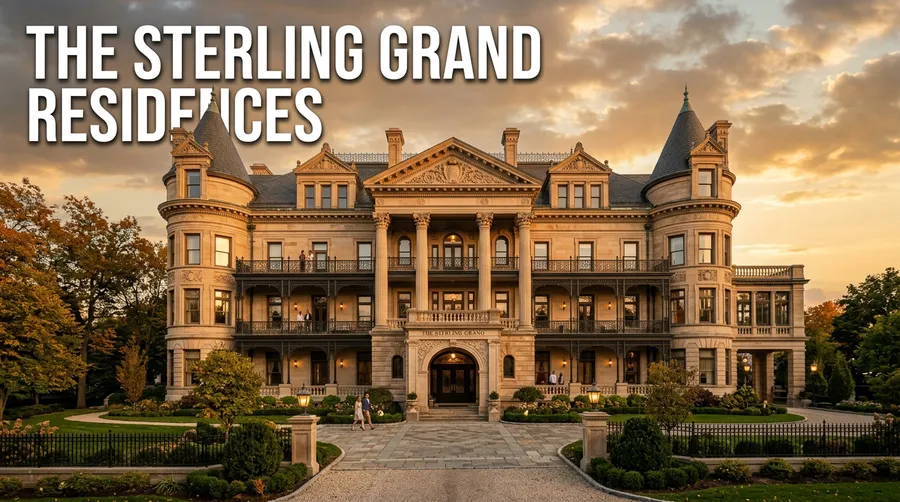
Photo by Nathan Prescott for Cornerstone Mansion · February 27, 2026
Find Nearby Hotels
Book Flights
For years, I’ve walked the hallowed halls and crumbling foundations of America's past, always seeking the story beneath the surface, the whispers only an observant traveler catches. The grandiosity of our nation’s oldest structures, be they Gilded Age mansions or stoic civic buildings, often leaves us in awe. But what happens when these magnificent edifices, built for a bygone era, no longer serve their original purpose? Do we let them decay into picturesque ruins, or worse, succumb to the wrecking ball? Thankfully, a new wave of adaptive reuse projects is charting a more enlightened course, proving that the past isn’t just something to look at; it’s something to live in, to learn from, and to continually redefine.
This isn’t about merely slapping a new coat of paint on an old building. We're talking about radical transformations—post offices becoming luxury residences, courthouses evolving into senior living facilities, and city halls integrating cutting-edge technology while maintaining their century-old charm. It’s a delicate dance between honoring what was and embracing what can be, often with surprising results for those of us who appreciate the weight of history underfoot. What these ambitious projects reveal, beyond their sheer architectural splendor, is a profound commitment to sustainable urban development and a nuanced understanding of what "preservation" truly means in the 21st century.
Beyond the Postcard: Reimagining Our Grand Old Structures
How many times have you admired an old building, perhaps a stately federal structure or a once-bustling civic center, and wondered about its future? These aren’t just monuments; they’re vital pieces of our urban fabric, brimming with stories. The alternative to demolition, adaptive reuse, breathes new life into these behemoths, sparing them from landfill and integrating them into contemporary community needs. It's a complex undertaking, rife with engineering puzzles and philosophical debates about authenticity, but the payoff can be extraordinary.
Consider the intricate challenges of embedding modern infrastructure—think high-speed internet, efficient HVAC systems, and, crucially, comprehensive accessibility—within walls that predate electricity, let alone Wi-Fi. It’s not simply about hiding wires; it’s about rethinking how spaces function without compromising their historical integrity. This often involves innovative solutions, like routing new systems through disused chimneys or adding discreet elevators that respect the original design. These are the unsung triumphs that don't make it into most tourist brochures, but they're the heart of what makes these sites relevant today.
Boston's Ledger: From Stamped Mail to Stylish Living
Wandering through Boston’s financial district, the imposing twin structures at 10 Liberty Square and 12 Post Office Square instantly command attention. Originally completed in 1898, these six-story monoliths served as a U.S. Post Office, their buff-colored granite façade and intricate cast-iron ornamentation a testament to late 19th-century civic pride. They speak of a time when the postal service was the digital backbone of the nation, handling millions of letters and packages. Now, as of early 2025, these buildings are undergoing a remarkable metamorphosis, transforming into 70 residential units above a retained ground-floor postal function.
What’s truly fascinating here is the juxtaposition of private luxury living with an enduring public service. While the upper floors are now exclusive residences, the ground-floor postal lobby remains fully active, preserving a direct connection to the building’s original role. For the curious traveler, this means you can actually step inside the historic lobby, send a postcard, and appreciate the scale and craftsmanship that once defined everyday civic interaction. It’s a clever compromise: the exterior, including that magnificent façade, remains completely intact, ensuring the 19th-century streetscape character endures.
The integration of modern amenities within this historic shell is nothing short of an engineering marvel. Imagine a cloud-managed HVAC system with occupancy sensors, precisely optimizing energy use, all cunningly concealed within existing duct shafts. And for accessibility, a new glass elevator shaft has been added, almost imperceptibly, in a rear courtyard, while corridors throughout were widened to a 48-inch clear width—a critical detail for modern mobility standards—and accessible bathrooms integrated without disturbing the ornate plaster cornices. This adherence to Massachusetts' stringent stretch energy code, with LED lighting and intelligent shading, ensures a comfortable, efficient experience that previous generations could only dream of.
A Southern Belle's Second Act: New Orleans' Courthouse as Home
Journeying south to the humid embrace of New Orleans, you’ll find a different, yet equally compelling, narrative unfolding on St. Louis Street. Here stands a majestic Greek Revival courthouse, erected in 1855, with its grand portico and towering Corinthian columns. It's the kind of building that makes you pause, imagining legal dramas unfolding under its imposing gaze. After decades of various uses, including a stint as a school, this architectural gem reopened in February 2025 as a 168-unit assisted living facility.
The sheer audacity of converting a courthouse, a bastion of public justice, into a private residence for seniors is astounding. Yet, the transformation has been handled with remarkable sensitivity. The grand portico and those iconic Corinthian columns have been meticulously restored, their original limestone blocks cleaned and repointed to gleam as they once did. Most strikingly, the central courtroom, with its soaring coffered ceiling and elegant marble pilasters, has been artfully repurposed as a communal dining and lounge space. Imagine enjoying your morning coffee in a room where pivotal legal battles once took place—it's an unexpected and deeply moving experience, bridging past public life with present private comfort.
Naturally, the practicalities of modern care dictate significant interventions. Barrier-free access is paramount in an assisted living environment, achieved here through gently sloping ramps at all entry points and pneumatic-seal door operators on the heavy original doors. Wheelchair-accessible restrooms are now seamlessly integrated into former jury rooms. And the technology, while invisible, is profound: passive infrared occupancy controls in corridors ensure lights activate only when needed, while Wi-Fi-enabled fall-monitoring sensors are discreetly integrated into ceiling fixtures, offering peace of mind. It’s a testament to how deep preservation can reach, ensuring seismic reinforcement is concealed within existing wall cavities, protecting residents while maintaining historic aesthetics.
Portland's Enduring Civic Heart: A Modern Pulse in an Old Beat
Our final stop takes us to the Pacific Northwest, specifically Portland, Oregon, where the city’s landmark City Hall, designed by Whidden & Lewis in 1895, has undergone its first full interior renovation in over a century, completed in early 2025. Unlike Boston or New Orleans, this project isn't about adaptive *reuse* in the sense of a new function, but rather a deep adaptive *renewal*, ensuring its continued viability as a bustling civic center. This building is a treasure trove of late 19th-century craftsmanship, with stunning marble floors, intricate oak woodwork, and sweeping grand staircases.
The preservation efforts here were painstaking, bordering on an archaeological endeavor. Every inch of marble flooring was meticulously conserved, the oak woodwork painstakingly restored and repolished to its original luster. Even the original dais configuration in the council chamber was reinterpreted with reversible seating modules, ensuring historic sightlines were preserved, an impressive feat for a space that needs to be flexible for modern meetings. This project speaks to a community’s commitment to its civic identity, investing heavily to ensure the heart of its governance remains both functional and inspiring.
Modernity, however, has not been left at the door. Integrated digital room-scheduling panels now grace chamber entrances, and energy-efficient VRF (Variable Refrigerant Flow) HVAC units—a highly efficient system for heating and cooling individual zones—have been cleverly retrofitted into attic spaces, controlled by a centralized smart hub. Accessibility, too, received significant upgrades: a custom-fabricated lift now provides assisted access beneath the dais, hearing-loop systems ensure clarity for all in the council chamber, and tactile wayfinding strips have been subtly added to the original terrazzo flooring. All lighting fixtures were replaced with tunable white LEDs, hidden behind restored plaster moldings, which adjust to daylight sensors and occupancy controls for optimal light quality and energy savings. For visitors, this means a truly enhanced experience, often without even realizing the extent of the modernization around them. The best time to visit is during regular weekday business hours, perhaps catching a public meeting, to fully appreciate the blend of tradition and innovation. Expect security checks upon entry, but the beauty of the interiors is well worth the minor inconvenience.
The Unseen Costs and Uncommon Triumphs of Preservation
What these three distinct projects—a residential conversion, an assisted living facility, and a civic renewal—collectively illuminate is the powerful, often hidden, story of how we relate to our architectural heritage. They challenge the romantic notion that historic buildings must remain untouched time capsules. Instead, they argue, compellingly, that true preservation often demands purposeful change. Yet, it also raises questions for the traditional traveler: how does one "visit" a private residence or a senior living facility? The experience shifts from entering a museum to appreciating a living, breathing part of a city's ongoing narrative.
The triumphs are clear: these buildings avoid demolition, they contribute to urban density, and they demonstrate that beauty and utility are not mutually exclusive. But what's the cost? Sometimes, it's the loss of broad public access to certain spaces, transforming a formerly public domain into a private one. In Boston, you can see the lobby; in New Orleans, you're observing from the outside, appreciating its role in the streetscape. Only Portland’s City Hall offers a fully accessible, renovated interior experience for the general public, where the past and present merge seamlessly for *everyone*.
Ultimately, these projects are more than just architectural feats; they are profound statements about resilience and adaptability. They teach us that our history isn't just about what was, but about how we choose to carry its spirit forward. They compel us to look closer, to ask questions beyond the surface, and to appreciate that the most exciting stories of preservation often lie in the subtle interplay between an old stone wall and a new digital sensor. When you encounter one of these revitalized landmarks, don't just admire its facade; ponder its journey, and consider what it truly means for history to live on, in ways both obvious and wonderfully unexpected.
Heritage Highlights: Your Guide to Historic Buildings Nearby
What defines a historic building?
A historic building is one recognized for its architectural, cultural, or historical significance, often listed on a local, state, or national register.
What is the definition of a historic building?
A historic building is officially defined as a structure at least 50 years old with documented significance in history, architecture, or culture.
How long until a building is considered historic?
In the U.S., a building generally must be at least 50 years old and retain its historic integrity to be considered for designation.
What is classed as a historic building?
A building is classed as historic if it meets criteria for age (typically 50+ years) and significance in architecture, events, or persons.
Is a 100 year old home considered historic?
Yes; homes 100 years old typically qualify as historic provided they retain original features and have recognized significance.
Can I renovate a historic home?
Renovations are allowed but usually require approval from preservation authorities to ensure changes respect the building’s historic character.
Is it hard to sell a historic home?
Selling can take longer due to niche buyer interest and potential renovation restrictions, though strong market demand exists in many areas.
What are the cons of owning a historic home?
Cons include higher maintenance costs, renovation restrictions, and possible requirements for specialized materials or contractors.
Do historic homes hold their value?
Historic homes often retain or increase in value due to scarcity and community support for preservation.
What are the advantages of owning a historic home?
Advantages include unique character, potential tax incentives, community prestige, and often strong resale value.
What are the best historic districts to visit near me?
Popular districts include those listed on the National Register in your state, such as Colonial Williamsburg in Virginia or the French Quarter in New Orleans.
When is the best time of year to visit historic buildings?
Spring and fall offer mild weather and special preservation events, making them ideal for touring historic sites.
How much does it cost to tour a historic building?
Tour costs vary widely, typically ranging from free admission at public sites to $10–$25 for guided tours at major landmarks.
Are there any requirements to enter historic buildings?
Most sites require general admission tickets; some may have age restrictions or require advance reservations for guided tours.
We use cookies to enhance your experience. By continuing to visit this site you agree to our use of cookies.