Famous Residents

America's Hidden Histories: Stays Near UNESCO Gems

Most travel guides peddle the same old stories, ticking off landmark after landmark without ever quite capturing the *feel* of a place. But if you’ve spent decades traversing this continent, digging into its layered past, you start to understand that true immersion comes not from grand pronouncements but from quiet moments—often, within the very walls that once sheltered historical figures or pivotal events. This is especially true when attempting to experience America's UNESCO World Heritage Sites. Let's be blunt: finding a genuinely historic, privately-owned residence offering overnight stays *within* a UNESCO-designated boundary in the United States is akin to spotting a unicorn at a historical reenactment. Our UNESCO sites tend to be vast national parks, archaeological wonders, or publicly managed monuments like Independence Hall. They aren't generally set up for your weekend getaway in a statesman's former bedroom. This crucial distinction often gets lost in the glossy brochures. My quest, then, has always been to unearth those rare, exceptional properties *adjacent* to these hallowed grounds—places where the history isn't just displayed, but truly lived, breathed, and slept in. These are the places that offer more than just a convenient location; they offer an authentic echo of the past, often surprising you with their depth and character.

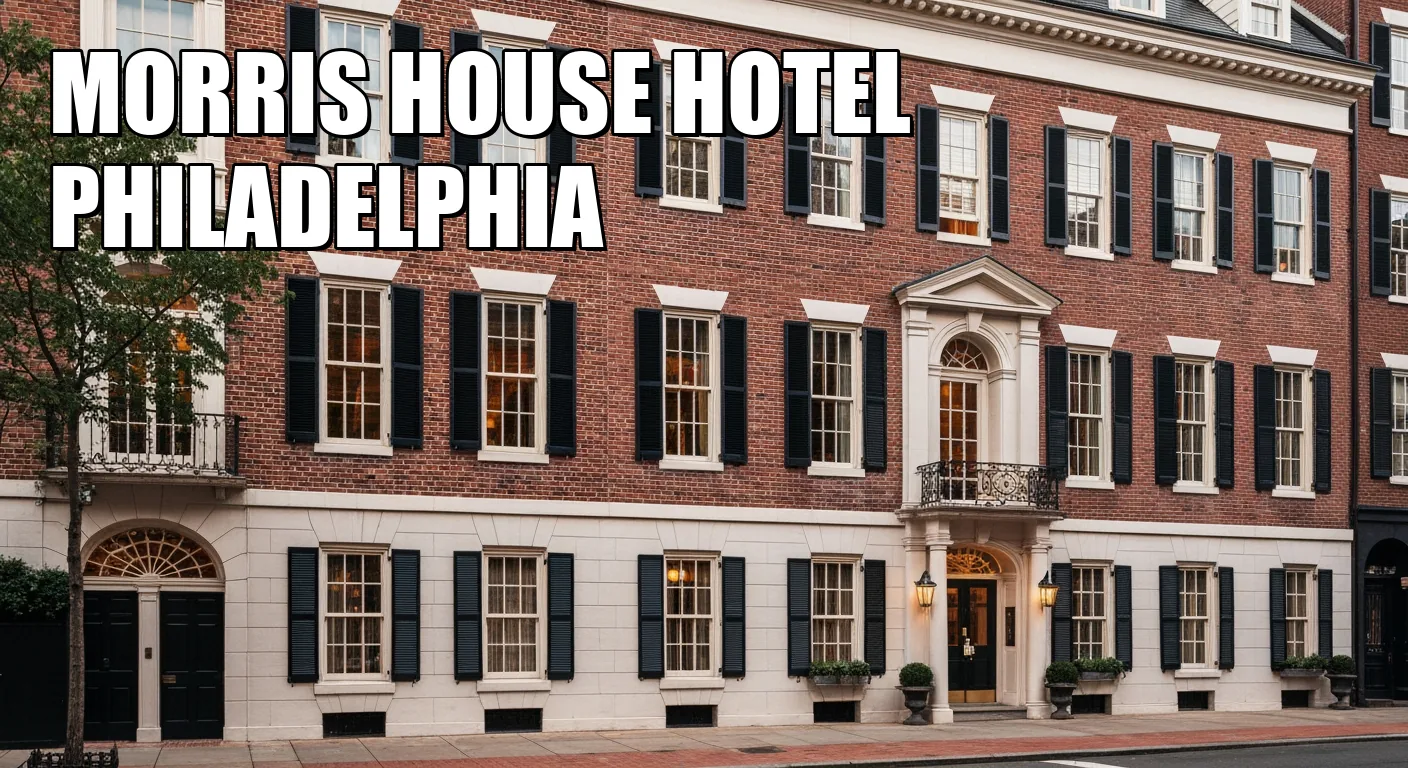
Where Philadelphia's Founding Whispers Linger: Morris House Hotel

Stepping into the Morris House Hotel in Philadelphia feels less like entering a hotel and more like being invited into an impeccably preserved Federal-style townhouse, which, in fact, it is. Built in 1787, the year the U.S. Constitution was debated and signed just a few blocks away, this National Historic Landmark sits in charming defiance of the modern city around it. Its proximity to Independence Hall, a UNESCO World Heritage Site designated in 1979 for its profound role in shaping American democracy, isn't merely a geographical convenience; it's a direct, palpable connection. You’re not just *near* history; you're immersed in its very domestic texture. What struck me most about the Morris House wasn't its period furniture or manicured garden, but the sense of quiet continuity. While other guides might focus on its luxury amenities, the real story here is how intimately it allows you to connect with the Georgian and Federal periods. Guests should expect a nuanced experience, not a theme park. Practical advice for visiting: this isn't a bustling chain. It’s a boutique gem. Booking directly via phone at (215) 922-2446 or their website, morrishousehotel.com, is always the smartest play. Expect nightly rates between $299 and $358, which, for its location and historical pedigree, feels remarkably fair. The Wedding Suite, at a spacious 590 square feet, is particularly sought-after, offering a glimpse into the grander domestic life of early Philadelphia. Visiting during the shoulder seasons—late November through early December or January and February before Presidents' Day weekend—often yields the best rates and fewer crowds, allowing for a more reflective exploration of the historic district.

Unlocking the Past in Old City: Thomas Bond House Bed & Breakfast

A few blocks east of the Morris House, nestled deeper into Philadelphia's Historic District, you'll find the Thomas Bond House Bed & Breakfast. Constructed in 1769, this property predates the Morris House and is another National Historic Landmark, offering a distinctly different, perhaps even more personal, window into colonial Philadelphia. This isn’t a grand hotel; it’s an intimate B&B, and that's precisely its charm. My initial expectation was a quaint, perhaps overly fussy, experience, but what I found was a genuine warmth and a deeper connection to the pre-Revolutionary era. The Thomas Bond House stands as one of the city's oldest Federal-period residences, placing you literally steps from where the very foundations of the United States were laid. It’s an ideal base if you want to walk through history, rather than just drive past it. You're still adjacent to Independence Hall, but here, the focus shifts from grand civic architecture to the daily lives of the city's early inhabitants. What often goes unmentioned in typical travel literature is the sheer joy of waking up in a room that feels authentically old, not merely decorated to look so. The Deluxe Queen Suite is a consistent favorite. Rates typically range from $194 to $250+, making it a slightly more accessible option than some of its counterparts, especially if you book well in advance. Direct booking via phone at (215) 923-8523 or thomasbondhousebandb.com is highly recommended. Consider a weekday visit in early spring or late fall to truly savor the quiet streets of Old City, before the summer tourist deluge.

From Warehouse to Welcome: Penn's View Hotel's Unique Perspective

Imagine a building that started life as a bustling shipping warehouse in 1828, then became a hardware store, and now, a historic hotel. That’s the intriguing trajectory of Penn's View Hotel, sitting right at the edge of Philadelphia's Historic District, almost within shouting distance of Independence Hall. It's a different beast entirely from the more genteel Morris House or Thomas Bond House. Here, the history isn't about powdered wigs and declarations, but about trade, commerce, and the gritty, industrious spirit of a burgeoning American port city. This isn't your typical "historic home" experience; it's a dive into Philadelphia's mercantile past, offering a unique counterpoint to the more familiar narrative of founding fathers. I’ve always found it offers a refreshing shift in perspective—a reminder that history isn’t just about grand political gestures, but also about the economic engines that fueled a nation. While some might dismiss its 19th-century origins as less "colonial," its story is equally vital to understanding the city's growth. The Jacuzzi King Suite or the King Patio Suite with Delaware River views are the suites to aim for, often fetching $191 to $250+. Booking directly through their website, pennsviewhotel.com, or calling 215-922-7600 is straightforward. Planning your visit for a mid-week stay outside of major holiday weekends is always prudent; this area can get surprisingly lively on Friday and Saturday nights.

Experiencing Moravian Heritage in Bethlehem: Hotel Bethlehem's Suites

Shift your gaze from the bustling urbanity of Philadelphia to the serene, meticulously planned community of Bethlehem, Pennsylvania, home to the Moravian Church Settlements—a newly minted UNESCO World Heritage Site designated in July 2024. This site celebrates a unique Protestant denomination, the Moravians, and their distinctive communal living, educational practices, and missionary work. Directly across from the grand Historic Hotel Bethlehem, you'll find the "Suites at 462," a carefully preserved historic building that extends the hotel's hospitality tradition, which dates back to 1741 on this very site. The suites themselves offer a fascinating blend of historical preservation and modern comfort, capturing a slightly later, Industrial Era aesthetic that speaks to Bethlehem's rich manufacturing past. What many conventional guides fail to convey is the sheer *atmosphere* of Bethlehem itself—it's a living, breathing historical document, not just a collection of buildings. Walking its streets, particularly in the quiet of an early morning, provides a tangible connection to the Moravian ideal of community and craftsmanship. The Hideaway Suite, a generous 750 square feet, is particularly appealing, though it typically requires a minimum 3-night stay and can run from $331 to $400+. This isn't a quick stop; it's an invitation to settle in and truly absorb the Moravian story. Booking via hotelbethlehem.com or calling 866-367-6829 is your best bet. Avoid the popular Christmas market season unless you thrive on crowds; for a true historical immersion, aim for early fall or late winter.

Adobe Aesthetics and Artistic Echoes: The Historic Taos Inn

Venturing far from the East Coast, the Historic Taos Inn in Taos, New Mexico, offers an entirely different kind of immersion—one steeped in indigenous culture and the rugged beauty of the Southwest. Located near Taos Pueblo, a UNESCO World Heritage Site that holds the unique distinction of being the only living Native American community with such a designation, the Inn isn’t just a place to sleep; it’s a cultural touchstone. Originally built in the late 1800s as a private residence for English land baron Arthur Manby, it was later owned by Dr. Thomas Paul Martin and his wife before its transformation into Hotel Martin in 1933. The Taos Inn transcends mere accommodation; it’s a gathering place, a living museum of the region's artistic and spiritual soul. What surprised me on my first visit was how effortlessly it blends the historical with the vibrant present, serving as a hub for local artists, musicians, and travelers alike. Unlike some historic properties that feel frozen in time, the Taos Inn hums with a contemporary energy while honoring its past. Its adobe architecture and eclectic furnishings reflect the unique blend of Native American, Spanish, and Anglo influences that define Taos. The King Suite, at 473 square feet and often equipped with three beds, is a popular choice, with rates typically ranging from $150 to $250+. Direct booking through taosinn.com or calling (575) 758-2233 is advised. To experience the Pueblo and the Inn with fewer crowds, plan your visit for spring (April-May) or fall (September-October). Be aware that Pueblo visits sometimes have restrictions or closures, so always check their official website before you go. These five properties, each distinct in its history and ambiance, offer more than just a place to lay your head. They are gateways, allowing you to not just observe but to genuinely inhabit a slice of American history, all while remaining within easy reach of some of the nation's most treasured UNESCO World Heritage Sites. My advice for anyone planning a trip for late 2025 through early 2026: always contact these establishments directly. Their online booking systems are reliable, but a quick phone call can often reveal specific deals or insights into the best times to visit, especially as prices frequently adjust with demand and seasonal shifts. The quiet moments, the unexpected details, and the genuine sense of place are what truly elevate a trip from a mere vacation to a profound journey—and these residences deliver exactly that.

Exploring America's UNESCO World Heritage Treasures: Your Complete Guide

What is the history of UNESCO world heritage sites?
The World Heritage Convention was adopted by UNESCO on November 16, 1972, created to protect cultural and natural heritage of outstanding universal value for present and future generations worldwide.
What is the only city with 4 UNESCO World Heritage sites?
Córdoba, Spain is the city with 4 UNESCO World Heritage sites, including the historic centre, Great Mosque of Córdoba, Medina Azahara, and others recognized for their cultural significance.
What country is home to the most UNESCO world heritage sites?
Italy is home to the most UNESCO World Heritage sites with 60 sites, followed by China with 59 sites as of 2025.
What is the difference between a World Heritage Site and a UNESCO site?
A World Heritage Site is a specific designation by UNESCO for places of outstanding universal value that meet selection criteria, while UNESCO site may refer more broadly to any site recognized or supported by UNESCO.
What are the 5 Cs of World Heritage?
The Five Cs are: Credibility (establishing credible World Heritage criteria), Conservation (protecting sites), Capacity-building (developing expertise), Communication (sharing knowledge), and Communities (involving local populations in preservation).
What are the 5 pillars of UNESCO?
UNESCO operates through five major programme areas: Education, Natural Sciences, Social and Human Sciences, Culture, and Communication/Information to promote peace and sustainable development.
What is UNESCO cultural property?
UNESCO cultural property comprises physical items that are part of a group or society's cultural heritage, including cultural landscapes, historic buildings, works of art, archaeological sites, and collections of libraries, archives, and museums.
How many UNESCO World Heritage sites are in the United States?
The United States is home to 26 UNESCO World Heritage sites, including natural wonders like Yellowstone and Grand Canyon, and cultural landmarks like Independence Hall and the Statue of Liberty.
Which state has the most UNESCO World Heritage sites in the USA?
Pennsylvania has the most UNESCO World Heritage sites of any US state with 3 sites: Independence Hall in Philadelphia, Fallingwater in Mill Run, and Moravian Church Settlements in Bethlehem.
What are some must-visit UNESCO World Heritage homes in the United States?
Notable UNESCO World Heritage homes include Fallingwater (Frank Lloyd Wright's architectural masterpiece in Pennsylvania), Hollyhock House (also by Frank Lloyd Wright in Los Angeles), and the Robie House (Chicago), all part of the 20th-Century Architecture of Frank Lloyd Wright inscription.
What is the best time to visit UNESCO World Heritage sites in the USA?
Spring (April-May) and fall (September-October) offer the most pleasant weather and manageable crowds for visiting most UNESCO sites; however, timing varies by location and climate zone.
How much does it cost to visit UNESCO World Heritage sites in the United States?
Many UNESCO sites in the US are free or low-cost (national parks require passes around $80 annually), while specific house museums vary; Independence Hall is free, but Frank Lloyd Wright properties typically charge $15-25 per tour.
How do I apply for a site to become a UNESCO World Heritage site?
Countries must nominate sites through their State Party UNESCO office; the site must be on the country's tentative list, meet at least one of ten selection criteria, and demonstrate outstanding universal value.
Are UNESCO World Heritage sites accessible to visitors with disabilities?
Accessibility at UNESCO sites is regulated by individual countries and states under their legal frameworks; many sites have made accommodations, but requirements vary significantly from location to location.
What should I know before visiting a UNESCO World Heritage site?
Check the specific site's operating hours and seasonal closures, book guided tours in advance when available, bring appropriate gear for the climate, and respect preservation guidelines while visiting these protected cultural and natural treasures.