America's Mansard Roofs: An Expert's Guide
To truly understand a city, you must look up. Far too often, we rush through historic districts, snapping photos of facades and street-level details, completely missing the architectural drama unfolding above. And nowhere is that drama more compelling in the United States than in the realm of the mansard roof. This isn't merely a roofing style; it's a profound statement, a declaration of intent, and a window into America's post-Civil War desire for European sophistication and grandeur.
What exactly defines a mansard, and why did it become such a dominant feature across the American landscape? Originating in 17th-century France and popularized by architect François Mansart (from whom it eventually took its name), this four-sided gambrel-style hip roof is characterized by each of its sides having two slopes, the lower slope being steeper and punctured by dormer windows. By the mid-19th century, particularly during France's Second Empire under Napoleon III, it became *the* architectural fashion, synonymous with new construction and urban renewal. America, always eager to emulate European elegance, wholeheartedly embraced the style for its perceived sophistication and, perhaps more pragmatically, for the additional usable attic space it cleverly provided. These were not just roofs; they were architectural crowns, often lavishly ornamented, that transformed the skyline and announced an era of prosperity and ambition.
### Beyond the Paris Look-Alike: Renwick Gallery's Grand Statement
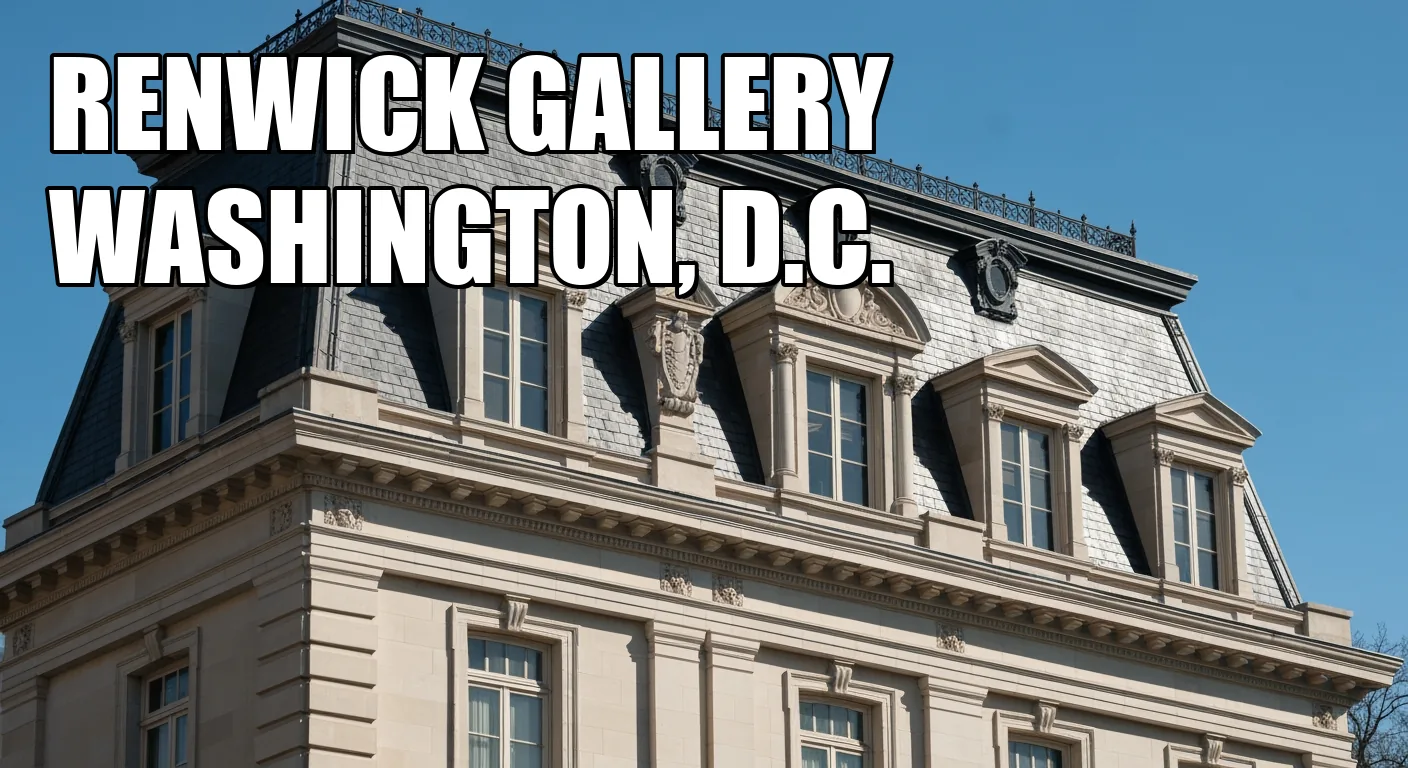
Standing majestically across from the White House, the Renwick Gallery in Washington, D.C., instantly transports you to a Parisian boulevard. This isn't hyperbole; its lead architect, James Renwick Jr., directly modeled it after the Louvre's Tuileries addition. Completed in 1874, this building embodies the Second Empire style with an almost textbook precision, from its elaborate dormer windows to the paired columns that punctuate its façade.
Visiting the Renwick today, you might easily overlook its original purpose. It was, in fact, America's first purpose-built art museum, a groundbreaking vision by William Wilson Corcoran. Imagine the audacity of such a structure in post-Civil War Washington! What strikes me most about the Renwick isn't just its beauty, but its resilience and adaptability. After serving as an art gallery, it housed the U.S. Court of Claims, a stark contrast to its artistic beginnings. Its transfer to the Smithsonian in 1965 and the subsequent $30 million restoration completed in 2015 speak volumes about the enduring value placed on this architectural gem. They didn't just fix it; they painstakingly restored original wood and plaster moldings, even uncovered hidden vaulted ceilings. A visit here, especially on a quiet weekday morning, allows you to appreciate not only the art within but also the meticulous craftsmanship of its own historic envelope. Look closely at the slate work on the mansard — it's a masterclass in texture and geometry.
### Philadelphia's Mighty Tower: A Mansard Crown for Civic Power
Think of Philadelphia City Hall, and your mind likely leaps to its colossal scale and the towering statue of William Penn presiding over the urban grid. But cast your gaze downward from Penn's bronzed feet, and you’ll discover an equally impressive architectural feat: the intricate mansard roofs that crown various sections of this monumental structure. Built between 1871 and 1901, this isn't just a building; it's a testament to the grand civic aspirations of a rapidly industrializing nation.
The mansard roofs here, designed by John McArthur Jr. and Thomas Ustick Walter, are not a single, monolithic entity. Instead, they form a complex series of configurations around the central tower and the four pavilion corners. You’ll notice the patterned slate work, the decorative brackets, and the sheer number of ornate dormer windows, each a small masterpiece in itself. What often gets missed by the casual observer, overwhelmed by the building’s 250+ sculptures by Alexander Milne Calder, is the way these roofs integrate into the overall sculptural program. They are part of the building's narrative, not just its lid. Getting up close, perhaps taking one of the building's historical tours, offers a chance to see the details of the ongoing preservation efforts. The $80-100 million restoration project that began in the 90s, meticulously addressing everything from masonry to the Penn statue itself, reminds us that structures of this magnitude are not static monuments, but living entities requiring constant care.
### The EEOB: When Bureaucracy Dressed in Baroque Finery
Few buildings provoke such an immediate, almost visceral reaction as the Eisenhower Executive Office Building (EEOB) in Washington, D.C. Located next to the White House, its exuberant Second Empire style, with its mansard roof composed of granite, slate, and cast iron, initially drew considerable criticism. Many found Supervising Architect of the Treasury Alfred B. Mullett's creation too "busy" or "French" for American tastes when it was completed in 1888. This building truly challenges the notion that all historical architecture was universally beloved in its time.
What makes the EEOB's mansard so extraordinary isn't just its scale, but the sheer material diversity and the intricate craftsmanship. It's a symphony of textures: the rough granite against the smooth slate, the delicate ironwork lending a filigree touch. The complex dormer arrangements and decorative brackets aren't mere flourishes; they speak to a mastery of French Second Empire ornamentation rarely seen on such a grand, governmental scale in the U.S. While now housing White House staff, its original purpose as the home for the State, War, and Navy Departments gives you a sense of its historic weight. Visitors today won't typically get past its heavily guarded exterior, but the ability to simply walk around it and appreciate its controversial beauty from all three façades is an experience in itself. The extensive modernization efforts, particularly the HVAC and security system upgrades, demonstrate the difficult tightrope walk of preserving a National Historic Landmark while adapting it for modern, high-stakes functionality.
### A Grand Old Hotel's Enduring Charm: New York's Mansard Legacy
New York City’s architectural narrative is often dominated by Art Deco skyscrapers and gritty pre-war tenements, but tucked away on Broadway, a different kind of grandeur persists. The Grand Hotel, completed in 1868 and designed by Henry Engelbert, stands as a testament to the Second Empire style's early penetration into the city's hospitality landscape. Now known as the 31st Street Broadway Hotel, its continued operation, despite significant changes around it, is an unexpected delight.
Its most striking feature, beyond the white marble façade and slender cast-iron columns at ground level, is the elaborate two-story mansard roof. This isn't a modest attic space; it's a significant design element that adds considerable height and visual interest. The steeply pitched lower section, characteristic of the style, is particularly evident. An unexpected insight here is the building's clever corner chamfer design, which allowed for windows on every floor, affording guests strategic views down bustling Broadway – a practical luxury in a burgeoning metropolis. This hotel was originally built for residential families, a concept that seems almost quaint today amidst New York's ever-evolving hotel scene. It speaks to a different era of urban living and tourism, one where the building itself was as much a destination as the city it stood in.
### Syracuse University's Foundation: More Than Just a Roof
Head upstate to Syracuse, New York, and you'll find a different kind of mansard legend: the Hall of Languages at Syracuse University. This building isn't just an academic structure; it's the very cornerstone of the university, its first and most recognizable edifice, dedicated in 1873. Designed by Horatio Nelson White, its mansard roof isn't as overtly flamboyant as some of its urban counterparts, but it carries a quiet dignity that belies its functional importance.
The slate mansard roof here covers the central section, rising 3.5 stories, flanked by more modest 2.5-story wings. The dormer windows are classic Second Empire, providing light and air to what were once crucial spaces within the fledgling university. One of the less common facts about its early days is that the building originally contained east and west towers housing large water tanks – a testament to the practical challenges of campus life in the late 19th century. The interior underwent a comprehensive $4 million restoration in the late 1970s, which completely rebuilt the interior while carefully preserving the elegant exterior. This is a common challenge for historic buildings: how do you modernize infrastructure and accessibility (like lowering the first floor for elevator access) without sacrificing historical integrity? The Hall of Languages offers a masterclass in this balancing act, demonstrating that even a university building can be a work of art and a deeply symbolic place.
### Ambrose Burnside's Spirited Home: A Rhode Island Gem
Sometimes, the most compelling architectural stories are found in unexpected corners, away from the grand civic centers. In Providence, Rhode Island, the General Ambrose E. Burnside House, built between 1866 and 1867 and designed by Alfred Stone, offers a uniquely flamboyant take on the Second Empire style, particularly in its roofline. This isn't a mansard that merely caps a building; it *defines* it.
The distinctive concave slate mansard roof, with its undulating wall surfaces and a unique rounded corner bay, truly sets this house apart. It’s built of pressed brick with Nova Scotia stone detailing, exuding a sense of robust opulence. Upon its completion, it was hailed as "one of the finest modern houses in Providence," and it’s easy to see why. The swooping lines of the roof convey a sense of motion and artistry that transcends mere functionality. What's particularly poignant about the Burnside House is its later history. After the Union General's death, it transitioned from a private residence to a haven for the vulnerable, housing the Providence Children's Friend Society House for Aged Women and the Providence Association for the Benefit of Colored Children. This transformation from a symbol of individual success to a place of community welfare adds profound layers to its architectural narrative. While it was converted to apartments after World War II and, as of a few years ago, required significant restoration, its exterior on Benefit Street remains a powerful, if slightly melancholic, reminder of an era of architectural exuberance and evolving social purpose.
### Hotel del Coronado: Where Victorian Meets Pacific Mansard Majesty
Venturing to the sun-drenched shores of Coronado, California, you might not immediately think of the Second Empire style, yet the iconic Hotel del Coronado, begun in 1887, weaves its influence into a distinctly American Queen Anne Victorian tapestry. Designed by James W. Reid of the Reid Brothers firm, "The Del" isn't a purist example, but a fascinating fusion of styles crowned by its distinctive roofs.
While often described as Victorian, its prominent cone-shaped pavilion tower and the oceanfront Ballroom tower both feature shingled, mansard-style roofs with double-hung windows and multiple tiers of dormers. These elements inject a subtle but undeniable Second Empire grandeur into its otherwise whimsical Victorian character. The hotel, famous for its white scalloped wood shingles and soaring red roofs, cost a staggering $600,000 to build – roughly $17 million today – and was equipped with cutting-edge technology, including early electric lighting supervised by Thomas Edison himself. It's a place where history feels alive, having hosted presidents, royalty, and even Marilyn Monroe during the filming of "Some Like It Hot." The recent $400 million restoration, which is about 25 times its original cost, speaks volumes about its enduring legacy and the immense value placed on preserving such a unique American landmark. When you visit, don't just admire the beach; take a moment to look up at those vibrant red roofs and consider the architectural ambition that brought a touch of European sophistication to the Pacific coast.
From the halls of government to grand hotels and stately homes, the mansard roof has left an indelible mark on America's architectural heritage. These structures aren't just old buildings; they are stories etched in stone, slate, and wood, echoing ambitions and innovations that continue to fascinate. Exploring them isn't merely a visual exercise; it's an opportunity to connect with the past on a deeper, more meaningful level, seeing what lies beyond the ordinary guidebook descriptions.
The Complete Guide to Mansard Roof Architecture in America
What is the history of mansard roof architecture?
The mansard roof originated in 16th century France and was popularized by French architect François Mansart in the 17th century, but gained prominence in America during the Second Empire style craze between 1860 and 1890, particularly in major cities like New York where it was seen as fashionable and very French. The distinctive four-sided, double-sloped design was originally created in Paris as a solution to city building restrictions that taxed additional stories, making it an appealing way to maximize living space in urban environments.
Where are the best locations in the United States to see mansard roof architecture?
New York City has the most impressive concentration of mansard roofs, with 19 Second Empire properties registered on the National Register of Historic Places, including the iconic Grand Hotel at Broadway and 31st Street. Other top destinations include Boston and Worcester, Massachusetts (14-15 properties each), Cambridge, Massachusetts (14 properties), and Washington, D.C. (13 properties), all featuring stunning examples of Second Empire architecture from the 1860s-1890s era.
What architectural features define a mansard roof?
A mansard roof features a four-sided design with two distinct slopes on each side: a steep lower slope and a gentler upper slope or nearly flat section, creating maximum interior space. The roof typically includes multiple dormer windows punched through the lower slope to light the interior attic space, and often features decorative elements like cornice details, balustrades, and stone carvings around the dormers.
How much does it cost to replace or install a mansard roof?
Replacement costs typically range from $15,000 to $50,000+ depending on home size, with per-square-foot costs ranging from $8 to $20+ and higher for premium materials like slate ($15-$30 per sq ft). For smaller homes under 2,000 sq ft, expect $18,000-$28,000, while medium homes (2,000-3,500 sq ft) typically cost $30,000-$45,000, and larger or historic homes can exceed $50,000.
What materials are best for mansard roofs?
Popular material options include asphalt shingles ($5-$8 per sq ft), slate tiles ($15-$30 per sq ft for elegance and longevity), standing-seam metal roofing ($10-$18 per sq ft), and synthetic slate or composite materials that provide slate appearance at lower cost. Modern installations often use lightweight, durable materials like architectural shingles or metal to handle the steep angles and extreme weather exposure unique to mansard designs.
What are the main advantages of mansard roof design?
Mansard roofs maximize living space by creating usable attic area without adding building stories, provide timeless aesthetic appeal that adds property value, and offer versatility for future renovations and dormer additions. The design also provides excellent opportunities for creative window placement and skylights to bring natural light into upper-floor spaces.
How do mansard roofs differ from hip and gable roofs?
Unlike hip roofs where all sides slope downward to walls, or gable roofs with only two triangle-shaped slopes, mansard roofs feature a unique dual-slope design on all four sides with a steep lower section and flatter upper section. This distinctive design creates more interior headroom and usable space than traditional pitched roofs while providing the architectural distinction that made Second Empire style so popular in 19th-century America.
What is the recommended maintenance schedule for mansard roofs?
Mansard roofs should be inspected at least twice yearly—in spring and autumn—with regular gutter cleaning to maintain proper drainage. Homeowners should check for damaged or missing roof tiles, monitor flashing and joint seals, inspect the flat roof section for water pooling, and address any issues promptly, as the complex dual-slope design requires more attention than simpler roof styles.
What are common problems with mansard roofs?
Common issues include water penetration and leaks (due to complex flashing requirements), flat roof section maintenance problems, snow accumulation on the flat top that can lead to leaks or buckling, and damaged slate or tile that's expensive to replace. The steep angles also make these roofs challenging and costly to work on compared to standard roof designs.
Are there guided tours of mansard roof architecture?
Yes, numerous cities offer Gilded Age architecture tours that showcase mansard roof buildings, including Gilded Age walking tours on New York's Upper East Side ($150+ per person), Boston's architecture tours of Back Bay and Beacon Hill, and historic Georgetown architecture tours in Washington, D.C. Many tours operate seasonally and can be booked through major travel platforms like Viator and TripAdvisor.
Which museums feature mansard roof architecture?
The Renwick Gallery in Washington, D.C., now part of the Smithsonian Institution Museum of American Art, is the first Second Empire building constructed in the United States (completed 1859) and features a prominent mansard roof. Newport Mansions in Rhode Island also offers audio tours of Gilded Age properties, while the Hower House Museum in Akron, Ohio features Second Empire style with tours available Friday-Saturday from 12-3 PM during the 2025 season.
Can I add a dormer to a mansard roof?
Yes, mansard roofs are highly adaptable to dormer additions, with shed dormers commonly used to add headroom and functionality while maintaining the roof's distinctive profile. When designing dormers, it's important to measure the roof's unique shape carefully and ensure the dormer complements the existing lines and angles to preserve the home's architectural character.
How long does a mansard roof typically last?
Longevity depends on materials used—asphalt shingles last 15-20 years, metal roofing lasts 40-60+ years, and slate tiles can last 75-100+ years with proper maintenance. Historic mansard roofs like those at the War Memorial Opera House in San Francisco (nearly 100 years old) demonstrate durability, though regular maintenance and repairs are essential for extended lifespan.
What is Second Empire architectural style?
Second Empire is the architectural style that flourished in America from 1860-1890, characterized by its defining mansard roof, elaborate ornament, strong massing, and French influence inspired by Napoleon III's redesign of Paris. The style was popular for both grand residential mansions and public buildings, representing post-Civil War American wealth and fascination with French culture.
Are historic mansard roofs protected by preservation laws?
Many mansard roof buildings are listed on the National Register of Historic Places and are subject to historic preservation guidelines that often require maintaining original roof materials and design when undertaking restoration projects. Recent preservation efforts, such as the War Memorial Opera House 2025 mansard roof replacement project, emphasize using historically appropriate materials like zinc cladding to match original lead-coated copper while addressing deterioration issues.