Bed & Breakfast

America's Oldest Taverns: Beyond the Brochure

Find Nearby Hotels

Book Flights

There’s a particular kind of magic that hums within the aged timbers of America’s oldest tavern inns. It’s a low thrum of whispered conversations, clinking pewter, and the ghosts of grand ideas taking root over a tankard of ale. For decades, I’ve chased that feeling, traversing the country to experience these living relics, hoping to find a place where I could not only dine but truly *sleep* within history’s embrace. What I’ve discovered, however, is a landscape far more nuanced than any glossy travel brochure would have you believe.

Most travelers imagine stepping back in time, ordering a meal from a crackling hearth, then retiring to a creaking four-poster bed where George Washington himself might have snoozed. While that dream isn't entirely a myth, the reality is that many of these celebrated "historic inns" have, over the centuries, shed their lodging function, evolving instead into restaurants, museums, or simply enduring pubs. Understanding this distinction is paramount if you're hoping for an actual overnight stay, not just a historical meal.

The Elusive Overnight: Where History Still Offers a Bed

After countless miles and inquiries, it’s clear: true historic tavern inns offering nightly lodging are a rare breed. They stand as testaments to incredible preservation efforts and a steadfast commitment to their original purpose. Two establishments, in particular, consistently deliver on the promise of an authentic colonial slumber, allowing you to not just visit history but literally sleep within its walls.

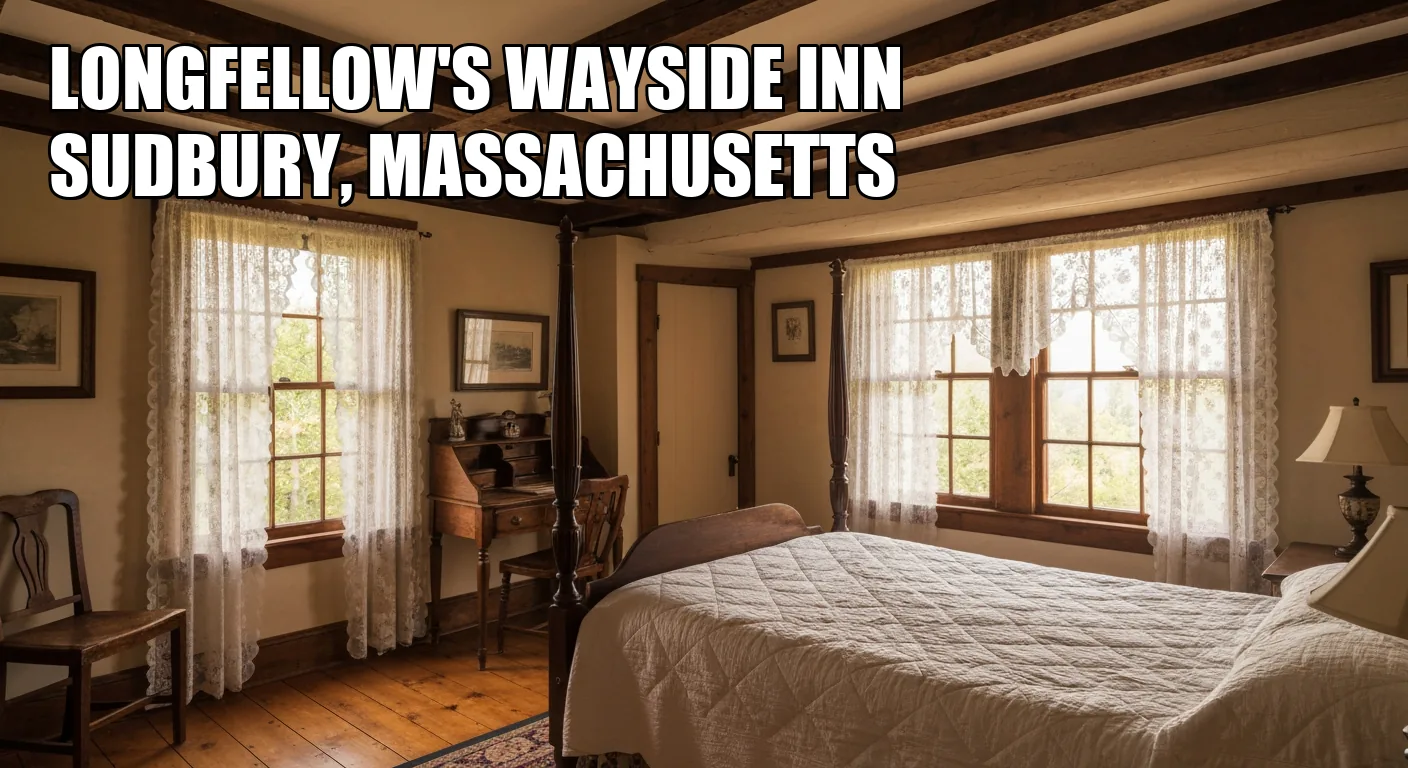
Consider first the Longfellow's Wayside Inn in Sudbury, Massachusetts. Established in 1716, it proudly claims the title of America's oldest continuously operating inn. Stepping inside feels less like entering a museum and more like arriving at a cherished, slightly eccentric great-aunt's house. The low ceilings, the scent of woodsmoke, and the uneven wide-plank floors tell a story without needing a plaque. For an unparalleled historical immersion, try to book Rooms 9 or 10; these are original to the inn’s 18th-century structure, boasting authentic post-and-beam details and floors that have creaked under centuries of footsteps. Expect to pay around $220-$240 per night for a double occupancy, which often includes a hearty breakfast – a small price, I think, for time travel. What often surprises people is its Revolutionary War significance; it served as a crucial storehouse for arms and provisions on the very morning of the Battle of Concord. Henry Wadsworth Longfellow, no stranger to historical resonance, found such inspiration here in 1862 that he made it the setting for his iconic 1863 poem "Tales of a Wayside Inn."

Then there’s the Red Fox Inn & Tavern in Middleburg, Virginia, a jewel in the heart of horse country, founded in 1728. This isn’t a single building but a charming cluster of five historic structures, each with its own character. The Red Fox truly allows you to feel the passage of time, from its stone walls to the flickering candlelight in its taverns. While it boasts 22 rooms, many guests gravitate towards the Tavern Suites (Rooms 1-5), located directly above the main tavern – a prime spot for soaking in the ambiance. Nightly rates here typically range from $292 to $497, fluctuating significantly with the seasons and local equestrian events, so planning is essential. What sets this inn apart, beyond its age, is its Civil War narrative; it functioned as both a Confederate headquarters and a hospital, a chilling thought as you walk its quiet halls. General J.E.B. Stuart and Colonel John Mosby even planned strategies here. And the guest list reads like a history book: a young George Washington surveyed the land nearby, and more recently, President John F. Kennedy and Elizabeth Taylor sought its historic comforts. It’s a vibrant, living piece of American history, not just a static display.

Iconic Echoes: When a Tavern Forfeits its Beds

Yet, for every Wayside Inn or Red Fox, there are a dozen other "historic taverns" that capture the imagination but no longer offer a pillow for your head. These places are crucial to understanding America’s past, and absolutely worth a visit, but arriving with visions of an overnight stay will lead to disappointment.

Take, for instance, the White Horse Tavern in Newport, Rhode Island, established in 1673. It proudly holds the title of America's oldest restaurant, a distinction well-earned by its enduring presence. The building itself is breathtaking, a time capsule of colonial architecture, and its role as a meeting place for Rhode Island's General Assembly and a billet for British troops during the Revolutionary War is undeniable. George Washington himself was known to grace its halls. However, despite its deep historical roots and impressive age, the White Horse Tavern operates solely as a restaurant today. You can savor a meal steeped in history, but you’ll need to find your accommodations elsewhere. The grandeur of its past is palpable, but its present function is purely culinary.

In the bustling heart of New York City, Fraunces Tavern stands as a magnificent monument, founded in 1762 as the Queen's Head Tavern. This isn't merely a restaurant; it’s a living museum, and the site of one of the most poignant moments in American history: George Washington’s emotional farewell to his Continental Army officers in the famous Long Room on December 4, 1783. Think about that for a moment: the weight of a new nation, the parting of comrades, all within those very walls. Thomas Jefferson and Alexander Hamilton also frequented this establishment. While you can certainly dine here and explore its fascinating museum floors, there are no guest rooms to book. Its significance lies in its powerful historical narrative and its role as a gathering place, not a lodging house. Don't expect a cozy corner suite; anticipate an immersive, educational experience.

And then, in Boston, Massachusetts, we find the Bell in Hand Tavern, dating back to 1795. As Boston's oldest continuously operating tavern, it quickly became a vital hub for patriots and political figures, including the esteemed Daniel Webster. Its lore includes the founder, Jimmy Wilson, Boston's last town crier, and mentions of Paul Revere and Sam Adams gracing its lively atmosphere. A quirky detail often overlooked by modern patrons: originally, the ale served was so thick it required *two* pewter mugs—one for the ale, the other for the froth! While the Bell in Hand offers a robust sense of history and a vibrant bar scene, it’s strictly a bar and restaurant. You'll enjoy a drink in a place steeped in Bostonian tradition, but your overnight stay will be at a nearby hotel. It’s a reminder that not all historic "taverns" are "inns" in the modern sense.

Navigating the Historical Labyrinth: What Guides Won't Tell You

Here’s the rub, the crucial insight you won't often find highlighted in generic travel guides: the term "historic tavern inn" is often a historical designation, not a contemporary operational description. Many of America's oldest taverns have simply adapted to modern commercial realities. The iconic Tun Tavern (1685), birthplace of the United States Marine Corps, for example, is entirely gone, its very site now swallowed by the relentless march of Interstate 95 in Philadelphia. The King George II Inn (1681) in Bristol, Pennsylvania, while still operating, is purely a restaurant. This isn't merely a semantic distinction; it’s a critical piece of information for planning your trip.

Moreover, the detailed, room-specific historical narratives that many travelers seek are not consistently documented across these centuries-old establishments. While we can pinpoint Washington's farewell in Fraunces Tavern's Long Room, or the original structure of Wayside Inn's Rooms 9 and 10, asking for "the room where General so-and-so slept" often leads to a shrug or a polite deflection. The historical record, particularly for 17th and 18th-century establishments, can be fragmented, making precise attribution challenging. So, manage your expectations; the ambiance of history is often more pervasive than specific room legends.

Beyond the Brochure: Unearthing Your Own Connection

So, how do you approach these historic treasures? With an open mind and a dash of detective work. My advice is to always call ahead, or at least check their current websites, specifically confirming lodging availability and rates. Visiting during the shoulder seasons—late spring or early fall—often provides a more intimate experience, especially in New England or Virginia, allowing you to appreciate the architecture and atmosphere without the peak tourist crush. Prices for the genuine inns, like Wayside and Red Fox, can fluctuate dramatically based on demand and local events, so book well in advance if you have specific dates in mind, particularly for weekend stays.

Ultimately, the journey through America's historic tavern inns is about more than just finding a bed for the night. It's about connecting with the narrative of a nation. Whether you’re dining in the oldest restaurant, raising a glass in a patriot’s haunt, or actually laying your head where history unfolded, each visit offers a unique lens into the past. It’s a tangible reminder that history isn't just something to be read in books; it's a living, breathing entity, sometimes even serving up dinner or, with a bit of luck, a truly unforgettable night’s sleep.

Your Guide to America's Historic Taverns and Inns: Essential Questions Answered

What is the oldest still operating restaurant in America?
The White Horse Tavern in Newport, Rhode Island, established in 1673, is the oldest continuously operating restaurant in the United States and is designated as a National Historic Landmark. It has served guests for over 350 years without closing.
What is the oldest western stagecoach stop in America?
The Talbott Tavern in Bardstown, Kentucky, built in 1779, is recognized as the oldest western stagecoach stop still in operation. According to tradition, it has never closed since opening and is likely the oldest surviving building in Kentucky.
Is Talbott Tavern historically significant?
Yes, the Talbott Tavern is highly significant as it was visited by notable figures including George Rogers Clark, Daniel Boone, future Presidents Andrew Jackson and Abraham Lincoln, and exiled French royalty Louis-Philippe. It is listed on the National Register of Historic Places and features original murals from the 1790s.
What is the origin of the tavern?
Taverns originated in colonial America following English traditions and were called 'ordinaries' in early settlements, evolving to the term 'tavern' by the end of the 17th century. The word derives from the Latin 'taberna,' meaning a shed, workshop, or stall, and served as gathering places for food, drink, news, and commerce.
What's the difference between an inn and a tavern?
The primary difference is that an inn is licensed to provide lodging to guests along with food and beverages, while a tavern traditionally serves only food and drink without providing overnight accommodation. Over time, the terms have become somewhat interchangeable in modern usage.
How did inns differ from taverns in colonial times?
Colonial inns offered guest accommodations and meals, while taverns served only food and drink as gathering places; inns were strategically located along travel routes for lodging, whereas taverns functioned as social and business centers within towns and communities.
What qualifies as a tavern?
A tavern is a business establishment where people gather to consume alcoholic beverages and food, typically featuring beer, wine, spirits, and roasted meats or other provisions. Historically, it served as a public meeting place for social, political, and commercial activities.
What qualifies as an inn?
An inn is a commercial establishment that provides lodging, food, and beverages to travelers; it typically features guest rooms and dining facilities, distinguishing it from a simple tavern by its capacity to house overnight visitors.
What makes a place a tavern?
A place becomes a tavern when it is licensed to serve alcoholic beverages and food to patrons who gather on the premises, distinguishing it from a private residence or retail establishment by its public nature and commercial purpose.
Why do they call it an inn?
The term 'inn' likely derives from its function as a place where travelers could 'come in' to rest, eat, and sleep during journeys; the word emphasizes hospitality and lodging, distinguishing these establishments from simple drinking establishments.
What is the best preserved historic tavern in the United States to visit?
Colonial Williamsburg in Virginia features multiple beautifully preserved and reconstructed historic taverns including the Christiana Campbell's Tavern and Shields Tavern, all maintained authentically and open to visitors throughout the year.
Which famous founding fathers frequented historic American taverns?
Thomas Jefferson, Benjamin Franklin, John Adams, George Washington, and Paul Revere were all known to gather in famous historic taverns like City Tavern in Philadelphia and Fraunces Tavern in New York City to discuss politics and business.
How much does it cost to visit historic taverns in the United States?
Costs vary widely: Colonial Williamsburg admission is $35 for a single day or $18 for a 2-day pass; individual historic taverns like Bell in Hand in Boston or Fraunces Tavern in New York City are free to visit and operate as functioning restaurants and bars, with dining costs only if you eat or drink.
What is the oldest continuously operating tavern in Boston?
Bell in Hand Tavern, established in 1795 by town crier James Wilson, claims to be America's oldest continuously operating tavern and still operates as a functioning restaurant and bar on Union Street in Boston.
Where can I visit a historically significant tavern that is still operating as a restaurant?
You can visit Fraunces Tavern in New York City (dating to the colonial era), Bell in Hand Tavern in Boston (1795), White Horse Tavern in Newport, Rhode Island (1673), or Talbott Tavern in Bardstown, Kentucky (1779), all of which operate as functioning restaurants and bars.