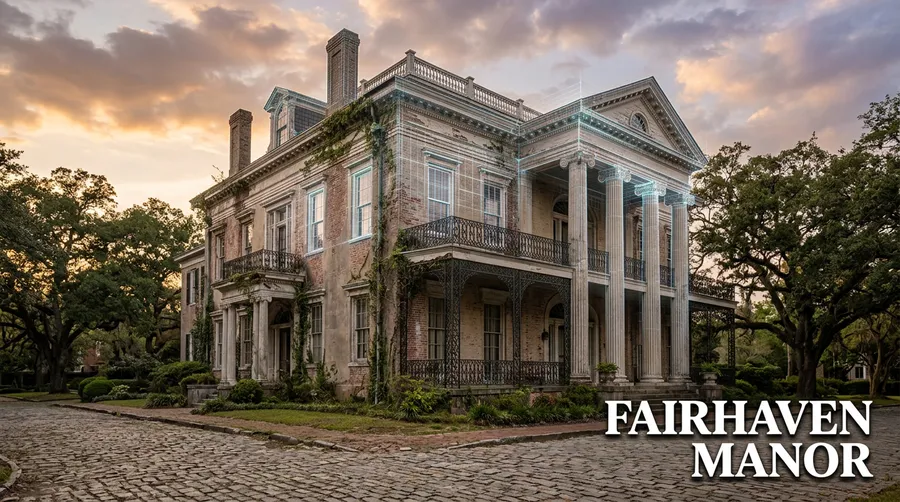
Photo by Sarah Chen for Cornerstone Mansion · December 2, 2025
Find Nearby Hotels
Book Flights
The worn cobblestones of colonial towns, the silent majesty of ancestral lands, the soaring ambition of early skyscrapers – these are the threads of America’s story. I’ve walked them all, notebook in hand, trying to peel back the layers that time and tourism often obscure. What’s truly fascinating now, however, isn't just the past itself, but the ingenious, sometimes surprising, ways we’re fighting to preserve it for future generations. Forget dusty archives; we're talking LiDAR, AI, and augmented reality, technologies poised to redefine how we experience our history, particularly at sites facing existential threats.
More than a simple stroll through a historic landscape, what if your visit could offer a glimpse into the very fabric of its decay and the innovative spirit battling against it? My recent explorations have taken me to places grappling with the forces of nature and neglect, where the future of preservation isn’t about just putting up a fence, but about creating digital twins and immersive narratives. This isn’t a dry lecture; it’s an invitation to see familiar landmarks, and perhaps some you’ve never considered, through a profoundly different lens.
Beyond the Dirt: Jamestown’s Shifting Sands of History
Jamestown, Virginia. The very name evokes images of brave (or desperate) English settlers, a foundational cornerstone of American identity. For many, a visit here means walking through reconstructed forts and historical exhibits, maybe a fleeting glance at the actual archaeological footprint where the original James Fort once stood. It can feel, at times, a little abstract, a little... *empty*, given the monumental weight of its history. You’re looking at dirt, often, and needing immense imagination to conjure the arduous lives lived there, the complex interactions with the Indigenous Algonquian peoples. This site, however, isn't just battling historical amnesia; it's literally battling the Atlantic Ocean.
Picture this: You’re standing on the banks of the James River, and in a generation or two, that very spot might be underwater. Sea-level rise, projected up to one foot by 2030, is a very real, very immediate threat to Jamestown's physical footprint. Shoreline erosion gnaws at the edges of archaeological discoveries, and storm surges threaten what remains of a once-bustling settlement. It’s a sobering thought, one that typical tourist brochures rarely dwell on. What makes Jamestown unique, beyond its historical primacy, is this ongoing, visceral struggle against nature, a struggle now being met with twenty-first-century tools. To truly appreciate Jamestown, you need to understand it not just as a static historical park, but as a dynamic, eroding shoreline.
The innovative preservationists here are deploying LiDAR scanning, using UAVs (unmanned aerial vehicles, or drones) twice a year to capture every contour of the topography, the subtle undulations of fort earthworks, and the precise layout of excavated foundations. This data isn't just for archiving; it’s building a real-time "digital twin" of the site, updated quarterly to track every millimeter of shoreline recession. Imagine seeing, on a screen, the land literally disappearing. Complementing this, AI-driven predictive decay modeling is training convolutional neural networks on historical erosion data, forecasting which segments of the palisade or foundations are most at risk, directing precious conservation efforts exactly where they’re needed most. This is proactive, not reactive, preservation.
For the visitor, this future holds fascinating possibilities. While currently you might need to stretch your imagination to see the early 17th-century life, new geolocated AR overlays, accessible via a mobile app, will reconstruct the bustling settlement activities, showing you where structures stood, how people moved, and critically, mapping out the sophisticated trade networks of the Indigenous Algonquian communities. This promises to bridge the gap between "dirt and imagination," placing you directly into the past while subtly highlighting the climate risks that threaten its physical present. If you plan a visit, consider going during the shoulder seasons—late April/early May or mid-September/early October—to avoid the sweltering summer heat and school-trip crowds. Parking is generally ample but can fill up fast on peak weekends. Arrive early, around 9 AM, to have a more contemplative experience before the tour buses descend.
Chicago's Hidden Colossus: A Skyscraper's Unseen Stories
Chicago is a city defined by its architecture, a veritable open-air museum of steel and glass. Yet, amidst the towering giants of the Loop, a quiet pioneer often goes unnoticed: the Ludington Building. Constructed between 1891 and 1892, it’s not as flashy as the Sears Tower (now Willis Tower) or as overtly decorative as some of Daniel Burnham’s later works. Most people walk past it, perhaps admiring the terracotta details for a fleeting moment, without grasping its pivotal role in the early skyscraper era. And that, in itself, is a shame.
What often gets lost in the rush of the Loop is the nuanced beauty of these early behemoths. The Ludington Building, with its innovative steel-frame construction and elegant Chicago School ornamentation, marked a turning point in architectural history. It's a structure that whispers stories of ambition, of pushing boundaries, and of the burgeoning industrial might of America. The issue isn’t just waning public engagement; it's outright invisibility for many. While less dramatic than a rising sea, redevelopment pressures in a constantly evolving urban core, coupled with the slow, insidious creep of deferred maintenance, pose a serious threat to the façade’s retention and the building’s structural integrity. This isn't a museum; it's a working commercial property, and that adds layers of complexity to its preservation.
To combat this, preservationists are deploying high-fidelity LiDAR and photogrammetry to create an incredibly detailed digital twin of the Ludington Building’s façade, capturing every ornate terracotta panel and the underlying steel framing. But here’s the clever part: AI-driven computer vision will analyze repeat scans to detect even micro-cracks and subtle mortar deterioration, allowing for predictive, preventative conservation rather than costly repairs after damage has taken hold. This shifts preservation from a reactive scramble to a strategic, data-informed process, ensuring the building’s long-term health.
Imagine stepping off the elevated train – a quintessential Chicago experience – and activating an AR historic overlay on your phone. This isn’t just a static image; it will reveal the building’s architectural evolution from its 1892 origins through its 1920s modifications, illustrating its role in the pioneering skyscraper movement right before your eyes. You’ll see the context of its initial construction, how it stood out, and how its neighbors have changed. A future "Skyscraper Stories AR kiosk" in the pedway network could even offer unique social media filters, allowing users to pose in period attire against historical backdrops – a surprisingly effective way to engage younger demographics who might otherwise overlook such a landmark. A quick tip for visiting: the best way to appreciate the Ludington is as part of an architectural walking tour. Many operate throughout the week, often starting in the late morning, offering context that’s impossible to glean on your own. You’ll pay a small fee for the tour (typically $20-$30), but the insights are invaluable.
Navigating Sacred Ground: Bears Ears, Where Land Speaks Volumes
Bears Ears Cultural Landscape in Utah isn't a "site" in the conventional sense, nor is it a single building. It is a vast, profound, and deeply sacred landscape spanning 1.35 million acres, a tapestry woven with thousands of archaeological sites, petroglyphs, ancestral dwellings, and traditional gathering places. For many, the closest they get is a scenic drive through the region, catching glimpses of iconic rock formations. But to truly experience Bears Ears is to engage with a profound sense of Indigenous history and ongoing stewardship, a challenge that transcends typical tourism. It’s an immersion, not a drive-by.
What makes Bears Ears unique, and often difficult for the casual visitor to grasp, is its sheer scale and the spiritual weight of its narrative, which is fundamentally tied to the land itself. This isn't a story told through plaques, but through the landscape, the sky, the wind, and the traditions of the Ute, Navajo, Hopi, Zuni, and other Pueblo peoples. The conventional wisdom around "visiting" often falls short here. It’s not about ticking off landmarks; it’s about respect, understanding, and a willingness to learn. The threats here are equally vast: accelerated soil erosion, invasive species proliferation altering delicate ecosystems, and unpredictable precipitation patterns exacerbated by climate change. There’s also the crucial risk of digital exclusion for the Tribal members whose heritage it represents, a silent threat to narrative sovereignty.
A truly groundbreaking approach to preservation is unfolding here, one that prioritizes community leadership. Tribal youth and elders are collaborating with preservation technologists to conduct community-led LiDAR mapping, documenting petroglyphs, ceremonial pathways, and traditional sites with unprecedented accuracy. This isn't just data collection; it’s an act of cultural reclamation and empowerment, ensuring that the narratives are owned and interpreted by those whose ancestors have called this land home for millennia. AI-enhanced environmental monitoring, fed by remote sensors, helps predict erosion hotspots and track the spread of invasive species, guiding targeted restoration efforts across this immense landscape.
For the visitor, the future promises an unparalleled depth of understanding. Imagine offline-capable AR experiences, narrated not just in English, but in Navajo, Ute, and Hopi languages, offering ancestral stewardship practices and cultural narratives right there on the land. This is particularly crucial given the often remote and internet-challenged nature of the area. A "traveling AR Bears Ears Story Bus" might visit regional schools and museums, bringing this sacred landscape’s stories to a wider audience while also collecting oral histories. If you plan to visit Bears Ears, understand that this is not a typical park with amenities. You need to be self-sufficient, respect the land, and educate yourself on appropriate visitation practices. Go during spring or fall to avoid extreme temperatures. There are no entrance fees, but consider supporting local Indigenous initiatives. This is a place to listen, to learn, and to leave no trace.
The Digital Guardians: How Tech is Reshaping Preservation and Engagement
It’s easy to dismiss technology in preservation as simply digitizing old documents, but what’s happening at these sites goes far beyond that. We’re talking about a fundamental shift in how we understand, protect, and interact with our heritage. The underlying strategic plan for preserving at-risk American historical sites isn't just about saving structures; it's about making history more accessible, more resilient, and ultimately, more relevant to a world increasingly shaped by digital experiences. The deployment of LiDAR-based digital twinning, augmented reality storytelling, and AI-driven predictive decay modeling isn't just futuristic; it’s a necessity in the face of escalating threats.
Consider the notion of digital obsolescence, a subtle but pervasive threat to our cultural memory. Fragile legacy documentation, proprietary software lifecycles, and data format decay mean that even digital records can be lost. These new strategies aim to create robust, evergreen digital twins that can withstand the passage of time and technological shifts. Then there's waning engagement, particularly among younger demographics. Generic historical narratives often fail to compete with the immersive nature of modern digital entertainment. AR experiences, like those planned for Jamestown or the Ludington Building, aren’t just cool gadgets; they are carefully crafted portals, drawing people into the past with a dynamism that traditional placards simply cannot match. They offer a unique way to bridge the gap between expectation and reality, showing you not just *what* was there, but *how* it functioned and *why* it mattered.
Crucially, these technological interventions aren't occurring in a vacuum. They are forging partnerships with academic institutions like the University of Virginia and University of Illinois Chicago, with tech giants such as Autodesk and Unity, and most importantly, with Tribal Nations like the Bears Ears Inter-Tribal Coalition. This collaborative framework ensures that the technology serves the history and the communities, rather than overshadowing them. Funding, too, is diverse, drawing from federal grants, tech-sector support, and even crowdfunding. It’s a holistic approach, recognizing that preservation in the 21st century requires more than just bricks and mortar; it requires bytes and foresight.
What to Expect, and How to See It All Anew
Visiting historic sites in 2025, and beyond, will be a dynamic experience, far removed from the static, sometimes dusty, encounters of the past. The goal of this ambitious five-year strategic plan, culminating in a national rollout by 2035, is to equip us with the tools to truly *see* our history, not just passively observe it. You’ll be able to compare what you expect from a site with the vibrant, digitally reconstructed reality, or even the scientific data tracking its decay. This isn't about replacing the physical experience; it's about enriching it, providing layers of context and insight that typical guidebooks simply cannot convey.
Imagine arriving at Jamestown, not just seeing earthworks, but activating an AR app that superimposes the palisade, the original buildings, and even the daily life of 1607 onto your view. You'll grasp the precariousness of their existence, how close they were to the encroaching river. Or in Chicago, pointing your phone at the Ludington Building and instantly seeing its original blueprint overlaid on its current façade, tracing its architectural lineage. And at Bears Ears, a powerful AR experience, narrated in the voices of its ancestral custodians, will transform vast landscapes into intimate stories, explaining the significance of a petroglyph panel or a ceremonial pathway.
My advice for future travelers? Embrace the tech, but don't let it replace your own observation. Use the apps, read the digital overlays, but also take time to simply *be* in these places. Feel the wind off the James River, marvel at the intricate terracotta details of a skyscraper, or stand in respectful silence within the grandeur of Bears Ears. The tech is a bridge, an interpreter, but the true connection still happens between you and the weight of history. Always check official park or site websites before you go for the most up-to-date information on operating hours, any potential timed entry requirements, or specific AR app availability. Costs for these future AR experiences might be bundled into general admission, or offered as a small separate purchase. These innovations aren't just for saving buildings; they're for saving stories, and inviting you into a deeper conversation with the past.
Timeless Treasures: Your Guide to the World's Historical Marvels
Most famous historical places worldwide
Sites like the Pyramids of Giza (Egypt), the Colosseum (Italy), and Machu Picchu (Peru) rank among the most famous historical places worldwide.
What are the top 10 most historic places in the world?
According to recent travel rankings, the top 10 are Machu Picchu, Tikal, the Pyramids of Giza, Angkor Wat, Petra, Stonehenge, the Colosseum, the Parthenon, Easter Island, and the Taj Mahal.
Which is the most famous historical place?
The Eiffel Tower in Paris is often cited as the single most famous historical landmark in the world.
What is the most famous place in history?
The Pyramids of Giza in Egypt, the only surviving Ancient Wonder, are widely regarded as the most famous place in history.
Which country is the most famous for its historical places?
Italy, with a record 60 UNESCO World Heritage sites, is the country most famous for its abundance of historical places.
Which country is no. 1 in history?
Italy tops the list for historical heritage, boasting more UNESCO World Heritage sites than any other nation.
What is the most iconic place on Earth?
The Eiffel Tower, known universally as the symbol of Paris, is considered the most iconic place on Earth.
What is the #1 tourist spot in the world?
Manhattan in New York City, centered around landmarks like the Empire State Building, ranks as the #1 tourist spot globally.
Whats the oldest landmark in the world?
Göbekli Tepe in Turkey, dating back around 11,000 years, is the oldest known monumental landmark still standing.
What is the #1 most beautiful place in the world?
A 2025 Rough Guide poll names New Zealand as the most beautiful country in the world, celebrated for its diverse landscapes and pristine fjords.
What is the best time of year to visit major historical sites?
Visiting during the shoulder seasons of spring (April–May) and fall (September–October) offers milder weather, smaller crowds, and lower prices.
How much do entry fees usually cost at top historical sites?
Entry fees vary widely, from free admission at many national monuments to $20–$30 USD at major UNESCO sites like Machu Picchu.
Do I need a guided tour to visit UNESCO World Heritage sites?
While many sites allow self-guided visits, hiring a licensed guide enhances historical insight and ensures compliance with local regulations.
What should I pack for a historical sites itinerary?
Bring comfortable walking shoes, sun protection, a refillable water bottle, and a lightweight daypack for essentials and souvenirs.
Are historical sites accessible to travelers with mobility issues?
Many major sites offer ramps, elevators, and accessible routes, but it’s recommended to check each site’s official website for up-to-date accessibility details.
How early should I arrive to popular landmarks to avoid crowds?
Arriving at opening time (usually 8–9 AM) minimizes lines and offers cooler temperatures for outdoor exploration.
Can I take photographs inside all historical sites?
Photography is generally allowed, but some interiors—such as certain temples or museums—prohibit flash or tripods; check site rules before visiting.
We use cookies to enhance your experience. By continuing to visit this site you agree to our use of cookies.