Photo by Catherine Hale for Cornerstone Mansion · April 1, 2026
Are we still visiting history, or is history now visiting us, beamed directly into our smartphones? This is the question that haunts me as I journey through America’s most revered historic sites, witnessing a profound transformation in how we engage with the past. For years, I’ve walked the same hallowed grounds, absorbing tales often polished to a gleaming, uncomplicated sheen. Yet, as the nation gears up for America250, celebrating 250 years since its founding, a new vision of heritage tourism is emerging, pushing beyond plaques and dusty exhibits. It’s a fascinating, sometimes messy, evolution, and nowhere is this more evident than in the contrasting approaches of New England’s Colonial Trail and the Ancestral Puebloan sites of the Southwest.
Boston's Freedom Trail: Is Digital Immersion a Game-Changer or a Gimmick?
Imagine strolling down a bustling city street, a 21st-century headset perched on your ears, suddenly surrounded by spectral figures debating liberty in hushed 18th-century tones. That's the promise of New England's recent technological leap. Boston's famed Freedom Trail, a serpentine path connecting 16 historically significant sites, has embraced augmented reality (AR) with gusto, rolling out tours like "Relive 1776." I’ve always appreciated the sheer walkability of the Freedom Trail, its ability to compress seminal moments into a tangible journey, but this takes it further. Through AR headsets or even a mobile app, small groups can now experience interactive episodes, complete with British soldiers marching past you, colonial figures arguing on street corners, and what the reviews praise as uncannily accurate cannon demonstrations.
This isn't just about bells and whistles; it’s an attempt to breathe life into brick and cobblestone. TripAdvisor reviews, often a good barometer of public engagement, consistently laud the historical accuracy and seamless visuals of these experiences, calling them both educational and genuinely engaging. For a younger generation, accustomed to interacting with their world through screens, this immediate overlay of the past onto the present offers an undeniable draw. Yet, I can’t help but wonder if sometimes these technologies distract more than they illuminate. Does seeing a virtual Paul Revere obscure the actual streets he rode, the real buildings that stood witness? The magic of history, for me, has always been in the quiet contemplation of a tangible artifact, the worn floorboards of an old house. This new approach offers a different kind of magic, one that’s louder, perhaps, but certainly not less impactful for many visitors. The Freedom Trail® Foundation also provides a suite of virtual programs, from 360° tours of the Massachusetts State House to the Park Street Church steeple and the Black Heritage Trail, expanding accessibility for those who can’t make it in person. These remote offerings, while lacking the immediacy of an on-site AR experience, are a thoughtful bridge for learners worldwide, proving that digital engagement can span both physical and geographical divides.
Stepping into Ancient Echoes: The Southwest's Deep Dive into Virtual Reality
Shifting gears entirely, let's journey west to the dramatic, sandstone-carved landscapes of Mesa Verde National Park, where the Ancestral Puebloan cliff dwellings cling precariously to canyon walls. Here, technology isn't just augmenting the present; it's meticulously reconstructing a past that’s physically out of reach for many. Mesa Verde and its partner labs have spearheaded sophisticated mixed AR/VR experiences that are less about reenactment and more about deep, immersive exploration. The IDIA Labs Mesa Verde AR Visitor Interpretation App, for instance, transforms static museum dioramas and walking tours, animating them with detailed 3D figures and interactive elements accessible right on your smartphone.
Where New England's AR brings the past *to* you on a street, Mesa Verde’s VR often takes you *into* the past, allowing access to places otherwise protected or too fragile for direct human presence. Public VR offerings include breathtaking 360° video tours of iconic structures like Cliff Palace and Balcony House. You can explore the intricate stonework and intimate spaces of these centuries-old pueblos in virtual reality, experiencing them up close in a way that’s impossible in real life, given visitor restrictions aimed at preservation. Furthermore, the EON-XR Mug House of Mesa Verde provides a "shared experience" that enables hands-on AR exploration of Pueblo artifacts, allowing digital manipulation and examination of items often kept behind glass. The key difference here is profound: New England uses AR to enliven *existing* physical spaces, while the Southwest uses AR/VR to grant unprecedented access to *otherwise inaccessible* historical environments. Both are powerful, but the latter feels particularly vital for preserving and sharing the story of sites that are inherently delicate and remote.
Beyond the Myth: Rescripting History's Narratives
Beyond the glitz of digital tools, a more profound, and perhaps more essential, shift is underway: the determined effort to unearth and integrate revisionist histories and diverse perspectives. For too long, American history, especially its colonial chapter, has been told through a singular, often celebratory lens. New England’s Colonial Trail is actively challenging this. Guides on the Freedom Trail are expanding their narratives beyond the familiar heroes and battles to spotlight the experiences of Black, queer, and working-class individuals—stories that were deliberately erased or simply ignored. Specific tour segments now delve into figures like Jemima Wilkinson, a fascinating gender-nonconforming religious leader, discuss the relegation of enslaved peoples within colonial meeting houses, and trace the enduring legacies of civil rights, often beginning at the powerful Embrace monument in Boston Common.
This isn't merely adding footnotes; it's fundamentally reframing the colonial narrative. Similarly, Historic New England, a powerful regional preservation organization, actively integrates scholarship on slavery and Native dispossession into its publications and exhibits, such as “Black Lives, Native Lands, White Worlds.” This critical work aims to move beyond a simplistic "colonial exceptionalism," asking visitors to confront the uncomfortable truths alongside the celebrated ones. How does it feel, you might wonder, to hear a guide deftly weave the harrowing tale of an enslaved person into the narrative of a wealthy merchant's home? It’s jarring, certainly, and necessary. It’s a potent reminder that history isn't just about heroes; it’s about the complex, often contradictory experiences of *all* people who shaped an era.
The Southwest, meanwhile, has a deeply ingrained tradition of Indigenous collaboration, but recent efforts have brought previously untold Pueblo narratives to the forefront with renewed urgency. The Western National Parks Association, for example, has funded extensive ethnohistorical research with tribal partners, meticulously documenting Pueblo experiences along the Camino Real and, critically, shedding light on the lasting impacts of the 1680 Pueblo Revolt. This wasn't just a rebellion; it was a powerful act of Indigenous resistance against Spanish colonization, a watershed moment that reshaped the cultural and political landscape of the entire region. Projects like "Grounded in Clay Conversations" and various academic presentations are actively reassessing these narratives, moving beyond popular archaeological tropes to highlight themes of diaspora, resilience, and profound cultural continuity. For visitors, this translates into a richer, more authentic understanding, one directly informed by the descendants of those who built and lived in these extraordinary places. It challenges the conventional wisdom that these sites are merely "ruins"; they are, in fact, living testaments to enduring cultures.
The Unseen Threat: Preserving the Past in a Warming World
Perhaps the most surprising, and frankly, sobering, development in heritage tourism isn't about technology or new stories, but about survival. The insidious creep of climate change poses an existential threat to countless historic sites. Here, the contrast between New England and the Southwest is stark and revealing. Historic New England, particularly at sites like Casey Farm in Rhode Island, has adopted a comprehensive, site-specific climate action planning model. This isn't theoretical; it’s about tangible, on-the-ground interventions. They're implementing stormwater management upgrades to combat increased rainfall, conducting detailed energy assessments to reduce carbon footprints, and investing in resilient infrastructure – like oversized copper gutters – to prepare for rising sea levels and more extreme weather events.
A significant National Endowment for the Humanities grant, for instance, supports carbon-neutrality planning at Historic New England’s Pierce House and helps develop institutional climate action documents. This ensures that preservation efforts aren’t just about maintaining old buildings, but about ensuring their very future in a rapidly changing environment. Regional conferences, such as "Preservation in a Changing Climate," actively convene preservationists, scientists, and community leaders to share mitigation and adaptation strategies specifically for historic sites along the vulnerable North Shore. When you visit these sites, you might not immediately notice the new drainage systems or the energy-efficient upgrades, but their presence speaks volumes about a forward-thinking, holistic approach to stewardship. It suggests a deep understanding that preserving the past also means securing its future against the very forces of nature.
In the Southwest, while parks like Mesa Verde acknowledge environmental threats—rockfall, erosion, wildfires—their approach to climate resilience remains, by comparison, more piecemeal. Current sustainability efforts tend to focus on "light-footprint" tourism, like maintaining their dark-sky designation, and visitor education, encouraging responsible behavior. However, they lack the centralized, site-specific climate action plans and proactive infrastructure adaptation seen in New England. There's a palpable sense that the sheer scale of the landscape and the complexity of managing vast, remote archaeological sites make such comprehensive planning a monumental challenge. While the reverence for nature and the focus on conservation messaging are commendable, the lack of a robust, actionable framework for physical adaptation leaves these irreplaceable sites vulnerable to the very environmental shifts they observe. When planning a trip to Mesa Verde, for instance, it's wise to be aware of the seasonal wildfire risks, particularly in late summer and early fall, which can impact accessibility and air quality. Always check park alerts before you go.
Beyond the Brochure: What Truly Defines a Site's Enduring Legacy?
So, what truly defines a historic site’s enduring legacy in the 21st century? Is it the slickest AR tour, the most thorough accounting of marginalized voices, or the most robust climate action plan? As a traveler who's seen it all, I'd argue it’s a delicate, interconnected dance of all three, and New England's Colonial Trail seems to be charting a more comprehensive path forward. While the Southwest’s Ancestral Puebloan sites excel in their deeply immersive digital reconstructions and a truly invaluable commitment to Native-led historical reinterpretations, they haven’t yet matched New England’s integrated blueprint for long-term survival.
New England offers multi-platform AR/VR experiences, both on-site and for remote learners, ensuring accessibility. Crucially, it embeds inclusive, revisionist narratives directly into its physical tours and scholarly programming, forcing a richer, more honest engagement with the past. And, perhaps most critically, it’s instituting concrete, site-specific climate action plans that actively safeguard the historic fabric against evolving environmental risks. This isn't just theoretical; it's a model that understands preservation isn't static. It's an ongoing, dynamic process that must adapt to new technologies, new understandings of history, and new environmental realities.
When you plan your next visit to a historic site, whether it's the bustling streets of Boston or the silent cliffs of Mesa Verde, arrive with an open mind. Don’t just look for the story you expect to hear. Seek out the untold narratives, engage with the technology, but also ask the uncomfortable questions. For Boston, consider visiting during the shoulder seasons—April-May or September-October—to avoid peak summer crowds and enjoy comfortable walking weather; many AR tours require pre-booking and often charge a separate fee from general site admissions, so check the Freedom Trail Foundation’s website well in advance. At Mesa Verde, expect entrance fees around $30 per vehicle (valid for seven days), and remember that guided ranger tours to many cliff dwellings are often the only way to access them, selling out quickly, especially during summer. Visiting on a weekday morning is your best bet for securing a spot. Ultimately, the future of our past depends on our willingness to look beyond the brochure, to challenge our assumptions, and to appreciate the complex, evolving tapestry of American history. Only then can we truly understand where we’ve been and, perhaps, where we’re going.
Historic Mansions Worth Building a Weekend Around
Start with the estates and mansion properties that still justify tickets, routing, and a real visit, not just a mood-board detour.
Visiting historical places fosters cultural understanding, personal enrichment, and a deeper connection to America’s past.
What are the benefits of historical?
Studying history enhances critical thinking, informs present decisions, and preserves collective memory.
What are the benefits of heritage tourism?
Heritage tourism supports local economies, promotes cultural preservation, and educates visitors about regional traditions.
What are the benefits of monuments?
Monuments commemorate significant events or figures, inspire civic pride, and serve as educational landmarks.
Why is a historic site important?
Historic sites are tangible links to past events, offering authentic context and experiential learning opportunities.
What are the benefits of being a historic landmark?
Designation as a historic landmark brings preservation funding, tourism visibility, and legal protections.
What is history and why is it important?
History is the record of past human activity; it’s important because it shapes identity, informs policy, and teaches lessons.
What is the importance of history 5 points?
History provides identity, guides policy, promotes critical thinking, preserves culture, and offers moral lessons.
What are the 10 values of history?
The values include identity, context, critical thinking, cultural continuity, citizenship, empathy, innovation, heritage, memory, and learning from past mistakes.
What is the historical significance?
Historical significance is the importance of an event, person, or site in shaping broader cultural, social, or political developments.
What are the top historical sites to visit in the U.S.?
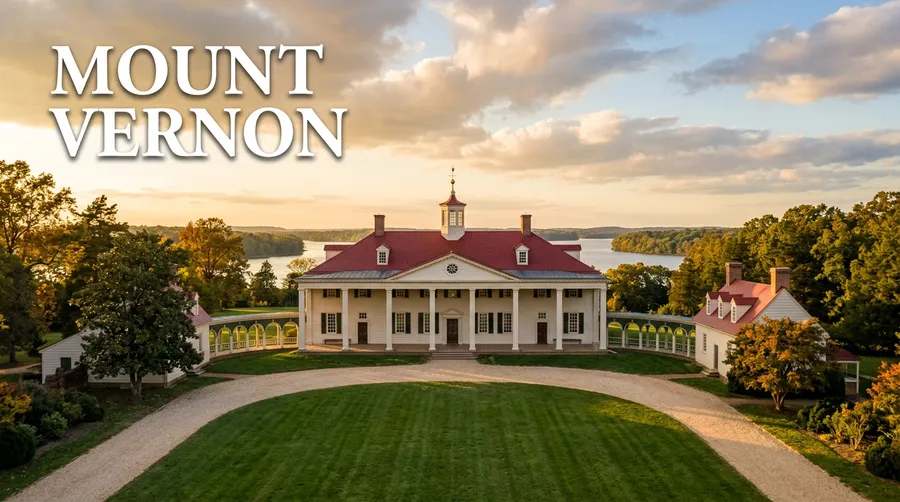
Top sites include Independence Hall (PA), Gettysburg National Military Park (PA), and Mount Vernon (VA).
When is the best time of year to visit U.S. historic sites?
Spring and fall offer mild weather, fewer crowds, and special events at many historic locations.
How much does it cost to visit U.S. national historical parks?
Many National Park Service sites are free; others charge $5–$35 per vehicle or $15 per person for entry.
Are there any requirements or permits needed?
Most historic sites require no special permits, though guided tours or research access may need advance booking.
What should I pack when visiting a historic landmark?
Pack comfortable walking shoes, water, weather-appropriate clothing, a camera, and any required park passes.
Why This Page Exists
Maison builds place guides to help readers plan a real visit or understand a real site. When a page makes present-day access, booking, or visitor claims, those details are revised against public-facing source material and editorial review. For the wider standards behind that work, see methodology.
The Cornerstone Brief
One historic place, once a week — what it is, why it matters, whether it's worth going. No filler, no paid placements.
Coming soon. Unsubscribe any time.
We use cookies to enhance your experience. By continuing to visit this site you agree to our use of cookies.