Shingle Style is one of the easiest American house types to miscall because the name sounds broader than the style actually is. A house covered in wood shingles is not automatically Shingle Style. The real style is more specific: broad, irregular massing wrapped in a continuous shingled skin, usually grounded by stone and far less interested in applied trim than neighboring late-Victorian cousins. Once you start reading the skin, the roof, and the relationship to the site together, the real thing becomes much easier to spot.
If you only remember four checks, make them these: one continuous shingled surface, a large unified mass instead of fragmented trim, strong horizontal pull, and a base of stone or heavy grounding that ties the house to the landscape.
What Makes Shingle Style More Than Just a Shingled House
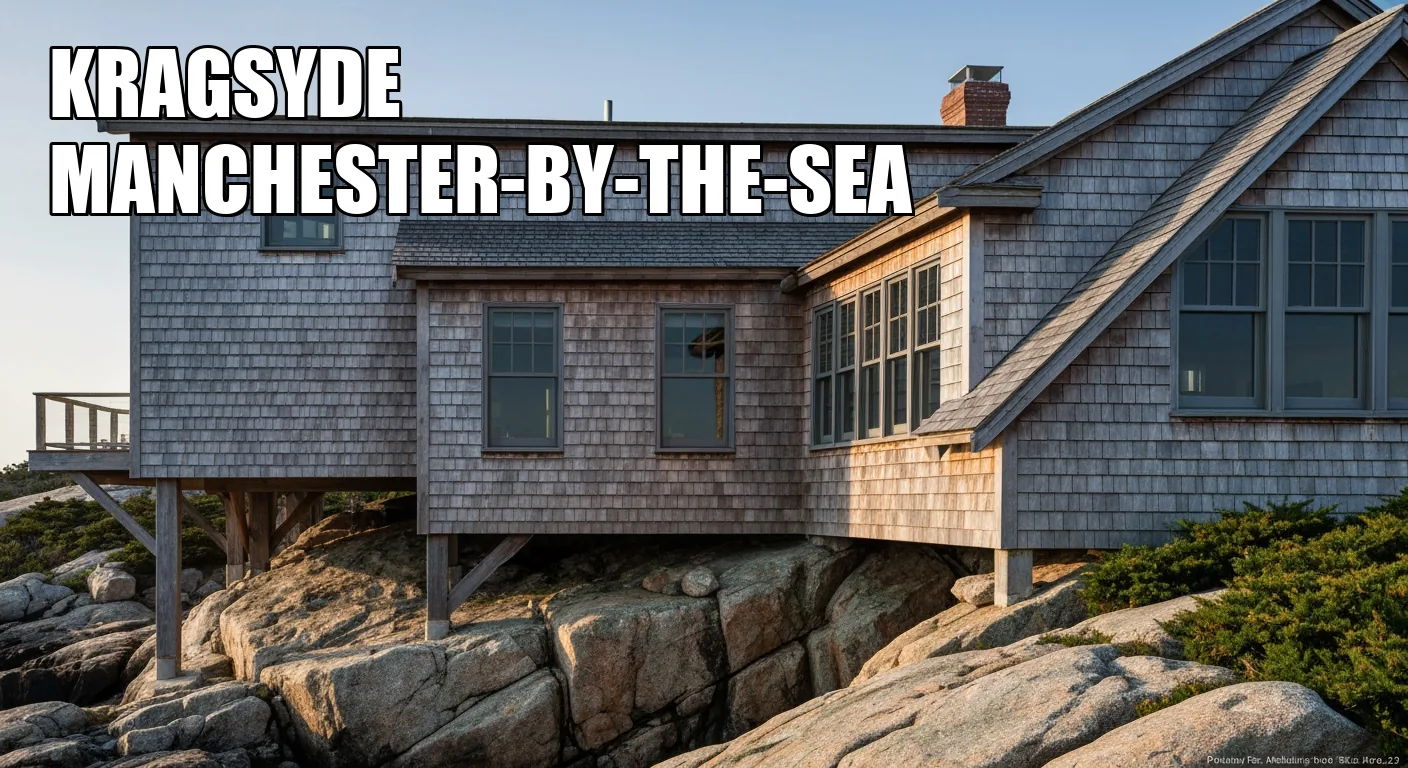
The key idea is not material alone but how the material behaves. In true Shingle Style work, the shingles act almost like a single wrapper drawn over the body of the house. They sweep across wall surfaces, around corners, and over roof transitions so the building reads as one contoured envelope rather than as a stack of parts fighting for attention.
That is why the style looks calmer than many other late-nineteenth-century houses. Even when the mass is large and irregular, the surface treatment suppresses fuss. Instead of breaking the building into decorative episodes, the shingles pull it back together.
The Fastest Way to Spot It From the Street
Start with the whole silhouette before you look for decorative details. Shingle Style wants the mass to read first. Rooflines can be broad and complex, but the surface usually works to unify them. After that, check whether stone foundations, porches, and entries feel integrated into the composition instead of pasted on.
| Look here first | What you want to see | Why it matters |
|---|---|---|
| Exterior skin | Shingles running across large surfaces with minimal interruption | This is the style's most decisive signature and the reason the house feels unified rather than busy. |
| Overall mass | Large asymmetrical body that still feels cohesive | Shingle Style likes complexity, but it usually organizes that complexity into one strong whole. |
| Roof and eaves | Broad gables, gambrels, or low sweeping roof forms with eaves held relatively close to the skin | The roof supports the contoured-envelope effect instead of turning into a separate trim show. |
| Grounding | Heavy stone foundation, low arch, or robust chimney mass | The house often looks rooted to the site rather than simply placed on it. |
| Ornament level | Less applied fuss than Queen Anne | This is one of the quickest ways to separate a true Shingle house from a more decorative late-Victorian neighbor. |
A practical way to think about it: Queen Anne often wants you to notice the decorated parts. Shingle Style wants you to notice the whole body first and the details second.
Continuous Skin, Close Eaves, and a More Horizontal Pull
One of the best official insights in the source pack is that the eaves are often kept visually tight to the walls so they do not interrupt the sweep of shingles. That matters because readers sometimes expect dramatic overhangs or fussy roof trim. Shingle Style can use complex roofs, but the covering still tries to pull the mass together rather than shatter it.
The style also tends to emphasize breadth more than vertical excitement. That does not mean every example is squat or simple. It means the eye is encouraged to travel across the house, along verandas, over broad gables, and around the wrapped surface rather than upward toward a single dominant tower or trim event.
Quick diagnostic rule: if the house is elaborate but the surface treatment keeps calming it down, stay in the Shingle conversation. If the house keeps breaking apart into decorated pockets, Queen Anne is probably the better first guess.
Stone Foundations, Porches, and Site Attachment
True Shingle houses often meet the ground heavily. Rough stone foundations, strong chimney masses, and broad porches help make the building feel anchored to coastal terrain, hillside sites, or resort landscapes. The style is not just about an outer finish. It is about the way the whole composition settles into place.
That is why Oldfarm in Acadia is so useful. The shingles do not float above the site as a decorative skin detached from the ground. They work with a granite base and a larger landscape logic. The same kind of site-conscious reading helps with large estate houses like Naumkeag and with recreational colony buildings like the Tree House.
How Shingle Style Overlaps With Queen Anne Without Collapsing Into It
The honest answer is that the overlap is real. Official descriptions sometimes acknowledge mixed ancestry directly, and Sagamore Hill is an especially good reminder that the categories can blur. That is exactly why the identification method has to stay practical rather than doctrinaire.
When the shingles are just one more decorative ingredient on a house that is otherwise obsessed with varied trim, turned porch elements, and restless facade play, Queen Anne may still be the stronger call. When the shingles become the governing surface and the mass pulls together into a more composed whole, Shingle Style becomes a much stronger label.
| Feature | Shingle Style | Queen Anne | Colonial Revival |
|---|---|---|---|
| Main visual effect | Unified mass wrapped in one skin | Active facade broken into decorated parts | More orderly and formally composed front |
| Surface treatment | Shingles dominate and connect the volumes | Shingles may appear, but as one texture among many | Surface usually serves symmetry more than contour |
| Ornament mood | Restrained compared with neighboring late-Victorian styles | More decorative and visibly busy | More controlled and classically disciplined |
| Best first test | Does the house read as one contoured body? | Does it keep fragmenting into display pieces? | Does the front feel more symmetrical and revival-minded? |
For the broader late-nineteenth-century sorting problem, the strongest companion read on the site is Victorian House Styles. For the closest neighboring subtype, use Queen Anne.
What Real American Examples Teach You
Naumkeag is important because it shows the style at estate scale without losing the compositional logic. Sagamore Hill is useful because it demonstrates how mixed labels emerge in the real world and why readers need to look at the total mass, not a single borrowed cue. Oldfarm and the Tree House show the style in landscape-heavy settings where site attachment becomes easier to see. The C.W. Swain House proves the style was not confined to one East Coast myth alone.
| Example | What it shows best | Why it matters |
|---|---|---|
| Naumkeag, Massachusetts | Estate-scale Shingle design with controlled massing | Good for seeing how the style can stay composed even at very large scale. |
| Sagamore Hill, New York | The real overlap between Shingle and Queen Anne readings | Useful because it teaches caution and prevents oversimplified labeling. |
| Oldfarm, Acadia | Shingles working with a granite base and site-conscious mass | Excellent for understanding how the style meets the ground. |
| Tree House, Sleeping Bear Dunes | Recreational-colony adaptation of the style | Shows that the style traveled beyond one famous coastal resort script. |
| C.W. Swain House, California | Continuous shingle cladding and cross-gabled composition | Good reminder that the style's visual logic can be read far from New England. |
What Readers Get Wrong Most Often
The first mistake is stopping at the material. Shingles alone do not make the style. The second is assuming that asymmetry automatically means Queen Anne. Shingle Style can be highly irregular, but it usually treats irregularity differently by pulling the surface and mass back into a larger composition.
The third mistake is ignoring the ground. If the house feels weightless or trim-driven, you may be in a different late-Victorian branch. Strong Shingle examples often feel rooted, broad, and architecturally deliberate.
Why Shingle Style Still Reads So Clearly
Shingle Style remains readable because its logic is physical. It is about wrapping, grounding, and calming a large house rather than merely decorating it. Once you learn to look for the contoured skin and the unified mass, the style stops being a fuzzy coastal mood and becomes a practical field diagnosis.