Photo by Isabelle Moreau for Cornerstone Mansion · March 29, 2026
For decades, I've crisscrossed this country, digging into its historical bedrock, searching for the raw, often uncomfortable truths that shape our present. You might imagine me with a dusty map and a well-worn notebook, and you wouldn't be entirely wrong. But as we hurtle toward America's Semiquincentennial in 2026—that's the 250-year mark, for those not fluent in Latin-derived anniversaries—the landscape of historical exploration is shifting. It’s no longer enough to simply *see* a site; we crave immersion, a direct line to the past, and a more honest reckoning with *all* of America’s stories.
This isn’t about just adding a digital layer to old exhibits; it’s about using technology to excavate narratives that have been buried, ignored, or simply too faint to grasp through traditional means. I’ve witnessed firsthand how augmented reality (AR) and AI-driven characters can transform a passive visit into a profound dialogue with history, offering perspectives that mainstream narratives often gloss over. These aren't just "cool gadgets"; they are crucial tools for empathy, especially at sites that challenge our understanding of who "Americans" truly are and what they’ve endured. So, let's explore five such places, each poised to offer an unparalleled experience in 2025, long before the official confetti of the 250th celebration even hits the ground.
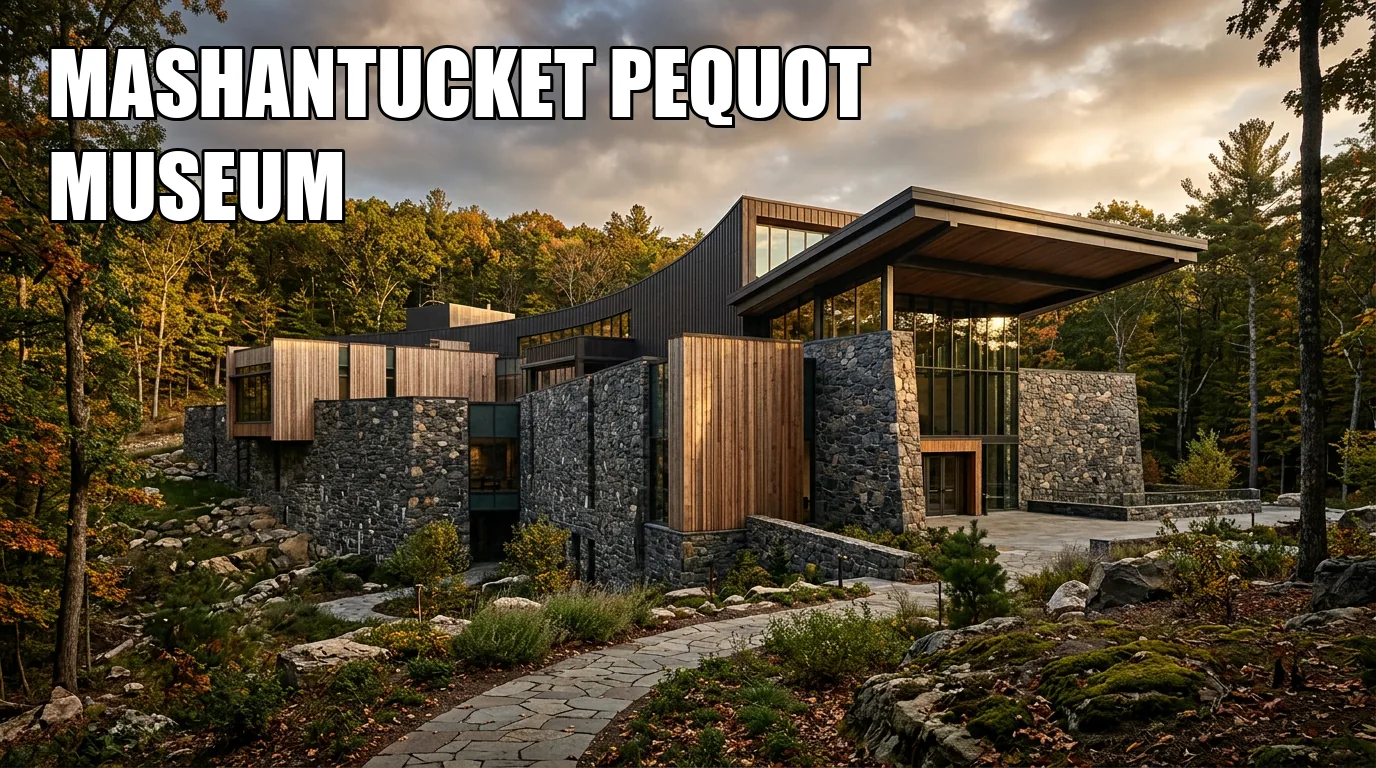
Rediscovering Indigenous Resilience: Connecticut’s Mashantucket Pequot Museum
Have you ever considered how profoundly our historical understanding is shaped by who writes the history? In rural southeastern Connecticut, on their ancestral lands, the Mashantucket Pequot Museum & Research Center stands as a powerful retort to centuries of Eurocentric historical accounts. This isn't your typical museum filled with static displays; it's a living testament to a people's enduring spirit, meticulously chronicling Pequot resilience from the brutal 17th-century conflicts—like the devastating 1637 Pequot War—right through to their vibrant contemporary cultural revival. What truly sets this place apart is its unwavering commitment to centering Pequot language, ceremony, and art, refusing to be relegated to a footnote in someone else's story.
Come 2025, the experience here will be nothing short of revolutionary. Imagine wandering the modern museum grounds, then, through a site-specific tablet, watching an AR landscape reprojection overlay 17th-century village layouts and seasonal ceremonies directly onto the present-day landscape. It's an uncanny, almost spiritual experience, allowing you to visualize what once was, quite literally, beneath your feet. But the innovation doesn't stop there. Visitors will have the chance to converse with AI-host Seyânah, an animated Pequot elder character who can answer questions about traditional plant medicines or social structures, speaking both English and Pequot. This isn't a mere chatbot; it's an educational interlocutor designed to bridge cultural divides and provide immediate, context-rich information, far beyond what any placard could offer. Moreover, their multimodal mobile app offers GPS-triggered cultural soundscapes, playing traditional songs and oral histories precisely at the very excavation spots where those ancient stories were unearthed. To truly grasp the gravity of this, plan your visit for the shoulder seasons—late spring or early fall—when the Connecticut landscape is at its most beautiful and the crowds are thinner, allowing for a more reflective engagement with the technology and the land. Expect a profound emotional journey, so set aside a full day.
Unearthing Manhattan's Hidden Founders: The African Burial Ground's Echoes
Walking through lower Manhattan, amidst the towering skyscrapers and relentless urban pulse, it’s easy to forget the layers of history beneath your feet. But beneath one specific patch of asphalt and glass lies a profound secret: the African Burial Ground National Monument. This isn't just a plot of land; it's hallowed ground, holding the remains of over 15,000 free and enslaved Africans from the 17th and 18th centuries. The scale of it, hidden in plain sight for centuries until its rediscovery during a federal building excavation in 1991, is staggering. It forces us to confront the foundational, yet largely ignored, role of African labor in building colonial New York, a truth often omitted from standard history textbooks.
In 2025, the monument will leverage technology to make these silent voices heard. Imagine pointing your smartphone at specific markers and watching an interactive AR memorial wall animate personal stories—names, origins, family ties—all meticulously extracted from archival records. It transforms an abstract historical fact into a deeply personal connection, revealing individuals rather than statistics. Even more remarkably, AI-driven ancestor voices will recite diary entries, wills, and letters in period dialects, synthesized from extensive research, creating an immersive auditory experience that bridges centuries. This is why it’s imperative to bring a fully charged smartphone or a portable power bank; these experiences are demanding on battery life. For visitors with visual impairments, an accessible app with haptic feedback will use vibrations to denote proximity to unmarked graves, guiding them along the discovery path with an unprecedented level of sensory detail. The true power here isn't just seeing the past, but *feeling* it, in a bustling urban environment that often feels disconnected from such profound history.
Beyond Ellis Island: Angel Island's Uncomfortable Truths on the Pacific Rim
Most Americans know Ellis Island as the "Gateway to America," a romanticized entry point for European immigrants. But few recognize its stark counterpart on the West Coast: Angel Island Immigration Station in San Francisco Bay. From 1910 to 1940, this island processed over a million immigrants, primarily from Asia, though with a distinct difference from Ellis Island's welcoming narrative. Angel Island served more as a detention center than a processing station, a physical manifestation of discriminatory exclusion laws—most notably, the Chinese Exclusion Act. The barracks walls bear thousands of carved poems, an indelible record of desperation, hope, and endurance left by those held for weeks, months, or even years. What typical guides often gloss over is the sheer psychological toll of this forced waiting, the constant uncertainty, and the inherent injustice of being deemed "undesirable."
For 2025, the island’s interpretive approach will offer a profound opportunity for visitors to truly *see* and *hear* these silent testimonies. Wearing AR glasses, you'll witness a 360° AR poem restoration, where the faded calligraphy on barrack walls is digitally re-inscribed before your eyes, then translated line by line. It’s a powerful moment of direct connection to the anguish and artistry of those confined here. An AI interlocutor poet-guest, modeled after an immigrant poet, will engage visitors in discussions about motivations, family separations, and aspirations, drawing from a rich archive of multilingual oral histories. This isn't about glorifying hardship but understanding the human spirit's remarkable ability to create beauty amidst adversity. To truly appreciate this site, catch an early ferry from Tiburon or San Francisco; the island can get crowded, especially on weekends, and the Bay weather can be unpredictable. Allow yourself a full day, not just for the tech, but for the quiet reflection the island demands, particularly when the fog rolls in, adding to its melancholic beauty.
A Pre-Colonial Metropolis Rediscovered: Cahokia's Grandeur Reimagined
Long before European settlers envisioned cities in North America, a sprawling metropolis thrived near present-day St. Louis. I’m talking about Cahokia Mounds State Historic Site, once North America's largest urban settlement, flourishing between 1050 and 1350 CE. It's a site that absolutely shatters any preconceived notions of a "pristine wilderness" awaiting European discovery, instead revealing a complex, sophisticated Indigenous civilization. We’re talking about an organized society with extensive trade networks, advanced engineering, and a profound understanding of astronomy, evidenced by monumental mound-building. What surprised me on my first visit was the sheer scale—it’s mind-boggling to comprehend that this vast city supported a population rivaling London's at the time.
To grasp Cahokia’s true magnitude in 2025, new technologies will literally elevate your perspective. Imagine using an app with drone-captured AR terrain models that reconstruct mound alignments and solar-calendar markers, providing an aerial view of the ancient city’s layout as if you were soaring above it in its prime. This allows you to truly visualize its urban planning. Furthermore, AI-augmented sky calendars on tablets atop Monks Mound, the largest earthwork, will identify solstice alignments, projecting animated celestial paths and explaining the intricate cosmology of the Mississippian people. My advice? Visit during the spring or fall equinox if possible, to truly connect with the astronomical precision. For a truly immersive group experience, on-site multiuser VR reconstruction booths will allow you to explore a digital Cahokia plaza, participate in council gatherings, or even simulate trade network interactions. This isn't just history; it's a window into a vibrant, technologically advanced society that challenges every conventional notion of pre-Columbian North America. The site is immense, so wear comfortable shoes, bring water, and prepare for a good climb up Monks Mound for the best views.
Confronting a Dark Chapter: Manzanar's Lessons in Resilience
The American landscape holds painful memories, and none are more starkly resonant than the windswept Owens Valley in California, home to Manzanar National Historic Site. This was one of ten WWII Japanese-American incarceration camps, a grim testament to a dark chapter when over 120,000 American citizens and legal residents of Japanese descent were forcibly removed from their homes and imprisoned without due process. It chronicles not only their unjust removal but also their remarkable resilience, their cultural survival, and the profound artistic expression that flourished even behind barbed wire. Every time I visit, the sheer isolation of the place, framed by the Sierra Nevada mountains, drives home the injustice.
In 2025, Manzanar will utilize technology not to sanitize, but to humanize this experience. Holding a tablet up to the original barrack foundations, AR-enabled barrack windows will reveal reconstructed interior scenes—family meals, classrooms, church services—bringing the daily life of internees vividly back into context. It’s a powerful way to understand the small acts of resistance and normalcy that persevered in the face of dehumanization. Additionally, AI-driven survivor profiles will, through voice and image synthesis, narrate the lived experiences of eight individuals, recounting daily life, gardening projects, and camp governance in the first person. This is about hearing directly from those who endured, allowing their stories to resonate with newfound immediacy. An adaptive wayfinding app, using machine learning, will even tailor tours by visitor interest—art, education, agriculture—presenting thematic AR modules accordingly. While the tech is compelling, the true power of Manzanar lies in its stark, unadorned reality. Expect an emotionally taxing, yet absolutely essential, visit. Come prepared for the elements, as the Owens Valley can be brutally hot or surprisingly cold, and allow at least half a day to fully absorb the site's profound lessons.
These five sites, disparate in their locations and specific histories, unite in their mission: to offer a more inclusive, nuanced understanding of the American story. Augmented by cutting-edge interpretive technologies, they foster a richer commemoration of America's 250-year journey. By foregrounding Indigenous heritage, African American legacies, immigrant struggles, and resilience in adversity, travelers in 2025 can engage deeply with narratives too often marginalized in traditional itineraries. It’s a chance not just to witness history, but to participate in its retelling, creating a more comprehensive and empathetic vision of our shared past and future. Don't just tick off the famous landmarks; seek out these deeper, more revealing journeys.
Historic Mansions Worth Building a Weekend Around
Start with the estates and mansion properties that still justify tickets, routing, and a real visit, not just a mood-board detour.
Wonders Through Time: Your Guide to the World’s Greatest Historical Sites
What are top 10 historical places?
The top 10 historical sites every traveler should visit are Machu Picchu, the Pyramids of Giza, Angkor Wat, Petra, Tikal, the Colosseum and Roman Forum, the Parthenon, Easter Island Moai, the Taj Mahal, and the Alhambra.
What are the top 10 most historic places in the world?
The ten most historic sites globally include Göbekli Tepe, Stonehenge, the Pyramids of Giza, the Great Wall of China, Machu Picchu, Petra, Angkor Wat, Tikal, Pompeii, and the Colosseum.
What is the most famous historical place?
The Pyramids of Giza in Egypt are recognized as the world’s most famous historical monument.
What is the most historical place?
Göbekli Tepe in Turkey, dating back over 12,000 years, is considered the world’s oldest known temple complex.
What is the most famous place on Earth?
The Pyramids of Giza hold the title of the most famous site on Earth, renowned for their ancient engineering and iconic silhouette.
What is the #1 most visited place in the world?
The Forbidden City in Beijing, China, welcomes more annual visitors than any other historical monument.
What makes a place famous?
A site becomes famous through a combination of historical significance, iconic architecture or art, cultural impact, and global recognition via media or heritage listings.
What is the most visited historical site in the world?
The Forbidden City in Beijing tops annual visitation charts among all historical sites.
What is the name of the most famous place?
The Pyramids of Giza are universally acknowledged as the most famous landmarks on the planet.
How to get famous in the world?
Achieving global fame typically requires making a significant contribution or innovation, leveraging media exposure, and engaging audiences through storytelling or unique achievements.
When is the best time to visit historical sites in the USA?
Spring (April–June) and fall (September–October) offer mild weather and smaller crowds at most U.S. landmarks.
How much does it cost to visit U.S. national historical landmarks?
Many national landmarks are free to enter, though some sites charge modest fees ranging from $5 to $30 per person.
Do I need advanced tickets for popular historical sites?
Yes; top attractions like Mount Rushmore, Ellis Island, and Alcatraz often require advance reservations to guarantee entry.
What should I pack for a historical site tour?
Bring comfortable walking shoes, sun protection, a refillable water bottle, and a lightweight daypack for essentials.
Are guided tours worth it when visiting historical places?
Guided tours provide in-depth context, rare access spots, and expert insights that enrich the visitor experience.
Why This Page Exists
Maison builds place guides to help readers plan a real visit or understand a real site. When a page makes present-day access, booking, or visitor claims, those details are revised against public-facing source material and editorial review. For the wider standards behind that work, see methodology.
The Cornerstone Brief
One historic place, once a week — what it is, why it matters, whether it's worth going. No filler, no paid placements.
Coming soon. Unsubscribe any time.
We use cookies to enhance your experience. By continuing to visit this site you agree to our use of cookies.