
America's Unsung History: A Road Trip Through Contested Pasts
For years, I've crisscrossed this country, not just hitting the familiar landmarks, but actively seeking out the places where the narrative gets complicated, where the ground beneath your feet tells a story far richer—and often more uncomfortable—than the glossy brochures suggest. This isn't a trip about perfect preservation or easy answers; it’s an itinerary designed to immerse you in America's foundational struggles, connecting disparate points on the map through threads of emancipation, labor rights, indigenous urbanism, and the dawn of the Civil Rights movement. You'll leave with more questions than you arrived with, and that, I’ve found, is the mark of a truly meaningful journey.
### What Does a Freedmen's Town Really Tell Us? Port Royal's Bold Experiment
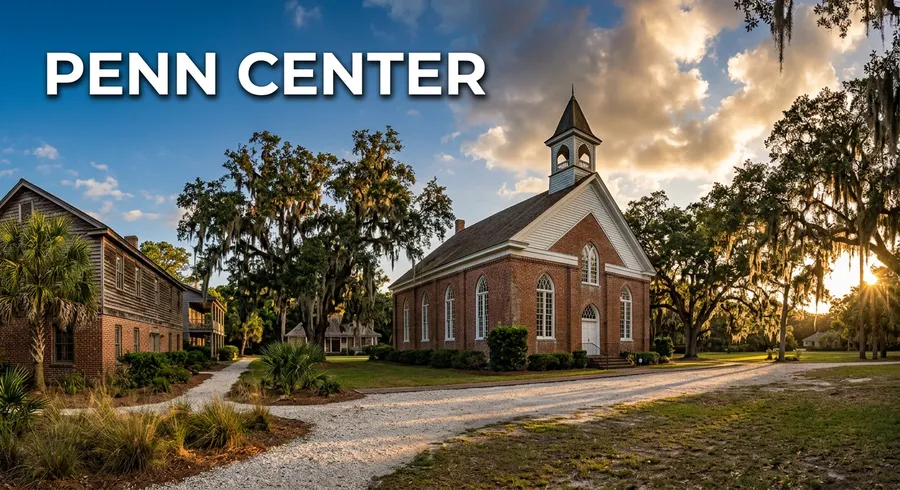
Stepping onto South Carolina's Sea Islands, particularly into what's now Reconstruction Era National Historical Park, one almost expects a somber, perhaps even tragic, atmosphere. What you find instead, especially around the remains of Mitchelville, is a profound sense of agency and defiant hope. During the Civil War, from 1861-1865, Union forces occupied these islands, freeing some 10,000 enslaved people. This wasn't merely liberation; it sparked the Port Royal Experiment, a radical, often overlooked, attempt at Black self-determination. Here, formerly enslaved communities didn't just survive; they cultivated cotton for wages, established their own schools like the famed Penn School, and crucially, purchased land. It was, in essence, a blueprint for what a post-slavery America *could* have been.
Many guides gloss over the profound impact of this period, focusing instead on the broader strokes of the war. But walking these trails, particularly if you catch a ranger-led tour, you begin to grasp the sheer audacity of it all. Visitors often arrive expecting only tales of suffering, yet the exhibits, displaying foundational remains of cabins and interpreting community-led efforts at Mitchelville Freedom Park, underscore a story of resilience and self-governance. It’s a powerful counter-narrative to the common perception that newly freed people were simply waiting for federal assistance; they were actively building their own futures. Getting there involves a pleasant drive on US-21 to Yemassee, then SC-170 towards Beaufort, a journey that peels away the layers of touristy coastal charm to reveal deeper historical strata. The site itself is free, making it accessible, but I always suggest tucking away about $20 for donations to local preservation efforts, because their work breathes life into these crucial narratives. Plan for a full day, packing a lunch to enjoy amidst the historic oaks, perhaps saving the $35 meal budget for a more substantial dinner back in Beaufort, where the local seafood is phenomenal.
### Pullman's Ghost: An Unfinished Chapter in Labor History
Leaving the Lowcountry and heading north, a significant drive of roughly 850 miles brings you to Chicago, Illinois, and the surprisingly poignant Pullman Historic District. When George Pullman built this "model town" in 1880 for his railroad car factory workers, he envisioned a paternalistic utopia, a perfectly controlled environment where every aspect of his employees' lives, from housing to entertainment, was managed. What he inadvertently created, however, was a powder keg. The district became the epicenter of the 1894 strike, a seminal event that, for better or worse, reshaped national labor law reforms and laid the groundwork for future unionization.
Today, designated a National Historical Park, Pullman is far from a lifeless museum. The restored Administration Clock Tower serves as an excellent visitor center, but the real insights come from the guided walking tours through the meticulously preserved worker rowhouses. What caught me off guard wasn’t just the architecture, but the sheer emotional resonance of the place; you can almost feel the tension that simmered beneath the surface of this outwardly perfect town. It’s a complex narrative that resists easy heroes or villains, illustrating the genuine struggles between capital and labor. The multimedia exhibits don't shy away from the brutality of the strike, yet they also celebrate the eventual triumph of the Brotherhood of Sleeping Car Porters, the first major Black union, decades later in 1937.
Getting there is straightforward, whether by car (I-55 S to the 103rd St exit) or, my preferred method for avoiding city traffic, the CTA Green Line, which drops you a convenient block from the Visitor Center. While admission to the park is free, I highly recommend shelling out the $15 for a guided tour or audio guide; the context it provides is invaluable and elevates the experience beyond just seeing old buildings. Budget around $50 for meals and local transport—Chicago has fantastic and diverse food options, but a quick lunch near the park will save you time. Don’t forget a modest donation or souvenir purchase (say, $25) to support the ongoing preservation and community-led workshops that are shaping Pullman’s future. It's an honest, unvarnished look at the price of progress.
### Before the Colonists: Cahokia's Overlooked Metropolis
Just a few hundred miles west of Chicago, across the Mississippi River in Collinsville, Illinois, lies a site that routinely humbles me: Cahokia Mounds State Historic Site. It’s astonishing how many Americans, even history buffs, are completely unaware that between AD 700 and 1400, North America harbored a city larger than London was at the time. This was not a collection of nomadic tribes; this was a sophisticated, urban center, home to a Mississippian culture that built 120 earthen mounds, including the colossal Monks Mound, creating an elaborate civic-ceremonial landscape that rivals anything found in Mesoamerica.
What truly sets Cahokia apart, beyond its sheer scale, is the profound sense of reverence it inspires. Walking the trails, especially climbing to the summit of Monks Mound for a panoramic view of the vast floodplain and the distant St. Louis skyline, one grapples with the immense history underfoot. It challenges the conventional, Eurocentric narrative of American development, revealing a complex, populous, and deeply spiritual society that flourished here for centuries before European contact. Yet, I've found that visitors often struggle to connect with the site without a guide, as the physical remains are largely earthworks. The interpretive center, built in 1989, does an excellent job, but a guided tour (an additional $8) truly brings the ancient city to life. It explains the purpose of the mounds, the significance of Woodhenge (an ancient sun calendar), and the ongoing efforts by the Illinois Historic Preservation Agency and the Cahokia Mounds Museum Society to protect and interpret this UNESCO World Heritage Site through Indigenous perspectives.
The logistics are simple enough: take I-55/I-270 to IL-203. Admission is $10 for adults, $6 for students/seniors, and trails are ADA-compliant. While the official parking is just $10, I’d recommend adding about $20 for gas and another $20 for lunch in Collinsville, making the total around $88 for the day. My best advice? Arrive early, ideally on a weekday morning to avoid crowds, and allow at least four hours to truly absorb the interpretive center and traverse the main mound trails. Don’t rush it. This is a place for quiet contemplation and a radical re-education about the continent’s deep past.
### The Scottsboro Boys: A Legal Battle That Echoes Still
Our final leg takes us south from Illinois, a drive of approximately 470 miles, into the heart of Alabama, to Scottsboro. Here, in 1931, nine young Black men, known to history as the Scottsboro Boys, were falsely accused of rape. This wasn't just a local injustice; their protracted legal battles became a national flashpoint, leading to landmark Supreme Court rulings—*Powell v. Alabama* (1932) and *Norris v. Alabama* (1935)—that fundamentally guaranteed fair counsel and jury inclusion for defendants nationwide. It's a sobering but essential chapter in the struggle for civil rights, laying crucial groundwork for future legal challenges.
What might surprise you about Scottsboro is its understated nature. This isn’t a grand, sprawling museum complex; the Scottsboro Boys Museum & Cultural Center, established in 1995, is housed in a modest building on West Willow Street. Yet, within its walls, you’ll find an intensely personal and powerful collection: original trial documents, raw oral histories, and multimedia presentations that painstakingly trace each defendant's harrowing journey through a biased legal system. It's a testament to the fact that immense historical significance can reside in unassuming places. The small size paradoxically makes the experience more intimate and impactful; you’re not overwhelmed, but rather drawn into the individual stories.
I always suggest taking the time for the heritage walking trail around the town square, marked by a plaque at the courthouse. It helps contextualize the events within the town itself and highlights the often-unseen local Black leadership that fought tirelessly for justice. Admission is $10 for adults, $6 for students/seniors, and a guided museum tour with a heritage trail map is a negligible $5. Budgeting about $50 for lunch, gas, and parking (which is usually easily found downtown for around $5) makes this one of the more affordable, yet deeply affecting, stops on this journey. Come prepared to confront difficult truths, but also to witness the beginnings of legal change that transformed the nation.
### Stitching Together America's Difficult Threads
This road trip, starting in Beaufort, SC, winding through Chicago and Collinsville, IL, and concluding in Scottsboro, AL, isn’t merely a collection of historical sites. It’s a deliberate trajectory that links emancipation-era agency with industrial labor rights, Indigenous urbanism, and the nascent struggles of Civil Rights jurisprudence. You’ll trace a continuous, often painful, thread of how diverse communities have ceaselessly contested American ideals of freedom, labor, and equality.
What I've consistently found on these journeys is that the most profound insights often emerge not from grand pronouncements, but from the quiet details: the precise dimensions of a freedman's cabin, the stark uniformity of Pullman's worker housing, the sheer scale of a mound built millennia ago, or the raw testimony of a Scottsboro defendant. These are not merely historical facts; they are living testaments to the complex, unfinished experiment that is America. Expect to be challenged, perhaps even unsettled, but without question, you will come away with a far richer understanding of the national story—a story that continues to unfold.
Timeless Treasures: FAQs on Exploring America’s Historic Landmarks
must see historical sites USA
Don’t miss Independence Hall and the Liberty Bell in Philadelphia, Gettysburg National Military Park in Pennsylvania, and the Alamo in San Antonio as quintessential American historic sites.
What not to miss in the USA?
Be sure to visit the Liberty Bell, Lincoln Memorial, and Statue of Liberty for defining moments of American history, and explore Colonial Williamsburg for immersive 18th-century experiences.
What are the top 10 historical places to visit in the world?
Globally, must-see historic sites include the Alhambra in Spain, Pyramids of Giza in Egypt, Taj Mahal in India, Great Wall of China, Machu Picchu in Peru, Colosseum in Italy, Petra in Jordan, Angkor Wat in Cambodia, Acropolis in Greece, and Chichén Itzá in Mexico.
Which U.S. city has the most historic sites?
New York State leads with 275 National Historic Landmarks, and within it New York City anchors a dense concentration of sites including the Statue of Liberty and Ellis Island.
Where to go in the USA for 7 days?
A balanced 7-day itinerary often includes New York City (3 days), Washington D.C. (2 days), and Philadelphia (2 days) to cover key historical landmarks, museums, and memorials.
Which place is best for a 7 day trip?
The U.S. East Coast—New York City, Philadelphia, and Washington D.C.—offers the richest seven-day journey through American founding history and national monuments.
How many days are enough for the USA?
Spend no less than seven days to cover a single region; ten days allows a well-rounded trip, and two to three weeks are ideal for multi-state exploration.
Where to go for the first time in the USA?
First-time visitors should explore the Great Smoky Mountains National Park for scenic history and Pittsburgh, Pennsylvania, for its steel-town legacy and cultural museums.
How much money do I need for 2 weeks in the USA?
Budget around $3,300 per person for a 14-day U.S. trip, averaging about $119 per person per day including accommodation, food, and activities.
What to do before going to the USA?
Ensure your passport is valid, obtain ESTA or a visa as required, purchase travel insurance, make copies of documents, and notify your bank of U.S. travel plans.