Photo by Catherine Hale for Cornerstone Mansion · January 23, 2026
Most travel guides, bless their earnest hearts, will steer you toward the well-trodden paths: Gettysburg, Colonial Williamsburg, perhaps even Alcatraz. And while those places certainly hold their own weight, a truly profound understanding of the American story, particularly as we gear up for the nation's 250th anniversary, requires a deeper dive. It demands looking beyond the monuments and into the everyday lives, the forgotten struggles, and the enduring resilience that shaped this country. I’ve spent decades crisscrossing the United States, digging into the layers of our collective memory, and I can tell you, the real treasures often hide in plain sight, waiting for a different kind of visitor.
What truly sets a historical site apart isn't just its age or architectural grandeur; it's its ability to transport you, to provoke thought, and to make the past feel unnervingly present. Three particular locations—Freedmen’s Town in Houston, Pullman National Monument outside Chicago, and Angel Island Immigration Station in San Francisco Bay—have recently captivated my attention. These aren’t just places with plaques. They are living narratives, transformed by a potent blend of community-led stewardship and genuinely innovative immersive technology, offering insights that traditional tours often miss. They invite you not merely to observe history, but to participate in its ongoing unfolding.
Houston's Enduring Heartbeat: A Journey Through Freedmen's Town
Stepping into Freedmen's Town, the historic Fourth Ward of Houston, often comes with an initial sense of disquiet for the uninitiated. This isn't a manicured plantation or a preserved colonial village. This is a neighborhood, still very much alive, that tells a raw, powerful story of post-Emancipation perseverance. Established in the late 19th century by formerly enslaved people, it grew into a thriving, self-sufficient Black community—a testament to agency and ambition. For years, rampant urban development threatened to erase these vital chapters, paving over the very foundations of Black entrepreneurship and culture. Fortunately, a coalition of local descendant organizations and preservation nonprofits has stepped in, not just to preserve, but to elevate, ensuring that decisions about this sacred ground are driven by community memory, not just commercial interest.
My visit here was less a tour and more an active exploration, mediated by the discreet power of technology. Imagine this: you download a smartphone app, and as you walk along the brick-paved streets, point your device at a renovated shotgun house—a narrow, often one-story dwelling common in the South—and suddenly, through augmented reality, you're seeing it as it stood in 1905. Overlaid with historic photographs, the app also delivers snippets of family oral histories. You hear the voices of the Johnson and Harris families, actual descendants, recalling childhood memories or pivotal moments tied to that very structure. It's a remarkably personal way to connect, allowing you to choose thematic storylines—perhaps focusing on "Education & Activism" or "Faith & Family"—which guides your experience, tailoring it to your interests. One afternoon, I stumbled upon a spontaneous "porch talk" where a community elder shared stories of the Antioch Missionary Baptist Church, which still stands as a spiritual anchor, explaining its role in the civil rights movement. This is history you don't just read about; you feel it breathing.
Pullman's Grand Vision, Labor's Fierce Echoes
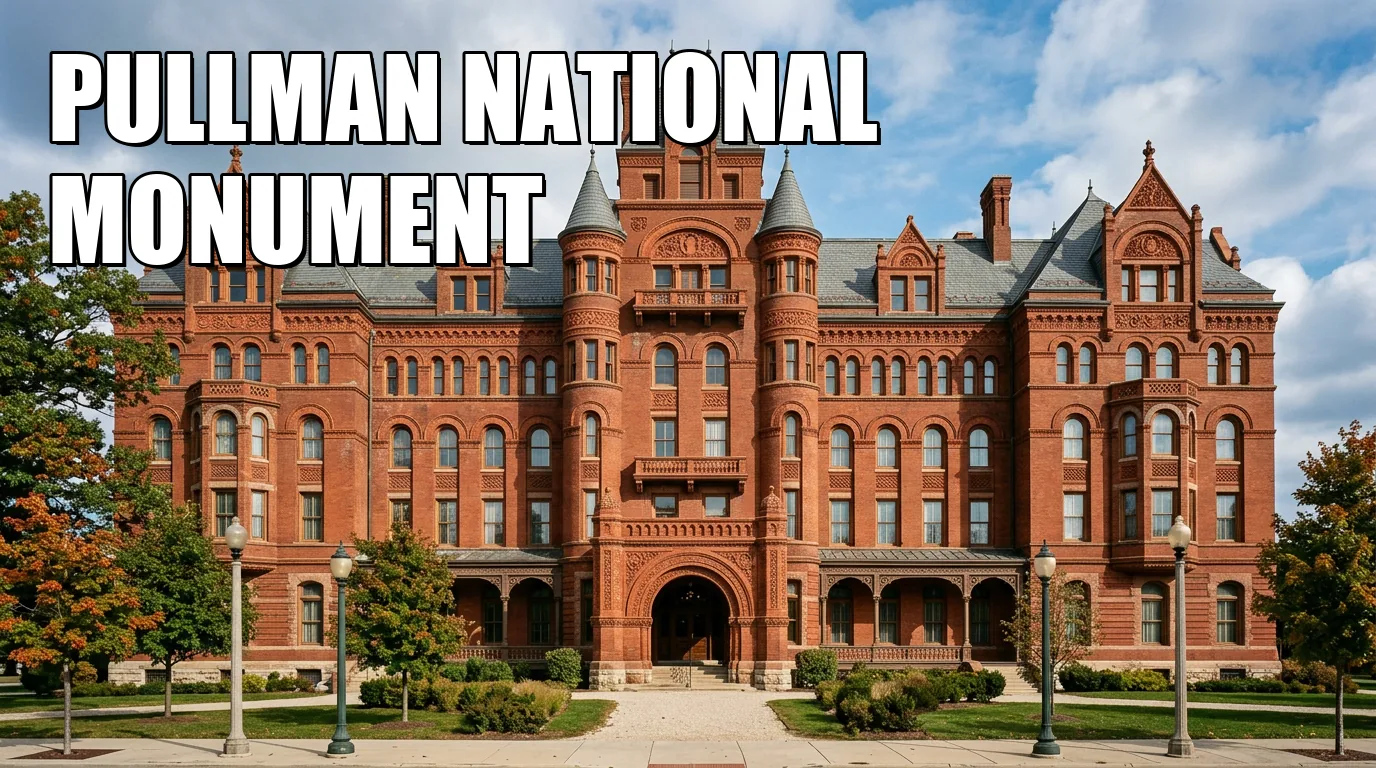
Traveling to Chicago, the Pullman National Monument offers a fascinating, albeit complex, counterpoint to the personal narratives of Freedmen's Town. Here, the story is one of audacious industrial ambition and the seismic shifts of labor relations during America's Gilded Age. George Pullman, the railroad car magnate, envisioned a utopian company town where his workers would live in model housing, attend carefully curated events, and, in theory, be free from the squalor of industrial cities. The reality, as any student of labor history knows, was far more paternalistic, culminating in the pivotal 1894 strike that paralyzed the nation's rail system. The area fell into decline after the strike, but today, a community land trust now oversees the restored factory buildings and worker housing, brilliantly integrating resident voices into the site’s curation and programming—a crucial detail that typical historical commissions often overlook.
The innovative use of technology at Pullman is nothing short of brilliant. Inside the dramatically restored Round House, I donned a tablet for an AR engineering simulation. Suddenly, the cavernous space came alive with 3D models of late-19th-century railcars taking shape, animated machinery whirring, and worker avatars explaining each intricate step of the fabrication process. It’s an eye-opening experience, demystifying the industrial scale of the era. If you stay until dusk, the factory façade itself becomes a canvas for interactive projection mapping, dramatizing the Pullman Strike. Archival images flicker across the brickwork, labor chants echo, and contemporaneous news headlines flash, creating a visceral sense of the struggle. What genuinely surprised me was the opportunity to storyboard a 30-second labor protest sequence on a touchscreen kiosk, which would then be incorporated into that evening's projection. It transformed me from a passive observer into a co-creator, forcing me to consider the narrative from the workers' perspective. Don't expect just a museum; this place demands your active engagement.
Angel Island's Uncomfortable Truths: Voices from the Pacific
My final recommendation takes us to the windswept shores of San Francisco Bay, to Angel Island Immigration Station—a place often dubbed the "Ellis Island of the West," yet its narrative is far less romanticized. For over three decades, from 1910 to 1940, this remote outpost served as the primary port of entry for over half a million Asian immigrants, but under the shadow of draconian exclusionary laws, many were detained, interrogated, and ultimately deported. It’s a stark, often painful, reminder of a darker chapter in American immigration policy. Today, a powerful partnership between Chinese-American heritage groups and the National Park Service has meticulously curated the site, deliberately prioritizing the formerly silenced voices of the detainees and ensuring multilingual interpretation—a detail absolutely critical for such a site.
The emotional weight of Angel Island is palpable, amplified by its thoughtful integration of AR. Donning specialized AR glasses, I walked through the barracks where thousands of immigrants endured lengthy detentions. Ghost-like projections of detainees materialized before me, reciting the poignant poems they had carved into the wooden walls. Crucially, these testimonies were available in Cantonese, Mandarin, Tagalog, and English, allowing for a deeply personal connection, regardless of one's linguistic background. Another geo-located audio guide delivered layered accounts: an immigration inspector's official, often sterile, report juxtaposed against a detainee's clandestine diary entry, forcing an uncomfortable but essential reckoning with institutional versus personal perspectives. This isn't just about learning facts; it’s about cultivating empathy. Plan to spend a full day here, arriving early by ferry (check schedules, they vary seasonally) to truly absorb the atmosphere. Don't rush; allow yourself to sit in the quiet spaces, perhaps joining one of the small-group dialogues led by community volunteers, many of whom are descendants of former detainees, bridging the historical struggle to contemporary immigration debates. The ferry costs roughly $49-55 roundtrip per adult from Tiburon or San Francisco, and the station itself usually has a small admission fee around $10-15.
Beyond the Widgets: What These Sites *Really* Offer
These three sites, disparate in their geography and specific historical focus, collectively represent a profound shift in how we engage with our past. They move decisively beyond the static displays and rote recitations that define much of traditional heritage tourism. What unites them is a shared commitment to community-led storytelling and a discerning application of immersive technologies. This isn't about flashy gadgets for their own sake; it’s about using AR and binaural audio—sound designed to be heard as it would in real life—to unlock narratives that were previously inaccessible or too easily ignored. Typical guides might mention "interactive exhibits," but they rarely explain *why* that interactivity matters. Here, it transforms you from a spectator into an active participant, a co-conspirator in uncovering history.
The real innovation lies in their stewardship models: a descendant-led nonprofit coalition in Freedmen's Town, a community land trust at Pullman, and a multi-group heritage partnership with NPS oversight on Angel Island. This ensures that the narratives are authentic, often challenging, and constantly evolving, rather than frozen in a singular, often sanitized, interpretation. They tackle labor rights, the human cost of exclusionary immigration, and Black resilience beyond emancipation, offering critical perspectives for America's 250th. They question tourist trap claims by building genuine engagement, highlighting that the "value" of a historical site isn't in its gift shop, but in its ability to spark dialogue and introspection.
Planning Your Expedition: Navigating These Unsung American Stories
Should you embark on this kind of historical journey, a few practical considerations will greatly enhance your experience. First, timing is everything. For Freedmen’s Town and Pullman, spring (April-May) and fall (September-October) offer the most pleasant weather, allowing for comfortable walking tours. Houston summers can be brutally hot and humid, so avoid July and August if possible. Angel Island benefits from the famous San Francisco fog in summer, keeping it cooler, but spring and fall still offer clearer views and fewer crowds. Weekday visits are always preferable at all three locations to minimize crowds, especially during peak school trip season.
Accessibility is another point. While all sites strive for inclusivity, the nature of historic preservation can mean some areas have uneven terrain. Always check their official websites for the latest information on specific accessibility features. For Freedmen's Town, remember you're exploring a living neighborhood, so respect residents' privacy. Parking can be a challenge in central Houston; consider ride-shares or public transport. At Pullman, dedicated parking is available, often for a small fee (around $5-10). Angel Island requires a ferry trip, so book your tickets well in advance, particularly on weekends. The AR apps for Freedmen's Town and Angel Island are typically free to download but require a charged smartphone and headphones for the best experience. Don't just show up with a dead battery! Finally, and perhaps most importantly, arrive with an open mind. These aren't just pretty places; they are profound classrooms, demanding your attention and your willingness to confront complex, sometimes uncomfortable, truths about the American experiment.
For the USA's 250th anniversary, merely celebrating a sanitized version of our past would be a disservice. These three sites—Freedmen's Town, Pullman, and Angel Island—exemplify a new paradigm in heritage tourism. They skillfully blend cutting-edge immersive technologies with genuinely community-driven preservation, transforming passive visitation into an engaged, often challenging, exploration of complex histories. They ensure that the evolving American narrative is not only inclusive but also deeply contemporary, forcing us to reckon with the echoes of the past in our present. This isn't just a trip; it's an education, a necessary pilgrimage for anyone truly seeking to understand the soul of this nation.
Historic Mansions Worth Building a Weekend Around
Start with the estates and mansion properties that still justify tickets, routing, and a real visit, not just a mood-board detour.
U.S. News named St. Simons Island, Georgia as the most underrated travel destination in 2025, celebrated for its Fort Frederica National Monument and live oaks draped in Spanish moss .
What is the most underrated place in America?
St. Simons Island, Georgia, tops the list for its rich colonial history and tranquil barrier-island charm .
Where is the most historical place in the USA?
Jamestown Settlement in Virginia, founded in 1607 as the first permanent English colony, is considered the most historical site in the United States.
What US city has the most interesting history?
Philadelphia, Pennsylvania, with its Revolutionary War landmarks, civil-rights sites, and the birthplace of American democracy, is often cited as the U.S. city with the most interesting history .
What are the most unique places to visit in the US?
Unique 2025 destinations include bioluminescent bays in Puerto Rico, treehouse villages in the Pacific Northwest, desert art towns in Texas, and alpine backcountry lakes in Montana .
What is the prettiest place in the USA to visit?
Acadia National Park in Maine, famed for its dramatic coastal cliffs, serene beaches, and granite peaks, is widely regarded as the prettiest spot in the U.S. .
Where is Bora Bora?
Bora Bora is a French Polynesian island in the South Pacific, about 230 km northwest of Papeete in the Society Islands .
Where is Fiji island?
Fiji is an archipelago in Melanesia, South Pacific, located roughly 2 000 km north-northeast of New Zealand, with major islands Viti Levu and Vanua Levu .
Is Bora Bora expensive?
Yes, average daily costs in Bora Bora range from $500 to $1 200 per person, reflecting luxury overwater bungalows and remote-location premiums .
What is XPF?
XPF is the French Pacific Franc used in French Polynesia, New Caledonia, and Wallis & Futuna, pegged to the euro at €1 = 119.33 XPF .
What is the best time of year to visit historical sites in the U.S.?
Spring (April–June) and fall (September–October) offer mild weather and fewer crowds at most historical destinations.
How much does a typical historical tour cost?
Guided historical tours average $25–60 per person, depending on location and tour length.
Are there any entry fees for U.S. National Historic Sites?
Most are free, but some charge $10–20 per vehicle or $5–10 per person for site maintenance.
What documents are required to visit national historic landmarks?
No special documents are needed; a valid photo ID and any national park passes suffice.
What must-see colonial-era sites are there in the U.S.?
Jamestown Settlement (VA), Colonial Williamsburg (VA), and Salem’s Witch Village (MA) are essential colonial-era visits.
How can I find guided history tours?
Check National Park Service and local visitor center websites or review platforms like Tripadvisor for vetted operators.
Are historical sites in the U.S. accessible for people with disabilities?
Most National Park Service sites offer wheelchair access and audio tours; consult individual site accessibility guides online.
Can I bring my pet to U.S. historical destinations?
Pets are generally allowed in outdoor areas on a leash but are prohibited inside buildings and museums.
Are audio guides available at major U.S. historical attractions?
Yes, many sites provide free smartphone apps or rentable audio devices for on-site narration.
What clothing is recommended for visiting outdoor historical sites?
Wear comfortable walking shoes, layered clothing, sun protection, and carry water for comfort.
How far in advance should I book tickets for popular historical sites?
Reserve 2–3 months ahead for high-demand sites like the Statue of Liberty or Monticello.
Is public transportation available to major historical destinations?
Yes, many cities provide subway or bus routes directly to landmark areas; check local transit maps.
Why This Page Exists
Maison builds place guides to help readers plan a real visit or understand a real site. When a page makes present-day access, booking, or visitor claims, those details are revised against public-facing source material and editorial review. For the wider standards behind that work, see methodology.
The Cornerstone Brief
One historic place, once a week — what it is, why it matters, whether it's worth going. No filler, no paid placements.
Coming soon. Unsubscribe any time.
We use cookies to enhance your experience. By continuing to visit this site you agree to our use of cookies.