Walk down any historic American street, and your eyes might first catch the riot of color on a Queen Anne, or the imposing gravitas of an Italianate mansion. But if you're like most casual observers, you're probably overlooking the most telling feature of all: the porch. These aren't merely transitional spaces between the public world and private sanctuary; they are elaborate statements, economic indicators, and technological showcases, all wrapped up in turned wood and decorative brackets. What conventional guidebooks often miss is that each porch style tells a unique story about its time, its builders, and the people who lived behind its intricate facade.
For too long, we've relegated Victorian porches to the realm of "quaint" or "ornate." But dig a little deeper, and you discover a fascinating architectural evolution driven by new technologies, shifting social norms, and a fervent desire for personal expression. From the sprawling, showy verandas of the Gilded Age to the restrained, almost minimalist leanings of a coastal Shingle, these five exemplary styles reveal a surprising diversity in what we broadly call "Victorian." Understanding them isn't just about identifying features; it's about seeing the soul of an era etched in timber.
Unraveling the Queen Anne's Labyrinthine Charm
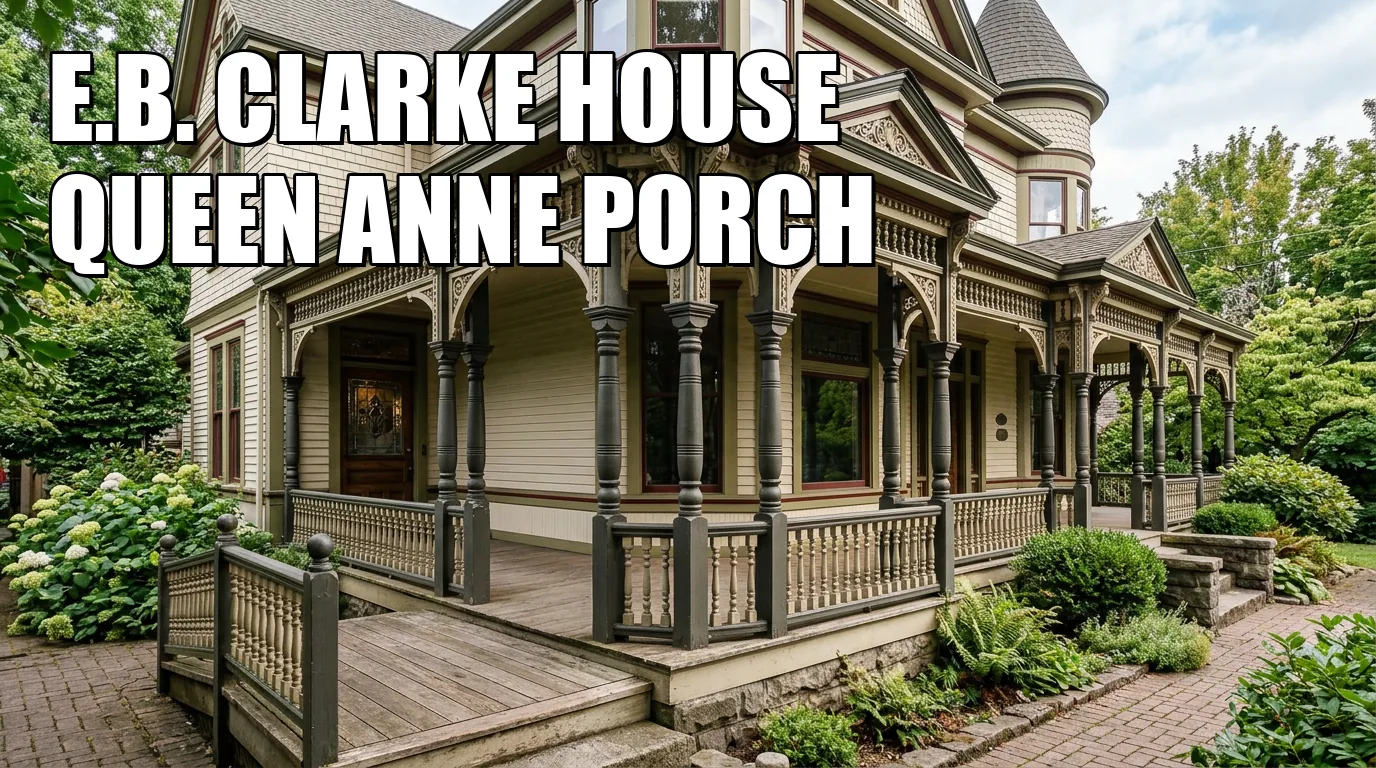
If you're looking for the quintessential "gingerbread house," you've found its grandest iteration in the Queen Anne style. Emerging from roughly 1880 to 1910, these porches scream "look at me!" with their often-massive, wraparound designs that hug the corners and extend along multiple sides of a home. What truly sets them apart, beyond their sheer scale, is the embrace of glorious asymmetry and a seemingly endless appetite for decorative excess. You'll often spot distinctive curved projections and irregular angles, transforming a simple entryway into an architectural event.
The real magic in Queen Anne porches, however, lies in their elaborate turned spindle work. Imagine a delicate lacework of wood, all made possible by newly invented mechanical jigsaws and lathes that allowed for an explosion of intricate patterns. These delicate spindles aren't just on the balustrades—the railings that prevent you from tumbling off—but frequently adorn porch ceilings and combine with scrolled brackets to create visual feasts. The columns themselves are typically not the straight, classical pillars you might expect, but rather turned posts, often connected by ornate spandrels—those decorative elements that arc gracefully between columns, adding another layer of visual complexity. Railings here aren't merely functional; they're artistic statements, with delicate turned balusters and sometimes even Chinese Chippendale lattice patterns, reflecting the era's fascination with global design and a desire to display wealth and refined taste.
If you want to witness this extravagance firsthand, head to Astoria, Oregon, and seek out the Captain George Flavel House. Built in 1885 for a Columbia River bar pilot who became a millionaire, this 11,600-square-foot mansion is a textbook example. Its porches boast the characteristic turned posts and intricate spindlework of high Queen Anne style. The interior even features Eastlake-influenced Douglas Fir woodwork, faux-grained to mimic exotic hardwoods—a fascinating detail revealing the era's penchant for luxurious illusion. It's a structure that demands you take a moment, maybe even two, to truly absorb the sheer volume of decorative effort. Does it feel over the top? Perhaps, but that was precisely the point.
Eastlake-Stick: When Structural Honesty Met Decorative Whimsy
Moving away from Queen Anne’s gentle curves, the Eastlake-Stick style, popular from about 1860 to 1890, offers a different kind of visual punch. This style is less about flowing ornament and more about expressing the underlying structure, albeit with a decorative flourish. Instead of the delicate, almost fragile spindlework of Queen Anne, Eastlake-Stick porches lean into chunky, jigsaw-cut ornamental elements applied to posts and railings. It's like the builders took the bones of the house and decided to dress them up with bold, geometric jewelry.
What defines these porches are the intricate wooden designs, curved brackets, and scrolls that aren't just decorative but often seem to emphasize the very joints and corners they adorn. You'll see "perforated gables and pediments, carved panels and a profusion of beaded spindles, and lattice work" along the eaves. Unlike the flowing lines of its Queen Anne cousin, Eastlake-Stick embraces straight lines, angular forms, and geometric patterns, often using vertical and diagonal braces to create powerful visual statements. The brackets supporting the porch cornices are often exaggerated in scale, substantial wooden corbels that look robust enough to hold up an elephant. Railings typically feature turned columns with heavier balusters arranged in clear geometric patterns, or square posts with chamfered corners—meaning the edges were beveled off—combined with elaborate brackets. This isn't about hiding the structure; it's about celebrating it.
For an unparalleled example, journey to Cape May, New Jersey, and the Emlen Physick Estate. Designed by the renowned Frank Furness in 1879, this 18-room mansion is often cited as the country's finest existing Stick-style Victorian. Furness's signature oversized features are everywhere, from the gigantic upside-down corbelled chimneys to the massive stick-like brackets on the porch. These monumental elements make the Physick Estate's porches a breathtaking testament to the style's commitment to structural expression. Standing there, you realize it's not just ornamentation; it's an architectural language spoken with bold, declarative sentences.
Italianate's Classical Grandeur: More Than Meets the Eye
If Queen Anne was the flamboyant show-off and Eastlake-Stick the structural purist, then Italianate, prevalent from 1850 to 1890, was the dignified, romantic aesthete. These porches sought to bring the elegant, romantic European villa aesthetic to American homes. Forget delicate spindles; here, it’s all about wide projecting cornices supported by heavy brackets, creating dramatic shadows and a sense of visual weight. This style emerged from influential pattern books by figures like Andrew Jackson Downing, reflecting a romantic ideal of rustic Italian farmhouses inspiring sophisticated American design.
Italianate porches favor classical columns and pilasters, often paired with decorative cast iron. Instead of fussy ornamentation, the emphasis is on substantial architectural moldings, elaborate window frames with scrolled ornament, and those distinctive, weighty brackets. Porch supports typically echo classical forms, sometimes even featuring Corinthian capitals with gilded details. These brackets aren't just decoration; they are integral architectural features, often curved or scrolled, providing both visual rhythm and a clear sense of structural support. Railings, where they exist, tend to incorporate classical details—think pediments or quoins (those decorative cornerstones)—and sometimes turned balusters alongside cast iron cresting. In urban centers, cast iron railings with their ornamental scrollwork were particularly common, perfectly complementing the style's overall classical leanings.
A prime example stands at 807 Franklin Street in San Francisco, built in 1875. This elaborate residence perfectly embodies the Italianate's hallmark characteristics: quoins along the edges, tall narrow windows, a prominent porch portico, and classical columns. What's often surprising is how these wooden houses are meticulously designed to evoke stone construction, complete with substantial brackets supporting wide eaves. It’s a masterful illusion, a wooden home performing as a grand masonry villa. You have to appreciate the craftsmanship that went into making wood look so monumentally substantial.
Folk Victorian: Democratizing the Decorative Impulse
Not every Victorian home belonged to a millionaire or a shipping magnate. Enter the Folk Victorian style (1870-1910), a delightfully democratic adaptation that brought decorative Victorian flair to simpler, more economical homes. This wasn't about ostentatious display; it was about making beauty accessible. The expansion of railroads and mass production meant that factory-milled Victorian ornamental elements—the "gingerbread"—could be shipped far and wide, allowing middle- and working-class families to infuse their modest dwellings with stylish details. The porches here are often structurally plain, but elevated by selective, impactful decorative elements, creating a more restrained, yet undeniably charming, aesthetic.
On a Folk Victorian porch, you'll typically see turned spindles or square beams with chamfered corners supporting the roof. While less elaborate than their Queen Anne cousins, these still showcase the precision of mechanical woodworking machinery. The ornamentation tends to be concentrated—perhaps a lace-like spandrel, or a jigsaw-cut balustrade—rather than covering every available surface. This selective approach speaks volumes about economic constraints and local building traditions. Railings often feature turned balusters, square posts with beveled corners, and jigsaw-cut spandrels arranged in relatively simple, repetitive patterns. They might be less complex than Eastlake-Stick designs, but they still demonstrate a clear appreciation for skilled craftsmanship and Victorian decorative sensibilities. The charm often lies in their slight imperfections and the regional variations you'll notice from town to town.
For a clear illustration, look no further than the Solon Wilder House in Lancaster, Massachusetts, built in 1883. Solon Wilder, a merchant and town treasurer, might not have been a railroad baron, but his financial success allowed for a handsome Victorian residence. Its porch features expertly cut woodwork and decorative trusses in the gables, with "stickwork" patterns raised from the wall surface—a clever architectural trick meant to symbolize the home's structural skeleton. This house beautifully exemplifies how middle-class Americans adopted Victorian aesthetics, proving that good design wasn't just for the wealthy. It's an often-overlooked testament to widespread artistic ambition.
Shingle Style: A Subtle American Rejection of Excess
Then we arrive at the Shingle style, another distinctively American innovation that emerged largely in coastal New England between 1880 and 1910. This style represents a quiet rebellion against the decorative excesses of its Victorian contemporaries. Instead of applied ornamentation or structural exhibitionism, Shingle-style porches prioritize a unified surface treatment. Imagine continuous wood shingle cladding that wraps seamlessly around porch structures and main walls alike, blurring the lines between elements. The result is an aesthetic characterized by seamless integration, where decoration and function become one.
Shingle-style porches feature subtle turned posts and balustrades that complement, rather than dominate, the design. There’s no elaborate spindlework here; instead, the style emphasizes substantial columns and posts that support deep roof overhangs and broad porches. Many of these porches incorporate recessed or even enclosed sections with large windows and multi-pane sashes, creating semi-protected outdoor rooms that feel both grand and cozy. The decorative elements are far more restrained than in Queen Anne designs, focusing on harmonious proportion and structural logic over ornamental excess. Railings typically employ rounded finials and simple balustrade designs, maintaining visual harmony with the continuous shingle treatment. They're designed to enhance, not interrupt, the overall visual flow of the shingled exterior.
The Reed-Fitzgerald House at 75 Ocean Street in Dorchester, Massachusetts, designed by Edwin J. Lewis Jr. in 1891, stands as a refined example. Built for a Boston insurance executive, this residence showcases the Shingle style's sophisticated approach. Its porches illustrate the characteristic integration of structural and decorative elements through seamless shingle treatment and well-proportioned column work. What strikes you here is an elegance achieved through restraint—a quiet confidence that stands in stark contrast to the boisterousness of other Victorian styles. It’s a challenge to the conventional wisdom that "more is more," proving that sometimes, less truly is an architectural triumph.
How to Appreciate These Porches Today: An Insider's Look
So, you’re convinced these porches are more than just pretty faces. Now, how do you truly experience them? My advice is to slow down. Don't just drive by; park the car and walk. Many historic districts, from Cape May to San Francisco, are incredibly walkable, offering a living museum of these styles. Look for the details: the intricate shadows cast by Queen Anne spindlework, the proud angles of Eastlake-Stick, the solid permanence of Italianate brackets, the charming simplicity of Folk Victorian, and the smooth, integrated flow of a Shingle-style veranda. Most tourist guides focus on the whole house; I urge you to focus on the porch as its own entity.
Consider visiting during shoulder seasons—April-May or September-October—to avoid peak crowds and extreme temperatures. The light is often softer then, perfect for appreciating architectural details without harsh glares. Many of the exemplary homes, like the Physick Estate or the Flavel House, operate as museums with admission fees typically ranging from $10-20, offering guided tours that can provide invaluable context. For the best photos, aim for early morning or late afternoon when the sun highlights textures and cast dramatic shadows, making the details pop. Pay attention to how the porch interacts with the landscape and the street—it was designed as a crucial intermediary space, a public face for a private home. Don't be shy about asking local historical societies for walking tour maps; they often highlight the specific porch features of their town's architectural gems.
Ultimately, these five distinct Victorian porch styles—Queen Anne, Eastlake-Stick, Italianate, Folk Victorian, and Shingle—aren't just architectural classifications. They are windows into a dynamic period of American history, each reflecting a unique blend of technological innovation, regional preferences, and economic realities from roughly 1850 to 1910. From the elaborate turned spindles of Queen Anne to the restrained elegance of the Shingle style, they collectively represent one of the most creative periods in our domestic architecture. So next time you see a Victorian home, don't just admire it; scrutinize the porch. It’s waiting to tell you a story.