Photo by Sophia Laurent for Cornerstone Mansion · December 9, 2025
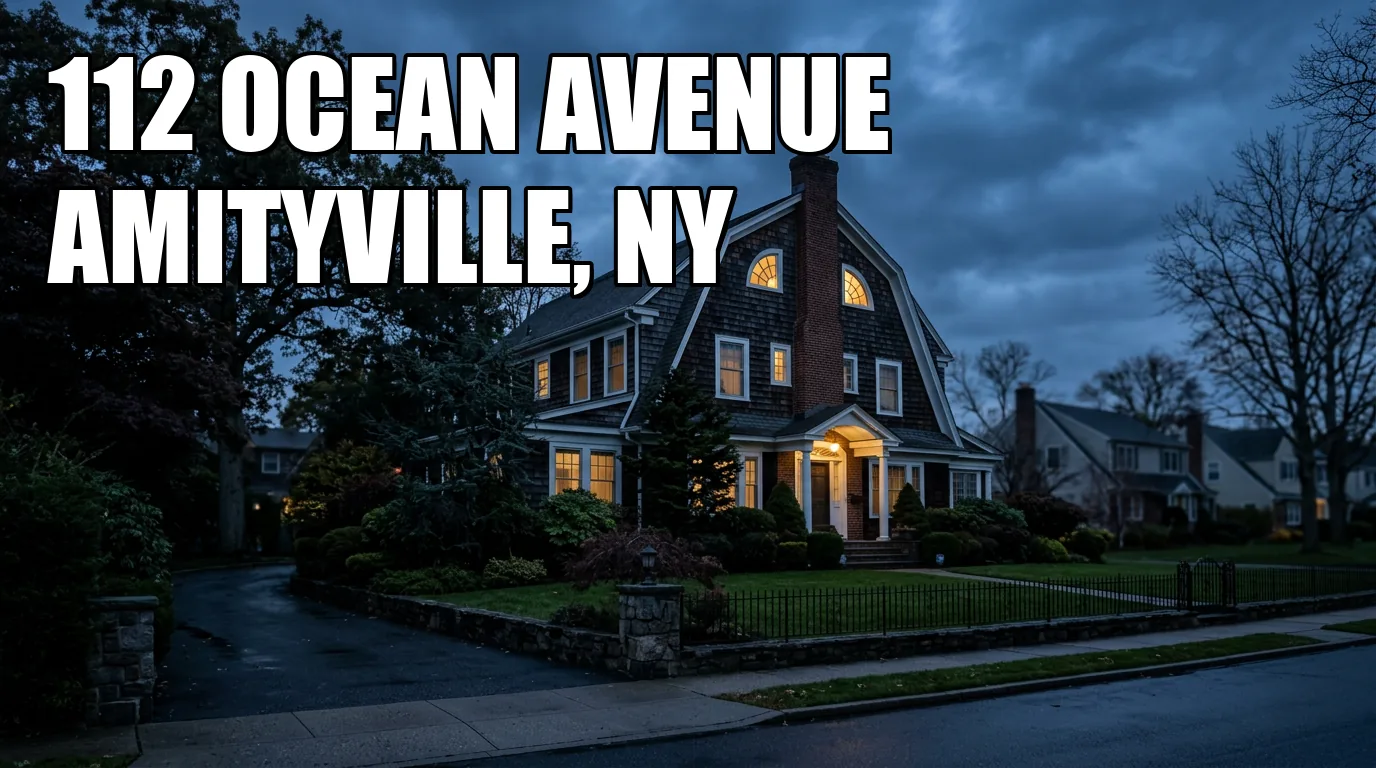
The road to Amityville, Long Island, feels less like a descent into madness and more like a pleasant suburban drive. You pass manicured lawns, children's swing sets, and the kind of quiet, unassuming neighborhoods that ironically underscore the horror that once allegedly unfolded here. For decades, the house at 112 Ocean Avenue has stood as an undisputed icon of American paranormal lore, its quarter-moon windows staring out from book covers and movie posters, promising an unseen evil. But let me tell you, as someone who’s chased spectral whispers from Salem to Alcatraz, the reality of Amityville isn’t found in jump scares or flickering lights. It’s found in the stark contrast between public perception and a fiercely guarded private existence.
### The Allure of the Abyss: Why Does Amityville Still Haunt Our Imagination?
What is it about Amityville that continues to captivate? It’s not merely the chilling account of the DeFeo murders, a brutal family annihilation in 1974. It’s the subsequent saga of the Lutz family, who fled the house just 28 days after moving in, claiming demonic possession and terrifying poltergeist activity. This narrative, immortalized in Jay Anson’s 1977 book, *The Amityville Horror*, and its cinematic adaptations, cemented the house’s place in the pantheon of haunted locations. Most travel guides, if they mention it at all, gloss over the details, preferring to lean into the legend rather than dissect it. But the legend, as I’ve learned in countless travels, often obscures a much more intriguing truth: the story we tell ourselves about a place often overshadows the place itself.
Consider the sheer cultural footprint of this address. It’s not just a house; it’s a shorthand for inexplicable terror, a reference point for everything from pop culture spoofs to serious discussions about the nature of evil. This enduring fascination, however, ironically clashes with the reality of accessing its history. Unlike other infamous sites where the past is preserved or re-enacted, Amityville offers almost no direct engagement with its notorious past, challenging the very notion of what a "historic site" means when it’s still very much a living, breathing private residence.
### Peeling Back the Layers: The Scarcity of Official Scrutiny Inside 112 Ocean Avenue
Forget notions of multiple teams of ghost hunters descending upon the house year after year, as often depicted in sensationalized media. The reality of authorized paranormal investigations within the Amityville Horror House is remarkably limited. In fact, only two major, publicly documented explorations took place inside the house after the Lutz family's flight. This scarcity itself is an insight, suggesting less of a continuous battle with the supernatural and more of an episodic burst of curiosity, quickly curtailed.
The most famous of these occurred on March 6, 1976, roughly two months after the Lutzes abandoned the property. This was the highly publicized investigation by Ed and Lorraine Warren, renowned figures in the world of paranormal research, who famously founded the New England Society for Psychic Research. Their team was a motley crew, assembled somewhat haphazardly by a television reporter, including Channel 5 News personnel, a radio reporter, and various psychics and sensitives – individuals believed to possess an intuitive awareness of supernatural phenomena. Ed Warren vividly recounted feeling immense pressure in the basement, describing it like being "underneath a waterfall" with "hundreds of pinpoints of electricity" hitting his body. Lorraine Warren, a gifted clairvoyant medium, reported an overwhelming sense of "ancient hatred" and psychic impressions of the DeFeo family's violent end. It was during this investigation that photographer Gene Campbell captured the controversial "ghost boy" infrared photograph, an image that remains a subject of intense debate, often speculated to be one of the deceased DeFeo children. They also mentioned a "red room," a small, windowless space in the basement entirely painted red, which the Lutzes had supposedly discovered.
Just under a year later, in January 1977, another notable figure, Hans Holzer – often credited as the "Father of the Paranormal" – conducted his own investigation with medium Ethel Johnson-Meyers. Johnson-Meyers controversially claimed the house stood upon an ancient Native American burial ground, attributing the disturbances to the angry spirit of a Shinnecock Indian Chief named "Rolling Thunder." However, this narrative was swiftly debunked by the local Amityville Historical Society, who pointed out that the Montaukett Indians, not the Shinnecocks, were the original inhabitants of that particular area. This episode highlights how easily historical claims can be fabricated or misinterpreted in the pursuit of a compelling paranormal explanation. The crucial takeaway here is that since 1976, there have been no other publicly documented, authorized supernatural investigations inside the house. None. This singular fact contradicts the popular assumption that the house remains a hotbed for continuous paranormal inquiry.
### Beyond the Quarter-Moon Windows: How Reality Diverges from Hollywood's Canvas
If your mental image of the Amityville Horror House is drawn from the classic 1979 film, or even the 2005 remake, prepare for a dose of reality. The cinematic portrayal, particularly those distinctive, menacing quarter-round windows on the third floor, has become as iconic as the story itself. Yet, a visit to the actual site today reveals a very different structure. The original, instantly recognizable facade is gone. Subsequent owners, weary of constant gawkers and trespassers, undertook significant renovations. The most noticeable change? The iconic quarter-round windows, those "evil eyes" of the house, have been removed and replaced with standard rectangular ones. This alteration alone fundamentally changes the visual narrative, transforming a cinematic villain into a more ordinary, if still imposing, suburban home.
Furthermore, the address itself has been changed. What was once universally known as 112 Ocean Avenue is now officially 108 Ocean Avenue. This deliberate move was a direct attempt by owners to deter the endless stream of curiosity-seekers, photographers, and self-proclaimed ghost hunters who would inevitably gravitate towards the notorious number. This pragmatic decision by owners, rather than any supernatural force, has been the most effective deterrent. It means that even if you know the general vicinity, finding the *exact* house might require a bit more sleuthing, as most GPS systems will still direct you to the original, now incorrect, address. These changes underscore a powerful point: the house’s owners have actively worked to sever its physical ties to the sensationalized myth, making it increasingly difficult to experience the "horror" firsthand.
### The Private Domain: Why You Won't Get Past the Curb (Or Even See the Original House)
Let’s be unequivocally clear: the Amityville Horror House is a private residence, and it is not open to the public. Period. This isn't a historical museum or a themed attraction; it's someone's home. The current owner, who purchased the property in 2017 through a limited liability company (LLC) – a legal structure often used to shield the owner's identity and maintain privacy – has no interest in entertaining visitors. There are no tours, no special access, no admission fees, and certainly no paranormal investigations permitted. This policy has been consistent across multiple owners since the Lutz family’s departure, a testament to their desire for normalcy amidst an inescapable legend.
If you decide to make the journey, your experience will be limited to viewing the exterior from the public street. Do not, under any circumstances, attempt to trespass or even approach the property. Not only is it illegal, but you will also be met with immediate and justifiable hostility from residents who are understandably fed up with the constant intrusion into their lives. Expect to see "No Trespassing" signs, and possibly even surveillance cameras. The local police are well aware of the house’s notoriety and are quick to respond to any disturbances, reinforcing the owners' strict privacy. Your best bet for a respectful, legal glimpse is a quick drive-by, perhaps a photograph from your car, and then move on. Anything more is an infringement on privacy and a waste of your time.
### A Pilgrim's Dilemma: Is a Drive-By Worth the Journey to Amityville?
So, after all this, is making the pilgrimage to Amityville truly worth it for the intrepid traveler? My honest answer: it depends entirely on what you expect to gain. If you’re seeking a tangible, interactive experience with paranormal history, complete with access and spooky anecdotes, then a visit will be profoundly disappointing. You won’t find any of that here. This isn’t a commercial enterprise; it’s a fiercely private domain doing its best to escape its past. This isn't a destination for the casual tourist looking for a thrill.
However, if you approach Amityville not as a site of active haunting, but as a living monument to American folklore, a place where a powerful story took root and continues to thrive despite all efforts to contain it, then it offers a unique kind of reflection. It’s a chance to ponder the immense power of narrative, the blurred lines between fact and fiction, and the human impulse to find terror and meaning in the unknown. Observing the house from the street, renovated and renamed, yet still drawing fascinated onlookers, provides a potent lesson. You're not witnessing a ghost; you're witnessing the lingering shadow of a story, a testament to how profoundly a single address can embed itself into the collective consciousness, even when its physical form tries desperately to move on. In a world saturated with easily accessible experiences, Amityville offers something rarer: a story that resists being fully consumed, remaining tantalizingly out of reach, forcing us to confront the power of imagination over direct observation.
More Film & TV Locations
These guides identify the real building or site first, then explain what visitors can still see in person.
The Amityville Horror House: Visitor's Guide & Common Questions
Can you still visit The Amityville Horror house?
The house is not open for public tours inside, but visitors can view it from the public street at its current address (108 Ocean Avenue, Amityville, NY). The property is privately owned, and trespassing is not permitted.
Does anyone live in the Amityville house today?
Yes, the Amityville Horror house is an active private residence where people currently live. Multiple families have occupied the home since the tragic events of 1974, and the current owners actively maintain the property.
Is the Amityville House a museum?
No, the Amityville Horror house is not a museum. It remains a private residential property that is not open to the public for tours or visits inside the home.
Why is the Amityville house blurred on Google Maps?
A previous owner requested that the property be blurred on Google Street View to deter tourists and sightseers from visiting the location. This privacy measure was implemented intentionally to protect the residents' peace and security.
Does the original Amityville Horror house still exist?
Yes, the original house built in 1927 still stands at its location on Long Island, though it has been significantly renovated over the decades. The structure remains, but the iconic eye-shaped windows and dark shingle exterior have been replaced with modern features.
Is there still paranormal activity in the Amityville House?
There have been no documented paranormal investigations or reported activity at the house since 1976. While the Lutz family reported extensive paranormal experiences during their 1975 stay, subsequent residents have not publicly reported similar activity.
Did they use the real Amityville house in the movie?
No, the 1979 film 'The Amityville Horror' and its first two sequels were filmed at a different house located in Toms River, New Jersey. The actual house in Amityville was never used for filming due to the owners' desire for privacy.
Can I visit the American Horror Story house?
The American Horror Story 'Murder House' (Season 1) is a completely different, unrelated property from the Amityville Horror house. It is located in Los Angeles and has occasionally opened for tours and special events, but it is not connected to the real Amityville story.
Is there a haunted house in Amityville?
While the Amityville Horror house has a famous haunting legend, there are no active haunted attractions or paranormal tours specifically at the real property. However, Long Island has several Halloween attractions and ghost tours available in nearby areas.
What is the Amityville horror house visit experience?
Visitors can view the exterior of the house from the public street where it stands unrenovated from the outside in some areas. Most visitors take photos from the street and learn about the property's history, but access to the interior and grounds is restricted due to private ownership.
What was the address changed to, and why?
The house address was changed from 112 Ocean Avenue to 108 Ocean Avenue by a previous owner who wanted to reduce the number of tourists and sightseers visiting the property. This change was made to provide privacy and security for residents.
What do the renovations on the house look like?
The iconic quarter-moon shaped eye windows have been replaced with standard square windows, the dark shingle siding has been replaced with lighter-colored materials, and the exterior has been modernized. The 5,000 square foot Dutch colonial home has also received modern upgrades including a renovated kitchen, finished basement, and security systems.
How far is the Amityville house from New York City?
The house is approximately 50-55 minutes by car or 1-1.5 hours by train from New York City. The fastest option is driving approximately 32.9 miles, or visitors can take the Long Island Rail Road (LIRR) Babylon Branch directly to Amityville station.
What is the best time to visit Amityville?
The best time to visit Amityville for outdoor activities is from mid-June through late September for warm weather conditions. However, the house can be visited year-round from the public street.
What else is there to do in Amityville?
Visitors can enjoy Amityville Beach, local parks, restaurants, and shops in the village area. The Long Island region also offers nearby attractions including museums, state parks, and historical sites for additional sightseeing.
Why This Page Exists
Maison builds place guides to help readers plan a real visit or understand a real site. When a page makes present-day access, booking, or visitor claims, those details are revised against public-facing source material and editorial review. For the wider standards behind that work, see methodology.
The Cornerstone Brief
One historic place, once a week — what it is, why it matters, whether it's worth going. No filler, no paid placements.
Coming soon. Unsubscribe any time.
We use cookies to enhance your experience. By continuing to visit this site you agree to our use of cookies.