
Historic Mansions
Ancient Echoes, Digital Future: Anatolia's US Journey

For decades, the idea of truly "experiencing" history felt confined to the pages of books or the dusty displays of a traditional museum, where artifacts sat behind glass, silent and static. But the landscape of cultural immersion is shifting dramatically, hinting at a future where ancient worlds don't just exist for us to observe, but to step into. While discussions about ambitious collaborations often remain behind closed doors until official announcements, the conceptual framework for something like "Anatolia's Legacy: Digital Ghosts and Reimagined Artifacts" feels not just plausible, but almost inevitable, given the trajectory of museum innovation and cultural diplomacy. It's a vision that promises to redefine how we connect with the past, particularly the rich, complex tapestry of Turkish history, right here in the United States.
What, then, would such an audacious venture truly entail, and how might it alter our perception of historical sites and cultural exchange? This isn't about bringing another set of ancient potsherds to a gallery; it’s about harnessing cutting-edge technology to transport visitors across continents and through time, allowing them to witness the grandeur of Göbeklitepe – a site that predates Stonehenge by thousands of years, rewriting our understanding of early human civilization – or the intricate artistry of Ottoman palaces, without ever leaving American soil. It's a bold proposition, one that compels us to reconsider what a "historic site" truly means in the 21st century.Göbeklitepe Digital Museum in Turkey to spend "thousands of hours... designing and coding" to tell a story through "multimedia technologies," setting a clear precedent for what's possible when historical narrative meets digital prowess.
Such an approach isn't merely a parlor trick; it's a strategic move to engage modern audiences, especially those in major US metropolitan areas already accustomed to high-tech entertainment. While the venerable Metropolitan Museum of Art in New York continues to draw millions with its vast collections, newer, interactive venues like WNDR Boston captivate visitors with "17,000 square feet of installations" where "art and technology dynamically interact." This proves that while traditional institutions maintain their gravitas, there's a significant, growing appetite for experiences that demand participation, not just observation. An exhibition like "Anatolia's Legacy" would tap directly into this hunger for active engagement, turning ancient history into a live, breathing spectacle that resonates with a generation raised on digital fluency.bilateral cultural property agreement was signed in 2021. This agreement, alongside projects like the $460,000 Ambassadors Fund for Cultural Preservation, signals a genuine governmental desire for cultural exchange. Yet, it’s not a path without potholes. Critics have raised concerns about Turkey's requests for renewed cultural agreements in light of perceived heritage losses within its own borders, highlighting that cultural diplomacy is rarely a simple, one-sided affair. This underlying tension means any major collaborative exhibition must be meticulously planned to ensure authentic representation and respect for historical context, avoiding any perception of "cultural erasure" while celebrating the depth of Turkish heritage.
Despite these diplomatic complexities, the appeal of Turkish culture on the global stage is undeniable. Consider the overwhelming success of the Göbeklitepe exhibition at Rome's Colosseum, which drew over six million visitors, or the upcoming major exhibition at Berlin's Museum Island in 2026. These figures aren't just statistics; they're a powerful testament to a broad international fascination with Anatolian history. Such proven success on foreign soil suggests that American audiences, with their diverse backgrounds and intellectual curiosity, would likely respond with similar enthusiasm. Moreover, the timing for enhanced cultural diplomacy seems auspicious, with Ankara declared "Cultural Capital of the Turkic World 2026", reinforcing Turkey's commitment to projecting its cultural influence globally.
This isn't merely about showcasing ancient relics; it's about leveraging cultural exchange to foster understanding and strengthen international ties. Turkey's Ministry of Culture has explicitly stated that "cultural matters should be a priority in bilateral relations," indicating a strategic investment in such initiatives. An immersive exhibition would serve not only as a cultural offering but as a powerful diplomatic tool, fostering goodwill and showcasing a side of Turkey that extends far beyond contemporary headlines. It’s a subtle yet profound way of engaging with a nation's identity, one digital ghost at a time.$50 billion to the economy annually, supporting hundreds of thousands of jobs. This isn't just direct ticket sales; it's a ripple effect through local economies. Every dollar generated at a museum, for example, creates an additional $2.20 in other sectors like hospitality, transportation, and local businesses. A blockbuster, tech-forward exhibition like "Anatolia's Legacy" would function as a significant economic stimulus, particularly in major metropolitan areas where museums already anchor substantial economic activity.
Beyond traditional revenue streams, the digital nature of such an exhibition opens up entirely new financial frontiers. Many museums are already exploring online workshops and educational classes, and accepting digital donations. But the real game-changer lies in digital licensing. Imagine the possibilities: partnering with gaming companies to create virtual reality explorations of ancient cities, or collaborating with fashion brands for unique merchandise featuring digitally enhanced Anatolian motifs. Think of the Van Gogh Museum's wildly successful collaboration with Pokémon or The Louvre's partnership with Uniqlo – these demonstrate how cultural institutions can "transform collections into commercial assets while maintaining cultural integrity." An exhibition built on digital assets would be uniquely positioned to capitalize on these new, lucrative models, extending its reach far beyond the physical gallery space.
Furthermore, tech sector sponsorships would prove invaluable. Companies specializing in holographic projection, AI development, or immersive VR environments would jump at the chance to associate their brands with a groundbreaking cultural endeavor. The "implementation of Hologram Boxes," for example, has already "achieved exceptional results" in B2B marketing, generating "thousands of social media posts" from a single event. An exhibition like "Anatolia's Legacy" offers a perfect platform for such synergistic partnerships, allowing tech firms to showcase their innovations while underwriting a cultural spectacle. This dual benefit—cutting-edge tech demonstrating its capabilities alongside cultural education—creates a powerful, mutually beneficial relationship that traditional artifact-based exhibitions simply can't replicate.200,000 to 500,000 visitors. Anticipate significant crowds, especially on weekends and during school holidays, so arriving early or booking timed tickets would be essential for the best experience. The ticket prices would likely be on the higher end, reflecting the advanced technology and unique content, perhaps in the $30-$50 range, similar to other major immersive art installations. Parking costs in urban centers are always a factor; public transport or ride-sharing would be wise considerations.
The overall economic impact per city could range from $15 to $40 million, a testament to the exhibition's ability to drive tourism and local spending. Beyond that, the digital licensing and tech sponsorship opportunities—potentially generating $2-5 million and $5-15 million respectively—would represent a new paradigm for funding and sustaining cultural initiatives. This isn't just about presenting history; it's about innovating how history is funded and disseminated. The blend of "advanced holographic projection and AI-driven narrative guides" would almost certainly command premium pricing, justifying the investment for visitors seeking an unparalleled educational and sensory journey.
Ultimately, "Anatolia's Legacy: Digital Ghosts and Reimagined Artifacts" represents more than just a potential exhibition; it’s a blueprint for the future of cultural diplomacy and museum experiences. It challenges us to look beyond static displays and embrace dynamic, interactive storytelling. Such a project, though complex in its diplomatic undertones and logistical challenges, holds the promise of truly bringing the distant past into vivid, tangible reality for millions, reshaping our understanding of one of the world's most historically rich regions and setting a new benchmark for cultural exchange in the digital age. Success hinges on a delicate balance: pushing technological boundaries while remaining steadfast in authentic historical representation.

Famous Residents
Biltmore Estate Tickets, House Tour, and What to See in One Day or Two
A practical Biltmore Estate guide covering house reservations, how long to allow, what admission includes, parking, pets, and how to divide a day between the house, gardens, and Antler Hill.
Famous Residents
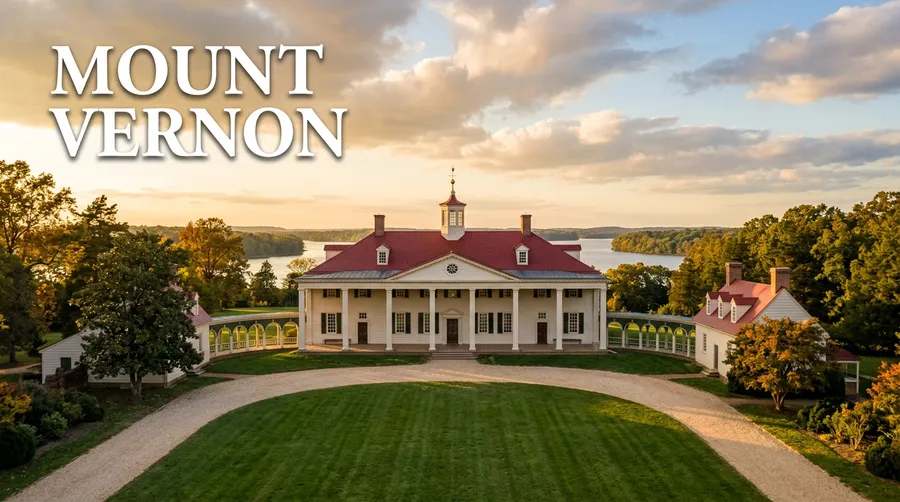
Mount Vernon Tickets, Mansion Tour, and What to See at George Washington’s Estate
A first-timer’s Mount Vernon guide covering timed mansion entry, how long to budget, what is included beyond the house, and how the estate now frames slavery as central history.

Famous Residents
Monticello Tickets, Tours, Mulberry Row, and What the Estate Actually Shows
Monticello is not just a house tour. Here is how the ticketed tours differ, what Mulberry Row adds, and why the slavery interpretation is central to understanding Jefferson’s estate.

Famous Residents
Hearst Castle Tickets, Tours, and How to Choose the Right Visit
A practical Hearst Castle guide covering tour types, estate logistics, the difference between the main-house visit and the pool spectacle, and how to choose the right first visit.
Discovering Turkey’s Timeless Treasures
Most important historical sites in Turkey?
Key sites include Hagia Sophia, Ephesus, Göbekli Tepe, the Archaeological Site of Troy and Cappadocia’s rock formations.
What is the most famous historical site in Turkey?
Hagia Sophia in Istanbul is Turkey’s most renowned landmark, celebrated for its Byzantine architecture and layered history.
Which of the 7 wonders are in Turkey?
The Temple of Artemis at Ephesus is the only one of the Seven Wonders located in modern-day Turkey.
What is the most ancient site in Turkey?
Göbekli Tepe, dating to around 9600 BCE, is the world’s oldest known temple complex.
What is Turkey famous for historically?
Turkey is famed as the crossroads of empires—Hittite, Greek, Roman, Byzantine and Ottoman—leaving a rich architectural and cultural legacy.
How many UNESCO sites are in Turkey?
As of mid-2025, Turkey has 22 UNESCO World Heritage Sites.
What is the most important thing in Turkey?
Preserving its millennia-old heritage—from ancient ruins to Ottoman monuments—is central to Turkey’s identity.
What is the nicest place to visit in Turkey?
Cappadocia, with its fairy-chimney landscapes and cave hotels, is widely regarded as the nicest destination.
Is Turkish white or middle eastern?
Ethnically Turks belong to the Caucasian group, though Turkey’s geography and culture bridge Europe and the Middle East.
Is Cappadocia worth it?
Yes—its unique volcanic formations, underground cities and hot-air-balloon experiences make it a must-visit.
When is the best time to visit historical sites in Turkey?
Spring (April–June) and autumn (September–October) offer mild weather and fewer crowds.
How much does a Turkey Museum Pass cost?
The 15-day Museum Pass costs around 210 TRY (approximately $7.50 USD) and covers most major sites.
Do I need a visa to travel to Turkey?
Many nationalities require an e-Visa obtained online before arrival; check official government portals for details.
What should I wear when visiting mosques in Turkey?
Modest clothing covering arms and legs is required, and women should bring a scarf to cover their hair.
Are guided tours available at Turkish archaeological sites?
Most major sites offer licensed guides and audio tours, bookable onsite or through travel agencies.
Maison builds place guides to help readers plan a real visit or understand a real site. When a page makes present-day access, booking, or visitor claims, those details are revised against public-facing source material and editorial review. For the wider standards behind that work, see methodology.