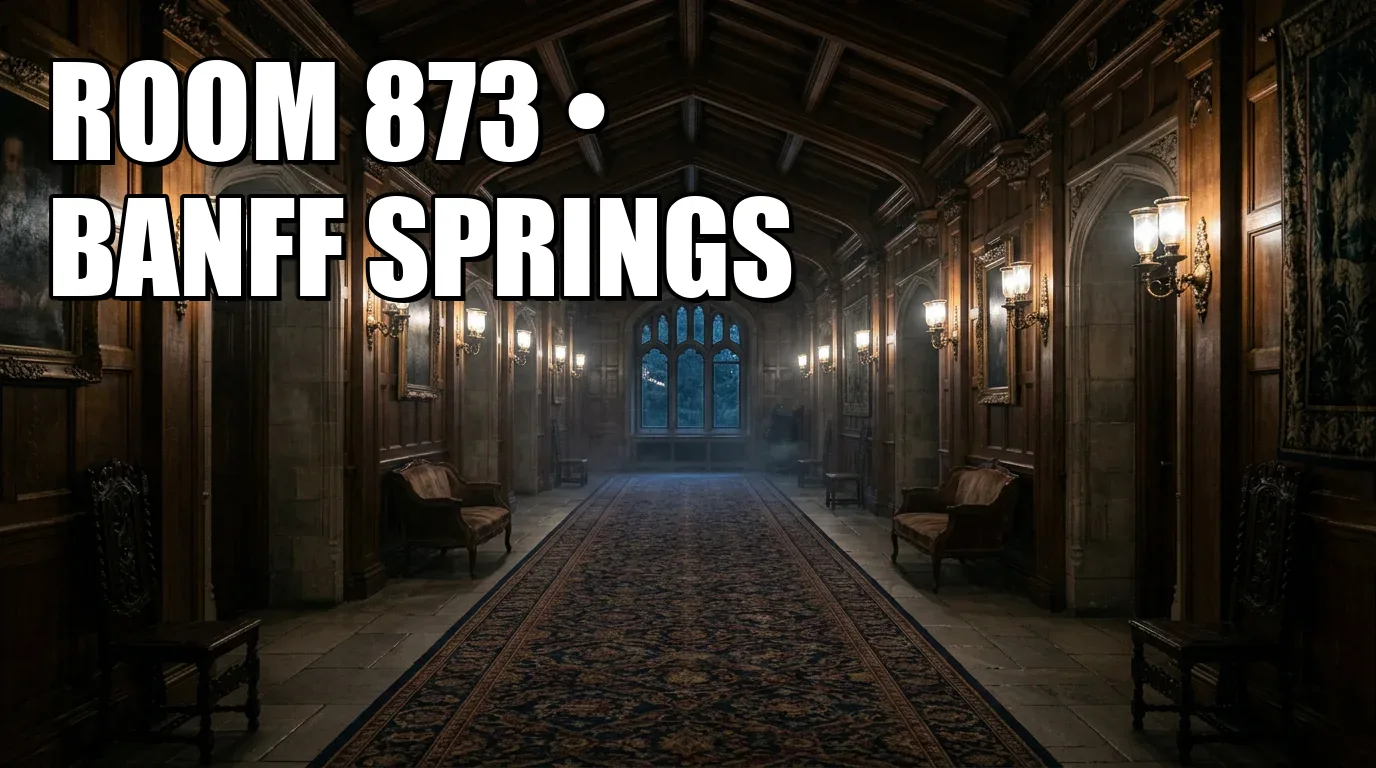
At a Glance 1888 Original hotel opening
724 Current guest rooms and suites
4 PM / 12 PM Check-in / check-out
- Room 873 belongs to hotel lore; the practical decision is whether the Fairmont Banff Springs experience is worth the rate and resort scale.
- The building, bars, and valley setting matter more than one ghost story if you are deciding where to sleep in Banff.
- Use the page to separate bookable reality from recycled haunted-list copy.
Room 873 is the search hook, but the useful Banff question is bigger than one missing door. If you are actually deciding whether to sleep at Fairmont Banff Springs, the real issue is not whether a legend exists. It is whether the castle-scale hotel, the current room categories, and the resort logistics justify the rate and the mood you want from Banff.
The short version: Fairmont now publicly acknowledges the Missing Room story and gives a practical explanation for it. The hotel's own ghost-stories page says a mid-century redesign combined two smaller rooms into one larger suite, removed the extra door, and left the hallway pot light behind. That means the legend is part of the property's public folklore, but it is not a bookable Room 873 product. The real stay is still sold through room categories, suites, and Fairmont Gold.
What Fairmont itself now says about the Missing Room
This is what makes the Banff page stronger than most haunted-room stories. The hotel is no longer silent about the legend. On its official Ghost Stories page, Fairmont frames the Missing Room as one of the castle's enduring tales and then offers a current explanation: a redesign combined two smaller rooms into one larger suite, the extra door disappeared, and the remaining hallway pot light helped keep the rumor alive.
That is a much better starting point than recycled listicle lore. It does not kill the story, but it does reposition it. The legend stops being a mystery you are supposed to solve with a room request and becomes what it really is today: part of the atmosphere of a historic hotel that has been rebuilt, expanded, and remodeled for more than a century.
Why the hotel matters more than the room number
Once you move from folklore to stay reality, Fairmont Banff Springs becomes the main event again. The official site still sells the property as Canada's Castle in the Rockies, a landmark hotel in Banff National Park with 724 guest rooms and suites, restaurants, spa, golf, and year-round mountain access. That scale matters. This is not a tiny haunted inn where one room story can define the whole product. It is a large destination hotel with multiple wings, categories, and moods inside one property.
The page should therefore answer the question most readers actually have but phrase badly in search: if Room 873 is not something I can directly book, is the hotel still worth wanting? For many travelers the answer is yes, but for hotel reasons first. The building itself, the dramatic setting above Banff, and the sense of sleeping inside a landmark are what keep the stay desirable after the ghost-story curiosity fades.
What to book instead of chasing a vanished door
The best Banff Springs decision is not a room-number request. It is choosing the right category. The official inventory breaks the hotel into guest rooms, suites, and Fairmont Gold, and the public room cards make clear that these choices change the stay more than a legend does. Some rooms are about main-building atmosphere and mountain views. Some categories sit in the Gatehouse near the Adventure Centre and make more sense for longer or more family-shaped stays. Fairmont Gold is the genuine splurge the hotel wants you to understand: separate arrival flow, private lounge, and a more elevated service layer.
| If your real goal is... | The smarter Banff Springs move is... | Why it beats chasing 873 |
| Feeling the full castle mood | Book the strongest room category your budget allows in the part of the hotel whose setting matters most to you. | The stay becomes about the landmark building and Banff setting, not about hoping a rumor changes your room assignment. |
| Upgrading the whole experience | Look at Fairmont Gold instead of a story-led room hunt. | Gold is a real premium product with clear benefits; Room 873 is not. |
| Family or longer-stay practicality | Use the current room cards and Gatehouse options to solve space and layout first. | The hotel is big enough that comfort and location inside the resort matter more than one legend. |
Arrival, parking, and resort-scale reality
This is another place where Banff stops behaving like a ghost story and starts behaving like a real hotel. The official guest-services page lists the property at 405 Spray Avenue, with 4:00 PM check-in and 12:00 PM check-out. Parking is structured rather than improvised: the hotel places it in the roofed parkade beside the Convention Centre and clearly distinguishes self-parking from valet. Fairmont also notes ski and bike storage near the Main Entrance.
Those details matter because they remind you what the stay actually is. Banff Springs is not a small old hotel where you drift in and let the building do the rest. It is a large resort hotel with real arrival choreography. If you love that kind of scale, the property delivers. If you wanted a more intimate haunted-hotel atmosphere, the very things that make Banff famous may also be what make it feel less personal.
Where the legend still adds real value
The Missing Room story is still useful, just not in the way search sometimes imagines. It gives the hotel a layer of strangeness that fits the building. A castle-like resort with a public explanation for a vanished door is naturally more memorable than a generic mountain luxury property. The legend helps the stay feel storied before you even reach the lobby.
But the value is emotional and atmospheric, not transactional. It should make you more interested in the hotel, not distort how you book it. That distinction is the whole point of keeping this page alive. Good haunted-hotel pages do not just repeat folklore. They teach readers how to carry folklore into a real booking decision without letting it take over the decision.
When Banff Springs is worth the spend
The hotel is worth it when you want the overnight to be one of the trip's main attractions, not just a sleeping base between hikes or drives. If you want a castle-hotel experience, big Rocky Mountain views, on-property amenities, and a building with enough history to sustain its own mythology, Banff Springs still makes sense. If you mainly want a practical Banff room and the folklore is doing most of the persuasion, there are cheaper ways to sleep in town.
That is why the page should end on hotel logic, not on ghost logic. Room 873 is what gets people in the door. The real question is whether Fairmont Banff Springs is the kind of stay you actually want once the legend has done its work. For most travelers, that answer becomes clearer the moment they stop asking for a vanished room and start asking what kind of Banff trip deserves a castle.
If you are comparing this against other room-number haunted-hotel pages, use Haunted Hotel Rooms as the broader room-led hub, then come back here when the hotel itself starts sounding more interesting than the rumor.
The Cornerstone Brief
One historic place, once a week — what it is, why it matters, whether it's worth going. No filler, no paid placements.
Coming soon. Unsubscribe any time.