Photo by Amelia Blackwood for Cornerstone Mansion · January 16, 2026
Does the notion of "Southwest Spanish architecture" conjure up a singular, dusty image in your mind? Perhaps an adobe wall, a wooden viga, and a red tile roof? If so, you're not entirely wrong, but you're only scratching the surface of a rich, complex architectural tradition—one that tells a story of conquest, adaptation, faith, and stunning resilience across the high desert. After years spent crisscrossing these sun-baked lands, I’ve learned that these structures aren’t just old buildings; they’re living documents, full of whispers and profound lessons.
What makes these sites so compelling, really? It's not merely their age, though many stretch back four centuries. It's the inherent narrative in every thick wall, every hand-hewn beam, every subtle curve that speaks to a profound convergence of cultures. Spanish colonial ambition met indigenous building wisdom, and the result was something utterly unique, perfectly suited to the demanding environment. I’ve seen countless guides merely point out features, but to truly grasp these places, you need to understand the *why* behind the *what*.
Santa Fe's Enduring Heart: The Palace of the Governors
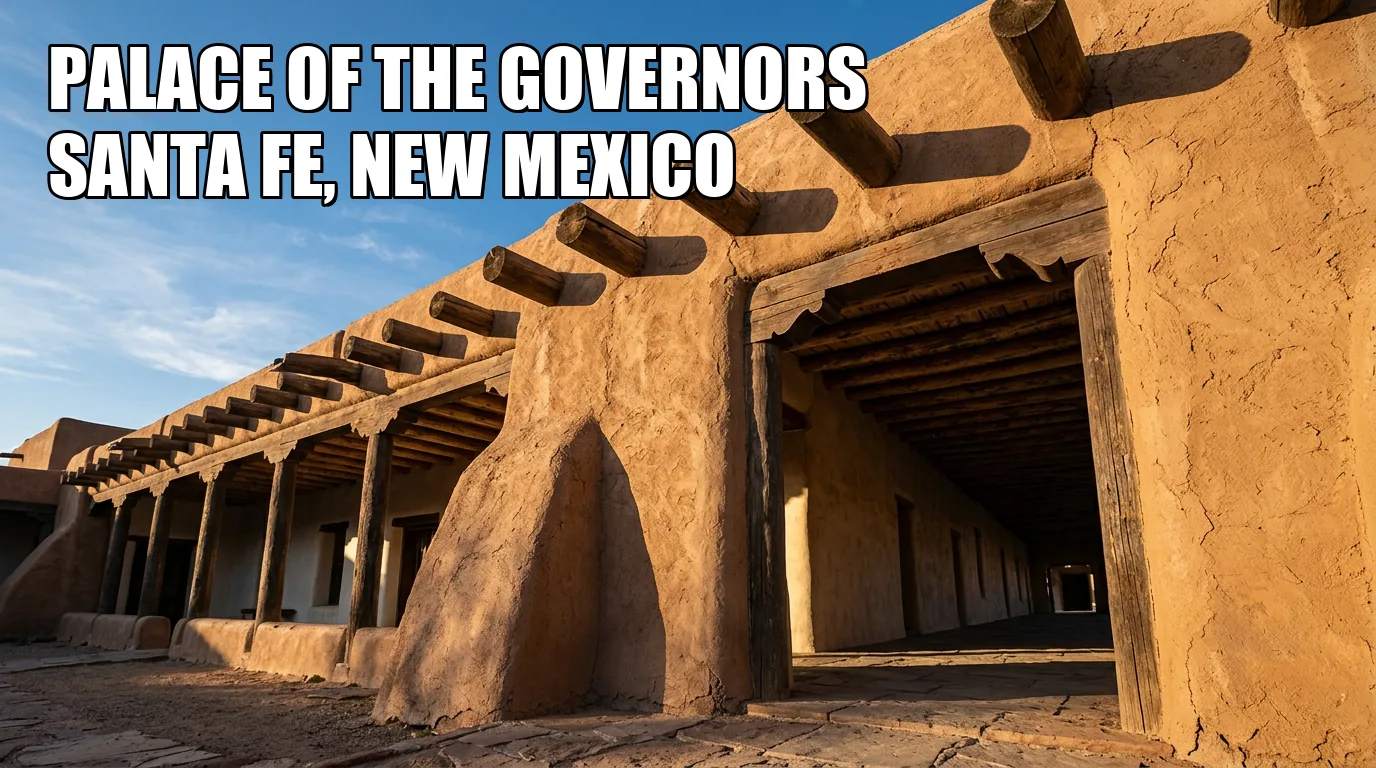
Stepping onto the historic Plaza in Santa Fe, your gaze invariably lands on the low-slung, formidable structure anchoring its north side: the Palace of the Governors. Completed between 1610 and 1614, this isn't just an old building; it was the seat of Spanish power in what they called "Nuevo México" for two centuries, then Mexican, and finally American. It's the oldest continuously occupied public building in the United States, a fact that often gets lost amid the bustle of tourists and souvenir shops. Most guides will tell you it's historically significant, but few emphasize how deeply ingrained it is into the very fabric of New Mexico's identity.
What truly struck me on my first visit, and continues to resonate, isn't the building's interior, which now houses the New Mexico History Museum—though that's certainly worth your time. It's the long, columned portal, or *portico*, extending the full length of the north side. This covered veranda, with its sturdy wooden posts and corbels, became an iconic feature of Spanish Colonial architecture in the Southwest. Today, it’s a vibrant, ever-changing marketplace where Native American artisans, regulated by strict tribal standards, sell their handmade crafts. This isn't some contrived "cultural experience"; it's a direct, unbroken thread connecting modern Pueblo and Navajo artists to the very place where their ancestors once confronted Spanish authority. That juxtaposition—a colonial palace now serving as a primary economic and cultural hub for the descendants of the colonized—is profoundly moving and uniquely Santa Fe. You might expect a static museum piece, but you’ll find a bustling, dynamic heart. Parking around the Plaza can be a nightmare, especially during summer weekends; aim for the city garages a few blocks away if you’re driving, or plan to visit early on a weekday morning to truly appreciate the quiet grandeur before the crowds descend.
Acoma's Skyward Sentinel: San Estévan del Rey Mission Church
To truly grasp the integration of Spanish and indigenous building techniques, you must venture out to Acoma Pueblo, the "Sky City," perched atop a massive mesa west of Albuquerque. This is not a casual stop; visiting requires respect, planning, and a guided tour, which departs from the visitor center at the base of the mesa. The journey alone is an experience, climbing the narrow road to the village that has been continuously inhabited for over 800 years. There, you'll find the San Estévan del Rey Mission Church, built between 1629 and 1641 under the direction of Franciscan friar Juan Ramírez. This imposing structure is a powerful testament to the spiritual and architectural ambitions of the Spanish, alongside the unparalleled skills of the Acoma people.
Don't expect delicate filigree here; this church is a fortress, a monumental act of faith and labor. Its distinguishing feature, quite literally, is its *gargantuan* adobe walls, which measure up to seven feet thick at the base and soar to a height of 35 feet. These aren't just thick; they convey an almost geological permanence. They speak of an era when missions were not merely places of worship but also defensive bastions in a frontier land. Look up at the roof: those massive ponderosa pine *vigas*—the exposed ceiling beams—were hauled by hand from mountains miles away. They are a triumph of ingenuity and sheer physical effort, representing the integration of Spanish woodworking innovations with time-honored Pueblo building methods. Many tourist guides gloss over the sheer physical effort and collaborative spirit required. This isn't just a church; it's a living monument to human will and cultural fusion. Be prepared for a solemn, respectful experience. Photography inside the church is typically forbidden, and visitors are asked to be mindful that Acoma is a living community, not just a historical attraction.
Santa Fe's Humble Gem: San Miguel Chapel
Back in Santa Fe, often overshadowed by the larger Cathedral Basilica of St. Francis of Assisi, lies the unassuming San Miguel Chapel. Most visitors will walk past its entrance without a second glance, perhaps catching a glimpse of the small sign proclaiming it the "Oldest Church in the USA." But to dismiss it would be a profound mistake. Though its current iteration dates largely to a 1710 rebuilding after the Pueblo Revolt, its foundations and original purpose trace back to 1610, constructed by indigenous Tlaxcalan workers who had accompanied Spanish settlers. This fact alone—that its earliest builders were not European but other Native Americans—is a crucial piece of the Southwest’s complex history, rarely highlighted with the prominence it deserves.
What truly sets San Miguel apart, beyond its venerable age, is its subtly profound design. This single-nave chapel became the foundational model for many subsequent missions throughout New Mexico, a testament to its functional elegance. Venture inside, and if you're lucky enough to visit at the right time of day, you might experience its unique celestial orientation firsthand. The sanctuary is precisely aligned to allow a dramatic shaft of light to pierce straight down the center aisle, illuminating the altar at specific times. This wasn't accidental; it reveals a deeply intentional celestial and religious orientation that speaks volumes about the intertwined spiritual beliefs of the time. It’s a quiet, introspective space, far from the Plaza’s commotion, offering a moment of genuine historical connection. While the Palace of the Governors tells a story of power, San Miguel tells one of enduring faith and community, built by hands often uncredited. Finding parking nearby can be tricky, so consider walking from the Plaza, a pleasant 10-15 minute stroll down the historic Barrio de Analco.
The Revival's Grand Dame: La Fonda Hotel
When we talk about Spanish Colonial architecture, it’s easy to focus solely on the centuries-old structures. But the early 20th century saw a powerful resurgence, a "revival" spearheaded by figures like architect Isaac Hamilton Rapp and, later, the renowned Pueblo Revival architect John Gaw Meem, working for the Fred Harvey Company. La Fonda Hotel, built in 1922 on the site of Santa Fe’s original *fonda* (inn), is a magnificent example of this Spanish Colonial Revival style. This isn't a direct continuation of ancient building methods, but rather a romanticized, often opulent, reinterpretation tailored for the burgeoning American tourist. Many might dismiss it as a mere hotel, but it's a museum of applied craftsmanship and design, one that profoundly shaped the aesthetic of modern Santa Fe.
What truly captivates visitors at La Fonda are the meticulous details that echo and elaborate on earlier traditions. The hotel integrates hand-carved wooden *vigas* and *corbels* throughout, not just as structural elements but as decorative statements, often adorned with painted motifs. Look up to admire the stained-glass skylights and the intricate hammered tin chandeliers—a testament to the high-quality craftsmanship nurtured by the Fred Harvey Company. The six-story bell tower, added later, gives it a distinct landmark presence, and the 25-foot cathedral ceiling in the lobby, with its terracotta tiles, speaks of a grand vision. This isn't an archaeological site; it's a living, breathing testament to how a past aesthetic was consciously revived and elevated to create a distinct sense of place for travelers. While it’s a luxury hotel, the lobby, restaurants, and many public spaces are open to visitors, offering a fantastic opportunity to experience the style without booking a room. Grab a drink at the Bell Tower Bar for unparalleled views of the city, especially around sunset – it's a popular spot, so expect a wait during peak season.
Taos's Iconic Adobe Mass: San Francisco de Asís Mission Church
A short drive south of Taos, nestled in the village of Ranchos de Taos, stands one of the most photographed and painted churches in America: the San Francisco de Asís Mission Church. Built between 1772 and 1815, this mission has achieved legendary status, immortalized by artists like Ansel Adams and Georgia O'Keeffe. While its fame often centers on its striking visual appeal, the architectural genius behind its form is equally compelling. For me, seeing it in person, after years of seeing its image, was a powerful experience; the photographs, however iconic, simply don’t convey its palpable presence.
The church's signature feature, and what makes it truly unique, are the distinctive beehive-curved adobe buttresses supporting the transepts. These aren't just decorative; they are structurally vital, designed to counter the outward thrust of the heavy adobe walls and roof. They represent a sophisticated understanding of engineering using local materials, an organic solution to a centuries-old problem. Additionally, note the doubly *corbelled vigas* set more closely together than typical Spanish Colonial structures—another subtle but significant design choice that hints at the specific needs and aesthetics of this particular community. Beyond the main structure, adobe walls extend from the back of the church to form an enclosed rectangular forecourt, creating a fortified plaza arrangement. This design choice speaks volumes about the security concerns of the era, where a church had to serve both spiritual and defensive purposes. You might expect a quiet, deserted monument, but it's still an active Catholic parish. Respectful observation is key, and be aware of potential photography restrictions, especially during services. The best time to visit for photography, if permitted, is late afternoon when the low sun dramatically sculpts its adobe forms.
These five structures, each unique, collectively tell the story of the American Southwest’s architectural soul. They are not merely relics but vibrant connections to a complex past, inviting us to look closer, question assumptions, and appreciate the enduring power of human ingenuity and adaptation. Each visit offers not just a glimpse into history, but a profound dialogue between cultures, etched in adobe and timber, under the vast, ancient sky.
Architecture Styles You Can Read From the Street
Use visible details like rooflines, columns, and ornament to identify building styles faster.
What is a comprehensive guide to southwest spanish architecture?
Southwest Spanish architecture, developed from the 17th-19th centuries, blends Spanish colonial heritage with Indigenous Pueblo influences, featuring distinctive adobe or stucco walls, terracotta tile roofs, wooden vigas (ceiling beams), arched openings, and courtyard layouts. Key architectural styles include Spanish Colonial, Pueblo Revival, Mission Revival, and Territorial styles, best preserved in Arizona, New Mexico, and Texas.
What are the best locations to visit for southwest spanish architecture in the USA?
Top destinations include San Antonio Missions National Historical Park in Texas (UNESCO World Heritage Site), Mission San Xavier del Bac near Tucson, Arizona, Santa Fe's Palace of the Governors and historic plaza in New Mexico, Taos and its San Francisco de Asis Church, Tumacacori National Historical Park in Arizona, and Albuquerque's Old Town with its Spanish colonial buildings.
What is the best time of year to visit southwest spanish architecture sites?
Visit during spring (March-May) or fall (September-November) for pleasant weather and comfortable outdoor exploration. Summer temperatures in the Southwest can exceed 100°F with intense sun, while winter offers cooler conditions. Weekday visits are less crowded than weekends, especially during mass times at active churches.
How much does it cost to visit southwest spanish architecture sites?
Many major sites offer free admission, including San Antonio Missions National Historical Park and Mission San Xavier del Bac in Arizona. Tumacacori National Historical Park charges $10 per adult, Casa San Ysidro in Albuquerque costs $6 per adult, and some guided tours range from $8-15, though free Saturday admission is available at Casa San Ysidro (10:30 a.m.–3 p.m.).
What are the typical operating hours for southwest spanish architecture sites?
Most mission sites operate 9 a.m. to 5 p.m. daily, with seasonal variations; San Xavier del Bac has church hours 9 a.m.–4 p.m., Casa San Ysidro offers guided tours at scheduled times (9:30 a.m. and 1:30 p.m. Tuesday-Friday, extended hours weekends), and the Heard Museum in Phoenix is open 10 a.m.–4 p.m. daily. Specific sites close on major holidays like Thanksgiving and Christmas.
What distinctive architectural features define southwest spanish colonial buildings?
Key features include thick adobe or stucco walls (1-2 feet thick) for insulation, low-pitched or flat roofs with wide overhangs, exposed wooden vigas and latillas, small deep-set windows, arched doorways and windows, red or terracotta tile roofs, earth-tone color palettes (browns, tans, terra cotta), decorative tilework, carved wooden doors, wrought iron accents, and enclosed courtyards or portales (covered porches).
How long should I plan to spend visiting southwest spanish architecture sites?
Allow 3-4 hours to tour San Antonio Missions National Historical Park, with individual missions requiring 30-45 minutes each. Mission San José typically needs 1-2 hours, while quick visits to single churches like San Xavier del Bac or San Francisco de Asis can be completed in 45 minutes to 1 hour. Guided tours typically last 45 minutes to 1.5 hours.
Are guided tours available at southwest spanish architecture sites?
Yes, most major sites offer free or low-cost guided tours; San Antonio Missions provides free ranger-led tours daily, San Xavier del Bac offers free docent-led tours Monday-Saturday (around 9 a.m. each hour), Casa San Ysidro requires guided tours only at scheduled times, and Santa Fe offers architectural walking tours led by local historians.
What accessibility accommodations are available for visitors with mobility limitations?
San Antonio Missions has partially wheelchair-accessible major sites with wheelchairs available for loan at each location, accessible restrooms, and paved ranger-led tour paths. Mission San José de Laguna is wheelchair accessible, Mission Concepción has ramps and designated parking, and many visitor centers offer assistance and accessible facilities, though rough terrain exists at some sites like the San Juan Farm area.
Are photography and filming permitted at southwest spanish architecture sites?
Personal photography is generally allowed at most mission sites; however, commercial photography, filming, or large group portrait sessions may require special permits (typically a $50 application fee plus additional costs). San Antonio Missions requires permits 30 days in advance for filming/photography with 8+ people, while casual personal photography remains unrestricted at most sites.
Which southwest spanish architecture sites are UNESCO World Heritage Sites?
San Antonio Missions National Historical Park in Texas, which preserves four Spanish frontier missions (San José, San Juan, Espada, and Concepción), was designated a UNESCO World Heritage Site in 2015 along with the Alamo, recognizing its significance in Spanish colonial frontier history and architectural preservation.
What is Territorial style architecture and how does it differ from Spanish Colonial?
Territorial style emerged in New Mexico during the 1830s-1912, blending Spanish folk carpentry and Pueblo architecture with Greek Revival and American architectural elements (pediments, columns, copings). Unlike earlier Spanish Colonial's pure adobe construction, Territorial style incorporated classical details and was more ornate, with examples visible in Old Town Albuquerque and state government buildings.
What museums showcase southwest spanish colonial art and architecture?
The Museum of Spanish Colonial Art in Santa Fe features historic artifacts and contemporary art inspired by Spanish heritage, the Heard Museum in Phoenix displays Spanish Colonial architecture on its campus alongside Native American collections, the New Mexico History Museum houses the Palace of the Governors, and Casa San Ysidro in Albuquerque offers tours of a 1700s-era Spanish colonial home.
What practical tips should visitors know when exploring southwest spanish architecture?
Wear comfortable walking shoes, bring plenty of water and sun protection, note that some churches lack air conditioning (bring layers for temperature changes), check hours before visiting as some sites close unexpectedly, allow extra time for photography, visit early or on weekdays to avoid crowds, and respect active religious services when visiting functioning churches.
Which southwest spanish architecture sites require advance reservations or bookings?
Casa San Ysidro requires advance ticket purchases for guided tours; El Rancho de las Golondrinas museum offers guided tours by reservation only from April-October; some specialized photography sessions require week-ahead booking. Most mission sites operate on walk-in basis without reservations, though group tours benefit from advance notice to park authorities.
Why This Page Exists
Maison builds place guides to help readers plan a real visit or understand a real site. When a page makes present-day access, booking, or visitor claims, those details are revised against public-facing source material and editorial review. For the wider standards behind that work, see methodology.
The Cornerstone Brief
One historic place, once a week — what it is, why it matters, whether it's worth going. No filler, no paid placements.
Coming soon. Unsubscribe any time.
We use cookies to enhance your experience. By continuing to visit this site you agree to our use of cookies.