Film & TV Locations

Beyond Darcy's Gaze: Unveiling P&P's Real-Life Estates

Stepping onto the grounds of Darcy's Pemberley or wandering through the verdant landscape where Elizabeth Bennet once strode, one feels an almost visceral connection to Jane Austen's world. But what lies beneath the cinematic gloss? Having crisscrossed the UK in search of these hallowed grounds, I've unearthed insights that go far beyond any glossy brochure. The 2005 adaptation of Pride & Prejudice, directed by Joe Wright, breathed new life into Austen's masterpiece, creating indelible images of grand estates and rolling English countryside. Yet, the reality of visiting these sites often presents a more complex, and frankly, more fascinating picture than the film suggests. Forget the polished perfection; let's delve into the tangible history, the practicalities, and the occasional surprises that await.

For those chasing the ghosts of Elizabeth and Darcy, several magnificent British estates from the film open their doors to the public. These aren't just backdrops; they are repositories of centuries of history, each with its own story, sometimes diverging wildly from its on-screen persona. What makes a place truly authentic, or merely a convincing stand-in? The seasoned traveler learns to look beyond the immediate film connection to appreciate the deeper layers of significance.

Pemberley's True Spirit: Decoding Chatsworth House's Grandeur

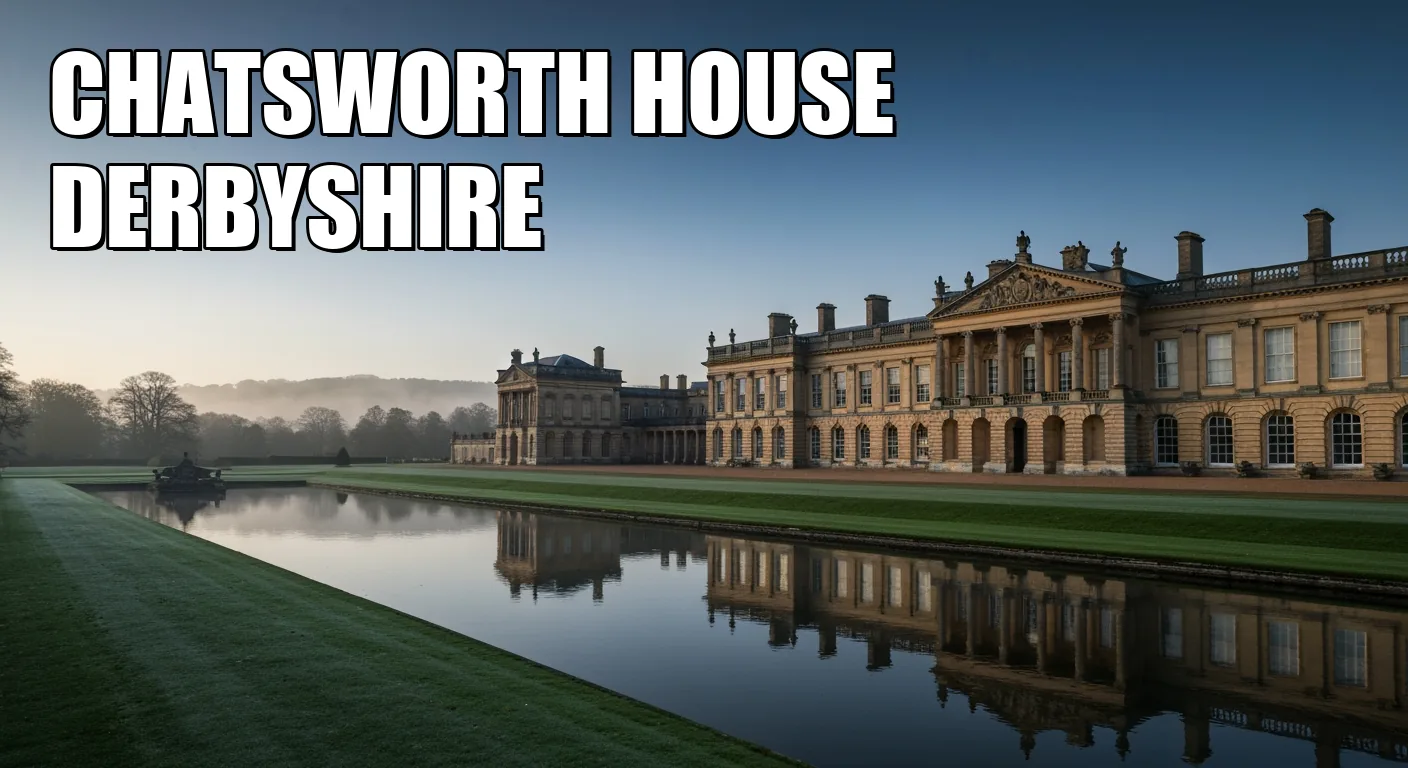
Does any estate loom larger in the collective consciousness of a Jane Austen fan than Pemberley? Joe Wright's team chose Chatsworth House in Derbyshire to embody this iconic residence, and frankly, it's a stellar choice. This isn't merely a pretty house; it's been the seat of the Dukes of Devonshire for 17 generations, a lineage that speaks volumes about inherited wealth and enduring influence. Visitors will recognize the exterior immediately, but it's the interior, particularly the Sculpture Gallery—where Elizabeth famously encounters Darcy's bust—and the Painted Hall, that truly resonate. The film captured only a sliver of its vastness, leaving much for the curious visitor to discover. The grandeur here isn't fabricated for the screen; it's a legacy.

Don't expect a quiet, intimate experience, especially during peak times. Chatsworth is a major attraction, and its £27-£35 adult entry fee (variable based on season and advance booking) reflects its status. To truly appreciate its scale and the remarkable art collection it houses—spanning four centuries—allow yourself a full day. Interestingly, Chatsworth isn't just a film location; it's widely believed to have been Jane Austen’s inspiration for Pemberley herself, lending a layer of meta-authenticity that few other sites can claim. The estate becomes a living dialogue between literary imagination and architectural reality. Plan your visit for late March through early November, but be warned: June through August is absolute peak season, teeming with crowds. For a more serene, yet vibrant experience, aim for late April or May when the rhododendrons and magnolias burst forth, or the latter half of September as the autumnal hues begin to paint the landscape, offering a less frenetic pace.

Stourhead's Classical Oasis: Where Romance Took a Turn

The pivotal first proposal scene, a rain-soaked moment of simmering tension, unfolded at the Temple of Apollo within Wiltshire's Stourhead Garden. This isn't a grand house interior; it’s a meticulously designed 18th-century landscape, a masterpiece of classical inspiration, earning its Grade I designation on the Register of Historic Parks and Gardens. Henry Hoare II, "Henry the Magnificent," envisioned an Italianate idyll, a living painting that draws inspiration from the Grand Tour. The temple itself, built in 1765, strategically overlooks the estate, a direct challenge to the architectural ambitions of the era. Understanding this context elevates the film scene from a simple location to a moment steeped in historical artistic tradition.

Visiting Stourhead offers a dramatically different experience from Chatsworth. Here, the emphasis is on contemplative walks and breathtaking vistas. The standard admission runs £20-£22, with a slight bump for Gift Aid donations, which help support the National Trust's conservation efforts—a worthy addition if you're able. Autumn, from late September through mid-November, is arguably the most spectacular time to witness Stourhead, as the brilliant reds, oranges, and golds of the foliage reflect in the serene lake. Spring, too, particularly April and May, is a symphony of new growth, with rhododendrons and azaleas creating a profusion of color. Avoid summer if you prefer fewer crowds and a more intimate communion with nature; though lush, the sheer volume of visitors can detract from the garden's tranquil magic. Consider the Christmas at Stourhead illuminated trail (late November-early January) for a festive, albeit popular, alternative.

Unveiling Rosings: The Imposing Reality of Burghley House

Lady Catherine de Bourgh's formidable residence, Rosings Park, found its cinematic match in Lincolnshire's Burghley House. This 16th-century Elizabethan mansion, with its later Baroque embellishments, truly embodies the opulent, slightly intimidating grandeur Austen described. The extensive glazing—a mark of wealth and status in its time—would have been particularly impressive to visitors like Elizabeth Bennet. Burghley isn't merely a pretty face for the camera; it’s one of England's most photogenic and historically significant estates, steeped in royal connections and frequently chosen for heritage productions. The film's portrayal captured its imposing scale, a perfect visual metaphor for Lady Catherine's domineering personality.

An adult ticket for Burghley typically ranges from £18-£22, with advance purchase usually securing the lower end of that scale. However, there’s a crucial caveat for September visitors: the Defender Burghley Horse Trials. This event, held annually from September 4-7, 2025, utterly transforms the grounds, attracting over 173,000 visitors. It’s one of only seven CCI5-rated equestrian competitions globally, a pinnacle of the sport, and a massive economic driver. If you're hoping for a quiet stroll through Lady Catherine's domain, September during the Horse Trials is absolutely the wrong time. You'll encounter grandstands, trade stalls, and a carnival-like atmosphere, which, while exciting for equestrian fans, completely overwhelms the P&P connection. For a more traditional experience, late March through November (outside of the Horse Trials) offers pleasant conditions, with spring and early autumn striking an ideal balance between weather and crowd levels.

Netherfield's Gentle Charm: Basildon Park's Unexpected Life

Mr. Bingley's rented estate, Netherfield Park, often feels like a character itself in Pride & Prejudice—a symbol of transient wealth and social mobility. Basildon Park in Berkshire provided this backdrop, and its history adds an intriguing layer to its film role. This Georgian mansion was famously rescued from ruin in the mid-1950s by Lord and Lady Iliffe, a testament to passionate preservation. Its meticulous restoration combined historical authenticity with a surprising twist: a functioning 1950s kitchen, reflecting the Iliffes' personal touch. This blend of period drama authenticity and mid-century practicality is something you won't find in typical guides and offers a unique insight into post-war aristocratic life.

As a National Trust property, adult entry is typically £16.50-£20.90, with advance bookings often at the lower price point. While the house itself is beautiful, what struck me was the contrast between its cinematic role and its real-life story of near-oblivion and subsequent revival. It’s a less overtly grand estate than Chatsworth or Burghley, lending a believable air to Bingley's "rented" status. Basildon Park offers a more intimate scale, making it particularly enjoyable during the shoulder seasons of April-May or September-October when the weather is pleasant and the grounds are less crowded than in the peak summer months. Beyond its P&P connection, the estate occasionally hosts temporary exhibitions and family activities, especially around school holidays, so check their schedule before you go.

Longbourn's Humble Heart: Groombridge Place Beyond the Moat

The Bennet family home, Longbourn, needed to feel lived-in, respectable but not ostentatious. Kent's Groombridge Place, a charming 17th-century moated brick manor dating from 1662, fit the bill perfectly. The film's production designer cleverly enhanced its authenticity by building a duckboard bridge across the moat and populating the courtyard with period-appropriate farmyard animals, transforming it into the bustling heart of the Bennet household. In reality, the duckboard bridge is gone, and the animals are not a permanent feature, but the essence of a comfortable, historic family home remains.

Admission to Groombridge Place typically runs £8.95-£9.95, varying by peak/off-peak status. What makes Groombridge particularly interesting is its own rich history, including a mention in Sir Arthur Conan Doyle's Sherlock Holmes story "The Valley of Fear." Beyond its cinematic credentials, the estate boasts 200 acres of historic gardens, including formal walled gardens, and a rather enchanting "Enchanted Forest." This forest features adventure elements like a 350-meter Treetop Walkway and Crusoe's World—things decidedly *not* present in Jane Austen's time, but hugely popular with families today. Oh, and keep an eye out for the resident "Zeedonk" (a zebra-donkey hybrid), a truly unexpected delight! Peak season is undeniably summer (June-August) during school holidays, when all activities are in full swing. If you're there purely for the P&P connection, a quieter spring or early autumn visit allows for better appreciation of the manor and its historic grounds.

The Other Pemberley: Wilton House's Regal Secrets

Interestingly, while Chatsworth provided the exterior and some key interiors for Pemberley, Wilton House in Wiltshire stepped in for other crucial scenes. Its magnificent 17th-century State Apartments, particularly the Double Cube Room—with its Chippendale furniture, Van Dyck portraits, and immense scale—became Georgiana's music room and the setting for several pivotal Elizabeth-Darcy interactions. This estate, the seat of the Earls of Pembroke for nearly 500 years, was rebuilt in the Palladian style by Inigo Jones and John Webb, making it a true architectural treasure. Visitors often overlook Wilton in favor of its more famous P&P counterparts, which can make for a more intimate experience.

An adult ticket for the house and grounds is around £19, or £8 for grounds only. Wilton operates on a more limited schedule than some other estates, with specific days for guided tours versus "free-flow" self-guided exploration. This varied access means checking their website carefully before planning your trip is absolutely essential. Currently, for the 2025 season, Wilton House is listed as closed, which is a significant practical issue for anyone planning a P&P pilgrimage. This highlights a critical aspect of film location tourism: these are living, working estates, and their accessibility can change without much notice. When it *is* open, late spring (May) through early autumn (September) generally offers the best weather and viewing conditions. The sheer artistry within the Double Cube Room alone is worth a visit, offering a window into centuries of aristocratic taste and patronage.

Haddon Hall: More Than Just an Inn, A Timeless Backdrop

Finally, we come to Haddon Hall, a true chameleon of period drama. This exceptionally well-preserved Elizabethan and Jacobean manor on the River Wye served as the interior for the humble Lambton Inn, where Elizabeth receives the fateful letter from Jane detailing Lydia's elopement. But to call Haddon Hall merely an "inn" in the cinematic context does it a disservice. It's a living museum, having also featured in three versions of Jane Eyre, The Princess Bride, and The Other Boleyn Girl, making it one of England's most versatile and authentic historical backdrops. Its rooms and gardens genuinely reflect multiple historical periods, untouched by modern interventions.

Haddon Hall's adult entry fee is £28.00. It operates seasonally, typically from late March to late October, with occasional closures for maintenance or private events. What truly distinguishes Haddon is its palpable sense of history; the rooms feel genuinely ancient, not just staged. Unlike the polished grandeur of Chatsworth or the architectural ambition of Burghley, Haddon feels like stepping directly into the past. For a truly unique experience, check their schedule for special exhibitions, such as "MAGIC: Charms, Rituals and Superstition in Elizabethan England" (September-October 2025), which offer fascinating insights into earlier eras. Visiting during late spring (May) or early autumn (September) allows you to appreciate its beauty without the intense summer crowds, and notably, children aged 5-15 often receive free admission during much of the season—a welcome family-friendly detail.

Crafting Your Journey: Navigating the P&P Trail with Precision

Embarking on a pilgrimage to these Pride & Prejudice estates demands careful planning, as their geographic spread across England means you can't simply hop between them. General UK peak season runs from June to August, offering maximum daylight but also maximum crowds and higher costs for accommodation and travel. My strong recommendation, gleaned from years of navigating similar trails, is to target the shoulder seasons: May or September to early October. The weather remains largely pleasant, tourist numbers dip considerably, and the natural beauty—be it spring blossoms or autumn foliage—is often at its most spectacular. You’ll find better availability for everything from rental cars to charming B&Bs.

If you're aiming to visit a majority of these sites, a strategic three-to-four-day itinerary would be prudent. Dedicate your first day to Derbyshire, tackling Chatsworth House and Haddon Hall, which are a mere 20 minutes apart by car. Your second day could take you to Wiltshire for Stourhead and, when it reopens, Wilton House, located about 30 minutes from each other. For the third day, head south for Basildon Park in Berkshire and Groombridge Place in Kent, which, while a bit more of a drive, are manageable within a single day. Burghley House in Lincolnshire, given its location, might necessitate a dedicated fourth day trip or be woven into a broader East Midlands itinerary. Remember that admission fees are significant, so budget accordingly, and always check official websites for the most current opening times, event schedules, and booking requirements, particularly for properties like Wilton House with its specific touring formats.

Ultimately, these estates offer more than just a fleeting glimpse into a beloved film. They are vibrant, living testaments to English history, architecture, and enduring landscapes. Each visit peels back another layer, revealing not just Mr. Darcy's grand residence or the Bennet family's humble abode, but the very fabric of the world that inspired Jane Austen, and continues to enchant us through cinematic adaptations. Go with an open mind, a comfortable pair of shoes, and the understanding that the real stories are often far richer than anything the silver screen can convey.

Discovering Pride and Prejudice: Essential Guide to Iconic Filming Locations

What locations was Pride and Prejudice filmed in?
The 2005 Pride and Prejudice was filmed entirely across England in Berkshire, Derbyshire, Kent, Lincolnshire, Northamptonshire, and Wiltshire. Key locations include Chatsworth House (Pemberley), Burghley House (Rosings), Groombridge Place (Longbourn), and Haddon Hall (Lambton Inn).
Pride and Prejudice filming locations guide
The most accessible filming locations include Chatsworth House near Bakewell, Derbyshire; Burghley House in Stamford, Lincolnshire; and Groombridge Place near Tunbridge Wells, Kent. Many locations offer public access with gardens open seasonally and house tours available.
Can you visit where Pride and Prejudice was filmed?
Yes, most filming locations are open to the public during specific seasons. Chatsworth House, Burghley House, and Groombridge Place all welcome visitors, though hours and access vary by location. Check official websites for 2025 opening schedules and admission fees.
Where is the house from Pride and Prejudice located?
The main estate, Pemberley (filmed at Chatsworth House), is located in Derbyshire, England. Longbourn (the Bennet family home) was filmed at Groombridge Place in Kent, and Rosings (Lady Catherine's house) is at Burghley House in Lincolnshire.
Can you visit Mr. Darcy's house?
Yes, you can visit Chatsworth House, which served as Mr. Darcy's estate Pemberley in the 2005 film. The house is open to the public with guided tours, and the gardens where Elizabeth's famous visit scenes were filmed are accessible to visitors.
Can you stay at Chatsworth House?
Chatsworth House itself is not available for overnight stays as it remains the private residence of the Duke and Duchess of Devonshire. However, there are hotels near Chatsworth offering package deals including house admission, and luxury cottages and inns are available on the Chatsworth Estate.
Who lives at Chatsworth House now?
Peregrine Cavendish, the 12th Duke of Devonshire, and his wife the Duchess of Devonshire currently reside at Chatsworth House, as the Cavendish family has called it home for over 500 years.
Is Lady Catherine's house the same as Downton Abbey?
No, Lady Catherine's Rosings Park was filmed at Burghley House in Lincolnshire, not Highclere Castle. Highclere Castle is the filming location for the television series Downton Abbey and is a separate estate.
How much is $10,000 a year in Pride and Prejudice?
In modern 2025 terms, Darcy's £10,000 annual income would be worth approximately $664,603 to $17 million USD depending on the calculation method used (purchasing power versus GDP share).
Is Fitzwilliam Darcy autistic?
Modern scholars and fans have theorized that Mr. Darcy displays traits consistent with autism spectrum disorder, particularly social discomfort in unfamiliar situations and preference for familiar company, though Jane Austen did not explicitly characterize him as neurodivergent.
Are there Pride and Prejudice filming locations in the United States?
The main 2005 and 1995 adaptations were filmed entirely in England. However, Pride and Prejudice: Atlanta (2019) was filmed in Atlanta, Georgia, USA as a modern adaptation set in the African American community.
What is the best time to visit Pride and Prejudice filming locations?
Late spring through early autumn (May to September) offers the best weather and full access to gardens and estates in 2025. Peak season brings more visitors, so consider visiting on weekdays for a quieter experience.
How much does it cost to visit Chatsworth House in 2025?
Admission varies by what you want to see; house and garden tickets are typically £25-30 per person, while gardens-only access is usually around £15. Children often receive discounts and family packages are available.
Can you watch Pride and Prejudice filmed at Chatsworth House?
Yes, Chatsworth House hosts outdoor cinema events twice yearly during summer months where you can watch Pride and Prejudice (2005) on the lawn with advance booking.
What other Jane Austen adaptations were filmed in England?
The 1995 BBC Pride and Prejudice series and the upcoming 2025 Netflix Pride and Prejudice series (currently filming) both used English locations. Emma, Persuasion, and other Austen adaptations have also been filmed across English estates.