Architecture Styles

Beyond Frills: Unpacking America's Gingerbread Legacy

For years, the term "gingerbread" has been tossed around to describe the delicate, often whimsical wooden lace adorning Victorian homes across the United States. It conjures images of storybook cottages, a delightful excess of decorative trim that feels almost edible. But to dismiss it as mere frippery misses a richer, more complex story—a narrative of technological leaps, shifting social aspirations, and an enduring testament to the human desire for beauty in the everyday. As someone who's spent decades wandering through historic districts, from the painted ladies of San Francisco to the vibrant camps of Oak Bluffs, I’ve learned that understanding this ornate woodwork means understanding a pivotal era in American design and industry. What most people don't realize is that this profusion of detail, which seems so organic and flowing, often emerged from the very practical constraints and innovations of the 19th century. North America offered vast timber resources, while steam-powered scroll saws democratized intricate carving, making what was once the exclusive domain of master carvers accessible to a burgeoning middle class. The result? A vibrant, diverse decorative language that continues to captivate and challenge us, especially when it comes to the delicate art of modern restoration.

Peeling Back the Layers of Gable-End Drama: Scroll-Sawn Bargeboards

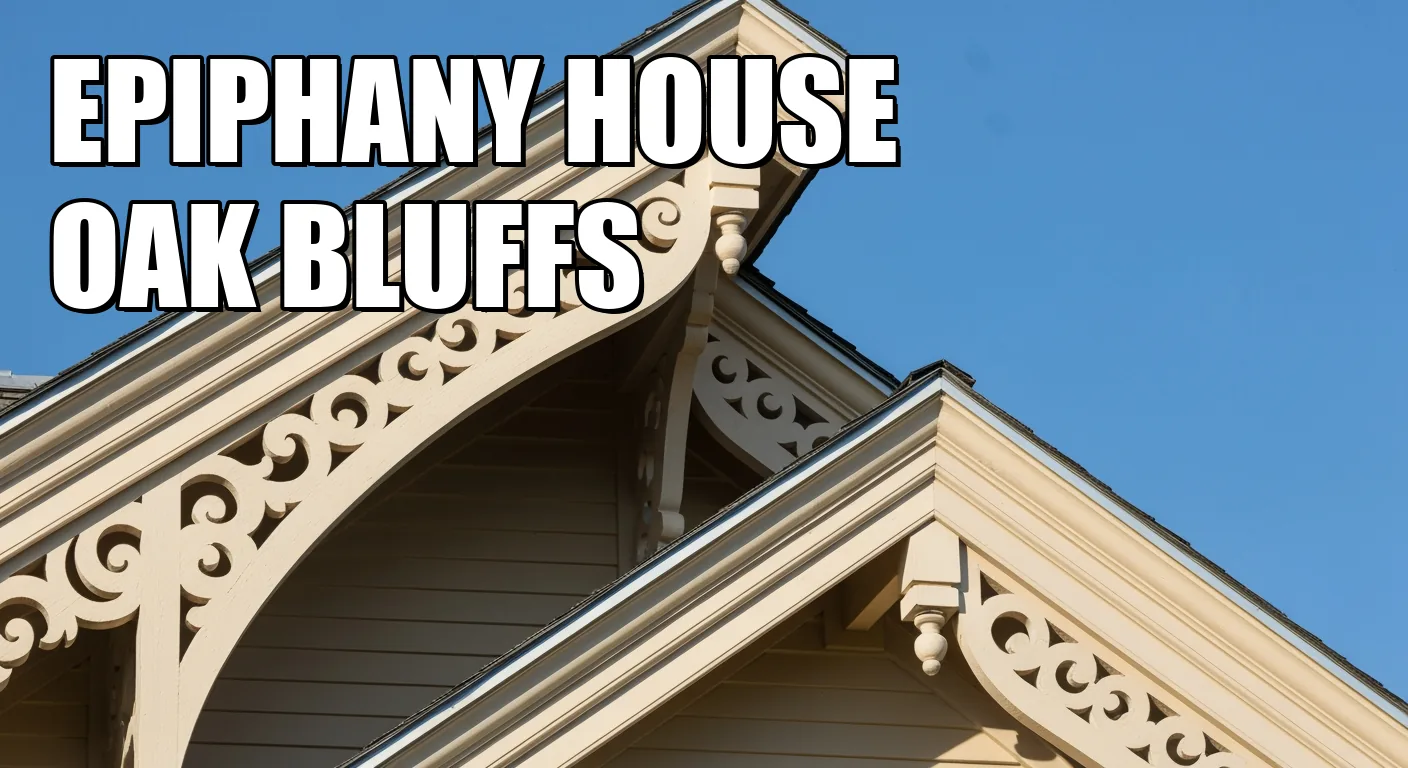
Have you ever looked up at the peak of a Victorian gable and seen a cascade of cutwork seemingly defying gravity? Those are bargeboards, sometimes called vergeboards, and they represent the very DNA of gingerbread trim. Far from simple decorative strips, these are often the most fundamental and visible expressions of Gothic Revival influence in residential architecture, particularly between 1850 and 1870. The patterns—geometric shapes, pointed arches, intricate tracery within the spandrels (the triangular sections beneath the eaves), even sunbursts and pierced bull's eyes—aren't just pretty; they reflect a romanticized return to medieval forms, translated into wood. It’s easy to admire the finished product, but the real marvel lies in their construction. The widespread adoption of steam-powered scroll saws in the mid-1800s was nothing short of revolutionary. Suddenly, a skilled craftsperson could produce elaborate cutwork with an efficiency unimaginable just decades prior, transforming raw pine, oak, or even more luxurious walnut into these architectural statements. Early examples often used Eastern white pine because it was readily available and easy to work with, keeping costs manageable for homeowners. However, in wealthier residences, you'd find mahogany or walnut, chosen not just for their inherent beauty but for their durability and the subtle status they conveyed. Restoring a damaged section today demands a premium, with professional work ranging from $250 to $700 per linear foot, a figure that quickly adds up when dealing with an entire gable's worth of intricate patterns.

Corbels and Brackets: More Than Just Porch Supports

Step onto a Victorian porch, and your eye is immediately drawn to the L-shaped elements supporting the eaves or the roof itself—the corbels and brackets. Often conflated, corbels are generally smaller, more decorative supporting elements, while brackets are larger, structurally integral components. But both shared a common mission: to blend structural necessity with flamboyant decoration. These pieces were true workhorses, typically carved from walnut, oak, mahogany, or pine, with wealthier owners favoring the rich grain of hardwoods, while pine offered an economical, paintable surface for the middle class. What’s fascinating is their evolution: hand-carved versions graced early Victorian homes from the 1840s, but the true explosion came between the 1860s and 1890s with mass production. This shift mirrors the burgeoning prosperity of the era and the rise of the machine age. If you’ve ever visited the charming "gingerbread cottages" of Oak Bluffs on Martha's Vineyard or the meticulously rebuilt Victorian district of Cape May, New Jersey (post-1878 fire), you’ve seen this ubiquitous corbel work in all its glory. They weren't just functional; they were statements, featuring acanthus leaves, palmettes, and interlocking scrolls—all designed with a rigorous bilateral symmetry to create dramatic shadow play. Be prepared for a significant investment if custom reproduction is needed; a single complex corbel can easily run $1,200 or more, reflecting the specialized artisan labor required to match period detail.

The Intricate Weave of Porch Spandrel Panels

Imagine the spaces between porch columns, stretching above the railing and below the eaves. These aren’t empty voids in Victorian design; they are canvases for the glorious porch spandrel panels, or "fretwork frieze." This is where the concept of "fretwork"—pierced woodwork created by removing material to form negative space—truly shines. These panels are a masterclass in delicate cutwork, often featuring interlocking balls and dowels, intricate spindle work, or elaborate geometric patterns that sometimes mimic textile designs. Circles, squares, diagonal lattices, and even sinuous curves create a visual rhythm that draws the eye along the entire length of the porch. The preference for softwoods like pine, birch, and even Nordic pine for reproductions wasn't arbitrary. These materials allowed for those incredibly delicate, intricate cuts without shattering, making the elaborate designs feasible. The standardization of these panels truly took hold between the 1870s and 1910s, with the 1867 Paris Universal Exhibition playing a surprising role in popularizing fretwork ornament across the globe. It’s a testament to the era’s globalized design influences. Restoration here is rarely simple, often requiring custom fabrication of 3-foot sections that can cost anywhere from $800 to $2,000 per panel, a significant investment for a detail that often goes unnoticed by the casual observer.

Crowning Glory: Gable Peak Finials and Ornate Trim

Every great work of art deserves a proper crown, and for Victorian gables, that often came in the form of finials. These decorative ornaments, perched majestically at the apex of the roof, serve as the exclamation point of the entire architectural composition. From the relatively modest, turned spindle elements of cottages to the towering, urn-shaped or pyramidal forms adorned with carved details on grander homes, finials evolved significantly. Early Gothic Revival examples might show sharp, pointed arch elements, while later Queen Anne styles embraced more elaborate turning with ball finials, ring turnings, and scroll-sawn applied ornament. The choice of wood for finials was often dictated by region and purpose. Eastern builders frequently opted for pine for its affordability, while out West, redwood finials gained popularity for their superior weather resistance and durability—a pragmatic choice given the elements. Some of the most exquisite pieces combined a pine body with applied walnut or mahogany ornament, creating a subtle contrast and adding to the piece's perceived value. These elements, peaking in popularity from 1870 to 1895, are critical to the complete silhouette of a Victorian home. Losing or damaging a finial isn't just a minor cosmetic issue; it fundamentally alters the intended profile of the house. Custom reproductions can be costly, with a single finial running from $600 to $1,500, reflecting the specialized lathe work and carving involved.

The Hidden Elegance of Ornamental Ceiling and Cornice Brackets

While many associate gingerbread with exterior flair, Victorian ornamentation often extended to more subtle, yet equally elaborate, elements like ornamental ceiling and cornice brackets. These are the unsung heroes of interior and semi-enclosed spaces, frequently dubbed "drop pendants" or decorative cornices. Here, the scroll designs take on a more refined, delicate character, often incorporating rosette motifs, acanthus leaf carvings, and geometric patterns that create layers of shadow and depth. Unlike their porch-supporting cousins, these cornices often incorporate modillions (those small, projecting ornamental brackets) and dentil molding (the repeated rectangular block patterns), showcasing a different kind of classical influence. What truly fascinates me about these pieces is the story they tell of Victorian aspiration. While solid mahogany or walnut was preferred for high-end examples, many middle-class homes utilized pine, which was then meticulously painted or, more surprisingly, *faux-grained* to simulate the appearance of expensive hardwoods. This wasn't about deception as much as it was about achieving an aesthetic ideal on a budget, a clever workaround that allowed more families to partake in the grand ornamentation of the era. These intricate assemblies, reaching their peak from 1880 to 1910, are extensively visible in the rebuilt districts of Cape May and the grander cottages of Oak Bluffs. Restoring them, particularly for intricate cornice sections that can span an entire room, can be a complex and costly endeavor, often ranging from $500 to $1,500 per linear foot for custom reproduction. Walking among these architectural treasures, it becomes clear that "gingerbread" is a reductive term. Each scroll, each spindle, each pierced panel holds a piece of American history, a whisper of the hands that crafted it, and the societal forces that shaped its design. Whether it's the Gothic echoes of a bargeboard or the faux-grained elegance of an interior cornice, these elements are far more than just pretty decorations. They are robust expressions of a vibrant, innovative era. For anyone considering the preservation of these delicate forms, remember that skilled artisans are paramount. Expect labor rates between $40 and $100 per hour, and don't be surprised by minimum project fees starting at $1,500 to $2,500. This isn't mere home improvement; it's an investment in safeguarding a tangible piece of our shared architectural heritage, ensuring that these elaborate wooden narratives continue to tell their stories for generations to come. The true beauty isn't just in the trim itself, but in the meticulous effort to keep its history alive.

Discovering America's Enchanting Victorian Gingerbread Architecture

What is the history of Victorian gingerbread trim?
Gingerbread trim emerged during the late 1860s and 1870s as part of the Carpenter Gothic architectural style, which adapted European Gothic Revival designs to American timber-frame homes. The invention of the steam-powered scroll saw in the mid-19th century revolutionized production, allowing builders to mass-produce ornamental wooden elements at low cost, transforming simple cottages into elaborate, individualized homes with fancifully cut frieze boards, scrolled brackets, and sawn balusters.
What are the best places in the USA to see Victorian gingerbread houses?
The most iconic locations include Oak Bluffs on Martha's Vineyard (Massachusetts) with over 300 gingerbread cottages, Cape May (New Jersey), Ocean Grove (New Jersey), the Wicker Park neighborhood in Chicago (Illinois), Savannah's historic district (Georgia), and the Old West End in Toledo (Ohio), which contains the largest collection of Victorian homes east of the Mississippi River.
What is Grand Illumination Night and when does it occur?
Grand Illumination Night is an annual Martha's Vineyard tradition dating back to 1869 where hundreds of paper lanterns are lit simultaneously to illuminate the gingerbread cottages in Oak Bluffs. The 2025 event is scheduled for Wednesday, August 20 at 7pm, with a rain date of Thursday, August 21, and includes community singing and live music at the Tabernacle.
When is the best time to visit the gingerbread houses in Oak Bluffs?
Summer (July-August) offers peak season with warm weather and events like Grand Illumination Night, though it's crowded. Shoulder seasons (May-June and September-October) provide fewer crowds and lower prices with pleasant weather, while the annual Gingerbread Cottage Tour typically occurs in August.
How can I visit the Oak Bluffs gingerbread cottages and what does it cost?
The 25th Annual Gingerbread Cottage Tour in 2025 offers tickets for $35 if purchased online in advance or $40 for day-of purchases, allowing visitors to tour six distinctive privately-owned cottages and includes museum admission and refreshments. Tours run 10am-3pm with visitors setting their own pace and allotting 2-2.5 hours.
How do I get to Oak Bluffs to see the gingerbread houses?
Martha's Vineyard is accessible by ferry from Woods Hole (45-minute trip) to either Vineyard Haven or Oak Bluffs ports. Once on the island, the gingerbread houses are a short 2-5 minute walk from the Oak Bluffs harbor area where ferries arrive, and public transit buses and bike rentals are available for transportation.
Is parking available near the gingerbread cottages in Oak Bluffs?
Parking in Oak Bluffs is limited. Options include parking along Ocean Park, Circuit Avenue, Seaview Avenue, or neighborhoods behind Union Chapel. Using public transit via the Martha's Vineyard Transit Authority buses, renting bicycles, or using ride-sharing services may be easier alternatives during peak season.
Are there photography restrictions when visiting the gingerbread cottages?
Photography is not permitted inside the privately-owned gingerbread cottages during tours to respect residents' privacy. However, exterior photography of the colorful cottages is welcome, and outdoor areas of the Camp Meeting Association are freely accessible for photography.
What materials are used for Victorian gingerbread trim today?
Modern gingerbread trim is available in various materials including traditional wood ($0.75-$10 per linear foot), PVC ($2-$6), fiber cement, polyurethane, and vinyl, offering different durability and maintenance benefits. PVC options provide weather and pest resistance while maintaining the authentic Victorian aesthetic.
How much does it cost to install or restore gingerbread trim?
The average cost to install exterior trim is approximately $1,800, with most homeowners spending between $1,000 and $4,500. Labor costs for trim work typically range from $65 to $105 per hour, while restoration costs for historic homes may reach $100-$200 per square foot depending on complexity.
What is the architectural style called Carpenter Gothic?
Carpenter Gothic is a 19th-century American architectural style that adapts European Gothic Revival elements—such as pointed arches, steep gables, and ornate woodwork—to traditional light-frame construction. Common features include decorative bargeboards, gingerbread trim, pointed-arched windows, wheel windows, and steep central gables.
Are there Victorian gingerbread houses in Cape May, New Jersey?
Yes, Cape May features extensive gingerbread-adorned Victorian architecture throughout its National Historic Landmark District. The town hosts Victorian Weekend October 10-13, 2025, offering house tours, and the 1879 Emlen Physick Estate showcases period architecture, though it features less ornate gingerbread trim than some other Cape May homes.
How do I maintain and clean gingerbread trim?
Gingerbread trim should be cleaned with a mild detergent solution and warm water using gentle cleaning methods. Modern materials like PVC require less maintenance than traditional wood, which may need periodic repainting and repairs to maintain structural integrity and protect against weather damage.
What colors are gingerbread houses traditionally painted?
While the Oak Bluffs cottages are known for vibrant, candy-like colors including bright pinks, yellows, greens, and blues, many Victorian gingerbread homes feature earth tones or accent colors that complement the intricate woodwork. Victorian color theory suggests using contrasting hues to highlight the detailed trim work.
Can I rent or stay in a gingerbread cottage on Martha's Vineyard?
Yes, several privately-owned gingerbread cottages in Oak Bluffs are available as vacation rentals, offering unique accommodations that provide an authentic experience of staying in these historic Victorian homes while remaining available for viewing their charming architectural details.