Architecture Styles

Beyond Gingerbread: Unearthing Folk Victorian's Soul

For years, I’ve found myself drawn to the houses that don’t make the coffee table books, the ones often dismissed as "gingerbread" or "quaint." These are the Folk Victorian structures, a style born from the exuberant spirit of the Victorian era but tailored for the everyday American, offering a dash of fashion without requiring a Vanderbilt fortune. What fascinates me isn't just the scrollwork or the shingle patterns, but the sheer ingenuity involved in taking high-style architectural elements and applying them to simpler, vernacular forms. This isn't architecture for show; it’s architecture that adapted, thrived, and tells a more intimate story of American expansion and aspiration. Think about it: the Gothic Revival and Italianate styles, with their imposing forms, largely catered to the elite. But as the 19th century waned, the burgeoning middle class, aided by pattern books, mass-produced decorative elements, and improving transportation, began to demand a piece of that stylistic pie. What emerged was Folk Victorian, a delightful hybridization where a straightforward, often rectangular or L-shaped house might suddenly sprout a bay window, a fancy porch, or a turret, all adorned with readily available millwork. It’s a style that democratized design, spreading architectural flair from grand avenues to dusty rural roads and nascent suburban developments. You see it everywhere, if you just know what to look for—and often, these buildings are still very much alive, playing new roles in their communities.

The Orin Jordan House: A California Transplant's Persistent Charm

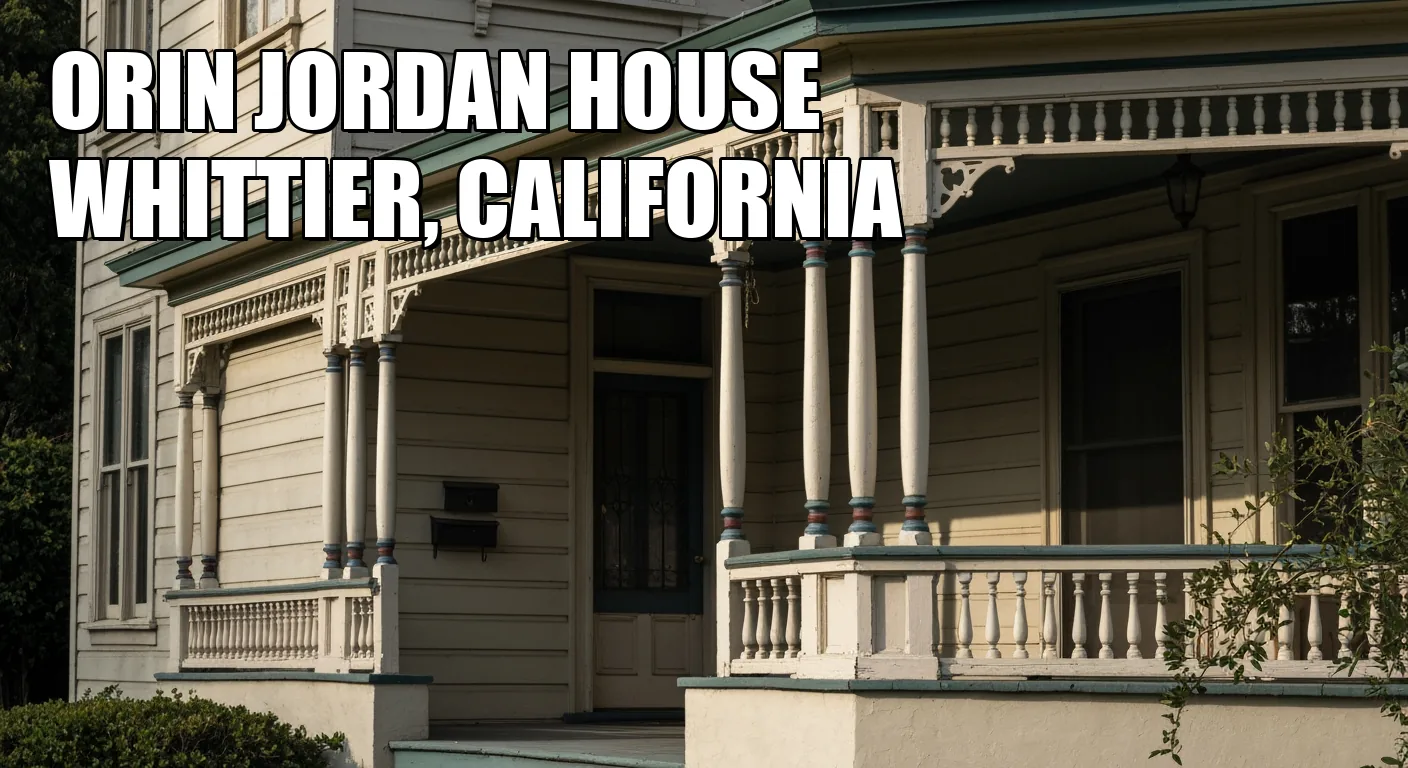
Stepping back to 1888, the Orin Jordan House in Whittier, California, offers a surprising lesson in architectural resilience and pioneering spirit. Built by its namesake, Orin L. Jordan, this two-story wood-frame structure, initially designed in a classic ell-shape, epitomized the aspirations of early Southern California ranch communities. What truly sets this house apart, beyond its charming rounded and triangular shingles beneath the gables and the delicate woodwork on its porch, is its very journey: in 1926, the entire house was moved approximately 300 feet southwest to its current location at 8310 South Comstock Avenue. Imagine the sheer logistical feat, particularly in that era, to relocate a substantial nine-room dwelling, adding a sturdy brick base in the process! This isn't just an architectural detail; it’s a testament to the resourcefulness and construction techniques of the time, revealing a community that valued its structures enough to literally pick them up and move them rather than demolish. Today, designated a local historic landmark and listed on the National Register, it offers a glimpse into a Whittier that was more agricultural than suburban, inviting passersby to appreciate a house that refused to stay put. While it remains a private residence, its presence on a fairly busy street makes for an easy, rewarding drive-by viewing.

Kauikeōlani: Hawaiian Folk Victorian's Climate-Driven Ingenuity

Far from California's ranches, on the lush island of Kauai, Hawaii, stands Kauikeōlani, more commonly known as the Albert Spencer Wilcox Beach House. Constructed in 1899, this property on Hanalei Bay is a singular example of turn-of-the-century design specifically tailored for a tropical climate. Most historic Hawaiian homes you encounter have undergone significant modifications over the decades, but this one remarkably retains its original rambling design, a functional marvel where social, cooking, and sleeping quarters are separated into detached rooms, all connected by expansive, covered *lānai* (porches). Albert Spencer Wilcox, a prominent businessman and son of missionaries, wasn't just building a house; he was crafting a lifestyle. His innovative layout, combined with extensive use of shiplap siding and numerous windows, speaks volumes about understanding Hawaiian living conditions long before air conditioning. Walking past its 22 acres, one can almost feel the gentle trade winds circulating through its open spaces. While it's private and largely hidden from direct public access, understanding its intelligent adaptation of Folk Victorian principles to a specific climate truly elevates its significance beyond mere ornamentation, posing a fascinating question about how much we've lost in modern, sealed-box construction.

A West Virginia Roadside Relic: The James B. Carden House Endures

Deep in Nicholas County, West Virginia, near Summersville, sits the James B. Carden House, an 1885 structure that has gracefully transitioned from family home to community eatery. This two-story, T-shaped Folk Victorian residence greets visitors with a wide front porch, adorned with the characteristic decorative scroll jigsaw work in its balustrades that defined so many late 19th-century homes in the region. What surprised me on my first visit wasn't just the charming architecture, but the nuanced material choices: the primary facade boasts horizontal tongue-and-groove board siding with a bead edge, a subtle touch that contrasts with the simpler clapboard on the secondary facades. This isn't just an arbitrary choice; it often indicates where a builder chose to invest more craftsmanship and materials, typically facing the main road or visitor approach. Since 1971, this historic gem has been home to the Country Road Inn-Mama Jerrols restaurant, ensuring its continued vitality. Rather than being a dusty museum, it's a place where history is savored with a meal. Expect home-style cooking within its storied walls, offering a unique opportunity to literally dine inside a piece of local history. The exterior, with its stone chimneys and accompanying barn and workshop, paints a vivid picture of a bustling rural homestead.

The Bacon Hotel: A Timber Boom's Fading Grandeur in Arkansas

Few buildings tell a story of boom and bust quite like the Bacon Hotel, also known as the Sunrise Hotel, in Whitehall, Poinsett County, Arkansas. Erected in 1912, this grand two-story wood-frame structure stands as one of Arkansas’s most compelling railroad-era Folk Victorian hotels. Its cross-gable roof and two-story porch, supported by spindled wooden posts, would have once welcomed weary travelers and timber magnates alike during the region’s booming lumber industry. The most captivating detail, and one I found unexpectedly poignant, is the large, intricately carved sunburst design emblazoned in the front gable end—a potent symbol of the optimism and prosperity that fueled its construction. This wasn't just a place to sleep; it was a beacon of local commerce and development. Yet, the hotel has stood functionally vacant since the 1950s, a silent witness to changing times. Visiting it today evokes a profound sense of temporal displacement. It’s a beautifully preserved shell, a testament to an era that has passed, reminding us that even the most robust local economies can dwindle. You won't find bustling guests here, but rather a quiet, dignified structure that invites reflection on Arkansas's industrial past.

Sibley's General Store: Mathews County's Enduring Commercial Heart

In the heart of Mathews, Virginia, the Sibley's General Store stands as a powerful reminder that Folk Victorian wasn't solely for homes; it shaped America's commercial landscape too. This 2.5-story wood-frame building, constructed in 1899 by the Sibley brothers, is not merely a charming structure; it’s the *only surviving example* of early-20th-century vernacular Victorian commercial architecture in downtown Mathews. Its full front porch, weatherboard cladding, and delightful decorative wood-shingle detail at the eaves speak to a practical yet appealing design ethos. But the true significance of Sibley's isn't just its architecture; it's the continuous pulse of community life that beat within its walls for an astonishing 180 years, ending only in 2003. Imagine the countless conversations, transactions, and news exchanges that transpired here, especially considering Henry Sibley, one of the builders, served as postmaster, relocating the post office to the store after its opening. Today, this vital piece of Mathews history has found new purpose, housing the Mathews County Visitors and Information Center. This transition is brilliant, allowing the public to freely explore the interior of a historically significant building, experiencing firsthand the scale and design of a bygone commercial hub. Expect warm welcomes and local insights; admission is free, and parking is generally easy to find in the small town.

A Collective Enchantment: Martha's Vineyard's Gingerbread Legacy

We can't discuss Folk Victorian without an honorable mention for the collective magic of the Martha's Vineyard Gingerbread Cottages in Oak Bluffs, Massachusetts. While individual cottages like the 1869 Kickemuit Cottage are notable, it's the sheer concentration of these whimsical structures, primarily built between 1859 and 1880, that creates an unparalleled architectural experience. These aren't grand mansions; they were designed to replicate the canvas tents of a Methodist camp meeting, evolving into permanent, fantastical dwellings with steeply pitched roofs and narrow footprints. The "gingerbread" moniker comes from their abundant, often brightly painted, ornate trim and scrollwork, giving them the appearance of edible houses. Walking through Oak Bluffs is like entering a storybook, a delightful, sometimes overwhelming, explosion of color and pattern. However, amidst this collective charm, one structure stands out for its unexpected engineering prowess: The Tabernacle. Completed in 1879, this open-air, cast-iron structure, seating over 2,000 people, wasn't just a place of worship; it was an extraordinary feat of prefabrication technology for its era. Its delicate appearance belies its robust construction. While Oak Bluffs can become quite a tourist spectacle during peak summer months (July and August), visiting in late spring (May-early June) or early autumn (September-October) offers a more serene experience, allowing you to truly appreciate the intricate details without battling crowds. Parking can be a challenge during peak season, so consider arriving early or using public transport if staying nearby. These cottages remind us that Folk Victorian wasn't just about individual homes; it could define entire communities, blending faith, leisure, and exuberant design into an indelible American landscape. The enduring appeal of Folk Victorian lies not in its adherence to strict architectural dogma, but in its spirited embrace of accessible beauty. From a relocated California ranch house to a climate-adapted Hawaiian retreat, a West Virginia restaurant, an Arkansas timber hotel, and a Virginia general store, these structures are more than just buildings with pretty trim. They are living documents of American expansion, ingenuity, and the persistent desire to infuse everyday life with a touch of elegance, no matter the budget or location. Seek them out; they’ll tell you stories no grander mansion ever could.

Explore America's Folk Victorian Heritage: Complete Visitor's Guide to Architecture and History

What is folk victorian architecture history?
Folk Victorian architecture emerged between 1870 and 1910 as mass-produced Victorian decorative elements became accessible through railroads, allowing working-class homeowners to add ornamental details like spindlework, brackets, and gingerbread trim to simple vernacular house forms. This democratization of Victorian style made elegant architectural details available to ordinary people, not just the wealthy elite.
What is an example of a Folk Victorian architecture?
Notable examples include the Albert Spencer Wilcox Beach House in Hanalei, Hawaii, the Orin Jordan House in Whittier, California, and the Bacon Hotel. These homes showcase the characteristic features of Folk Victorian style with simple base structures adorned with decorative Victorian elements like ornate porches and gable details.
When were Folk Victorian houses built?
Folk Victorian homes were primarily constructed between 1880 and 1910, with some isolated examples continuing into the 1930s, particularly in western states and smaller towns. The style peaked in popularity during the 1880s and 1900s as railroad expansion made decorative materials widely available across the country.
What is the history of Victorian architecture?
Victorian architecture flourished during Queen Victoria's reign from 1837 to 1901 and became the dominant architectural style in America from the mid-19th century onward. The era introduced numerous sub-styles including Gothic Revival, Italianate, Queen Anne, and Folk Victorian, all characterized by ornate detailing, bold colors, and architectural eclecticism reflecting industrialization and mass production.
What is a folk house?
A folk house is a simple, traditional dwelling built using locally available materials and construction methods passed down through generations, typically designed and constructed without formal architectural training. Folk houses reflect regional cultural practices, climate conditions, and available resources, serving as practical solutions to everyday housing needs rather than making style statements.
What is the folk architecture?
Folk architecture (also called vernacular architecture) refers to building constructed outside academic traditions without professional guidance, using local materials and traditional building methods specific to a region. It encompasses ordinary structures like homes, barns, and places of worship that embody generations of building wisdom tailored to local needs, climate, and cultural practices.
What is the meaning of old folk home?
An old folk home refers to traditional vernacular dwellings built by common people using time-tested regional construction methods and locally available materials. These historic homes represent everyday architecture from past centuries, often embodying practical design solutions and cultural traditions specific to their geographic area.
What are the types of folk housing?
Common folk housing types include the shotgun house, Cape Cod cottage, I-house, single-pen, double-pen, saddlebag house, central-hall cottage, and dogtrot design. Each type developed in specific regions and reflected local climate conditions, available materials, cultural traditions, and practical building needs of the communities that created them.
What is the meaning of home folks?
Home folks refers to people from one's local community or family, typically used in folk culture contexts to describe neighbors, relatives, and community members in traditional small-scale social groups. The term emphasizes the close-knit nature of folk communities where people share common cultural practices and traditions.
What is the meaning of folk lifestyle?
Folk lifestyle encompasses the traditional practices, customs, beliefs, and daily living patterns of particular communities passed down through generations via word of mouth, observation, and imitation. This includes folk traditions in music, crafts, food, celebrations, and social customs that define a group's cultural identity and values.
What are the main identifying features of Folk Victorian homes?
Folk Victorian homes are characterized by relatively plain, simple construction with decorative Victorian trim including porches with spindlework, ornate brackets in eaves, gable-front or side-gable roof forms, asymmetrical floor plans, and details inspired by Italianate or Queen Anne styles. Unlike elaborate Victorian mansions, Folk Victorians prioritize simplicity and symmetry while adding charming embellishments.
What is the difference between Folk Victorian and Queen Anne architecture?
Folk Victorian represents simpler, more affordable working-class versions of Victorian style with basic details and regular floor plans, while Queen Anne was built by the upper class with much more elaborate and asymmetrical designs featuring more ornate detailing. Queen Anne is essentially a grander, more ostentatious expression of the same Victorian influence that Folk Victorians applied more modestly.
Where can visitors find the best Folk Victorian homes and districts in the United States?
Notable Folk Victorian neighborhoods include Old Louisville in Kentucky, Powelton Village in Philadelphia, the Old West End in Toledo Ohio (largest collection east of the Mississippi), Port Townsend in Washington, and various historic districts in Charleston and New Orleans. Many small towns settled during the 1880s-1910s period also retain excellent collections of Folk Victorian homes.
How can I identify a Folk Victorian home when visiting historic neighborhoods?
Look for modest, relatively simple houses with decorative Victorian elements, prominent front porches with spindlework or turned spindles, brackets in the eaves, square symmetrical shapes with possible L-shaped projections, and gable-front designs. Folk Victorian homes should appear as plain folk houses that have been 'dressed up' with ornamental details rather than being elaborately decorated from the start.
What should homeowners know about preserving Folk Victorian architecture?
Preservation experts recommend using period-appropriate materials and details, consulting historical records for original features, working with experienced preservation contractors familiar with Victorian-era construction, and balancing modern updates with historical authenticity through concealed wiring and reproduction fixtures. Focus on maintaining original porch details, gable forms, window configurations, and decorative woodwork that define the style.