Having traversed this country countless times, I’ve learned that the true essence of a historic site rarely lies in its official designation alone. It’s in the quiet hum of community spirit, the innovative ways stories are brought to life, and frankly, what *isn't* plastered on a brochure. The landscape of Black historic preservation is undergoing a truly transformative moment, moving beyond mere recognition to active revitalization, with a distinct emphasis on tangible impact and engagement. We're seeing a shift from simply marking a spot to building vibrant centers of learning and community, challenging the very notion of what a 'historic site' can be.
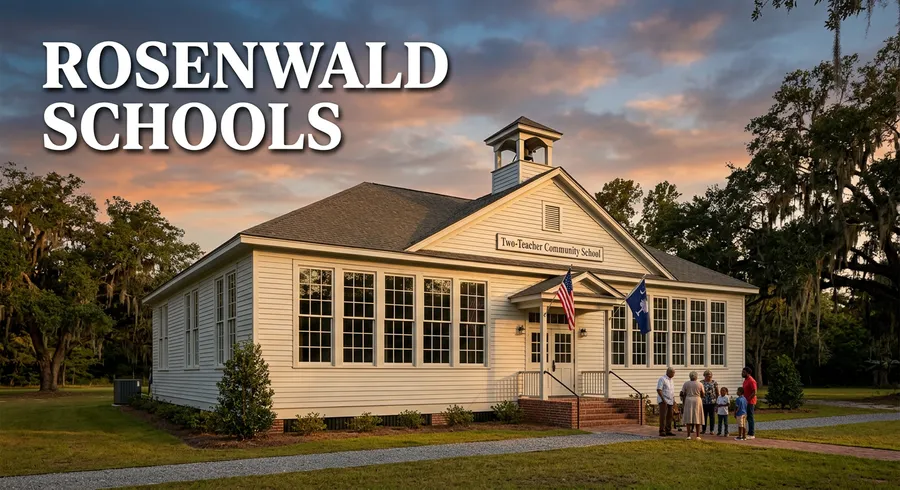
One of the most compelling narratives unfolding right now revolves around the scattered remnants of Rosenwald Schools across the American South. These aren't just dilapidated old buildings; Rosenwald Schools—the early 20th-century educational institutions built for African American children across the segregated South, often with crucial financial support from philanthropist Julius Rosenwald and Booker T. Washington—represent a profound act of community self-determination against immense odds. Their restoration isn't just about brick and mortar; it's about reclaiming a legacy of aspiration and defiance. While many schools have crumbled, a few dedicated groups are bringing them back, each with a unique approach.
What Makes a Rosenwald School Restoration Truly Shine?
Consider the South Fulton Rosenwald High School in Tennessee, which is slated to receive its memorial marker in July 2025. This isn't a grand museum overhaul, but rather a deeply personal commitment by the Ken-Tenn Homecoming Committee, partnering with Discovery Park of America. Their focus on annual reunions and oral-history drives ensures that the living memories of former students—the true soul of these institutions—aren't lost to time. It’s a powerful reminder that preservation isn't always about grand architecture; sometimes, it's about safeguarding the voices that once echoed in those halls. While a marker is a crucial step, the real magic here is the intergenerational storytelling, making it far more than just a place to observe history.
Florida's Okahumpka Rosenwald School offers a different kind of ambition, embarking on a four-month renovation starting in May 2025. After securing its National Register listing in 2021 and raising a significant $450,000 locally, the community envisions the original structure as a living-history monument. Crucially, they're building an adjacent community center, a smart move that tackles the practical challenge of balancing historical integrity with modern needs. This dual-purpose approach means the site won't just stand as a silent testament; it will actively serve its community, fostering new memories while honoring the old. It’s a model that understands historical relevance often hinges on ongoing utility.
Then there's the Pine Grove Rosenwald School in South Carolina, a site that completed its initial restoration back in 2009 and has been steadily running educational programs ever since. It's a testament to sustained effort, funded by a mix of grants and local foundations. Pine Grove demonstrates that the work doesn't end when the scaffolding comes down. Its continuous use as an interpretive site and community gathering space, focusing on Jim Crow-era schooling, provides a blueprint for long-term engagement. What makes Pine Grove stand out is its consistent programming; it's not a one-off event, but a continuous conversation with the past, making it a reliable destination for those seeking deeper understanding.
Why Virginia's Cape Charles Model Will Reshape Preservation
Among all these admirable efforts, the Cape Charles Rosenwald School in Virginia is emerging as a true game-changer, poised to redefine the scope and impact of Black historic preservation. As of early 2025, it's deep into Phase II rehabilitation, fueled by a remarkable $1 million grant from Virginia's Industrial Revitalization Fund and a generous six-acre land donation from the town. This isn't just another restoration project; it's a bold vision for adaptive reuse, transforming the school into a nonprofit hub, a workforce development center, a culinary incubator, a museum, and even an event venue. This multi-sector partnership and blended funding strategy is what sets it apart, demonstrating a forward-thinking approach that marries history with economic vitality.
I predict that by the decade's end, Cape Charles will stand as the most impactful site, not just for regional tourism but for historical education across the country. Its forecast economic impact of $26 million over ten years and the creation of 30+ jobs isn't just impressive; it's a compelling argument for investing in heritage preservation as a driver of community renewal. Most traditional guides don't emphasize this kind of economic ripple effect, but it's precisely what makes a site truly sustainable. If you're planning a trip to Virginia's Eastern Shore in late 2025 or early 2026, keep an eye on the Cape Charles Rosenwald School; arriving for an early morning tour on a weekday will likely offer the most intimate experience before the larger groups descend, allowing you to truly appreciate the scale of their ambition.
Beyond Bricks and Mortar: Digital Doors to the Past
While physical sites anchor our understanding, the digital realm is opening new, equally vital avenues for historical engagement. Take the National Archives' 2025 exhibition of Freedmen's Bureau marriage records in Washington, D.C. This isn't a new building or a renovated schoolhouse, but a sophisticated digital and onsite interpretive initiative. Leveraging AR-enhanced document displays and guided virtual tours, it connects descendants and scholars directly with 19th-century records of newly emancipated people. The Freedmen's Bureau—established in 1865 to assist formerly enslaved people in the aftermath of the Civil War—played a critical role in reuniting families and establishing basic services. This digital approach allows for an incredibly personal connection, making otherwise inaccessible historical documents immediate and profoundly moving. It reminds us that history isn’t just about grand narratives, but about the individual lives that shaped them.
Moving across the country, the Pacific Northwest presents a fascinating contrast in its preservation efforts. While the South focuses heavily on restoring physical structures, regions like Portland and Seattle are leaning into digital storytelling and community galvanization. Portland's Albina Preservation Initiative, launched in September 2024, is less about a single site and more about a movement. Through grants from entities like the Oregon Cultural Trust and the Mellon Foundation's Just Futures Initiative, they're developing an interactive mapping platform and VR reconstructions of Albina-era businesses. This is a brilliant strategy for engaging younger audiences and diasporic communities, acknowledging that many historical structures from Portland's once-vibrant Black neighborhood no longer exist. It acknowledges a painful reality—urban renewal often erased physical landmarks—and offers a powerful digital reconstruction as an alternative form of preservation.
What Lessons Does Seattle's Black Wall Street Offer?
Seattle, too, is exploring innovative ways to honor its Black entrepreneurial past. The Northwest African American Museum (NAAMNW) is launching a capital campaign in 2025 for a new wing, specifically dedicated to early 20th-century Black entrepreneurs in the region. Their foresight in securing a National Register listing not only recognizes the significance of their work but also unlocked crucial historic-tax-credit eligibility, a smart financial play that more non-profits should consider. Yet, it's Seattle's annual "Black Wall Street" commemoration in May 2025 that truly caught my eye. This isn't a museum exhibit; it's a pop-up Black business district and cultural festival on South Jackson Street, featuring AR-enhanced historical overlays of local entrepreneurs. It's vibrant, immediate, and incredibly impactful, providing a tangible platform for current Black entrepreneurs to pitch their ideas to investors. This blends history with immediate economic empowerment, challenging the common tourist trap notion that historical sites are static relics, proving they can be dynamic incubators of future success.
So, what can we take away from this evolving landscape? The core of successful preservation today lies in a combination of grassroots passion, strategic partnerships, and a willingness to embrace technology. From alumni networks driving capital campaigns in the South to urban initiatives leveraging AR and VR in the Pacific Northwest, community leadership remains paramount. These projects aren't just funded by grants; they're fueled by an unwavering dedication to ensuring that the narratives of Black Americans are not only preserved but are actively woven into the fabric of contemporary life. My travels have shown me that the most powerful sites are those that don't just ask you to look backward, but compel you to think forward, recognizing that history is a continuous, living conversation.