Discovering Collegiate Gothic's Genesis in Hartford
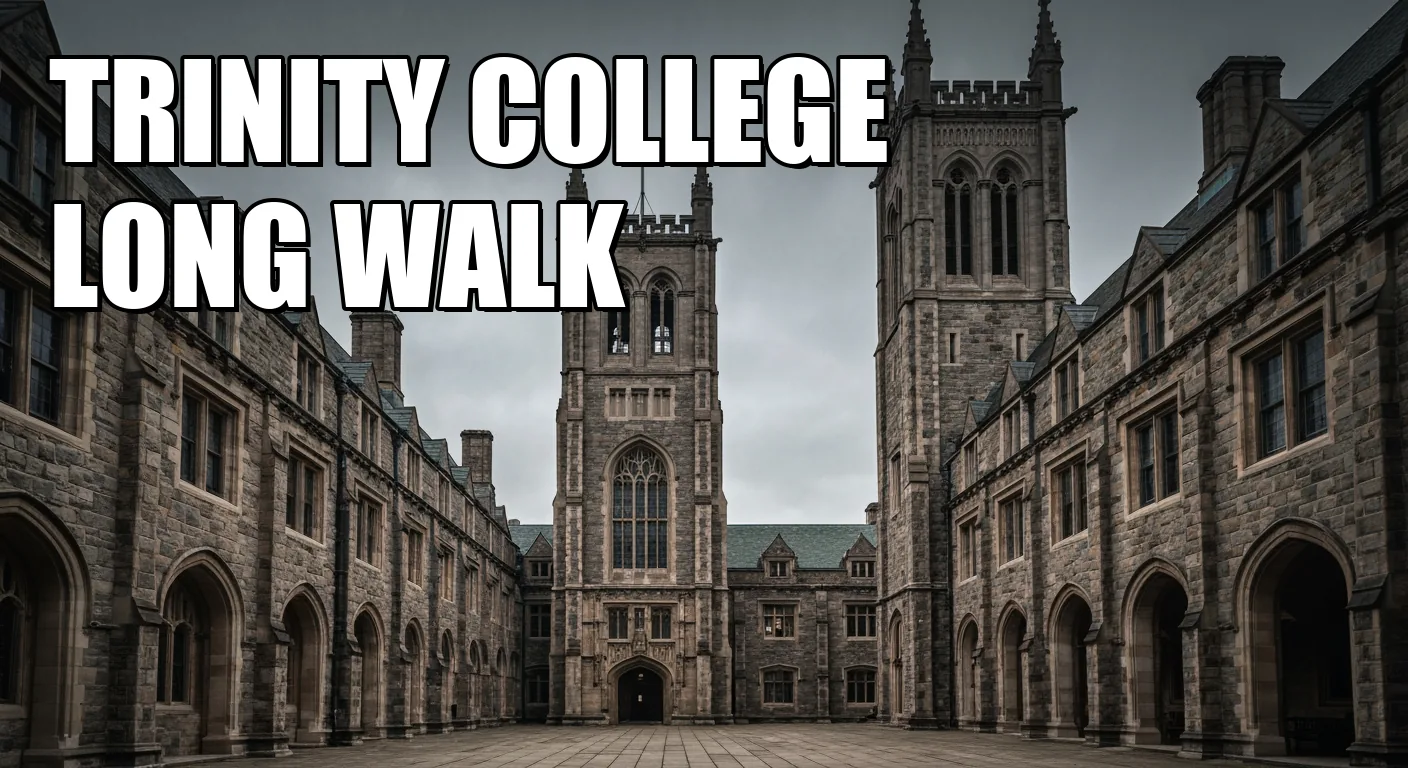
Imagine stepping onto a campus where the very first whisper of Collegiate Gothic architecture in North America took hold. That’s precisely the sensation atTrinity College's Long Walk in Hartford, Connecticut. Constructed primarily between 1878 and the early 20th century, this wasn't some later imitation; it was a foundational statement. The architect, William Burges, a renowned Victorian master, imbued these brownstone structures—Seabury Hall, Northam Towers, and Jarvis Hall—with an authentic medieval spirit. You'll notice the massive stone walls, the pointed arches, and bell towers topped with distinctive corner finials, all contributing to an atmosphere that feels less like New England and more like ancient Oxford.
What truly sets the Long Walk apart, beyond its striking pitched slate roofs and ornate stone carvings, is the sense of an enclosed world. The quadrangles formed by these buildings evoke the contemplative, almost monastic, spaces of European universities. It’s a perfect illustration of how architecture can shape experience, forcing introspection and a certain reverence for the past. But it’s not just about the bricks and mortar; it’s about the stories woven into them. The college’s enduring legend of Edward Ford, a disciplinarian from 1734 who reportedly still paces the Rubrics dormitory in 18th-century academic dress, adds a layer of genuine historical haunting that even Nevermore would envy. The fact that the Long Walk Historic District was only designated to the National Register of Historic Places in 2024 tells you this is a site whose full significance is still being appreciated, making a visit in 2025 feel particularly timely.How Durham Built a "Gothic Wonderland"
Travel south toDuke University's West Campus in Durham, North Carolina, and you'll encounter a different, yet equally potent, expression of gothic ambition. The centerpiece, Duke University Chapel, isn't just a building; it's an imposing, 210-foot-tall declaration of architectural prowess, often referred to by students as the heart of their "Gothic Wonderland." Completed in 1935, the chapel showcases the Collegiate Gothic style with an almost breathtaking precision, thanks to the vision of Julian Abele, a pioneering African-American architect. You can see echoes of King's College Chapel from Cambridge and Magdalen College from Oxford in its soaring limestone walls and intricate ribbed vaults.
Stepping inside, the vast Great Hall with its incredible acoustics and three pipe organs—boasting over 11,000 pipes combined—feels like a cathedral of both sound and light, filtered through stunning stained-glass windows. This isn't just a place of worship; it’s a monument to the power of design to inspire awe. But Duke, like Nevermore, harbors its own shadowy secrets. Beneath the chapel, a crypt contains the gleaming white marble sarcophagi of the Duke family, founders of this formidable institution. Weighing 20 tons each and carved by sculptor Charles Keck, these monumental coffins rest in a Romanesque vault designed for twenty bodies. While skeptics might attribute them to reflections, reports of ethereal white blurs appearing in photographs here are fascinating. And then there's the poignant legend of the "Phantom of the Bell Tower," a student named Eugene Morehead, said to still ring the bells on quiet nights—a somber reminder of a life cut short, adding a ghostly counterpoint to the campus’s academic pursuits.Yale's Old Campus: A Tapestry of Architectural Eras and Lingering Spirits
Few places embody the institutional heart of American collegiate gothic quite likeYale University's Old Campus in New Haven, Connecticut. This isn't a single architectural statement, but rather a rich tapestry woven from structures spanning from 1718 through the early 20th century. While later additions like Bingham Hall (1928) with its monumental nine-story brownstone corner tower certainly dominate, it’s Street Hall, opened in 1866, that offers a truly remarkable and distinct flavor. Here, you'll find a striking Victorian/Venetian Gothic design, characterized by polychromatic stone combinations, delicate lancet arches, and ornate trefoil and quatrefoil medallions that make its exterior a feast for the eyes.
What makes Yale’s Old Campus so compelling is its sheer density of history, both architectural and spectral. Phelps Gate, an ornate gothic gatehouse with octagonal corner towers and crenellated parapets, acts as a dramatic portal, instantly transporting visitors to a different era. But dig deeper, past the impressive facades, and you’ll find tales that resonate with the darker undercurrents of Nevermore. The North Middle dorm, specifically 205 Elm Street, has been a nexus for paranormal activity since the Civil War era. Reports from 1867 in the Yale Courant noted a "strange light" in a padlocked garret, and by 1870, the Yale Literary Magazine was openly questioning, "Is North Middle Haunted?" Modern investigations continue to document its unquiet spirits, making it a cornerstone of local ghost tours. This isn't a quaint campus anecdote; it’s a deeply embedded part of Yale’s lore, proving that history often comes with its own restless echoes.Ohio's Unsung Gothic Pioneer: Old Kenyon College
Perhaps the most surprising entry on this list, and one that most guides gloss over, isOld Kenyon at Kenyon College in Gambier, Ohio. This isn't just *a* gothic building; it holds the distinct honor of being the *first* collegiate Gothic building ever constructed in America. Dating between 1827 and 1829, this three-story stone edifice, with its four-foot-thick walls and distinctive tall central spire, truly marks the genesis of an architectural movement that would eventually define American higher education. What amplifies its mystique is its setting: a dramatic hillside overlooking the Kokosing River, nestled within Kenyon's profoundly isolated, 1,000-acre rural campus. The sheer solitude here lends an atmosphere that feels genuinely removed from the modern world, much like Nevermore's sequestered nature.
The building itself maintains an Early Gothic Revival charm, evident in its crenellated parapets and the weathered stone spire. Despite its immense historical significance as the progenitor of American collegiate gothic, Old Kenyon remains relatively unknown outside academic circles. This anonymity, I’ve found, adds substantially to its allure. It offers a quieter, more introspective gothic experience, free from the throngs of tourists you might find elsewhere. While it lacks the documented, specific hauntings of a Yale or Trinity, its long history as a student residence in such an isolated locale has undoubtedly fostered countless student tales and urban legends passed down through generations. To walk its grounds, a campus entirely registered on the National Historic Places registry, is to walk through living history, where the sense of spiritual and intellectual seclusion, central to its founding by Episcopal Bishop Philander Chase in 1824, still deeply pervades.Bannerman Castle: A Crumbling Gothic Dream on the Hudson
Our final destination veers away from hallowed academic halls to a truly unique and haunting American gothic ruin:Bannerman Castle on Pollepel Island in New York’s Hudson River. This isn't some ancient European relic; it's a Scottish-inspired fortress, built in the early 1900s by Scottish immigrant Frank Bannerman VI. Its original purpose wasn’t even residential, which makes it all the more intriguing—it served as an arsenal to house his colossal collection of military surplus and weaponry. The island itself, Pollepel Island, has a history steeped in Dutch colonial legends and superstition, predating the castle by centuries.
What captivates visitors about Bannerman Castle is its state of beautiful, melancholic decay. The exterior proudly displays genuine Scottish baronial architecture, complete with heavy stone masonry, crenellated parapets, and corner towers. Yet, the pervasive decay, with crumbling walls reclaimed by poison ivy and windows gaping like hollow eyes, transforms it into something truly gothic. It’s a literal ruin, a fortress designed to store implements of war that now stores only silence and the accumulated legends of isolation. For generations, the island remained largely inaccessible due to treacherous currents, dense poison ivy, and an abundance of venomous snakes and deer ticks—hazards that almost seem to guard its secrets. Only recently, with limited public tours via the Estuary Steward tour boat starting in 2024, has this long-forbidden landscape become accessible. Planning a visit in 2025 means you'll be among the first waves of visitors to truly explore this enigmatic ruin, offering a rare opportunity to witness an American gothic masterpiece in its raw, untamed glory. Expect limited capacity and plan your trip well in advance, as tickets for these unique excursions sell out quickly. Each of these locations, whether a venerable college campus or a decaying island fortress, offers a distinct, authentic taste of the dark academic aesthetic that makes Nevermore Academy so compelling. They are testaments not only to architectural ambition but also to the enduring power of history, legend, and the subtle, sometimes unsettling, whispers that echo through old stone. These aren’t just buildings; they’re experiences, challenging you to look beyond the surface and discover the rich, sometimes eerie, narratives etched into America's gothic soul.