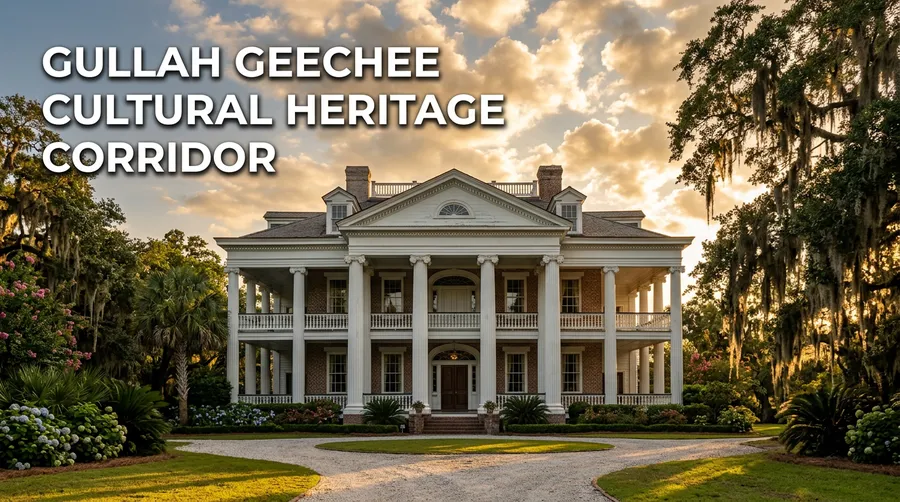
Photo by James Whitfield for Cornerstone Mansion · February 23, 2026
Find Nearby Hotels
Book Flights
For travelers weary of the well-worn paths and those boilerplate historical narratives, 2025 offers a remarkable opportunity to dig deeper into the American story. After years spent crisscrossing this country, I’ve found the most resonant experiences aren't always at the biggest, flashiest landmarks. Sometimes, they’re in the quiet corners, the places whose histories are still being uncovered or, perhaps more importantly, actively re-centered. This year, my compass points to three distinct regions that promise a truly layered exploration of the past: the living culture of the Gullah Geechee, the complex narrative of Westward Expansion, and the enduring legacy of Ancestral Native American civilizations.
Exploring the Gullah Geechee Corridor: More Than Just a Scenic Drive
What does it truly mean to experience a "cultural heritage corridor"? In the case of the Gullah Geechee Cultural Heritage Corridor, stretching from North Carolina down to Florida, it means immersing yourself in a vibrant, living culture shaped by generations of West African descendants, whose unique language, food, and traditions have been preserved for centuries. This isn't just a collection of historical markers; it’s an ongoing narrative. The year 2025 brings some particularly compelling reasons to visit, especially if you plan your trip around key events.
Imagine stepping into the newly opened Bluffton Gullah Cultural Heritage Center in South Carolina. Set to debut on October 10, 2025, with "An Evening of Gullah/Geechee Heritage & Healing" led by the formidable Queen Quet, it promises an intimate glimpse into the heart of this community. This isn't merely a museum; it’s an active space for storytelling and cultural transmission. But remember, a "corridor" implies diffusion, not a single destination. To genuinely grasp the Gullah Geechee experience, you'll need to move. Consider planning around the Original Gullah Festival of South Carolina in Beaufort, May 23-25, 2025, a jubilant celebration of rice-culture heritage and intricate crafts that truly brings the history alive. For a different flavor, the SEA Community Heritage Festival in St. Johns County, Florida, on December 6, 2025, combines history tours along Rails-to-Trails markers with community festivities.
Navigating this corridor takes some intention. While coastal highways like US 17, I-95, and SR 803 connect many key sites, relying solely on a car means you'll miss the nuance. Bike tours and walking trails, particularly those associated with the Rails-to-Trails markers in Florida, offer a slower, more immersive pace. Major airports like Charleston (CHS), Savannah (SAV), and Jacksonville (JAX) provide relatively easy access, with shuttle services available, but don't expect seamless public transit between every isolated historic marker. Preservation efforts here are a genuine collaboration between the National Park Service and local nonprofits, restoring plantation-era structures and funding oral-history programs—a constant, vital work that ensures these stories aren’t lost. Be aware that during popular festivals, accommodations in smaller towns book up fast, so early planning is absolutely non-negotiable.
Challenging the Frontier Myth: Westward Expansion in the Midwest
Our understanding of America's westward expansion is often painted with broad, romantic strokes of pioneering spirit and manifest destiny. Yet, a visit to the Midwest Plains in 2025 reveals a far more complex and often uncomfortable truth, a history of conflict, perseverance, and profound change for all involved. Most people heading to St. Louis might only consider the iconic Gateway Arch, and while the Museum of Westward Expansion beneath it offers a comprehensive, 19th-century overview of overland migration, it’s only one piece of the puzzle.
To truly challenge the conventional narrative, you absolutely must make time for the Quindaro Townsite in Kansas City, Kansas. This isn't another polished museum exhibit; it's a raw, powerful landscape newly designated a National Historic Landmark in May 2025. Quindaro was nothing less than the birthplace of the Kansas Free-State movement, a critical flashpoint in the struggle against slavery before the Civil War. It’s a profound counterpoint to the romanticized visions of wagon trains, reminding us that westward expansion was also a battleground of ideals and human rights. While the Gateway Arch is universally accessible via its tram and park shuttles, Quindaro, a 20-minute drive north of downtown Kansas City, is still very much a site in active preservation. Local historic societies, with NPS advisory board support, are stabilizing remaining structures and creating interpretive trails. This means visitors should expect a more rustic experience, fewer amenities, but a far deeper sense of discovery. Special lectures on Quindaro's role, organized by the Kansas Historical Society, are expected throughout the year, so check their calendar before you arrive.
Ancient Echoes: The Southwest's Ancestral Native American Lands
Shifting gears entirely, the Southwest beckons with histories that stretch back not centuries, but millennia. These aren't just "historic sites" in the traditional sense; they are landscapes imbued with deep spiritual and cultural significance, testaments to sophisticated civilizations that thrived long before European contact. Cahokia Mounds, a UNESCO World Heritage Site near Collinsville, Illinois, stands as a stunning example of Mississippian culture, a monumental city that predates European arrival by centuries. While the museum undergoes renovations, the vast mounds themselves—including the impressive Monk's Mound—are open dawn to dusk, offering a humbling sense of scale and ingenuity. Don't skip the Spring Equinox Sunrise Walk at Woodhenge on March 23rd, a powerful experience connecting ancient astronomy with modern appreciation.
Further west, Chaco Culture National Historical Park and Aztec Ruins National Monument in New Mexico, part of the Trail of the Ancients Scenic Byway, reveal the extraordinary architectural and societal complexity of the Ancestral Puebloan people. These sites aren't for the faint of heart logistically; unpaved roads leading to Chaco demand high-clearance vehicles, and seasonal ranger programs are the best way to gain deeper insight. Yet, the challenge is part of the reward. To witness the Summer Solstice sunrise alignment on June 21st at Chaco, even with its limited access for the first 100 visitors, is an unparalleled experience that transcends typical tourism.
Mesa Verde National Park in Colorado, renowned for its breathtaking cliff dwellings, offers another unique dimension to this journey. Unlike the open landscapes of Chaco, Mesa Verde provides structured, timed-ticket entry for guided tours of the dwellings, which you must book online 14 days in advance. This strict system, while occasionally frustrating, is crucial for preserving these delicate structures. The park's International Dark Sky Park status is an added bonus; arriving early or staying late allows for unparalleled stargazing, offering a connection to how these ancient peoples viewed their cosmos. Remember, these aren't just pretty ruins—they are sacred places, and visiting them demands respect and a contemplative approach.
Stitching Together America's Layered Past
Attempting a journey that spans the Gullah Geechee Corridor, the Westward Expansion sites, and the Ancestral Native American lands in a single trip is ambitious, but entirely feasible with careful planning. Each region offers a unique lens through which to understand the evolving narrative of the United States. While the Southeastern sites immerse you in a living cultural tradition, the Midwest asks you to critically re-evaluate foundational myths, and the Southwest demands reverence for histories far predating colonial encounters.
My advice: don't try to see everything. Pick one or two key experiences in each region that resonate most deeply. For example, you could start your spring in the Southwest with the Cahokia Mounds Spring Native American Market (April 5-6), then pivot to Beaufort for the Original Gullah Festival (May 23-25), and finish your year with the profound quiet of Chaco's Astronomy Festival (September 19-21) or the Quindaro Townsite's newly recognized importance. The true value lies not in ticking off every landmark, but in allowing these diverse histories to intermingle and inform your understanding of America’s richly complicated past. Expect crowds at major festivals and national parks, especially in peak season. Always call ahead for specific site opening hours, as smaller heritage centers sometimes operate on limited schedules, particularly outside of summer.
A true historical journey isn't about passive observation; it’s about engagement. It’s about questioning what you thought you knew, embracing discomfort, and ultimately, finding a deeper, more textured appreciation for the stories that have shaped this land. These are the destinations that will linger in your memory, offering insights that typical guides simply can't capture.
America’s Timeless Treasures: Historic Travel FAQ
Best historical towns to visit USA
Top picks include Williamsburg, VA; St. Augustine, FL; and Charleston, SC, each offering well-preserved colonial and early American architecture.
What town in America has the most history?
St. Augustine, Florida, founded in 1565, is the oldest continuously inhabited European-established settlement in the U.S.
What is the most picturesque town in the US?
Carmel-by-the-Sea, California, is renowned for its fairy-tale cottages, art galleries, and scenic coastal views.
Where is the most historical place in the US?
Independence National Historical Park in Philadelphia, PA, preserves sites pivotal to the nation’s founding.
Where are the best places for historical vacations?
Ideal destinations include Colonial Williamsburg, VA; Gettysburg, PA; and Washington, D.C., for immersive Revolutionary and Civil War experiences.
What is the #1 vacation destination in the US?
New York City remains the top overall U.S. vacation spot, celebrated for its museums, landmarks, and diverse history.
What is the best state to visit for history?
Massachusetts offers rich Revolutionary War sites, colonial towns, and the Freedom Trail in Boston.
What city has the most historical sites?
Philadelphia, PA, features dozens of designated historic sites spanning colonial to 20th-century history.
What state has the most interesting history?
Virginia’s history spans Native American heritage, Jamestown settlement, colonial capitals, and Civil War battlefields.
What is the oldest city in the United States?
St. Augustine, Florida, established in 1565, holds the title of the nation’s oldest city.
When is the best time to visit historic sites in the US?
Spring and fall offer mild weather, smaller crowds, and seasonal events at many historic locations.
How much does it cost to enter national historic sites?
Many National Park Service sites offer free admission, while others charge modest fees ranging from $5 to $30 per vehicle.
Do I need a permit to tour historic landmarks?
No permit is required for most public historic sites; special permissions apply only for commercial filming or large group events.
Are historic tours wheelchair accessible?
Most major historic sites provide wheelchair access, ramps, and accessible restrooms; check individual site websites for details.
What should I pack for a historic trip?
Bring comfortable walking shoes, water bottle, weather-appropriate clothing, and a camera or notebook for notes.
We use cookies to enhance your experience. By continuing to visit this site you agree to our use of cookies.