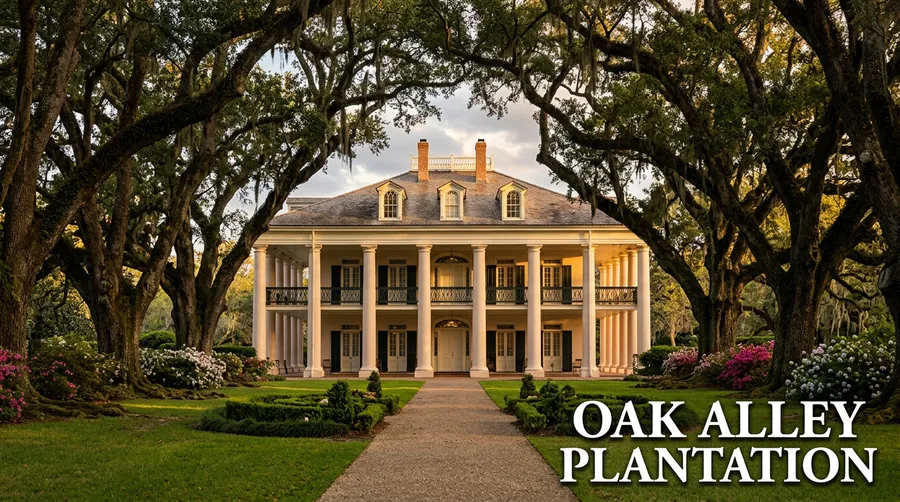
Photo by Philip Hargrove for Cornerstone Mansion · January 22, 2026
Find Nearby Hotels
Book Flights
For decades, a trip to a historic house often meant a polite, if slightly stilted, walk through a meticulously restored home, punctuated by a docent's well-rehearsed anecdotes about the family who once lived there. We'd peek over velvet ropes, admire period furniture, and leave with a superficial sense of the past. But something profound is shifting in the world of historic house museums, a quiet revolution that's redefining how we connect with history itself. As someone who's wandered countless dusty halls and manicured gardens, I can tell you: the stale, static experience is thankfully becoming a relic of the past.
What's truly exciting is observing how different regions, confronted by their unique historical burdens and preservation challenges, are charting entirely distinct paths forward. You see it most vividly when comparing the modest, resilient saltbox homes of New England with the grand, yet tragically complex, plantation estates of Louisiana. These aren't just architectural contrasts; they represent fundamentally divergent philosophies on what it means to preserve and present history to a modern audience. Both are striving for authenticity and immersion, yes, but their definitions of these ideals couldn't be more distinct.
Deciphering the Foundations: More Than Just Old Walls
When you step onto the grounds of a colonial-era saltbox in, say, coastal New England, the immediate impression is one of sturdy, unpretentious survival. These homes, characterized by their asymmetrical roofline—long in the back, short in the front, reminiscent of a wooden salt container—were built for practicality and resilience against harsh winters. Their preservation philosophy, often championed by organizations like Historic New England, zeroes in on the *original fabric*: the hand-hewn timber framing, the meticulously *hand-riven clapboards* (split, rather than sawn, for greater durability), the massive central chimney that was the heart of the home. It’s about understanding the entire ensemble—the main house, the outbuildings, even the surrounding landscape and trail networks—to convey the minutiae of quotidian colonial life, not just the grand narratives. You'll often find an emphasis on *incremental adaptations*, like later lean-to additions, which aren't removed but preserved *in situ* as vital chapters in the building’s living evolution, revealing centuries of changing needs and tastes.
Conversely, a Louisiana plantation like Whitney Plantation offers an entirely different, and frankly, often gut-wrenching, preservation approach. Here, the focus isn't primarily on the opulence of the main house, but on the sites of enslavement: the slave cabins, the expansive, unforgiving field landscapes. The restoration at these sites is driven by a *trauma-informed ethics*, a conscious decision to ensure that structures tied to forced labor are neither romanticized nor neglectfully commemorated. It’s a deliberate effort to center the experiences of the enslaved, not their enslavers. Master plans for these sites, as seen in projects by SmithGroup, often integrate climate resilience, extensive campus-wide interpretive zones, and community research centers. This holistic approach ensures both long-term sustainability and a sustained commitment to historical authenticity, constantly challenging visitors to confront the painful legacies embedded in the very soil.
Beyond the Velvet Rope: Technology's Unseen Hand in Storytelling
The way these distinct philosophies manifest in visitor experience is perhaps most evident in their integration of technology. In New England, the approach tends to be more subtle, often tactile. Take the Walsh House at Strawbery Banke Museum, for instance. It’s not just a restored house; it's an immersive exhibit featuring a *reproduction* kitchen and parlors. Here, visitors are explicitly invited to touch. Pick up a reproduction cooking vessel, feel the weave of a homespun cloth, or handle a period tool. Integrated digital storytelling stations activate period soundscapes—the crackle of a fire, the distant bleat of sheep—and first-person narratives when objects are handled. It's a gentle, almost sensory, form of augmented reality, focusing on what it felt like to inhabit these spaces. While mobile apps might exist for supplemental wayfinding in an outdoor village context, you won't find virtual reconstructions of vanished architecture dominating the experience; the emphasis remains on the tangible, the *real* touch of the past.
Contrast that with the profound, deeply personal journey offered by Louisiana plantations, where technology often takes center stage. Whitney Plantation, for example, pioneered self-guided audio tours. Visitors are handed a device and allowed unlimited on-site exploration at their own pace. This isn't just a convenience; it's a critical shift. The audio features narratives recorded by descendants of the enslaved, replacing traditional guided walks. This allows for a deeper, more emotional engagement, letting each visitor absorb the harrowing stories in their own time, without the pressure of a group or a fixed schedule. Envisioned pilot AR experiences, as part of their master plan, aim to virtually reconstruct lost structures like detached cookhouses, literally overlaying absence onto the existing grounds to help visitors comprehend the full scope of the labor that shaped these places.
Echoes from the Past: Giving Voice to the Unheard
One of the most compelling transformations in historic house interpretation is the deliberate effort to amplify voices that were historically marginalized or silenced. New England saltboxes are stepping up to foreground *women's domestic labor* and the intricate craft economies that underpinned colonial households. Visitors aren't just observing; they're invited to handle reproduction tools like weaving implements or cooking vessels, paired with short films featuring reenactors discussing the vital familial roles of colonial women and indentured servants. Furthermore, sites like Strawbery Banke are embracing rotating special exhibits, often co-curated with Black cultural centers, to highlight the *African-American presence* in pre-industrial New England neighborhoods, reinterpreting houses once owned by merchant families to reveal the lives of their Black staff. It challenges the whitewashed narrative of New England's past, revealing a far more complex social tapestry.
Southern plantations, as you might expect, tackle this with an even more urgent intensity. Whitney Plantation dedicates an entire *Slave Narrative Zone*, where life-size panels and recorded first-person accounts populate former slave quarter shells. This strategy explicitly centers enslaved voices, enhanced by museum-commissioned audio by descendant interpreters who are refreshingly unbound by traditional costuming conventions. It’s a powerful, unvarnished confrontation with the brutalities of chattel slavery. Beyond individual narratives, these sites are increasingly fostering *community-focused programming*, offering free artist exhibitions like the Indigeaux textile exhibit and aligning their curricula with local schools. This engagement invites local Black descendant communities to actively participate in the co-production of exhibits, transforming the museum from a passive presenter to a living, breathing community hub.
Stepping Inside Their Shoes: Engaging with History, Not Just Observing It
The question of how to engage visitors beyond mere observation is central to the modern historic house experience. In New England, the "living history immersion" often takes an unexpected, participatory turn. Yes, costumed interpreters reenact daily tasks, but the twist is that guests are frequently invited to *perform select chores* themselves. Imagine fulling cloth by hand or molding your own candle under guidance. It’s a deliberate strategy to foster *embodied learning*, moving beyond intellectual understanding to a visceral connection. You might also find yourself drawn into "conversational interpretation," small-group kitchen table talks with volunteers sharing deeply researched, often personal, insights into lesser-known household members—perhaps an indentured servant whose name appeared once in a ledger, or a widowed daughter whose quiet resilience shaped the family household. These intimate exchanges uncover stories that traditional, broad-stroke tours simply miss.
At Louisiana plantations, the engagement is far more reflective and self-directed. The self-paced exploration, liberated from time limits and guided schedules, allows visitors to control their tour length via mobile audio or a printed map. This autonomy is crucial for processing the emotionally heavy content, fostering a deeply personal, reflective engagement rather than a rushed march through history. Perhaps the most poignant form of engagement comes through *descendant-led interactions*. Many staff members are direct descendants of the enslaved, and they host informal storytelling sessions in surviving kitchens or out in the fields. These powerful interactions bridge factual history with community memory, creating a space where the past isn't just recounted, but genuinely felt and shared.
Confronting the Shadows: Navigating Complex Legacies
Ultimately, the most significant divergence—and indeed, the most vital aspect of their evolution—lies in how these institutions address their complex legacies. New England saltboxes, while rooted in stories of freedom and industry, offer nuanced narratives that acknowledge *indentured servitude*, tenant labor, and early forms of servitude. They are careful, however, to avoid conflating these experiences with the horrific system of *chattel slavery* (the ownership of human beings as property, passed down through generations). Contextualization comes through detailed exhibit panels and interactive overlays, sometimes even projecting archival letters, such as Abigail Adams' correspondence, onto walls to surface women's political influence within ostensibly domestic spaces. It’s an honest look at the social hierarchies that existed, without blurring critical distinctions.
Louisiana plantations, on the other hand, embrace *trauma-centered interpretation* with an unwavering gaze. Their exhibits explicitly grapple with violence and resistance, delving into underground railroad routes and slave rebellions. Oral histories and even VR-enabled reenactments are employed to recreate clandestine gatherings, giving a raw, immersive sense of the struggle for freedom. But beyond mere historical recounting, these sites are becoming spaces for healing. They host *community healing programs*, on-site gatherings for descendant communities to share prayers and engage in ritual within restored spaces that were once exclusive to enslavers. It's a powerful reclaiming of ancestral grounds, transforming sites of immense suffering into places of acknowledgment, remembrance, and communal repair.
A visit to either of these types of historic houses today is a world apart from the quaint, often superficial, tours of yesteryear. If you're planning a trip to immerse yourself in America's past, aim for a crisp October morning in New England to experience a saltbox without the summer crowds, or consider a reflective weekday visit to a Louisiana plantation in the cooler months between November and March. Expect to spend a solid 3-4 hours at either, allowing time for the nuanced narratives to truly sink in. Admission typically runs between $15-$30 per person, with additional parking fees around $5-$10, but the depth of insight you'll gain is invaluable. These are not merely buildings; they are dynamic, evolving spaces that challenge us to confront our assumptions and engage with history on an entirely new, often deeply personal, level. They prove that true understanding often comes from not just seeing, but from truly engaging with, the complex echoes of the past.
Unlocking America’s Storied Homes: Your Historic House Tour Guide
What are the best locations for historic house tours in the USA?
Top destinations include Newport, RI for Gilded Age mansions; Mount Vernon, VA for George Washington’s estate; Monticello, VA for Thomas Jefferson’s home; and Asheville, NC for the Biltmore Estate.
When is the best time of year to take historic house tours?
Spring and fall offer mild weather and lighter crowds, while many tours run year-round with peak availability outside summer holidays.
How much do tickets for historic house tours cost?
Adult admission typically ranges from $15 to $30, with senior, student, and child discounts often available.
How do I book historic house tours?
Most sites require advance online reservations; popular tours like FDR’s home use first-come, first-served ticketing at visitor centers.
What are the most famous historic homes to tour?
Must-see homes include Mount Vernon, Monticello, The Breakers in Newport, The House of the Seven Gables, and Franklin D. Roosevelt’s Springwood estate.
Are historic house tours wheelchair accessible?
Accessibility varies—some landmarks have ADA-compliant routes, but many older homes have stairs; check individual site access pages.
Can I bring children to historic house tours?
Yes; children under age 5 are often free and many sites offer family-friendly scavenger hunts and educational programs.
What should I wear for a historic house tour?
Comfortable walking shoes and layered clothing are recommended, as tours can include both indoor rooms and outdoor grounds.
Are guided tours better than self-guided tours?
Guided tours provide expert insights and historical context, while self-guided audio tours allow you to explore at your own pace.
How long do historic house tours typically last?
Most tours run 45 to 60 minutes, with extended options available at larger estates like the Biltmore.
Do I need to arrive early for popular tours?
Yes; high-demand tours, especially in summer and October, can sell out early and often operate on a first-come, first-served basis.
Are photography and filming allowed during the tours?
Photography without flash is generally permitted; tripods, selfie sticks, and open food or drinks are typically prohibited.
Are private group tours available?
Yes; many historic homes offer private tours for groups of 10 or more, often requiring advance booking and a minimum fee.
Are there discounts for seniors and students?
Most sites offer reduced rates for seniors and students, usually around 20% off standard adult admission.
What tips can help me make the most of my visit?
Arrive early, book guided tours when possible, check for special seasonal events, and review each site’s visitor guidelines in advance.
We use cookies to enhance your experience. By continuing to visit this site you agree to our use of cookies.