Film & TV Locations

Beyond Royco: America's Most Opulent Succession-Style Estates

Beyond the polished screens of HBO's *Succession*, where the Roy family’s private jets touch down at impossibly grand estates, lies a very real landscape of American opulence. As a writer who's spent decades wandering through these palatial homes, I can tell you that the show's aesthetic isn't just a fantasy; it's deeply rooted in our nation's history of staggering wealth, ambition, and, often, surprising vulnerability. These are the places where fortunes were flaunted, power was consolidated, and sometimes, lives unravelled with dramatic flair. What truly sets these properties apart isn't merely their size or the sheer cost of their construction. It's the stories embedded in their marble walls and manicured gardens—tales of individuals who shaped industries, defied social norms, and often built these colossal homes as personal fortresses, physical manifestations of their indelible mark on the world. My aim here isn't just to list impressive facts, but to peel back the layers, offering a glimpse into what makes these sites unique, what they truly represent, and what you, the curious visitor, can expect.

Huntington's Xanadu: Oheka Castle's Stubborn Grandeur

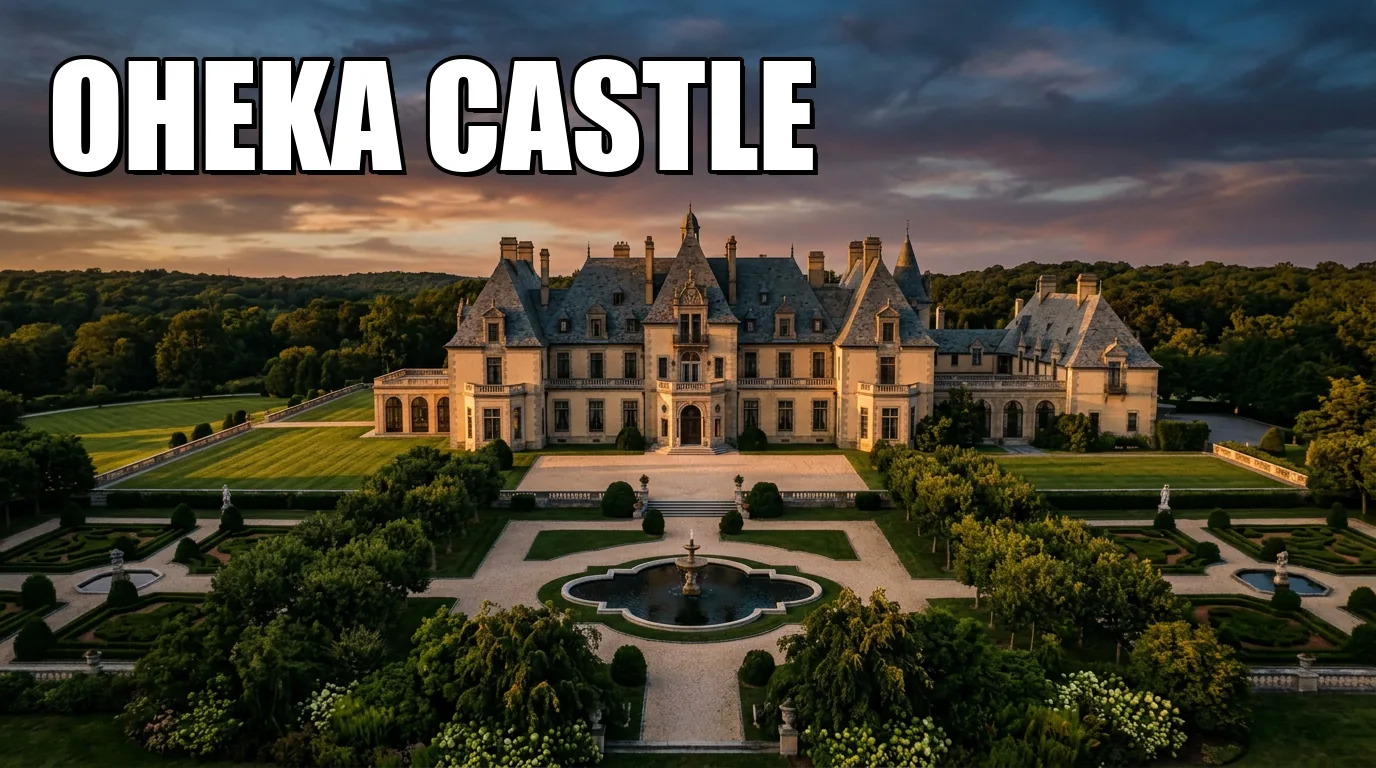
Let's begin with Oheka Castle on Long Island's Gold Coast, a sprawling French-style chateau that many will recognize from *Succession*'s memorable hunting episode. Built by investment banker Otto Hermann Kahn between 1915 and 1919, this isn't just a big house; it's the second-largest private residence ever constructed in America. Kahn, a cultural patron and art collector, wasn't just building a home; he was building an empire, a place to entertain heads of state and Hollywood stars after being denied membership in Morristown country clubs due to his Jewish heritage. The motivation here, a blend of aspiration and exclusion, is palpable even today. What makes Oheka truly fascinating is Kahn's almost obsessive foresight. Having lost a previous home to fire, he commissioned architects Delano & Aldrich to design Oheka entirely in steel and concrete, making it one of the first residential buildings in America to be completely fireproof. This wasn't merely a luxury; it was a deeply personal, pragmatic response to a past trauma, a detail that often gets lost in the sheer spectacle of its 127 rooms. After Kahn's death, the estate suffered a dramatic decline, even enduring over 100 documented arson attempts during its abandonment in the late 1970s—a testament to Kahn's original vision, as the structure remarkably survived. Today, thanks to a painstaking restoration by developer Gary Melius, it thrives as a luxury hotel, its grandeur undiminished. Visitors truly feel a sense of history's weight here. If you're planning a visit, know that mansion tours are by reservation only, typically starting at 11:00 AM daily, with occasional 12:00 PM and 6:00 PM slots. An adult ticket will set you back around $30, while seniors pay $25. My advice? Book well in advance, especially if you're aiming for a weekend, and don't skip the gardens. They offer a breathtaking backdrop, and it's easy to imagine a young Logan Roy, or perhaps an older one, pacing these very grounds, contemplating his next move.

Newport's Gilded Giants: The Breakers' Unapologetic Display

Moving north, we arrive at Newport, Rhode Island, home to a cluster of Gilded Age "cottages" that are anything but. The Breakers, for instance, isn't just the grandest of them all; it's an almost audacious declaration of Vanderbilt power. Built for Cornelius Vanderbilt II between 1893 and 1895, this 70-room behemoth, perched on Ochre Point overlooking the Atlantic, simply dwarfs its surroundings. Like Oheka, its predecessor burned down, and Vanderbilt, not one to repeat mistakes, insisted on a fireproof design from Richard Morris Hunt, even locating the boiler underground. This era’s obsession with absolute structural integrity, a response to recent devastating fires, is an intriguing undercurrent to their outward extravagance. Stepping into The Breakers, you're not merely entering a home; you're walking into a meticulously crafted monument to wealth. The Great Hall, with its towering Caen limestone walls, is frankly overwhelming. Yet, it's the smaller, more private details that often reveal the true depths of their fortune and taste. Take the Morning Room, for example, designed to capture the first rays of Atlantic sunlight. Its shimmering silver panels, upon scientific examination, were found not to be silver leaf, but platinum—a choice so extravagantly subtle that it ensured the panels would *never* tarnish. This isn’t a detail you’ll find in every guide, and it speaks volumes about the level of no-expense-spared ambition the Vanderbilts embodied. While it's undeniably magnificent, I sometimes wonder if its sheer scale loses a certain human intimacy. The Breakers is open year-round, with adult admission at $32. For families, children aged 6-12 are $14, and under 5s enter free. Parking in Newport, especially during peak summer months, can be a challenge and often comes with a fee, so consider arriving early on a weekday to beat the crowds, or explore the multi-mansion ticket options, which offer significant savings and spread your visits over several days.

Alva Vanderbilt's Marble Statement: Power, Divorce, and Suffrage

If The Breakers screams dynastic power, then Marble House, also in Newport, is a testament to individual defiance. Commissioned by William Kissam Vanderbilt as a birthday gift for his wife, Alva, this 50-room mansion, completed in 1892, cost an astonishing $11 million, with $7 million alone spent on 500,000 cubic feet of marble. It was, at the time, unparalleled in American opulence, yet it was also the stage for one of the Gilded Age’s most sensational divorces. Alva Vanderbilt, far from being a passive recipient of her husband's extravagance, was a force of nature. Just three years after receiving this colossal gift, she divorced William on grounds of his affairs, retaining ownership of Marble House as an outright gift—an almost unheard-of feat for a woman of her era. This mansion, her "summer cottage," became her sanctuary and, later, her platform. After her second husband's death, she reopened Marble House and hosted women's suffrage rallies, with the first event taking place in the stunning Chinese Tea House, a later addition built on the seaside cliffs. It's a powerful reminder that these estates weren't just about lavish parties; they were about projecting power and, in Alva's case, challenging societal norms. Here, the house serves as a tangible link to a pivotal moment in women’s history. Like The Breakers, Marble House operates as a museum year-round, with admission at $32 for adults. Multi-mansion tickets are almost always your best bet for exploring Newport, providing savings of up to 41% if you plan on visiting three or more properties. Don't underestimate the sheer amount of walking involved, both within the houses and between them if you forgo a car.

Tarrytown's Gothic Intrigue: Lyndhurst's Deliberate Deception

Far from the seaside glitz of Newport, but equally compelling, is Lyndhurst Mansion in Tarrytown, New York. This 14,000-square-foot Gothic Revival estate, designed by Alexander Jackson Davis, offers a stark stylistic contrast to the classical grandeur of the Vanderbilt homes. It passed through the hands of three prominent families—William Paulding Jr., George Merritt, and ultimately railroad tycoon Jay Gould, whose daughter donated it to the National Trust for Historic Preservation. This evolution of ownership provides a unique historical layering that differentiates it from the single-owner statement pieces. Lyndhurst's interiors are a masterclass in Gothic romanticism, characterized by narrow hallways, sharply-arched windows, and fantastically peaked ceilings that can feel both grand and intimately, almost broodingly, atmospheric. But here’s an intriguing detail that most guides glide over: a significant amount of the mansion’s "marble" is actually painted wood and plaster. This deliberate choice, known as *trompe l'oeil*, or "deceive the eye," reflects an aesthetic preference of the period for ostentatious "fakery." It challenges our modern sensibilities that equate authenticity with value, revealing a nuanced perspective on Gilded Age taste. The mansion also served as a prime filming location for HBO's *The Gilded Age*, further cementing its connection to this era of unparalleled wealth. Visiting Lyndhurst requires a ticketed tour; the Classic Mansion Tour is $16 per person and lasts about an hour, covering the first and second floors. For returning visitors or those seeking a deeper dive, the Upstairs/Downstairs Tour at $20 per person offers access to the tower and servant spaces, a perspective that truly adds context to the lives led here. Tours run seasonally, typically June through September, on the hour Friday-Sunday, 10:00 AM-4:00 PM, and Monday 12:00 PM-4:00 PM. I highly recommend purchasing tickets online in advance, as tours frequently sell out, especially during peak fall foliage season. Note that the tours involve significant standing and climbing around 25 steps.

Southampton's 'Summer Palace': Jule Pond and the Roy Family Aesthetic

For those who crave the direct experience of the Roy family's fictional world, we turn to Southampton, Long Island, and the Henry Ford II Estate, now known as Jule Pond. This property didn't just inspire Logan Roy's "Summer Palace"; it *was* it, featured prominently in the *Succession* episode of the same name. Built in the late 1950s by Henry Ford II, the grandson of the automotive titan, the production team deliberately chose it to capture what they considered Logan Roy's "new money taste." It’s a fascinating contrast to the Gilded Age estates – less about historical grandeur and more about sprawling, understated (yet still immense) exclusivity. This isn’t a museum you can visit. It’s a private estate, a stark reminder of the exclusivity *Succession* so vividly depicted. The property, spanning over 170,000 square meters, was sold in November 2021 for a staggering $105 million, a price tag that speaks volumes about the enduring allure of secluded Hamptons beachfront. Its listing details, however, paint a picture of quintessential Roy family living: tennis and basketball courts, multiple ponds, a guest house, and over 400 meters of private Atlantic beach access, allowing for those crucial "outdoor scheming" scenes the show was known for. It’s not just a house; it’s a self-contained world designed for total privacy and untouchable power, embodying the very essence of the Roy dynasty's insular lifestyle. These estates, whether built for defense against fire, as defiant social statements, or as modern-day fortresses of solitude, all speak to an enduring truth about American wealth. They are more than just buildings; they are characters in their own right, each with a story that echoes the very themes that make *Succession* so compelling. Visiting them isn't just a history lesson; it's a journey into the heart of American ambition.

Ultimate Guide to Visiting Succession Filming Locations Across America

What is a Succession mansion locations tour and where can I take one?
Guided walking tours of Succession filming locations are available in New York City, covering iconic sites like Kendall's apartment, WayStar Royco headquarters on the Upper East Side, and Battery Park where the finale was filmed; tours are $59-$162.50 per person and last approximately 2 hours.
What house was used in the Hamptons in Succession?
The iconic glass mansion featured in Season 3, Episode 4 is located in Wainscott, New York, and was listed for $52 million; it's a contemporary oceanfront property with 11,000 square feet and stunning Atlantic Ocean views.
What castles were used in Succession?
Oheka Castle in Huntington, Long Island (featured as a Hungarian castle) and Eastnor Castle in Herefordshire, England (Shiv and Tom's wedding venue) were the primary castles used throughout the series.
Where is Matsson's house in Succession?
Matsson's primary residence is Villa La Cassinella on Lake Como in Italy, and his company retreat is located at Juvet Landscape Hotel in the Valldal valley of northwestern Norway.
What castle was Shiv's wedding at?
Shiv and Tom's wedding was filmed at Eastnor Castle, a historic castle in Ledbury, Herefordshire, England, which served as a family country estate in the show.
Who owns Oheka Castle now?
Gary Melius has owned and operated Oheka Castle as a wedding and events venue since the 1980s; however, he filed for Chapter 11 bankruptcy in July 2025 to prevent foreclosure on the property.
Where is Nan Pierce's house in Succession?
Nan Pierce's home is the Peabody Estate, also known as Villa Solana, located in Santa Barbara, California; it's a historic 1914 property with original architectural details.
How much does it cost to hire Eastnor Castle for a wedding?
Eastnor Castle wedding packages start at £8,000 for weekdays and go up to £11,000 for Friday events, with accommodation and additional services charged separately; the castle offers exclusive use for 1-2 days.
Where did Shiv get married in Succession?
Shiv married Tom at Eastnor Castle in Herefordshire, England, which served as the romantic wedding venue across multiple episodes in Season 1.
Is Argestes a real place?
No, Argestes is a fictional media and tech conference, but it was inspired by real events like the World Economic Forum in Davos and filmed at Whiteface Lodge in Lake Placid, New York.
Can I visit Lyndhurst Mansion where the Roy family estate was filmed?
Yes, Lyndhurst Mansion in Tarrytown, New York is open to the public with guided tours available Thursday through Tuesday; it features a 67-acre estate with stunning Hudson River views and Gothic Revival architecture.
What are the ticket prices for Lyndhurst Mansion tours in 2025?
Classic mansion tours at Lyndhurst cost $29 for adults, $27 for groups, $22 for youth (ages 6-16), and $10 for children under 5; tours last approximately one hour and cover the two main floors.
How much does it cost to take a Succession walking tour in New York City?
Succession walking tours in Manhattan cost approximately $59 for combined uptown and downtown locations or $162.50 per person for specialized tours, including 2+ hours of guided experience.
Where was the Italy wedding episode filmed?
The Season 3 wedding episodes were filmed at multiple Tuscan estates including Villa Cetinale near Siena (wedding ceremony), Villa La Foce with gardens designed by Cecil Pinsent, and Villa Buonriposo where Kendall stayed.
Can I tour Oheka Castle and what are the admission prices?
Oheka Castle offers guided mansion tours daily starting at 11:00 AM with admission prices of $25 for adults, $20 for seniors, $15 for students and hotel guests, and $5 for children under 12.