
Beyond the Ballroom: Gilded Age Servants' Quarters
Most visitors to America's grandest Gilded Age estates are swept away by the sheer extravagance: the soaring ceilings, the imported marble, the glittering chandeliers. We walk through ballrooms where Vanderbilts danced and dining halls where Astors dined, imagining lives of unparalleled luxury. But pause for a moment. Consider the intricate, invisible machinery that kept these opulent worlds turning. Think of the dozens, sometimes hundreds, of people whose labor sustained such grandeur, yet whose presence was meticulously designed to vanish from sight. Their stories, etched into the very fabric of these homes, reside in spaces most guidebooks barely mention: the servants' quarters.
What does it truly mean to design for invisibility? Architects of the late 19th and early 20th centuries faced a unique challenge: how to house and facilitate the work of vast domestic staffs while maintaining the illusion of effortless gentility for their wealthy patrons. The solutions they devised were nothing short of brilliant, if sometimes chilling in their precision. These "invisible cities" within the mansions offer a profound, often unsettling, look into the strict social hierarchies and the era's architectural ingenuity. Forget the romanticized upstairs/downstairs dynamic; the reality was far more complex, a testament to an era obsessed with both display and discretion.
Biltmore's Grand Scale: An Unprecedented Domestic Empire
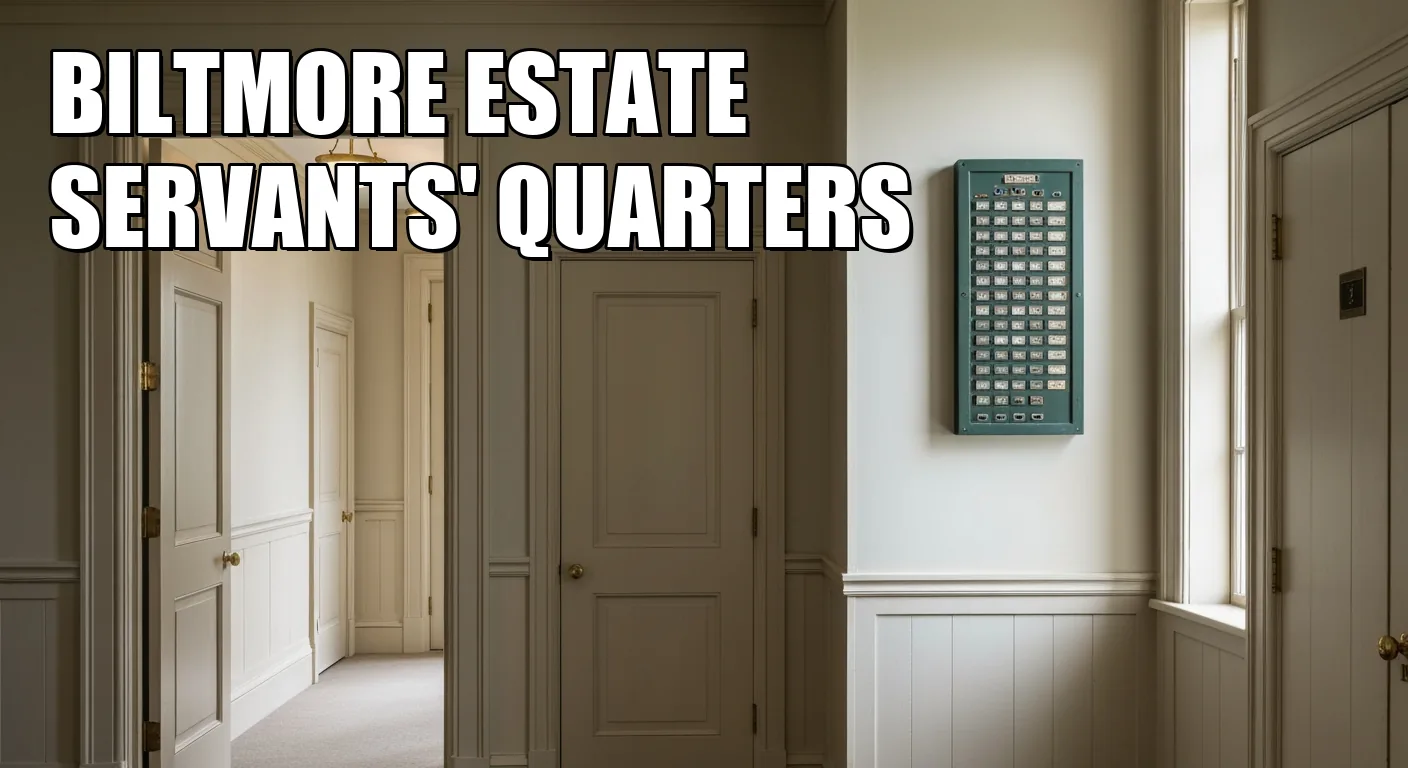
Venturing into the Biltmore Estate in Asheville, North Carolina, one is immediately overwhelmed by its sheer, audacious scale. Richard Morris Hunt's French Renaissance château, completed in 1895, isn't just a house; it's a small village under one roof, or at least, a sprawling estate that necessitated the most comprehensive integration of servant spaces in American residential architecture. While the main tours focus on the family's lavish rooms, digging deeper into Biltmore's operational heart reveals an almost industrial approach to domestic management. The sheer number of staff—around 80 living on-site—required an entire ecosystem of dedicated spaces. What truly struck me about Biltmore's approach wasn't just the quantity of servant rooms, but their *quality* compared to many other estates. Twenty-one dedicated female servant bedrooms on the fourth floor, for instance, each boasted individual windows, electric lighting, and heat—luxuries for their time, especially in servant accommodations. This wasn't just a roof over their heads; it was a comparatively comfortable existence for a maid or laundress. Yet, this relative comfort existed within a system of rigid segregation, with discrete service staircases ensuring complete separation from the family's living areas. Male staff, typically stable hands or outdoor laborers, were quartered above the stable complex, a further division by gender and occupational rank that speaks volumes about the era's social codes. Down in the basement, the true engine room of the estate hummed: the massive main kitchen, scullery, laundry, and even recreational spaces, all designed for maximum efficiency. It's a fascinating study in logistics, a testament to how the wealthiest families could orchestrate entire workforces within their private domains.Newport's Ingenuity: Hiding in Plain Sight (or Underneath It)
Newport, Rhode Island, with its concentration of Gilded Age "cottages," offers a different flavor of architectural discretion. Unlike Biltmore's sprawling rural setting, these urban mansions, often built on smaller lots, demanded even more clever solutions for housing and managing staff without visually intruding on the grand facades. The intense social competition among Newport's elite meant architects like Horace Trumbauer and McKim, Mead & White had to be incredibly inventive in making the necessary domestic machinery disappear. Consider The Elms, designed by Trumbauer. On its third floor, sixteen single-occupancy bedrooms for indoor servants, served by three full bathrooms, housed a good portion of the forty-strong staff. The true genius, however, lies in an architectural detail few visitors notice: a skylight midway along the corridor that funneled natural illumination throughout the servants' floor. Even more remarkably, glass block flooring elements on the second floor channeled sunlight further into *family* spaces below, reducing electrical needs. This wasn't just about servant comfort; it was an early, ingenious instance of passive energy transfer, blurring the lines of practical innovation between the "upstairs" and "downstairs" worlds. The underground coal delivery tunnel, connecting the street directly to basement furnaces, preventing any unsightly disruptions to the principal living areas, is another example of this meticulous attention to hidden infrastructure. Arrive early on a weekday to truly appreciate the quiet details; weekend crowds can make a deep dive into these less-trodden paths difficult. Then there's The Breakers, Cornelius Vanderbilt II's Renaissance Revival villa, arguably the most architecturally elaborate expression of servant spatial hierarchy. Here, McKim, Mead & White deliberately omitted any visible service wings, incorporating all staff quarters within the mansion's main rectangular block. Around 33 of its 70 rooms were dedicated to domestic staff, primarily on the third floor above the north wing. This vertical segregation was extreme, spanning five distinct levels: grand reception, family suites, guest bedrooms, staff quarters, and basement service functions. It meant staff often traversed multiple floors via narrow, deliberately inconspicuous service staircases, designed to prevent any accidental encounters with the family or their guests. The sheer logistical planning required to move food, laundry, and people through this hidden labyrinth without a hitch is mind-boggling, a silent ballet performed daily.The Art of Discretion: Concealment as a Design Philosophy
The concept of staff invisibility wasn't merely a practical consideration; it became a defining design philosophy. Architects went to extraordinary lengths to hide the functional reality of these massive households, sometimes to the point of outright architectural illusion. Marble House, another Richard Morris Hunt masterpiece for William Kissam Vanderbilt, exemplifies this perfectly. This 50-room residence, requiring 36 servants to maintain, appears from the exterior to be a grand two-story classical villa. What a typical guide won't immediately tell you is that Marble House secretly incorporates a *concealed third floor* dedicated entirely to staff accommodations. Hidden behind the uniform roofline and balustrade, this architectural sleight of hand allowed Hunt to maintain the classical proportions of the Petit Trianon, his inspiration, while providing substantial servant spaces without breaking the facade's visual unity. This was less about servant comfort and more about the patron's desire for an unblemished aesthetic, reflecting a societal value that prioritized outward perfection above all else. Visiting in the shoulder seasons (April-May or September-October) provides the best opportunity to linger and truly observe these subtle architectural deceptions. Similarly, the Vanderbilt Mansion in Hyde Park, New York, designed by McKim, Mead & White for Frederick Vanderbilt, showcases a comprehensive functional separation. Its third floor housed a dedicated Servants' Hall, physically separated from guest bedrooms by a strategically placed door at the main staircase. This created distinct circulation zones, keeping staff and guests firmly in their separate spheres. Female staff occupied the third-floor bedrooms, while male staff were relegated to the basement, alongside the wine cellar, ice room, and pressing rooms. The ingenuity extended even to dining: the main kitchen was positioned directly beneath the dining room, utilizing a large dumbwaiter system to lift prepared food to the butler's pantry on the first floor. This intricate system ensured service occurred without any visual intrusion into the family’s dining experience. It was a well-oiled machine, meticulously designed to create an illusion of effortlessness for the family, all while demanding incredible coordination and silent efficiency from the staff.Unpacking the Paradox: Practicalities and Lingering Questions
Visiting these estates today, it's easy to be enchanted by the romance of a bygone era. Yet, walking through the servants' quarters, a different narrative emerges. These spaces, though sometimes offering better conditions than urban tenements, were fundamentally about control and hierarchy. The typical servant bedroom, around 100-120 square feet, often shared with multiple individuals in earlier periods, stands in stark contrast to the family's sprawling suites. Shared bathroom facilities, while an improvement over chamber pots, often meant one bathroom served 8-10 staff members. These aren't just architectural curiosities; they are tangible manifestations of a rigid class structure, where one group's comfort was predicated on another's diligent, often unseen, labor. What surprised me most, after years of exploring these sites, is how the initial impression of grandiosity slowly yields to an appreciation for the *human* infrastructure—the lives lived and labors performed—that made such grandiosity possible. These quarters weren't just utilitarian; they were social spaces, albeit constrained ones. The Servants' Hall in the basement of the Vanderbilt Mansion, for instance, doubled as both dining and social space for staff, offering a rare glimpse into their collective life. When you visit, don't just admire the opulent halls; seek out the tucked-away staircases, the unassuming doors, the less-photogenic corridors. These are the places where the true story of the Gilded Age, beyond its glittering façade, truly resides. Tours focusing on these "back of house" areas are increasingly popular, and I highly recommend booking one if available—they offer a depth of insight no general admission ticket can provide. Expect these specialized tours to cost slightly more (typically $10-20 extra), but the context they provide is invaluable. Plan at least half a day for each major estate to truly explore both the public and private realms.Unraveling the Hidden Architecture: The Complete Guide to Servant Quarters in Historic American Homes
What are servant quarters in a house?
Servant quarters are special areas within large houses designed to house domestic staff, including kitchens, laundries, pantries, bedrooms, and work spaces that were kept separate from the main family living areas. These hidden spaces allowed servants to perform their duties and live out of sight from the family and guests.
Where were the servants quarters?
Servant quarters were typically located in basements, attics, top floors (third floor), separate wings, or outbuildings such as carriage houses and cottages on estates. They were strategically positioned to remain invisible from the family's private spaces while providing convenient access to areas where servants worked.
Servants quarters architecture history
From the late 17th century until the early 20th century, servant quarters became a common architectural feature in large American homes, with Victorian and Gilded Age mansions featuring elaborate designs including hidden staircases, separate corridors, and ingenious passageways that enabled servants to move throughout the house unseen by residents and guests.
What were servant quarters in medieval castles?
In medieval castles, servants were afforded small rooms or huts near their work areas such as kitchens or great halls, often sleeping in simple quarters or even in hallways and stairwells adjacent to where they performed their duties. These spaces reflected the servants' low status and practical need to remain close to their work.
What is a house servant called?
House servants are referred to by various titles depending on their specific role, including butler, housekeeper, cook, footman, valet, governess, maid, lady's maid, chambermaid, parlor maid, housemaid, kitchen maid, and scullery maid, each with distinct responsibilities within the household.
Part of 🏛 Architecture Styles

Architecture Styles
Gothic Revival Architecture: What the Street Can—and Cannot—Tell You
A three-level field test separates visible Gothic Revival evidence from a style hypothesis and the dates, authorship or alterations that require records.

Architecture Styles
Greek Revival Without Columns: A Confidence Test
Greek Revival can survive without a portico. Use roofline, entablature, entrance, wall plane, date and later alterations to state confidence.
Architecture Styles
Prairie Style Architecture: How to Spot the Style in American Houses
A practical guide to Prairie Style architecture in the United States, with the roof, window, massing, and site cues readers should compare from the street.