
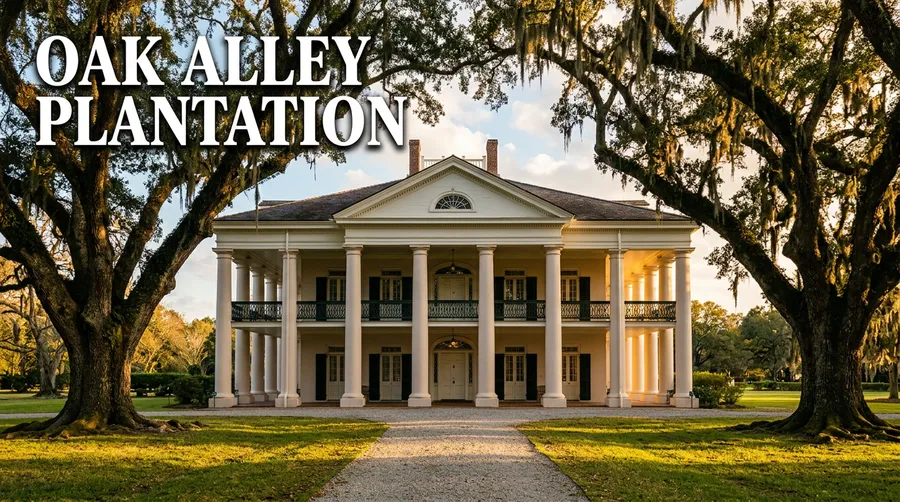
Stand beneath the sprawling live oaks dripping with Spanish moss, and you feel it – the weight of centuries. America's plantation landscapes, at first glance, might seem to offer only beauty, but dig deeper, and you find the raw, often uncomfortable, truth of our past. I've walked these grounds more times than I can count, expecting one thing and finding something else entirely. The narrative surrounding these sites has shifted dramatically in recent years, thankfully moving beyond the grandiosity of the "Big House" to center the lives of the enslaved people whose forced labor built these empires. But not all sites have made this transition with equal commitment or authenticity. What makes one truly insightful while another merely scratches the surface?
For too long, visitors to these historic estates were offered a skewed perspective, one that emphasized architectural grandeur and pastoral charm, often glossing over the brutal realities of human bondage. That era, thankfully, is largely receding into the past, supplanted by a growing, if sometimes uneven, dedication to a more complete, ethical recounting of history. We're looking for places that don't just acknowledge slavery, but integrate it as the fundamental, inescapable truth of their existence. The best of these sites compel us to wrestle with challenging questions, demanding a deeper understanding of American identity.
Whitney Plantation: Confronting the Unseen, Unflinchingly
Nestled along Louisiana's River Road, Whitney Plantation isn't designed for a comfortable stroll. From the moment it opened its doors in 2014, it staked a claim as the first U.S. museum dedicated primarily to the enslaved, a bold and necessary pivot that recalibrated the entire conversation around plantation tourism. My first visit there left me profoundly moved, not by the elegance of the main house (which, tellingly, is secondary to the experience), but by the sheer, visceral power of its memorialization efforts.
Where most plantation tours begin with the planter's mansion, Whitney deliberately starts at the slave cabins. You walk through these humble dwellings, restored but retaining a palpable sense of the past, before ever glimpsing the opulent main house. This isn't just a stylistic choice; it's a profound statement that immediately shifts your perspective. Dozens of statues, hauntingly lifelike, depict enslaved individuals, particularly children, creating a palpable sense of their presence and suffering. It's a sobering introduction, compelling you to reckon with individual lives rather than abstract historical concepts. Guides, meticulously trained and armed with extensive archival research, share stories gleaned from specific individuals who toiled and suffered on this very ground. Expect an emotional experience; this place doesn't pull its punches.
Beyond the physical site, Whitney Plantation extends its reach through robust digital humanities projects. They've built a comprehensive online database, a living testament to the enslaved, offering names and biographies that educators can use, and families can trace. You can even explore interactive maps on their website, providing a crucial link for those unable to visit in person. Moreover, their collaboration with PBS LearningMedia ensures that this crucial narrative, particularly the overlooked roles and resistance of enslaved women in domestic spaces, reaches classrooms nationwide. This commitment to digital accessibility truly amplifies their mission, ensuring these stories aren't confined to a physical location, but resonate across generations and geographies.
Ongoing archaeological digs around the former quarters and outbuildings continue to unearth artifacts – personal items, ceramics – that paint a richer picture of daily life. These aren't just curiosities; they inform the material-culture displays in the "Stories of Sugar" exhibit, grounding the narratives in tangible evidence. The meticulous reconstruction of landscape features, like cane-field layouts, based on these archaeological reports, helps visitors visualize the demanding labor patterns that defined life here. Crucially, Whitney's advisory councils, composed of Louisiana descendant families, actively contribute oral histories and advise on exhibit content, ensuring an authenticity and respect that only those with direct lineage can truly provide. Annual remembrance ceremonies, co-organized with these descendants, underscore a living connection to the past, transforming historical memory into a vibrant, collective experience.
Monticello's Unflinching Gaze: Jefferson's Complicated Legacy
Thomas Jefferson's Monticello, perched majestically atop a hill near Charlottesville, Virginia, presents a particularly poignant case study. For decades, it was largely celebrated as the architectural masterpiece of a Founding Father, the complexity of his relationship with slavery often relegated to footnotes, if mentioned at all. Today, however, Monticello has undergone an extraordinary interpretive transformation, explicitly acknowledging slavery as absolutely central to its history, forcing visitors to grapple with the profound contradictions of its famous owner.
What truly sets Monticello apart, beyond its sheer historical heft, is its unwavering commitment to self-interrogation. Few places of such national significance have so thoroughly deconstructed their own foundational myths. The "Getting Word Project," launched decades ago, meticulously collected oral histories from Monticello descendants, forming a vital digital archive on the Thomas Jefferson Foundation (TJF) website. This project, which began long before "descendant inclusion" became a buzzword, truly embeds the voices of those whose ancestors were enslaved here, shaping exhibits and bringing forth narratives that traditional historians might have missed. Then there's the 2018 Sally Hemings exhibition, which candidly addressed "Sex, Power, and Ownership," presenting Jefferson’s paternity of Hemings’s children not as speculation, but as an established historical fact. This move prompted profound visitor reflection on the complex, often uncomfortable, legacies of power and exploitation woven into the very fabric of the nation's founding.
Delving into the digital sphere, TJF’s online Monticello Community portal offers a treasure trove of digitized documents, descendant-contributed family trees, and even interactive 3D reconstructions of slave quarters along Mulberry Row. Imagine being able to virtually walk through these spaces, visualizing the living conditions of the enslaved, or using GIS-based mapping tools to understand the spatial relationships between their dwellings, gardens, and work sites across different historical eras. This isn't just academic; it provides an unparalleled level of detail and accessibility for both scholars and the general public, fostering a more complete understanding of the plantation's social geography. This digital commitment ensures that the story extends far beyond the physical boundaries of the estate, reaching a global audience.
Decades of systematic excavation have provided Monticello with an incredibly nuanced, evidence-based interpretation of its past. The 2000-2001 discovery and excavation of the African-American burial ground, for instance, yielded osteological (bone) and artifact data that directly informs interpretive panels and a dedicated memorial area. These aren't just theories; they're hard facts unearthed from the ground itself. Similarly, ongoing Mulberry Row excavations continue to reveal structural footprints and refuse deposits, offering invaluable insights into daily life, resistance strategies, and the material culture of the enslaved community. This meticulous archaeological work underpins the credibility of Monticello's narrative, preventing speculation from overshadowing substantiated history.
Perhaps most commendably, Monticello has structurally embedded descendant communities into its governance and interpretive process. Biennial descendant reunions, held since 2003, are not mere symbolic gestures. The permanent hiring of Hemings family descendants as researchers within TJF ensures that descendant voices are not just heard, but are integral to the very production of historical knowledge. Furthermore, the Monticello Community Fellowship program actively supports descendant-led research projects, ensuring a truly collaborative curation process. This level of institutional commitment to equitable collaboration sets a formidable benchmark for other historic sites, demonstrating what’s possible when an institution truly embraces its complex past.
Boone Hall's Evolution: Living History, Lingering Questions
Boone Hall Plantation, a "living plantation" near Charleston, South Carolina, has been continuously operating since 1681, making its journey of historical interpretation particularly intricate. Unlike Monticello or Whitney, it still functions as a working farm. In recent years, Boone Hall has made conscious efforts to adopt more inclusive narratives, moving beyond its traditional focus on the beautiful Avenue of Oaks and its use as a film set.
My last visit revealed a palpable shift. Guided tours now incorporate restored slave cabins, featuring interpretive panels that delve into Gullah-Geechee culture—the unique creole language, traditions, and kinship networks developed by enslaved West Africans and their descendants along the southeastern U.S. coast—and their remarkable strategies of resistance. The grand Avenue of Oaks tour, once purely aesthetic, now foregrounds the critical role of enslaved arborists in its planting and maintenance, a small but significant shift in perspective. You'll often find Gullah-Geechee craftspersons demonstrating traditional skills, like sweetgrass basket weaving, providing a vibrant, tangible connection to the past. This emphasis on living culture programs and direct engagement with descendant artistry is undeniably one of Boone Hall’s strengths, making the history feel immediate and alive.
However, when we talk about digital humanities, Boone Hall’s efforts, while present, are comparatively modest. They offer a small digital archive on their website with short biographies of several enslaved individuals and a virtual cabin walkthrough. While a good start, it lacks the extensive interactive tools, deep genealogical databases, or 3D archaeological reconstructions found at Monticello or Whitney. It’s a step in the right direction, but there’s still considerable ground to cover to match the depth and accessibility of its peers. This isn't to say it's not worth visiting; it just means the scholarly and interactive experience might be less robust for those looking to delve deeply from afar.
Archaeological findings here have also contributed to a richer understanding of daily life. Excavations at Cabin No. 4, for instance, uncovered domestic artifacts – ceramics, basket-weaving tools – which are now displayed alongside multimedia kiosks that illustrate the everyday resilience of the enslaved. Ongoing field-school partnerships also train local students in archaeological methods, simultaneously documenting plantation landscapes and fostering a new generation of historians. While these efforts are valuable, one might question whether the integration of archaeological data into the overarching narrative is as central or as seamlessly woven throughout the entire visitor experience as it is at Monticello, where every unearthed fragment seems to inform a broader historical truth.
Boone Hall's collaboration with the Gullah-Geechee Cultural Heritage Corridor is commendable, providing a platform for live demonstrations by craftspersons descended from enslaved communities. Annual Gullah festivals invite descendant families to share foodways and storytelling, creating a vibrant, celebratory atmosphere. Yet, an expert eye might note that while these collaborations are rich in cultural exchange and celebration, institutional decision-making regarding historical interpretation and site governance still appears to be largely top-down. While the contributions are invaluable, the structural inclusion of descendant voices in fundamental research and curatorial leadership doesn't quite reach the same level of embeddedness seen at Monticello. This doesn't diminish the power of the Gullah traditions on display, but it’s a distinction worth considering when evaluating the depth of a site's commitment to equitable historical partnership.
Choosing Your Path: What to Expect from an Ethical Plantation Tour in 2025
So, which historic plantation should you visit in 2025, and what should you expect? Each of these sites offers a unique lens through which to view American history, but their approaches vary significantly. Whitney Plantation, with its unwavering focus on the enslaved, offers an intense, visceral experience that prioritizes memorialization and direct confrontation with suffering. It's a powerful and essential visit, particularly for those seeking a truly immersive understanding of the lives of enslaved people. Plan to dedicate at least three to four hours for a comprehensive tour, and perhaps more time for reflection. The admission fee is typically around $28 for adults, and while specific timed tickets often aren't required, arriving earlier in the day, especially on a weekday outside of summer peak season (June-August), can provide a more contemplative experience with fewer crowds. Parking is free and plentiful on site.
Monticello, on the other hand, presents a masterclass in institutional self-reflection, demonstrating how a site deeply intertwined with one of America's most complex figures can bravely deconstruct its own foundational myths. Its depth of archaeological research, integrated digital humanities projects, and genuine structural inclusion of descendant communities set a gold standard for ethical historical tourism. A visit to Monticello requires a full day to truly appreciate its multiple tours (main house, slavery, gardens, etc.) and exhibits. Admission ranges from $32-40 for adults, depending on the season and chosen tour options. Booking tickets online in advance is strongly recommended, particularly for specific tour times, to avoid disappointment. Weekday mornings, especially in the spring or fall, offer the most pleasant weather and manageable crowd sizes. Parking is also included with admission.
Boone Hall Plantation, with its vibrant living culture programs and beautiful grounds, offers a compelling, if sometimes less deeply integrated, experience. It excels at showcasing Gullah-Geechee traditions and provides a more accessible entry point for visitors new to the complexities of plantation history. While it has made strides in acknowledging slavery, its approach to descendant engagement and digital resources doesn't quite match the rigorous, integrated model of Monticello. Expect to spend 2-3 hours here. Admission typically costs around $28 per adult. The best time to visit Boone Hall to experience cultural demonstrations is during their annual Gullah festivals (check their website for dates, usually in February or November), or during peak season when more interpreters are present. Otherwise, any weekday morning offers a less crowded experience. Parking is ample and free.
Ultimately, while all three sites have moved well beyond the antiquated "Big House" narrative, Monticello stands out as the most compelling model for ethical historical tourism in the post-2020s era. Its integrated digital humanities, holistic archaeological approach, and profoundly embedded descendant governance create a benchmark for truly collaborative and evidence-based historical interpretation. Whitney Plantation, in its powerful memorialization and site-based storytelling, is equally vital, offering an essential and emotionally impactful counter-narrative. Boone Hall, with its valuable living-culture programs, contributes significantly to our understanding of Gullah-Geechee heritage. Each offers a unique, important piece of the American story, but Monticello, in its multifaceted dedication to truth, truly sets the bar for what a historic site can and should be in the 21st century.