Bed & Breakfast

Beyond the Brochure: America's Historic River B&Bs

There's a particular kind of magic that settles over a town built alongside a flowing river. A sense of enduring purpose, of commerce and connection, often tinged with the echoes of dramatic history. And when that history is embodied in an inn, where you can actually lay your head, the experience transcends mere sightseeing. I’ve spent decades chasing these very sensations across the United States, seeking out the bed and breakfasts that aren't just old, but genuinely historic, offering a tangible link to the past.

My journeys have taught me that discerning the truly exceptional from the merely aged requires a keen eye. What often goes unsaid in glossy travel articles are the practical realities, the subtle nuances, and the unexpected delights—or occasional disappointments—that define a stay. So, let’s pull back the curtain on some of America's most storied river town inns, exploring not just their "what," but their profound "why."

What Does "America's Oldest Inn" Really Promise? The Griswold & Beekman Arms

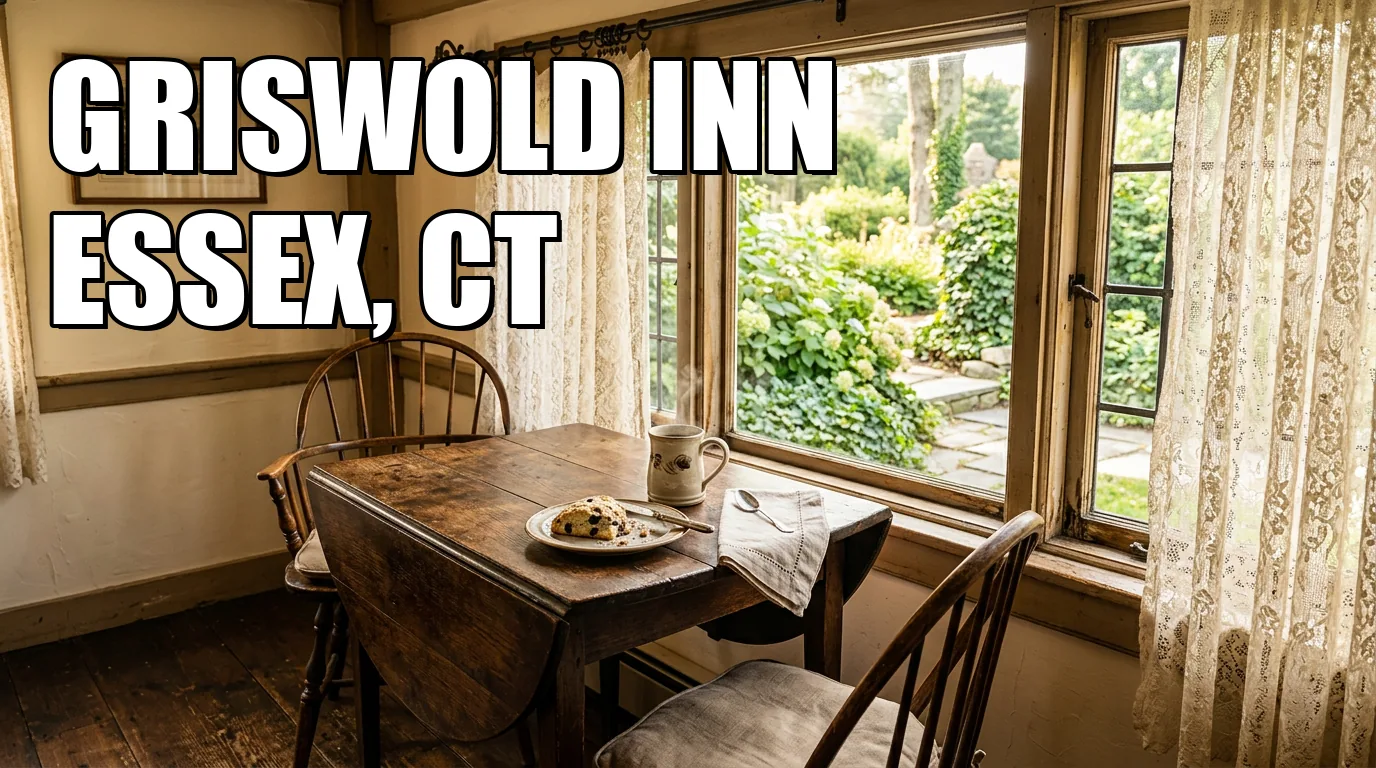
To declare an establishment as "America's oldest continuously operated inn" is to immediately invite skepticism, or at least a critical examination. Two contenders often vie for this title, and both offer distinct experiences: The Griswold Inn in Essex, Connecticut, and the Beekman Arms & Delamater Inn in Rhinebeck, New York. Founded in 1776, the Griswold Inn's genesis is undeniably tied to the very birth of the nation, established to house the shipbuilders constructing the Oliver Cromwell, Connecticut's first warship for the Continental Navy. One might imagine austere, cramped quarters; the reality is a charming, somewhat rambling collection of rooms and dining spaces that feel more like a beloved, lived-in home than a museum.

What sets the Griswold apart isn't just its age, but its spirited resilience. Think of the 1812 War, when British forces actually occupied the inn, or the clandestine "rum runners" who kept spirits flowing during Prohibition, delivering their illicit cargo down the Connecticut River under the cover of night. This isn't some sanitized historical recreation; it’s a building that has genuinely weathered storms and adapted. A Standard Room, running around $235-$280 per night, offers that quintessential New England charm, often with sloping floors and uneven walls that whisper tales of centuries past. Don't expect pristine modern minimalism; embrace the authentic creak of the floorboards as part of the appeal. For the deepest immersion, plan your visit in the quieter shoulder seasons—late spring or early fall after the leaf peepers have thinned out—to avoid the bustling summer crowds that can overwhelm this small village.

Meanwhile, Beekman Arms & Delamater Inn in Rhinebeck lays claim to an even earlier lineage, with its origins tracing back to a 1704 tavern, making it arguably the very oldest. Here, the sheer density of historical figures who’ve passed through is staggering: George Washington, Benedict Arnold, and Alexander Hamilton all dined and slept within these walls. Legend even suggests a pivotal quarrel between Hamilton and Aaron Burr occurred here, preceding their infamous duel. It's a place where history isn't just displayed, it practically seeps from the timber and stone architecture. President Franklin Delano Roosevelt himself launched each of his four presidential campaigns from the inn's front porch, cementing its place in political lore.

The experience at the Beekman Arms often feels a bit more refined, perhaps due to its proximity to New York City and its status as a popular weekend escape. Rooms typically range from $119-$251 per night. While you might expect a grand, sprawling estate, the "inn" is actually a collection of buildings, with the main Beekman Arms building retaining its colonial charm and the Delamater Inn offering more spacious, often updated accommodations. If you seek the pure, unadulterated colonial vibe, request a room in the main building. Be forewarned: weekends can be bustling, especially during autumn; booking at least three months in advance is wise, particularly for the more characteristic King or Queen rooms with their period furnishings.

Mississippi Grandeur: More Than Just Antebellum Facades

Natchez, Mississippi, holds a special place in the heart of anyone captivated by the grandeur—and complexities—of the antebellum South. It's a town that escaped the widespread destruction of the Civil War, leaving behind an astonishing collection of pre-war mansions. Among them, Monmouth Historic Inn, founded in 1818, stands as a National Historic Landmark that genuinely delivers on the promise of Southern elegance. Built as a grand mansion, it was home to Governor John A. Quitman, a prominent figure in the Mexican-American War and Mississippi politics. What truly distinguishes Monmouth isn't just the main house, but the expansive 26 acres of meticulously manicured gardens, dotted with signature angel statuary.

Unlike some historic properties that feel frozen in time, Monmouth integrates its history with a genuine sense of luxury and hospitality. You can choose to stay in the main house, but a more interesting experience often lies in one of the seven historic outbuildings, each meticulously restored with period furnishings and antebellum-era reproductions. These often offer a bit more privacy and a unique perspective on the estate's sprawling grounds. Standard rooms begin around $218-$328 per night, and frankly, it's worth the investment for the ambiance and the generous Southern breakfast. My advice? Spend time wandering the gardens at dawn or dusk, when the light is soft and the air is still; it's a moment of profound beauty often missed by those rushing from tour to tour. Expect a warm, formal welcome that leans into Southern tradition, so dress accordingly for dinner if you plan to dine on-site.

Challenging the "Tourist Trap" Label in Harpers Ferry

Harpers Ferry, West Virginia, perched dramatically at the confluence of the Potomac and Shenandoah rivers, is undeniably a destination. Thomas Jefferson famously called it "perhaps one of the most stupendous scenes in Nature," and its pivotal role in the Civil War and John Brown's Raid makes it a magnet for history buffs. This popularity can, at times, make it feel like a bustling tourist destination, but don't let that deter you from experiencing the genuine charm of The Town's Inn.

The inn comprises two pre-Civil War stone residences, the circa 1820 Mountain House and the 1840 Heritage House, both nestled in the heart of historic Lower Town. This isn't a place for those who prefer modern hotels; it’s an immersive experience within steps of the C&O Canal Towpath, the Appalachian Trail, and countless historical markers. While its appearance on Gordon Ramsay’s Hotel Hell might give some pause, the current ownership has demonstrably turned things around, offering clean, characterful accommodations that lean into the rustic charm of the past. The 1840 Suite, priced at $120 per night, offers a distinctive stay, but even the more modest River View East or West rooms at $80 per night provide unbeatable access to the park’s attractions. Here's the critical insight: while Harpers Ferry can get crowded, especially on summer weekends and during peak foliage in October, staying directly within Lower Town allows you to experience the village before the shuttle buses arrive and after they depart, offering a much quieter, more contemplative visit. Parking in Lower Town is virtually nonexistent for guests, so plan to park at the visitor center (about a 10-minute drive uphill) and utilize the shuttle, which typically runs every 15-20 minutes during park operating hours.

Coastal Echoes & Northern Timber: Uncovering Unique Histories

Moving to the coast and then further north, two more river towns reveal distinct narratives, each with their own allure. In Beaufort, South Carolina, Anchorage 1770 commands attention not just for its elegance, but for its architectural significance. Built in 1770, it is the oldest and largest *tabby structure* still in use in the United States. For the uninitiated, tabby is a unique construction material made from oyster shells, lime, sand, and water, common in coastal Southern regions. This isn't merely an old house; it's a testament to colonial ingenuity and resourcefulness.

The Marquis de Lafayette himself was entertained here in 1825, and during the Civil War, it served as Union Hospital No. 11, a stark contrast to its later life as a social club before its careful preservation. What surprised me most about Anchorage 1770 was how its history feels both grand and intimately personal. The waterfront rooms, especially Room 402 and Room 404, offer breathtaking views of the Beaufort River and are absolutely worth the premium, approximately $330-$407 per night. These aren't just rooms with a view; they are windows onto centuries of maritime activity. For the optimal experience, aim for a spring or late autumn visit when the Lowcountry weather is most pleasant, and book those coveted waterfront rooms at least six months ahead, especially if your travel dates fall on a weekend.

Far to the north, in Stillwater, Minnesota, the Rivertown Inn transports visitors to a very different kind of Gilded Age. Founded in 1884, this Victorian mansion was built for lumber baron John O'Brien during Minnesota's logging boom. Stillwater, nestled on the St. Croix River, was then a major timber shipping center, and the inn exemplifies the wealth and architectural ambition of that "golden era." This isn't a Revolutionary War-era property; it's a testament to industrial might and the elegance that followed. Architect Frederick Sturnegk and contractor August Jackson created a home that still resonates with their craftsmanship.

The Rivertown Inn embraces a literary theme, with suites named after 19th-century poets and authors, ranging from $325-$445 per night. While some might find the themed decor a bit much, it’s executed with a charming earnestness that suits the mansion's character. The gourmet breakfasts, prepared by the inn's chef, are a genuine highlight and far exceed typical continental offerings. If you're visiting for the fall foliage, book a year in advance; otherwise, a three-to-six-month lead time for summer weekends is sufficient. Consider a weekday visit for a more tranquil experience, allowing you to truly appreciate the intricate details of the mansion without the weekend bustle.

Maritime Tales and Haunted Legacies: Kennebunk's Unique Charm

Rounding out our journey, The Kennebunk Inn, established in 1799 in Kennebunk, Maine, offers a maritime flavor distinct from its riverine counterparts, yet still deeply connected to its coastal waterway. Initially a private residence, it gained local fame through Dr. Frank Ross, an obstetric physician who never lost a mother in over 1,000 deliveries—a remarkable feat for the era. But it’s the inn's "haunted heritage" that often captures imaginations, with tales of Silas Perkins, a mid-twentieth-century clerk whose spectral presence reportedly manifests through moving objects. This isn't just a gimmick; these stories are woven into the inn's local lore and shared with a wink and a smile by the staff.

With 23 rooms and suites, all featuring private baths and individual character, the inn maintains its 1799 origins while offering modern comforts. Rooms typically range from $111-$141 per night, making it one of the more accessible historic stays. What truly stands out here is the sense of continuity; the property has operated continuously through more than forty U.S. presidencies, a quiet testament to its enduring appeal. While Kennebunkport, its more famous neighbor, can feel a bit polished and touristy, Kennebunk itself retains a working-class charm that feels more authentic. If ghost stories intrigue you, inquire about the "haunted" rooms, but be prepared for subtle shifts, not overt theatrics. Plan your visit for late spring or early fall to avoid the summer crowds and fully appreciate the quaint New England coastal atmosphere.

The Undeniable Value of Stepping Back in Time

These seven properties—from the Revolutionary War gathering places and lumber baron mansions to Civil War-era residences and antebellum estates—represent a cross-section of American hospitality, each with a unique narrative. They are not merely accommodations; they are living documents, portals to another time. While modern amenities are certainly appreciated, the true joy of staying in these historic inns lies in the palpable connection to past events, to the people who walked these halls and shaped the course of history.

Forget the generic hotel chains for a moment. Instead, consider the creak of an old floorboard, the subtle scent of aged wood, or the quiet rustle of leaves outside a window that has overlooked centuries of change. These are the moments that provide genuine insight, challenging us to consider our place in the long, winding river of time. The value isn't just in the comfortable bed or the gourmet breakfast; it’s in the stories absorbed through the very fabric of the building, offering a perspective no guidebook alone can convey.

Charming River Town Bed & Breakfast: Your Complete Travel Guide

What is the history of historic river town bed and breakfasts in America?
Historic river town bed and breakfasts have roots in colonial and post-colonial American hospitality, evolving from early inns and coaching houses where travelers received lodging and meals. The concept modernized during the Industrial Revolution when improved transportation made remote areas accessible, and private homeowners began welcoming guests, creating the intimate, personalized bed and breakfast experience that combines the charm of historic preservation with contemporary comfort.
What are the most popular historic river towns to visit with bed and breakfasts?
Top destinations include New Hope, Pennsylvania on the Delaware River (known for arts and culture), Stillwater, Minnesota on the St. Croix River (lumber baron history), Harpers Ferry, West Virginia at the confluence of two rivers (historical significance), Hudson Valley, New York (scenic and romantic), and Cape May, New Jersey (Victorian charm). Each offers unique character, local dining, shopping, and outdoor activities.
What is the best time of year to visit a historic river town bed and breakfast?
Spring through early fall (May through November) offers the best experience with mild weather, vibrant foliage, and full operation of local attractions and restaurants. Fall is particularly popular for scenic beauty, while summer is busiest for outdoor activities like kayaking and hiking, though accommodations book quickly during peak season.
What should I expect to pay for a night at a historic river town bed and breakfast?
Rates typically range from $80 to $150+ per night depending on location, season, and amenities, with peak season and holiday weekends commanding higher prices. Many properties offer special packages and discounts during shoulder seasons (spring and fall), and weekday rates are often lower than weekends.
How far in advance should I book a historic river town bed and breakfast?
Booking 2-3 months ahead is recommended for peak season (summer and fall), while off-season reservations can often be made 4-6 weeks prior. Holiday periods and special events may require even earlier reservations, so check specific property websites for seasonal demand patterns.
What is the typical cancellation policy for river town bed and breakfasts?
Most B&Bs require 7-30 days notice for full refunds, with stricter policies during holidays and peak seasons (sometimes requiring 30+ days notice). Since B&Bs operate with limited rooms, cancellations significantly impact their business, so policies tend to be stricter than standard hotels.
What amenities are typically included at a historic river town bed and breakfast?
Standard amenities include free WiFi, private bathrooms, air conditioning and heating, complimentary breakfast, and period furnishings blended with modern conveniences. Many properties feature fireplaces, hot tubs, reading libraries, and garden access, though offerings vary by establishment.
What kind of breakfast can I expect at a bed and breakfast?
Breakfasts are typically home-cooked and served at a set time (often 8-9 AM), featuring locally sourced ingredients with options like omelets, pancakes, fresh pastries, fruit, and yogurt. Many B&Bs accommodate dietary restrictions including gluten-free, vegan, and dairy-free options upon request.
What activities and attractions are available in historic river towns?
Common activities include hiking (especially the Appalachian Trail near Harpers Ferry), kayaking and canoeing, riverboat tours, visiting historical museums and sites, exploring local galleries and shops, fine dining at local restaurants, and enjoying scenic riverside walks or biking on towpaths.
Are historic river town bed and breakfasts pet-friendly?
Pet policies vary significantly by property; some welcome dogs with a nightly fee ($50-75), while others prohibit pets entirely. Always check individual property policies when booking, as restrictions on size, breed, and number of animals differ.
Is parking available at historic river town bed and breakfasts?
Parking options vary depending on location and property size; many offer free on-site parking, while some downtown properties have limited parking or require street parking. It's best to confirm parking availability when booking, especially for properties in walkable town centers.
Can historic river town bed and breakfasts accommodate groups, weddings, or events?
Many established B&Bs offer event and wedding packages including venue access, catering coordination with local vendors, ceremony and reception spaces, and optional overnight accommodations for guests. Event seasons typically run from late spring through early fall, with pricing starting around $2,950 and higher depending on size and amenities.
Are historic river town bed and breakfasts wheelchair accessible?
Accessibility varies widely depending on the building's age and construction; while some newer properties or those on ground floors may accommodate wheelchairs, many historic homes have stairs, narrow doorways, and uneven floors. Contact properties directly to inquire about specific accessibility features, and check for ground-floor rooms with accessible bathrooms.
How do historic river town bed and breakfasts differ from standard hotel stays?
B&Bs offer personalized service, home-cooked breakfasts, intimate settings with typically 3-10 rooms, period-authentic decor blended with modern amenities, and direct interaction with innkeepers who share local knowledge. They prioritize hospitality and comfort over commercial efficiency, creating a more homey, authentic travel experience.
What should I pack for a historic river town bed and breakfast stay?
Pack comfortable walking shoes, layers for variable weather (especially in spring and fall), swimwear if the B&B has a hot tub or pool, camera for scenic views, and any medications or dietary supplements. Check the property's website for specific amenities to avoid packing unnecessary items like toiletries or hair dryers.