Bed & Breakfast

Beyond the Brochure: America's Oldest B&Bs

Most guides skim the surface, pointing to charming facades and famous guest lists. Yet, after decades exploring the nooks and crannies of this nation, I’ve learned that a truly historic bed and breakfast offers something far more profound than just a cozy night’s sleep. It’s an immersion, a sensory journey where the walls literally whisper tales from centuries past. These aren’t just old buildings; they’re living archives, often with spirits who’ve decided their residency is eternal. For those planning a journey into America’s origins in 2025, seeking experiences that transcend the typical tourist trap, I've curated a selection of properties that genuinely deliver on history, intrigue, and sometimes, a delightful shiver down the spine. What separates a truly authentic early American inn from a mere old house? It’s often the documented history, the tangible connections to pivotal moments, and the unfiltered accounts of those who lived—and perhaps still linger—within their walls. Many places claim "historic charm," but few can trace their foundations to the 17th or 18th century and maintain that essence. We're talking about buildings that predate the United States itself, structures that witnessed foundational events, and sometimes, even housed the very figures who shaped our nation. My aim here is to cut through the marketing fluff and provide insights you won’t find in a glossy pamphlet, helping you choose where to invest your time and imagination.

Salem's Persistent Spirits: A Deep Dive into the Inn's Hauntings

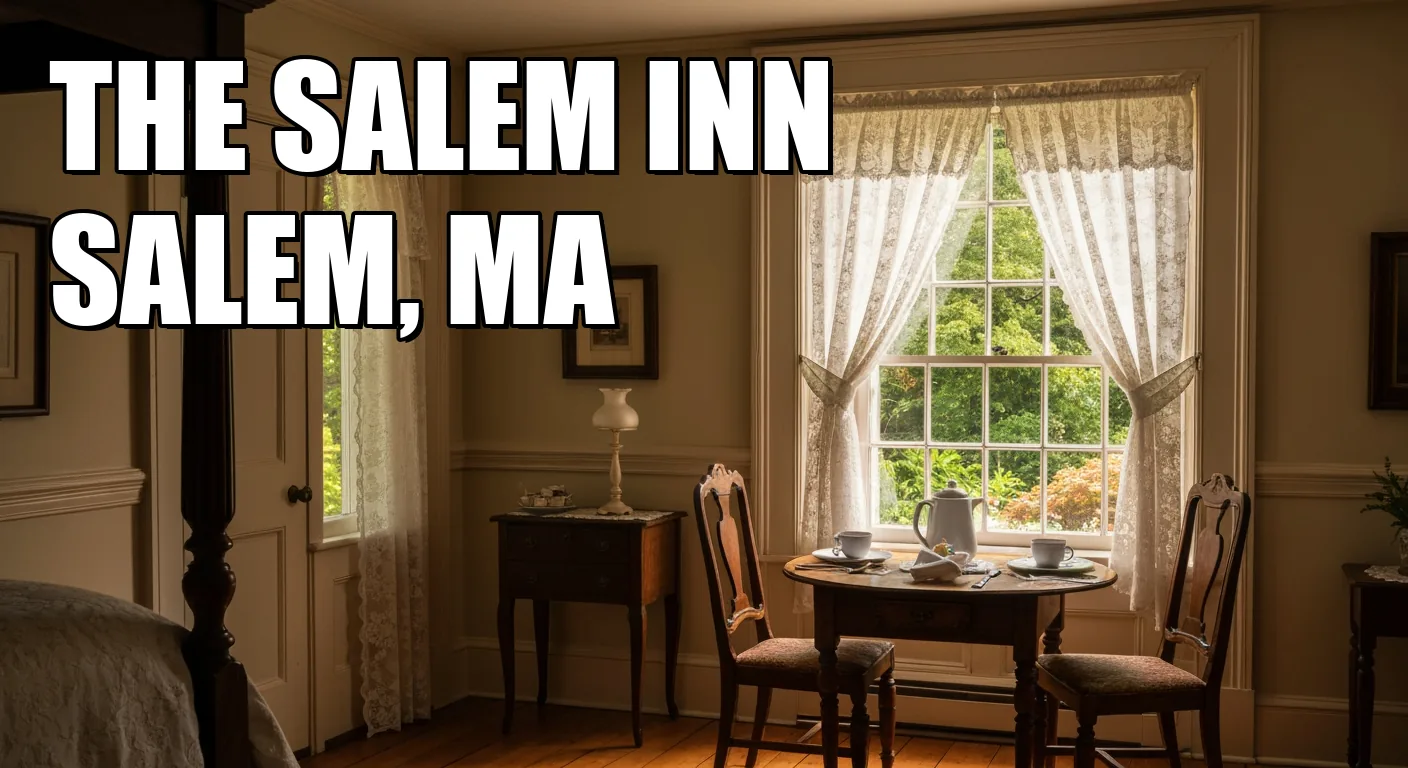
Venturing into Salem, Massachusetts, one can practically taste the history, and nowhere is that more palpable than at The Salem Inn. Comprised of three late 1700s homes—the Curwen House, West House, and Peabody House—this establishment isn’t just *named* after Salem’s witch trial history; it’s deeply interwoven with it. Author Nathaniel Hawthorne, whose work often drew from Salem's dark past and Puritan heritage, had connections to the property through the nearby House of the Seven Gables, and many prominent literary figures of the era were guests. But let’s be honest: while the literary connections are compelling, most visitors arrive seeking something more... otherworldly. And The Salem Inn delivers. Room 17 in the West House is notorious, supposedly occupied by the spirit of a woman named Elizabeth or Katherine, tragically killed by her husband. According to a psychic who investigated, she holds a particular animosity toward male guests, which, for a place that prides itself on hospitality, is quite a twist. Guests frequently report the unsettling sensation of being sat upon, an inability to move, and inexplicable cold spots, even when the thermostat is cranked. Staff diligently document these occurrences, noting that approximately 70% of guests in Room 17 report paranormal encounters, often leaving detailed, wide-eyed accounts in the guest books. For those chasing genuine paranormal thrills, this room offers a near-guarantee of something unsettling, making it a unique draw that transcends simple historical interest. Planning a visit to Salem, especially with a ghostly encounter in mind, requires significant foresight. The inn *blackouts* the entire month of October from third-party booking sites, forcing all reservations for that month to be made directly through their website—a shrewd move, if a little inconvenient. For October weekends, you'll need to book an astounding 12-18 months in advance, and don’t expect any discounts; rates run from $139-$309 per night for standard rooms, with suites costing considerably more. Weekends from May through September typically require a two-night minimum, and holiday weekends extend that to three nights. This isn't just a suggestion; it’s a hard rule for securing a stay during peak times.

New York's Revolutionary Cradle and Virginia's Civil War Scars

Moving south, the Beekman Arms and Delamater Inn in Rhinebeck, New York, stands as a testament to endurance, often cited as the oldest continuously running inn in the United States, dating back to 1766. This isn't a quaint little cottage; it's an institution. George Washington, Alexander Hamilton, and Benedict Arnold—figures whose very names echo with the birth pangs of a nation—all lodged here during the Revolutionary War. Franklin D. Roosevelt, a Hudson Valley native, even closed each of his four presidential campaigns with speeches from its front porch. Rooms 21 and 22 in the original building are particularly active, with guests and staff reporting ghostly footsteps, sudden cold breezes, strange smells, and disembodied whispers. The basement, tied to both the Underground Railroad—a network of secret routes and safe houses used by 19th-century enslaved people of African descent to escape to free states and Canada—and Prohibition-era activities, is considered the most haunted area, where a shadowy black figure is frequently seen emerging from the wine cellar. Paranormal investigators have even documented orbs in the tavern’s dining room and attic, lending a layer of scientific credibility to the local lore. Just shy of 400 miles southwest, in Abingdon, Virginia, another compelling narrative unfolds at the Martha Washington Inn & Spa. Built in 1832 by General Francis Preston, a hero of the War of 1812, it started as a grand family home. Its most poignant chapter, however, came during the Civil War, when it transitioned from a college campus to a Confederate training ground and then a hospital. Wounded soldiers from both sides were treated here, creating a crucible of suffering and sacrifice. Perhaps this explains the enduring reports of reappearing bloodstains on carpets, despite multiple replacements over the decades. A ghostly young woman is also said to roam the property, endlessly searching for her lover, a poignant echo of the tragic separations and losses that defined that brutal conflict. The Martha Washington Inn offers a different kind of historical depth. While it boasts a luxurious spa today, its past as a place of profound human drama makes it incredibly moving. Standard rooms here typically run $150-$200+ per night. If you’re eyeing a specific suite, be aware that cancellations must be made 14 days prior to arrival to avoid forfeiture of your deposit; for standard rooms, it’s seven days. Spring and fall are peak seasons here, so booking 4-8 weeks in advance is highly recommended. It’s a chance to touch history where it truly bled, rather than just read about it.

New England's Otherworldly Echoes: Concord and Stockbridge

Not far from Salem, Concord, Massachusetts, holds another gem: Concord’s Colonial Inn. Dating back to 1716, it initially served as a weapons storehouse during the Revolutionary War, a silent witness to the very first shots fired for American independence. Later, in 1835, Henry David Thoreau lived here, possibly writing some of his seminal works within its walls before it officially became an inn in 1889. The inn’s historical significance is undeniable, but it's Room 24 that draws the true thrill-seekers. This room famously served as Dr. Timothy Minot’s operating room during the Revolutionary War, where he tended to Continental soldiers wounded at the Battles of Lexington and Concord. The pain and desperation of that era seem to cling to Room 24, as guests consistently report unusual activity. Staff share tales of a tall gentleman in a top hat and an older woman in the sitting room, alongside a young girl in a bonnet near the front desk. Books and décor inexplicably fall from shelves, and disembodied voices are often heard throughout the property. It’s not a subtle haunting; it's an active, visceral connection to a pivotal moment in American history. Standard rates hover around $130-$170 per night, but securing a spot on weekends or during prime dates requires booking 6-8 weeks in advance. A typical 48-hour cancellation policy applies, so plan accordingly. Just a short drive away, nestled in Stockbridge, Massachusetts, The Red Lion Inn has been a continuously operating establishment since 1773. While some guides whisper rumors of George Washington’s stay, the inn’s more verifiable history lies in its uninterrupted service to countless celebrities and dignitaries over its 250+ years. Its charm is undeniable, a quintessential New England experience, but for those with an ear for the unseen, the fourth floor beckons. This area consistently experiences the most paranormal activity. Room 301 is particularly notorious; guests report feeling bedsheets and even their toes being tugged, hearing footsteps, and waking to the sensation of a body sitting on the bed. A man in a top hat, dressed in period attire, frequently appears as a shadowed figure before vanishing into a white mist. Add to this a young girl carrying flowers, often heard crying or giggling, who sometimes wakes guests on the fourth floor, and it’s no wonder the cleaning staff express strong reluctance to work up there. Rates range from $99-$268 per night, with June offering the lowest average at $155. For fall foliage season (September-October) and holiday weekends, booking 2-4 months ahead is essential. Weekdays generally offer better availability and, typically, lower rates.

St. Augustine's Enduring Elegance and California's Untamed Beginnings

Across the country in St. Augustine, Florida, the St. Francis Inn presents a different kind of antiquity. Built in 1791, this Spanish Colonial-style building exudes an old-world charm befitting America's oldest continuously inhabited European-established settlement. While its paranormal incidents aren't as specifically detailed by room number as some of its New England counterparts, the inn’s history as lodging for prominent guests and literary figures, including Pulitzer Prize-winning author Van Wyck Brooks, has left an undeniable atmospheric legacy. Staff and guests consistently report unusual phenomena throughout the property, suggesting a general, pervasive sense of the past rather than intense, localized hauntings. It’s less about jump scares and more about a lingering presence, a feeling of stepping back in time. The St. Francis Inn is a delightful place, with prices ranging from $139-$339 per night. For peak season dates and special events, like the Nights of Lights festival, booking 2-3 months in advance is wise. Be aware they require a one-night deposit to guarantee a reservation, with a $25 cancellation fee if you pull out within seven days of arrival. It’s a beautifully preserved piece of Spanish colonial history, offering a softer, more ambient historical experience than the often-intense Revolutionary or Civil War-era properties. Finally, we head west, to Ferndale, California, where the Shaw House Inn stands as a distinctive anomaly among this list. Constructed in 1854 by Seth Shaw, a co-founder of Ferndale, it's considered one of California's oldest bed and breakfasts and features stunning Carpenter Gothic Victorian architecture. While not extensively documented for the kind of overt paranormal activity found in the East, its significance lies in its role as the *first* home built in Ferndale. It maintains an incredible architectural and historical integrity from its founding era, offering a glimpse into the expansion of the American frontier. The Shaw House represents a different facet of "early American" history—the push westward, the founding of new communities in rugged landscapes. Its history isn't about wars or literary giants but about pioneering spirit and the creation of new towns. Rates run $195-$245 per night. For the best rates, consider visiting during the low season (March or November); May, conversely, sees higher prices. Booking 4-8 weeks ahead is recommended for summer weekends and holiday periods. This inn provides a vital counterpoint, reminding us that America's story isn't confined to the thirteen colonies.

Mastering the Art of Securing Your Historic 2025 Getaway

Booking these exceptional properties isn't just a matter of clicking a button; it's a strategic endeavor, especially if you're aiming for a particular room or a popular season. If your heart is set on experiencing Salem in October, you'll need to be planning now for 2026, as 2025 is likely already fully booked, requiring a staggering 12-18 months advance notice. For New England's vibrant fall foliage or any major holiday weekend across these inns, a 3-6 month lead time is essential. Standard prime dates, like summer weekends, typically demand booking 4-8 weeks out. Don't overlook the magic of a weekday visit. Not only do you often find better availability, but most properties offer noticeably lower rates for Monday through Thursday stays. Expect price premiums of 25-50% during peak seasons, particularly around Halloween in Salem, fall foliage season in New England, and the summer months across all properties. A little flexibility in your travel dates can significantly impact both availability and your wallet. These places are treasures, but like any treasure hunt, they reward the prepared and persistent traveler. Choose wisely, book strategically, and prepare to step into a past that truly comes alive.

Charming Stays: Your Complete Guide to Early American Bed & Breakfasts

What is the history of bed and breakfast?
The concept of bed and breakfast traces back to ancient times when locals opened their homes to weary travelers. In early America, colonial families frequently offered overnight stays and morning meals, while by the 18th century, inns spaced about eight miles apart in Massachusetts provided essential lodging along travel routes.
What country did B&B come from?
While the practice of hospitality existed worldwide, the formal term 'Bed & Breakfast' originated in England, Scotland, and Ireland during the 18th century, becoming systematically developed through coaching inns that served long-distance travelers.
What is the oldest operating inn in America?
The Beekman Arms & Delamater Inn in Rhinebeck, New York, established in 1761, is recognized as America's oldest continuously operating inn and has welcomed notable guests including George Washington and Horace Greeley.
Did hotels exist in the 1600s?
Yes, by the 1600s more than 600 inns were registered in England, and coaching inns operated throughout the 17th century, serving as precursors to modern hotels. In colonial America, taverns and inns were essential establishments from the earliest settlements.
What is the origin of American breakfast?
The hearty American breakfast we know today emerged in the mid-19th century with industrialization and the growth of hotels near train stations, featuring hot and cold breads, eggs, meats, pancakes, and eventually orange juice in the 1920s.
Where did the Big Breakfast originate?
The Full English Breakfast, often called a 'big breakfast,' originated in medieval England as a large morning meal for wealthy families. It became widespread during the Victorian era among working-class communities during the Industrial Revolution.
What's the difference between an Airbnb and a B&B?
B&Bs are regulated lodging establishments that must meet health and safety standards, while Airbnb is a loosely regulated home-sharing platform. B&Bs typically offer 4-11 rooms with personalized service and home-cooked breakfasts, while Airbnbs can be entire homes or apartments without innkeeper oversight.
Who is the owner of B&B Hotels?
Goldman Sachs is the majority owner of B&B Hotels, a French budget hotel chain, since acquiring it from PAI Partners in July 2019. B&B Hotels operates over 770 properties across 17 countries.
What is the difference between a B&B and a traditional hotel?
B&Bs offer intimate settings with 4-11 rooms, home-cooked breakfasts, and personal service from resident innkeepers, while hotels provide standardized amenities like 24-hour service, multiple dining options, and larger facilities. B&Bs emphasize local character and personal connection.
What should I expect on my first B&B stay?
Expect a warm, personalized welcome from hosts, a comfortable private or shared room in a house or small inn, a home-cooked breakfast served at a set time, and opportunities to meet other guests. Check-in is typically 3-6 PM with specific house hours and rules.
How much does it cost to stay at a bed and breakfast?
Prices average $60-90 per night for solo travelers, $90-140 for couples, and $80-110+ for small families. Luxury B&Bs may exceed $200-300 per night, while budget options start around $30-50 nightly.
Where are the best early American bed and breakfast destinations?
Top destinations include New England locations like Boston, Salem, Newport, and Bar Harbor; southern properties in Savannah and Charleston; and historic towns featuring colonial architecture and Revolutionary War sites.
What regulations and requirements exist for bed and breakfast establishments?
B&Bs must comply with state and local lodging regulations, health and safety codes, sanitation standards, and zoning laws. Requirements vary by location but typically include licensing, inspections, and adherence to local food safety regulations.
What amenities and services do bed and breakfasts typically offer?
Most B&Bs provide comfortable beds, private bathrooms, complimentary breakfast, free Wi-Fi, and personalized recommendations from innkeepers. Unlike hotels, they typically lack 24-hour service, room service, gyms, or pools.
What should I communicate with my B&B host before arrival?
Inform your host of allergies, dietary restrictions, accessibility needs, arrival time, whether you have children, room preferences, and any special celebrations. Confirming these details ensures a comfortable, well-prepared stay tailored to your needs.