Bed & Breakfast

Beyond the Brochure: Gilded Age B&Bs Unveiled
There's a peculiar allure to the Gilded Age, isn't there? That sliver of American history, roughly from the 1870s to the turn of the 20th century, where unprecedented wealth fueled an architectural arms race. Think industrial titans, grand estates, and a relentless pursuit of opulence. These weren't just houses; they were statements, monuments to ambition and power. Today, many of these magnificent structures have found a second life as bed and breakfasts, promising a peek into a bygone era. But as someone who's spent years wandering their halls, I can tell you the reality is often more nuanced, more surprising, and far more human than any glossy brochure might suggest.

My journeys have taken me from the windswept cliffs of Newport to the wild isolation of Georgia's barrier islands, always seeking that authentic echo of a time when "more was more." What I've found are places that don't just offer a comfortable night's sleep, but an immersion—sometimes delightful, sometimes challenging—into the very fabric of American history. Let's peel back the layers and discover which of these Gilded Age gems truly shine, and what you should genuinely expect when you cross their storied thresholds.

Newport's Grandeur: Beyond the Postcard Perfection

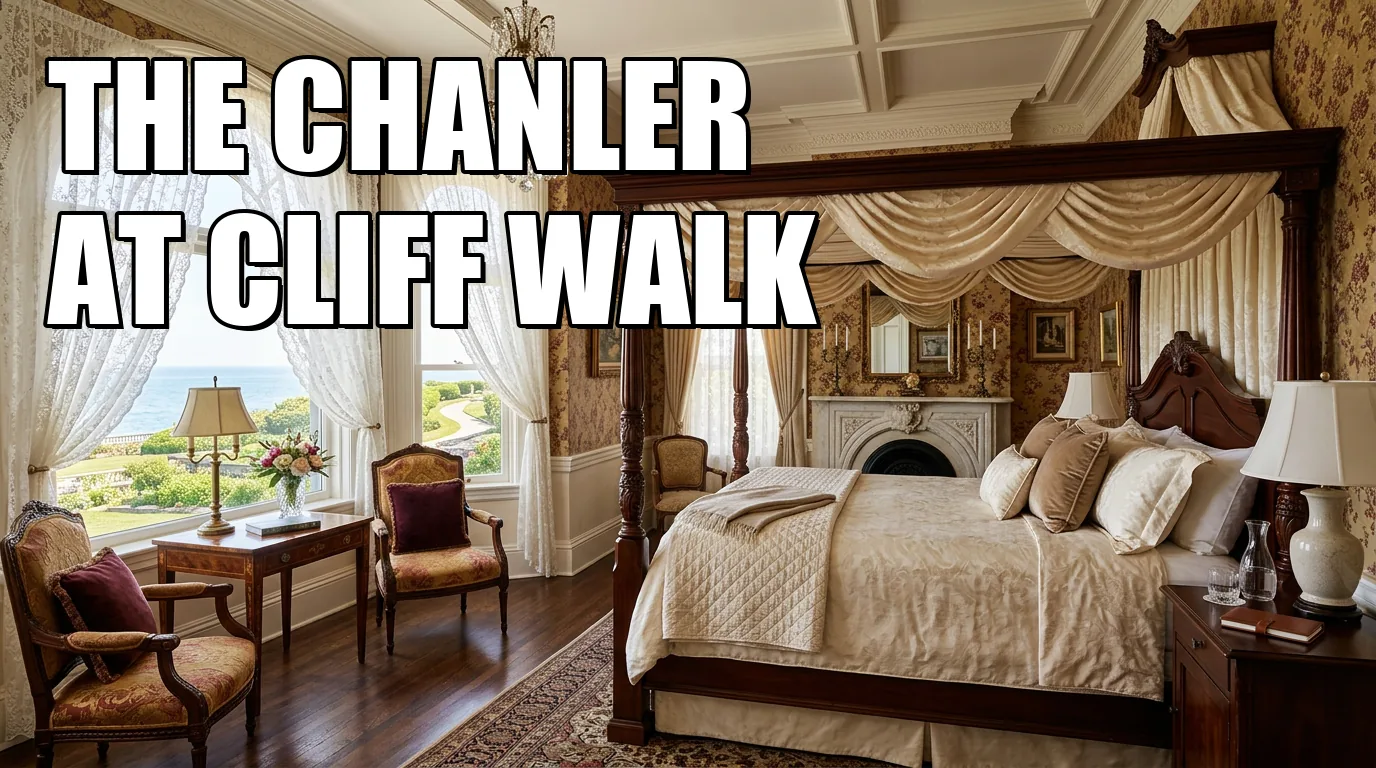
Newport, Rhode Island, is practically synonymous with Gilded Age excess. Its famous Cliff Walk is lined with what locals quaintly referred to as "cottages," properties that today would dwarf many modern luxury hotels. Two stand out for their transformation into exquisite inns: The Chanler at Cliff Walk and Castle Hill Inn. Both offer a glimpse into the lavish lives of America's elite, yet their experiences diverge in fascinating ways. The Chanler, originally built in 1873 for Congressman John Winthrop Chanler, holds the distinction of being the first residence on Cliff Walk. Stepping inside, one is immediately struck by the meticulous, almost theatrical, period decorations, each of its twenty rooms designed in a distinct style—Regency, Louis XVI, Renaissance. I recall the Renaissance Room's sunken tub, a genuine nod to the era's indulgent bathing rituals, which feels wonderfully anachronistic yet utterly luxurious today. The extensive renovation in 2003 was a careful act of balancing historical integrity with contemporary comforts, largely successful, though purists might debate how much modern polish dilutes the raw historical feel.

Just a few miles away, on forty sprawling acres of a peninsula, sits Castle Hill Inn, Alexander Agassiz’s 19th-century summer estate. This Relais & Châteaux property exudes a different kind of Gilded Age charm—more shingle-style seaside retreat than ornate European palace. What elevates Castle Hill beyond mere architectural marvel is its indelible connection to an icon: Grace Kelly stayed here in 1956 while filming "High Society." Her preferred rocky cove beneath the Harbor House, now officially christened "Grace Kelly Beach," complete with a purpose-built staircase, isn't just a marketing ploy; it's a tangible link to the era's leisure activities and the glamour it attracted. While both offer stunning ocean views and impeccable service, Castle Hill feels slightly more organic, less museum-like, perhaps because its sprawling grounds and varied accommodations—including a charming Lighthouse Suite—invite a sense of exploration that complements its historical gravitas. Expect to pay a premium for Newport's peak season (June through August), often seeing rates exceeding $700 per night for prime weekends. If your budget or aversion to crowds is a factor, consider booking in May or late September when the crisp air and smaller crowds allow for a more contemplative experience, and rates may soften by 15-20%.

Beyond Expectation: Opulence in Unexpected Places

When we think of Gilded Age wealth, our minds often drift to the East Coast. Yet, the reach of industrial fortunes knew no geographic bounds, creating pockets of astonishing grandeur in locales you might never expect. The Laurium Manor Inn in Laurium, Michigan, for instance, is a testament to the copper mining boom. Completed in 1908 for Thomas H. Hoatson, a mining magnate, this forty-five-room mansion is an absolute jaw-dropper. Imagine: 13,000 square feet, a silver-leaf covered domed ceiling in the music parlor, and a 1,300-square-foot ballroom on the third floor. The expense—$50,000 for construction and $35,000 for furnishings—is mind-boggling when you consider miners in the area were earning just 25 cents an hour. This stark contrast between immense wealth and labor's meager reward is palpable here, giving the gilded splendor a slightly sobering edge.

The Laurium Manor holds a unique historical claim: President Theodore Roosevelt stayed in Room Number 1 while on the campaign trail, and his original bed, purchased directly from the Hoatson family's descendants, remains there. It’s details like this, the very tangibility of history, that elevate a stay from mere lodging to a genuine encounter with the past. The restoration, begun in 1989, has been a meticulous labor of love, earning it accolades as the nation's best historical bed and breakfast by Newsweek readers. The Empress of Little Rock, Arkansas, offers another surprising splash of Gilded Age exuberance. Designed in 1888, this mansion represents one of the finest surviving examples of Queen Anne architecture in the United States. Its builder, saloon keeper James H. Hornibrook, was a character straight out of a novel—and his dramatic death by apoplectic stroke at his own front gate in 1890, shortly after the mansion's completion, imbues the place with a certain melancholic resonance. The property’s central circular staircase, from which all rooms radiate, creates wonderfully unique octagonal spaces. The legend of Hornibrook playing cards in the distinctive polygonal tower, watching for raids on his saloon, isn't just a fun anecdote; it gives you a vivid sense of the man and his era, challenging the assumption that all Gilded Age figures were buttoned-up industrialists.

Architectural Quirks and Southern Charms

Sometimes, history isn't just about grand statements, but about the sheer audacity or cleverness of construction. Take the Angel of the Sea in Cape May, New Jersey. This isn't just a charming Victorian mansion; it's a testament to human ingenuity—and stubbornness. Originally built around 1850 for chemist William Weightman Sr., who introduced quinine to the U.S., the structure underwent a truly bizarre relocation in 1881. Weightman wanted an ocean view, so farmers literally *cut the house in half*, moved each section separately with mules and horses, and then faced the challenge of reconnecting them. They couldn't perfectly, resulting in two joined but distinct buildings. This means that every one of the Angel of the Sea's twenty-seven rooms is acoustically and spatially distinct. Don't expect cookie-cutter layouts here; embrace the delightful asymmetry born from a homeowner's singular vision, and perhaps a few exasperated farmers.

Further south, Savannah, Georgia, offers its own brand of Gilded Age elegance, often infused with a distinctive Southern flair. Bellwether House, originally two adjoining Italianate townhouses built in 1876 for prominent merchants Henry Dresser and Samuel Palmer, exemplifies this blend. Its complete restoration in 2020-2021 was a masterful exercise in adaptive reuse, preserving stunning details like original plaster ceiling medallions, heart-pine floors, and ornate fireplaces while introducing modern comforts. One of its most striking features is Savannah's longest contiguous front porch, an ideal spot for enjoying a mint julep and watching the world go by. The inn has been rightly recognized by Historic Hotels of America, and its success challenges the notion that true historical preservation must mean a sacrifice of contemporary luxury. Room Number 10, a garden suite with a broad two-person shower wrapped in green tiling, shows how historical properties can be reimagined for modern comfort without losing their soul. The practical advice here is to leverage the excellent walking tours Savannah offers; the Bellwether House’s location makes it a perfect base for exploring on foot, a much better experience than battling for parking in the historic district, which can be scarce and costly, often $20-$30 for an overnight garage spot.

Stepping Back in Time: The Unplugged Experience

For those genuinely seeking to escape the relentless hum of modern life and experience a true time capsule, Greyfield Inn on Cumberland Island, Georgia, offers an unparalleled opportunity. This isn't just a bed and breakfast; it's an institution. Built between 1901 and 1905 for Margaret Carnegie Ricketson, daughter of Lucy and Thomas Carnegie (and niece of Andrew Carnegie), this Colonial Revival-style mansion was purposefully designed to preserve the aristocratic lifestyle of the Gilded Age industrial elite. What makes Greyfield so unique is its deliberate rejection of modern technology. You won't find Wi-Fi or televisions here. This isn't an oversight; it's a feature. The inn, opened to the public in 1962 by Margaret's daughter, Lucy R. Ferguson, to ensure its preservation, remains family-owned and operated, ensuring its vision endures.

Visiting Greyfield is an all-inclusive affair, encompassing three full meals, bicycles, kayaks, and naturalist-led tours of the island's wild, undeveloped landscape. This isn't a place you simply drive up to; access is via ferry from Fernandina Beach, Florida, and reservations for the ferry and inn are often booked six to nine months in advance, especially for popular weekends. The commitment required to get there, combined with the lack of modern distractions, forces a delightful deceleration of pace. As longtime guests attest, "There aren't many places you can go and twenty-five years later nothing has changed." This isn't just a slogan; it's the profound truth of Greyfield. Expect to truly unplug and reconnect, not just with history, but with nature and the quiet rhythm of a bygone era. It might not be for everyone, particularly those tethered to their devices, but for a true immersion, it's virtually unmatched.

The Enduring Allure and Planning Your Gilded Age Escape

What, then, is the lasting appeal of these Gilded Age bed and breakfasts? It goes beyond mere aesthetics. These aren't just museums where you observe history from behind a velvet rope; you inhabit it. You sleep in the same rooms, walk the same floors, and often hear the echoes of the very personalities who shaped these grand homes. The original furnishings at Greyfield, the enduring bed of a president at Laurium, or the structural idiosyncrasies of the Angel of the Sea—these are the details that imbue a stay with genuine meaning, offering a rare opportunity to connect with the past in a deeply personal way.

For the discerning traveler, planning such a trip requires more than just picking a pretty picture. Consider the *experience* you seek. Do you want the vibrant social scene and historic sites of Newport, or the remote, reflective solitude of Cumberland Island? Are you looking for architectural drama or a subtle blend of old-world charm with modern convenience? Each of these establishments offers a distinct flavor of the Gilded Age, reflecting not just the era's wealth, but the unique vision and often eccentric personality of its original owners.

Expect to find that while many strive for historical accuracy, they also carefully integrate contemporary amenities. The balance is key. A modern, well-appointed bathroom doesn't detract from the Gilded Age experience; it enhances comfort while allowing the grand architectural details to take center stage. Parking, especially in popular, older towns like Newport or Savannah, can be a challenge. Always inquire about on-site parking options and associated fees when booking; it’s a small detail that can significantly impact your arrival experience. Moreover, these establishments often host weddings or events, which can temporarily alter the atmosphere, so check their event calendars if a quiet retreat is your priority.

Ultimately, these Gilded Age bed and breakfasts are more than just places to stay; they are living testaments to an extraordinary period in American history. They challenge our perceptions of wealth, design, and even human ambition, offering insights that typical guidebooks often miss. To truly appreciate them, one must approach them not just as a guest, but as a curious historian, ready to uncover the stories hidden within their magnificent walls.

Your Guide to Experiencing America's Gilded Age Mansions & Luxury Bed & Breakfasts

What was the Gilded Age in history?
The Gilded Age was an era of rapid economic growth and industrialization lasting from the late 1870s until the early 1900s, characterized by extreme wealth inequality where the wealthy experienced prosperity while working classes faced poverty and labor exploitation.
What happened in Gilded Age?
The Gilded Age saw the rise of industrial capitalism, the building of transcontinental railroads, massive immigration, the settlement of the American West, urban growth, and the emergence of powerful robber barons who controlled major industries.
What is the origin of the Gilded Age?
The term 'Gilded Age' originated from Mark Twain and Charles Dudley Warner's 1873 satirical novel 'The Gilded Age: A Tale of Today,' which satirized an era of superficial prosperity masking serious social problems.
Why is it called Gilded Age?
The term 'gilded' refers to something covered with a thin layer of gold—shiny on the surface but potentially cheap underneath—symbolizing the era's superficial prosperity that masked serious social and economic problems including corruption, inequality, and exploitation.
What were the three major changes of the Gilded Age?
The three major changes were: (1) the movement from agricultural to industrial economy, (2) the shift from rural to urban living as people moved to cities for factory work, and (3) westward expansion facilitated by railroad development.
Who were the big three in the Gilded Age?
The most prominent robber barons and 'big three' of the Gilded Age were Andrew Carnegie (steel), John D. Rockefeller (Standard Oil), and J.P. Morgan (finance and industrial consolidation), though Cornelius Vanderbilt (railroads and shipping) is also frequently mentioned.
What are the three major themes of the Gilded Age?
The three major themes were: (1) rapid industrialization and technological innovation, (2) extreme wealth inequality and the concentration of power in few hands, and (3) political corruption and social upheaval alongside reform movements.
What were the three major progressive reforms?
Three major Progressive Era reforms were: (1) the Sherman Antitrust Act (1890) and Clayton Antitrust Act (1914) to break up monopolies, (2) the Pure Food and Drug Act (1906) to regulate food and pharmaceutical safety, and (3) women's suffrage with the Nineteenth Amendment (1920).
Which three factors transformed during the Gilded Age?
Three key factors transformed the United States: (1) agriculture transformed from small family farms to large-scale commercial operations, (2) transportation was revolutionized by 254,000 miles of railroad track connecting the nation, and (3) demographics shifted as the urban population grew dramatically due to immigration and urbanization.
What is the gilded age bed and breakfast history?
Many historic mansions built during the Gilded Age (1870s-1900s) have been restored and converted into luxurious bed and breakfasts, allowing modern visitors to experience the grandeur and elegance of America's wealthiest families' private estates.
What are the best locations to visit Gilded Age B&Bs?
Top locations include Newport, Rhode Island (home to The Breakers, Marble House, and The Elms), Saratoga Springs, New York (Batcheller Mansion Inn), Chester, New York (Glenmere Mansion), Lenox, Massachusetts (Brook Farm Inn), San Francisco, California (Chateau Tivoli), and Jekyll Island, Georgia.
What is the best time to visit Gilded Age mansions and B&Bs?
September is ideal for mild weather and fully open properties, while late fall through December offers festive holiday decorations in the mansions; avoid late October when many properties begin closing for the season.
What famous Gilded Age B&Bs and mansions can I stay in?
Notable properties include Glenmere Mansion (Chester, NY) offering 15 luxury guest rooms, Batcheller Mansion Inn (Saratoga Springs, NY) in a Victorian-era home, Chateau Tivoli (San Francisco) featuring original furnishings, Brook Farm Inn (Lenox, MA), Gilded Hotel (Newport, RI), and Jekyll Island Club Resort (Georgia).
How much does it cost to stay at Gilded Age B&Bs?
Costs vary significantly: Glenmere Mansion rooms range from $887-$1,035 per night, Batcheller Mansion offers boutique Victorian accommodation, Chateau Tivoli provides mid-range Victorian B&B experiences, while some properties require multi-night minimums or full property buyouts for groups.
What can I see and do at Gilded Age properties?
Visitors can enjoy guided mansion tours with audio apps, explore ornate architectural details and original furnishings, walk the Cliff Walk in Newport, attend special event tours related to HBO's 'The Gilded Age' series, visit historic gardens, and experience fine dining at on-site restaurants.
Are Gilded Age mansions and B&Bs accessible?
Many properties have limited accessibility due to their historic nature; most offer ground floor access and some provide elevators for upper floors, though mobility restrictions should be confirmed directly with each property before booking.
Are there Gilded Age B&Bs and mansions outside New England?
Yes, notable properties include Chateau Tivoli (San Francisco, 1892), Hayes Mansion in San Jose (1903), Jekyll Island Club Resort in Georgia (opened 1888 as a winter retreat), and various historic Victorian hotels throughout California.
How long should I spend touring Gilded Age mansions?
Most mansion tours last about one hour, with larger estates taking slightly longer; experts recommend dedicating at least one full day to touring 2-3 mansions to fully appreciate the architecture, decor, and historical significance of each property.