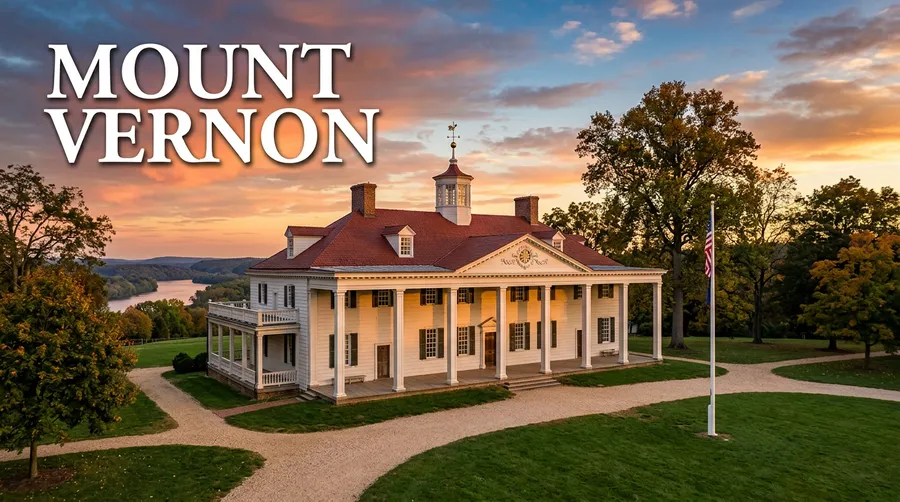
Photo by Amelia Blackwood for Cornerstone Mansion · February 15, 2026
Find Nearby Hotels
Book Flights
For decades, my travels across the United States have focused on digging beneath the polished veneer of historical markers and tourist brochures. I’m perpetually searching for the raw, inconvenient, or simply overlooked truths that define a place, and in recent years, a fascinating trend has emerged: many of our most iconic historic sites are embarking on profound journeys of reinterpretation. They’re not just adding a new exhibit; they’re actively dismantling and rebuilding narratives, often with a powerful assist from cutting-edge technology and a commitment to voices long silenced. It’s a dynamic, occasionally messy process, but one that promises a far richer understanding of America’s complex past.
What makes a truly impactful historical site visit? It isn't merely the architecture or the famous names; it's the feeling of a narrative shifting beneath your feet, the realization that what you thought you knew was only a fragment. This isn't about revisionism for its own sake, but rather an honest attempt to integrate previously marginalized perspectives and leverage new tools to tell a more complete story. These places aren't just preserved relics; they are living, breathing archives, continually being re-examined and understood.
Alcatraz Island: More Than Just "The Rock"
Most people envision Alcatraz through the lens of Hollywood thrillers—a stark, inescapable federal penitentiary, home to notorious criminals like Al Capone. And yes, "The Rock" certainly was that, a high-security prison from 1934 to 1963, its formidable cellblocks casting a long shadow across San Francisco Bay. But to see Alcatraz *only* as a prison is to miss entire epochs of its compelling history, a narrative shift that modern interpretation is finally addressing head-on.
Before its penal infamy, Alcatraz served a crucial military purpose, first as a strategic coastal fortification in the 1850s, guarding the Golden Gate during the Gold Rush. This earlier identity, a crucial part of its story, was long overshadowed by the dramatic prison era. Now, thanks to initiatives like the 3D digital twin project—a meticulous mapping effort using drones and advanced scanning—visitors can begin to comprehend its architectural evolution. Imagine experiencing an augmented reality overlay on your phone, revealing the original military Citadel's hidden strata from 2025, or even "walking" through submerged tunnels that once buttressed the fort. This isn’t just a cool gadget; it fundamentally reframes Alcatraz, moving it beyond a single, albeit sensational, chapter into a multi-layered historical epic.
But perhaps the most profound reinterpretation on Alcatraz involves acknowledging its pivotal role in Indigenous rights. From 1969 to 1971, a group known as Indians of All Tribes occupied the island, asserting Indigenous land rights and drawing international attention to broken treaties and cultural erasure. This occupation—a powerful act of protest and self-determination—was, for many years, a footnote in the official narrative. Today, the National Park Service, through resources like the 360° virtual tour on Google Arts & Culture, actively integrates this period, allowing remote visitors to explore the protest encampments and understand the profound significance of that movement alongside the prison’s history. It forces a deeper empathy, connecting the island’s story to broader themes of sovereignty and justice.
Planning a visit to Alcatraz demands foresight. Ferry tickets, sold by Alcatraz City Cruises, often book out weeks or even months in advance, especially during peak summer and holiday seasons. You’ll want to secure yours as soon as your travel dates are firm. Arriving early for your ferry slot helps avoid congestion. Expect crowds, even with timed entry, particularly in the main cellhouse. While the ferry ride itself is a highlight, offering stunning views of the city and bay, the real magic happens when you engage with the layers of history now being presented. Seek out the ranger-led talks, which often delve into these newer interpretations, or take advantage of the audio tour that provides rich historical context. Don't rush; allow at least three hours on the island to truly absorb the diverse narratives, from military strategy to civil rights activism.
Unearthing the Industrial Dream: Pullman's Complex Legacy
Step off the Metra Electric line south of Chicago, and you’ll find yourself transported to Pullman National Historical Park, a testament to an audacious 19th-century social experiment. George Pullman, the railroad car magnate, envisioned a utopian industrial town in the 1880s: a meticulously planned community where workers lived in company-owned housing, attended company-built churches, and were, in theory, cared for from cradle to grave. For decades, the story of Pullman centered on this architectural innovation and the dramatic 1894 Pullman Strike, a pivotal moment in American labor history. But beneath the carefully manicured lawns and grand brick buildings lay a far more intricate and often uncomfortable truth, a truth that new interpretation is finally bringing into sharp focus.
One of the most critical gaps in Pullman’s traditional narrative concerned its African American labor legacy. The Brotherhood of Sleeping Car Porters, formed in 1925, was arguably one of the most significant Black labor unions in U.S. history, playing a crucial role in both the labor and civil rights movements. Yet, on-site interpretation often gave this story limited space, a curious omission given its profound impact. The redesignation of Pullman as a National Historical Park in December 2022 wasn't just a bureaucratic change; it was a mandate to broaden its scope, making labor and civil rights central, not peripheral. This commitment promises to fundamentally reshape the visitor experience.
The proposed Pullman Cultural Trail, expected to roll out more fully through 2024 and beyond, exemplifies this transformation. This isn't just a walking path; it’s an outdoor gallery incorporating art installations, expanded signage, and QR-code-driven digital interpretation. Imagine pausing at a mural depicting A. Philip Randolph, or scanning a code to hear an oral history from a Pullman porter’s descendant. This trail is designed to surface the stories of Black porters, their families, and the community leaders who built a vibrant social fabric within, and often despite, the strictures of Pullman’s industrial control. It’s a deliberate move to shift the focus from the grand vision of George Pullman to the lives, struggles, and triumphs of the people who made his enterprise run.
What should a visitor expect when exploring this evolving landscape? Don't merely admire the architecture; look for the new layers. The interpretive workshops that began in 2021, integrating audience-centered methods, invite visitors to confront challenging questions about industrial control, worker rights, and racial justice. This isn't about providing easy answers; it's about fostering critical thinking. Wander the streets, consider the stark contrast between the executives' homes and the workers' tenements, and visualize the vibrant community life that unfolded within those boundaries. While the site is largely free to explore, check the official National Park Service website for specific guided tour schedules or special events that might highlight the Cultural Trail’s progress and offer deeper insights into the reinterpreted narratives. Parking is generally available on side streets, but be prepared for a good amount of walking to fully appreciate the scale and stories of this unique town.
The Uncomfortable Truths and New Perspectives
These sites, Alcatraz and Pullman, are just two powerful examples of a broader movement to complicate, enrich, and sometimes even correct our historical understanding. They demonstrate that history isn't static; it's a dynamic conversation, continually re-evaluated as new evidence emerges and different voices gain platforms. What makes these reinterpretations so compelling isn't merely the technology they employ, but the profound shift in perspective they demand from us as visitors.
No longer can we simply be passive consumers of a single, often sanitized narrative. We are invited, even challenged, to engage with multiple truths, to recognize the agency of marginalized communities, and to understand the long-lasting impacts of historical events. This process isn't always comfortable; confronting uncomfortable truths about our national past rarely is. But it’s through this very discomfort, this questioning of conventional wisdom, that genuine insight is forged.
Ultimately, revisiting a historic site that has undergone such thoughtful reinterpretation often feels like discovering a familiar masterpiece anew, but with previously unseen brushstrokes and hidden depths revealed. It's a reminder that the past isn't a fixed destination, but an ongoing journey of discovery. For the curious traveler, this evolution offers an unparalleled opportunity to engage with American history in a way that is both intellectually stimulating and deeply human. Don't just tick these places off a list; arrive ready to rethink everything you thought you knew.
Discover America’s Timeless Treasures
What are famous historical landmarks?
Famous historical landmarks include the Statue of Liberty in New York, Mount Rushmore in South Dakota, and Independence Hall in Pennsylvania.
What is the most famous historical landmark?
The most famous historical landmark in the U.S. is the Statue of Liberty, symbolizing freedom and democracy.
What are the top 10 most historic places in the world?
The top 10 most historic places globally include the Great Wall of China, Machu Picchu, the Pyramids of Giza, Stonehenge, Petra, the Colosseum, Angkor Wat, Chichén Itzá, the Taj Mahal, and Easter Island.
What is the worlds most famous landmark?
The world’s most famous landmark is the Great Pyramid of Giza in Egypt.
Which is the famous historical landmark?
In the U.S., the most famous is the Statue of Liberty, while globally it’s the Great Pyramid of Giza.
What is the oldest landmark ever?
The world’s oldest known man-made landmark is Göbekli Tepe in Turkey, dating back to around 9600 BCE.
What is a famous landmark that is not man made?
A famous natural landmark is the Grand Canyon in Arizona.
What is the most famous landmark in America?
The Statue of Liberty is the most famous U.S. landmark, welcoming millions of visitors each year.
What are some modern landmarks?
Modern landmarks include the Gateway Arch in Missouri, the Vietnam Veterans Memorial in Washington, D.C., and the Seattle Space Needle.
What are the oldest famous places?
Among the oldest are Stonehenge (c. 3000 BCE), the Pyramids of Giza (c. 2600 BCE), and Çatalhöyük (c. 7500 BCE).
What are the best historical sites to visit near me in the U.S.?
Top U.S. sites by region include Colonial Williamsburg (East), Cahokia Mounds (Midwest), Mission San Juan Capistrano (West), and the Alamo (South).
When is the best time to visit historical sites?
Spring and fall offer mild weather and smaller crowds at most U.S. historical landmarks.
How much does it cost to visit national historical sites?
Most U.S. National Historic Sites charge between $5 and $25 per adult, while many offer free admission days annually.
Are guided tours available at historical landmarks?
Yes, most U.S. historical sites offer ranger-led or private guided tours, often included in the admission fee.
What should I bring when visiting outdoor ruins?
Bring comfortable walking shoes, water, sun protection, and a camera; check site rules for any additional gear.
We use cookies to enhance your experience. By continuing to visit this site you agree to our use of cookies.