Photo by Catherine Hale for Cornerstone Mansion · February 4, 2026
Find Nearby Hotels
Book Flights
Have you ever wondered what truly separates a preserved historic site from a living, breathing community that simply *happens* to be historic? It's a question I've pondered on countless road trips across this sprawling nation, often finding the most profound answers not in the perfectly manicured, endlessly hyped destinations, but in places that have stared down devastation and emerged with an unexpected, gritty beauty. These aren't cities that merely *exist*; they’ve reinvented themselves, often out of sheer necessity, making them far more compelling to explore than any glossy brochure might suggest.
My latest wanderings led me to three such places—Johnstown, Pennsylvania; Butte, Montana; and Bisbee, Arizona. Each endured its own unique apocalypse, whether by water, industrial collapse, or economic abandonment. Yet, they didn't just survive; they found innovative ways to intertwine their traumatic pasts with a surprisingly vibrant present. Forget the predictable tourist loops for a moment, because these towns offer a richer, more nuanced understanding of American resilience.
Johnstown: Where Disaster Forged an Unbreakable Spirit
One could argue that few American cities have been as profoundly shaped by a single event as Johnstown. Ask anyone familiar with its history, and they'll likely recount the tale of May 31, 1889, when the South Fork Dam ruptured, unleashing the worst U.S. flood of the 19th century. The statistics alone are chilling: 2,209 lives lost, 1,600 homes obliterated, and damages totaling over $17 million (approximately $550 million today). What often gets lost in the sheer horror of the event, however, is the almost immediate, almost miraculous, human response that followed.
Within days, the world converged on Johnstown. Seven thousand relief workers, led by none other than Clara Barton and her nascent American Red Cross, descended upon the ravaged landscape. They didn't just offer condolences; they cleared debris, rebuilt vital rail lines, and, astonishingly, had the mighty Cambria Iron Works—the city’s economic engine—back producing steel within 18 months. This wasn't merely recovery; it was an act of defiant resurgence. What most guides won't emphasize is that Johnstown's later mid-century urban renewal, funded by HUD, was less about erasing the flood's memory and more about a strategic reinvention of its downtown core. The Market Street West Urban Renewal Area, for instance, a tangible legacy of 1960s federal-local collaboration, wasn't without its detractors, but it did foster significant private investment and created 700 new jobs, a testament to continued adaptation.
For the modern traveler, understanding this dual narrative is key. Visiting the Johnstown Flood Museum is a non-negotiable first stop. Housed in the magnificent Carnegie-funded former Cambria Library, it’s far more than a collection of artifacts. The Academy Award®-winning short film alone is a masterclass in conveying the terror and tragedy, but it's the large-scale relief map, with its light and sound effects illustrating the flood's devastating path, that truly imprints the scale of the disaster on your mind. Don't rush through; allow the gravity of what happened to sink in. Afterwards, a pilgrimage to the Johnstown Flood National Memorial, an NPS site at the former South Fork Dam location, provides a quiet, reflective counterpoint. You'll stand on the remnants of the dam and gaze at the valley, trying to imagine the unimaginable. For parking, expect ample free spots at both locations, though summer weekends can draw a crowd; aim for a weekday morning in the shoulder seasons (April-May or September-October) for the most contemplative experience.
Butte's Phoenix Act: From Copper King to Artistic Heartbeat?
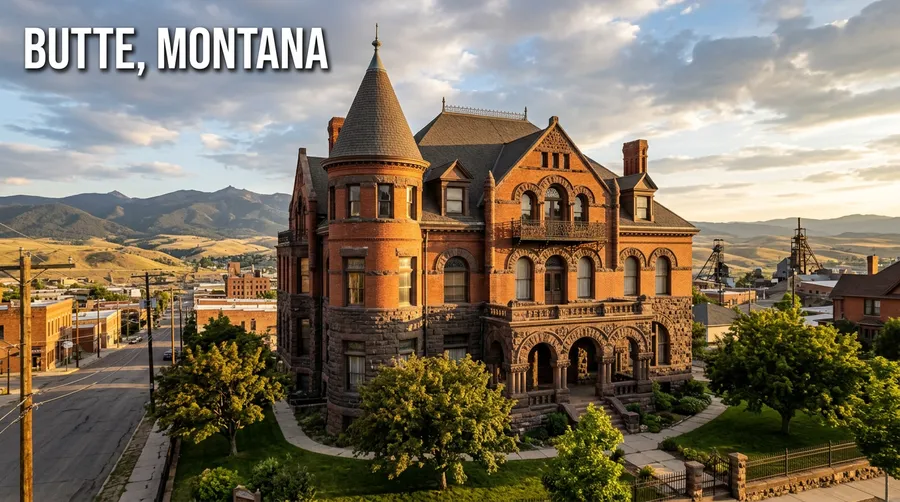
Head west, high into the Montana Rockies, and you’ll find Butte, a city that once proclaimed itself "The Richest Hill on Earth." This was the undisputed domain of copper kings, a vibrant, rough-and-tumble boomtown fueled by seemingly endless mineral wealth. The architecture here is astonishing: ornate Victorian mansions and robust commercial blocks that speak to an era of unbridled ambition. But the boom couldn't last forever. When copper demand plummeted, Anaconda Copper ceased operations in 1983, leaving a gaping void. Butte's population halved, and its magnificent architectural heritage began to crumble, echoing the ghosts of past glory.
What happened next wasn't a top-down revitalization, but a slow, organic awakening. Butte became a magnet for artists and creatives drawn by the sheer affordability of its vacant buildings and the raw, untamed beauty of its landscape. Organizations like the Butte Historic Trust, established in 2021, coalesced around adaptive reuse, transforming neglected landmarks into dynamic new spaces. The federal Superfund cleanup of the infamous Berkeley Pit, a monumental open-pit mine, while controversial, also enabled the safe redevelopment of surrounding trails, creating an unexpected recreational asset. So, is Butte truly an "artistic heartbeat"? The answer is complex. It's less a polished arts district and more a living laboratory of creative grit, where dive bars exist alongside nascent galleries, and historical narratives are etched into every brick.
When you wander the Uptown Historic District, a National Historic Landmark, prepare to be surprised. This isn't a museum piece; it's a working district where meticulously restored saloons rub shoulders with ethnic-heritage eateries that have been serving up comfort food for generations. Don't skip a visit to the Mother Lode Theatre. Restored between 1988 and 1996 by the Butte Center for the Performing Arts, its hand-carved classical façade and original Masonic-inspired interiors are a breathtaking example of what can be saved with community dedication. Check their schedule for a performance; seeing the interior come alive is an experience far superior to a mere daytime tour. Parking Uptown can be a minor challenge, especially during popular events; aim for street parking a block or two off Main Street, or utilize one of the smaller public lots near the historic YMCA studios. And the Berkeley Pit Overlook? It’s a stark, almost alien landscape, a testament to both human ingenuity and environmental impact. While the walking trails are pleasant, the view itself is undeniably sobering, prompting a quiet reflection on the true cost of progress. Go with an open mind, expecting a dose of reality, not just scenic beauty.
Bisbee's Bohemian Revival: A Mining Town's Unconventional Second Act
Down in the arid reaches of Southern Arizona, snuggled into a canyon near the Mexican border, lies Bisbee. Like Butte, it was once a copper powerhouse, one of the West's richest camps. But by the 1970s, the mines closed, leaving behind the familiar specter of population decline and commercial vacancies. Unlike many other boom-and-bust towns that simply faded, Bisbee chose a different, distinctly bohemian path. This wasn't a deliberate, centrally planned urban renewal project; it was an organic migration of artists, free spirits, and those seeking an alternative lifestyle, drawn by the affordable, historic real estate and the town’s undeniable, quirky charm.
What’s truly unique about Bisbee’s trajectory is the deliberate, community-led commitment to preserving its character. A strict Design and Review Board isn't just a bureaucratic hurdle; it's a fiercely protective body that ensures all new construction and renovations adhere to the town's historic aesthetic. This grassroots preservation, combined with initiatives like the Lowell Americana Project – a volunteer-led effort that meticulously restored gas pumps and created a mock vintage radio station to celebrate local culture – gives Bisbee an authentic, almost theatrical, feel. It’s a town where history isn't just observed; it’s performed. The recent reopening of the Bisbee New City Hall in 2025, incorporating elements of the 1917 structure, underscores this civic pride, proving that even modern necessities can embrace historical context.
Walking through Bisbee is an experience in itself. The streets are steep and winding, begging to be explored on foot. The Bisbee Mining & Historical Museum, housed in the grand 1902 Phelps Dodge building, offers an excellent foundation, shedding light on early mining life and machinery. But the real magic often lies beyond the museum walls. Venture into the Lowell Historic District, a short drive from the main downtown area, and you'll encounter a meticulously recreated commercial strip from the mine era. This isn't just façades; it's an immersive step back in time, largely thanks to the tireless efforts of local volunteers. Don't be surprised if you feel like you've walked onto a movie set – it’s that well-done. Parking in Bisbee’s main downtown can be tricky, especially on weekends when the town swells with visitors. Arrive early on a weekday morning (before 10 AM) for the best chance at street parking, or utilize one of the paid lots slightly outside the core. Expect to pay $5-10 for parking in these lots. The best months to visit are spring (March-May) and fall (October-November) when the desert heat is manageable, and the artist community is in full swing with outdoor markets and events.
These three cities, seemingly disparate in geography and historical context, share a profound commonality: they faced the brink, absorbed the blow, and then, through a mix of grit, ingenuity, and community spirit, reinvented themselves. They defy the easy narrative of decline, proving that sometimes, the greatest treasures are found not in what was perfectly preserved, but in what was bravely rebuilt and reimagined. So, next time you plan a journey, consider these resilient corners of America. You’ll find more than just history; you’ll discover a vibrant testament to the enduring human spirit.
Timeless Trails: Your Guide to Historic US Cities
What are the oldest US cities?
The oldest continuously inhabited European settlements in the U.S. include St. Augustine, Florida (1565), Jamestown, Virginia (1607), Santa Fe, New Mexico (1610), followed by Hampton, Albany, Plymouth, Gloucester, New York, Boston, and Jersey City.
What is the 10 oldest city in the United States?
Jersey City, New Jersey, founded in 1630, is the tenth oldest continuously inhabited city in the United States.
What is the oldest city in Mexico?
Cholula in Puebla is Mexico’s oldest continuously inhabited city, with settlement dating to around 800 BC.
What are the oldest cities in the Americas?
Some of the earliest urban settlements in the Americas include Wyam (Oregon) around 13,000 BC, Tlapacoya (Mexico) about 7500 BC, Puerto Hormiga (Colombia) around 4000 BC, and Caral (Peru) circa 2627 BC.
What are the three oldest cities in North America?
The three oldest European-established cities in North America are St. Augustine, Florida (1565), Jamestown, Virginia (1607), and Santa Fe, New Mexico (1610).
What is the oldest still established city in the US?
St. Augustine, Florida, established in 1565, is the oldest continuously inhabited European-established city in the United States.
When was Mexico City founded?
Mexico City traces its origins to the Mexica city of Tenochtitlan, founded in 1325.
What was Mexico called before Mexico?
Under Spanish colonial rule, the territory was known as the Viceroyalty of New Spain until independence in 1821.
How long can a US citizen stay in Mexico?
US citizens may remain in Mexico as tourists for up to 180 days on a visitor’s permit (FMM) without a visa.
Is Mexico City the oldest city in America?
No; although Mexico City dates to 1325, older settlements like Cholula (~800 BC) and Cuicuilco (~1400 BC) predate it in the Americas.
What are the best times of year to visit historic US cities?
Spring and fall offer mild weather and fewer crowds, making them the ideal seasons to explore historic US cities.
Are guided tours available for historic city landmarks?
Most historic cities offer guided walking, bus, or trolley tours, typically costing between $25 and $50 per person.
Do I need to book tickets in advance for popular historic attractions?
Advance booking is recommended for high-demand attractions—especially in peak season—to ensure entry and avoid sold-out dates.
Are there city passes for multiple historic sites?
Many cities offer multi-attraction passes that provide discounted or skip-the-line access to several historic landmarks.
What should I pack for visiting historic cities?
Pack comfortable walking shoes, weather-appropriate clothing, a refillable water bottle, and sun protection for outdoor exploration.
How accessible are historic sites for travelers with disabilities?
Most major historic attractions now provide wheelchair access, ramps, and accessible restrooms, though some older structures may have limited entry.
What public transportation options serve historic districts?
Historic districts are often served by buses, light rail, trolleys, and bike-share programs, making it easy to navigate without a car.
Are there discounts for seniors or students at historic sites?
Many museums and tours offer reduced rates for seniors, students, military personnel, and children—always inquire at ticketing.
Can I find free historic attractions in US cities?
Several cities host free admission days at museums, public monuments, and historic walking tours—check local tourism websites for schedules.
Are historic US cities safe for solo travelers?
Historic districts are generally safe during daylight hours; standard precautions like staying in well-lit areas and safeguarding belongings are advised.
We use cookies to enhance your experience. By continuing to visit this site you agree to our use of cookies.