Direct answer: a “colonial B&B” in 2026 is usually a small historic inn with a period facade, stairs instead of elevators, breakfast that may or may not be included, and cancel rules stricter than a Marriott. The brochure year (1716, 1766, 1773) is not the same as continuous hotel service—and sometimes not even the same building. If you book the year alone, you will be disappointed. If you book the stairs, the check-in window, and the age policy, you will sleep well.
Colonial B&Bs 2026, beyond the brochures: what you are actually buying, which claims survive a deed check, and who should (or should not) reserve the creaky floorboard room.
What “colonial B&B” means on a booking engine
Inventory mixes three different products under one aesthetic:
- True early fabric still lodging guests — timber, uneven floors, limited elevators, often 9–56 rooms rather than 200.
- Colonial-era business, later shell — the inn “never stopped,” the building burned and was rebuilt (common after 1890s fires).
- Colonial Revival or hotel-scale “historic inn” — 100+ rooms, modern plumbing, marketing that borrows 1700s language.
None of those are fake hospitality. Only the first two are what most people mean by “sleep in the 1700s.” Read the construction date and the room count before you romanticize the listing photo.
Bookable anchors with 2025–2026 numbers
New England
- Concord’s Colonial Inn (Concord, MA) — ~56 rooms; check-in 3:00 PM / out 11:00 AM; booker must be 21+ with ID + card; no elevator, but a first-floor wheelchair-accessible room; dogs in Prescott Wing (2 max, ~$75 fee); parking complimentary on sourced policy; breakfast not free (available for surcharge); (800) 370-9200 / (978) 369-9200. Cancel: often 48 hours or one-night penalty; prepaid can be nonrefundable.
- Compass Rose Inn (Newburyport, MA) — rates from ~$289; check-in 3:00–5:00 PM, out 11:00 AM; breakfast included (buffet/continental in sources).
- Heart of the Village Inn (Shelburne, VT) — 9 rooms; full custom breakfast; check-in 3:00–8:00 PM; strictly 21+ adults-only, pet-free; (802) 985-9060; free parking called out for road-trippers.
- The Griswold Inn (Essex, CT) — ~34 rooms; 860-767-1776; 2026 marks ~250 years since a 1776 founding story—confirm event packages live, not from a souvenir mug.
- Publick House Historic Inn (Sturbridge, MA) — hotel-scale historic product (~128 rooms); 508-347-2500; period vibe with more inventory than a five-room B&B.
- The Red Lion Inn (Stockbridge, MA) — ~125 rooms; (413) 298-5545; see fact/lore below on the 1896 fire.
Mid-Atlantic
- Historic Inns of Annapolis (MD) — rooms across multiple colonial-era buildings; one central check-in at Governor Calvert House before you get keys to satellite houses.
- Elk Forge Inn (Elkton, MD) — 14 rooms; roughly $149–$329 by room/day; midweek Colonial/Victorian rooms ~$149 Sun–Thu / ~$179 Fri–Sat & holidays; VIP suites ~$289–$329; breakfast included; 410-392-9007; some pet suites.
- Colonial Inn (Absecon, NJ) — 24 rooms; adults-only; no pets; continental basket breakfast; August 2026 samples roughly $159–$209 (weekends higher).
- Carlisle House (Carlisle, PA) — OTA samples ~$169 night / ~$188 all-in after taxes—always read the total, not the teaser.
South / Virginia fringe
- Loudoun Valley Manor (Waterford, VA) — OTA samples ~$150 night / ~$171 total with fees.
- Omni Homestead (Hot Springs, VA) — springs story to 1766, but this is resort scale after a reported ~$170M renovation: water-park modern, not a nine-room colonial B&B. Use it only if you want “historic brand + resort kit.”
Peak windows: October foliage in New England (book ~8+ weeks out; expect two-night minimums); coastal July–August. Shoulder May–mid-June and September, or deep winter (January often cheapest in hotel data), for softer rates. Luxury/peak coastal: 8–12 weeks ahead; secondary markets often 4–8 weeks—but a five-room inn can still sell out on one festival weekend.
Brochure lore vs documented fabric
- Red Lion Inn, Stockbridge — origins as a 1773 crossroads tavern; the standing house is largely a 1897 rebuild after the August 31, 1896 fire. Business continuity ≠ original timber.
- Concord’s Colonial Inn — fabric roots to 1716; Revolutionary storehouse/hospital use is documented lore-history. It was not a continuous hotel: private house → boarding house (~1835) → hotel from 1889. Market “colonial inn”; book 19th-century hotel operations in an older shell.
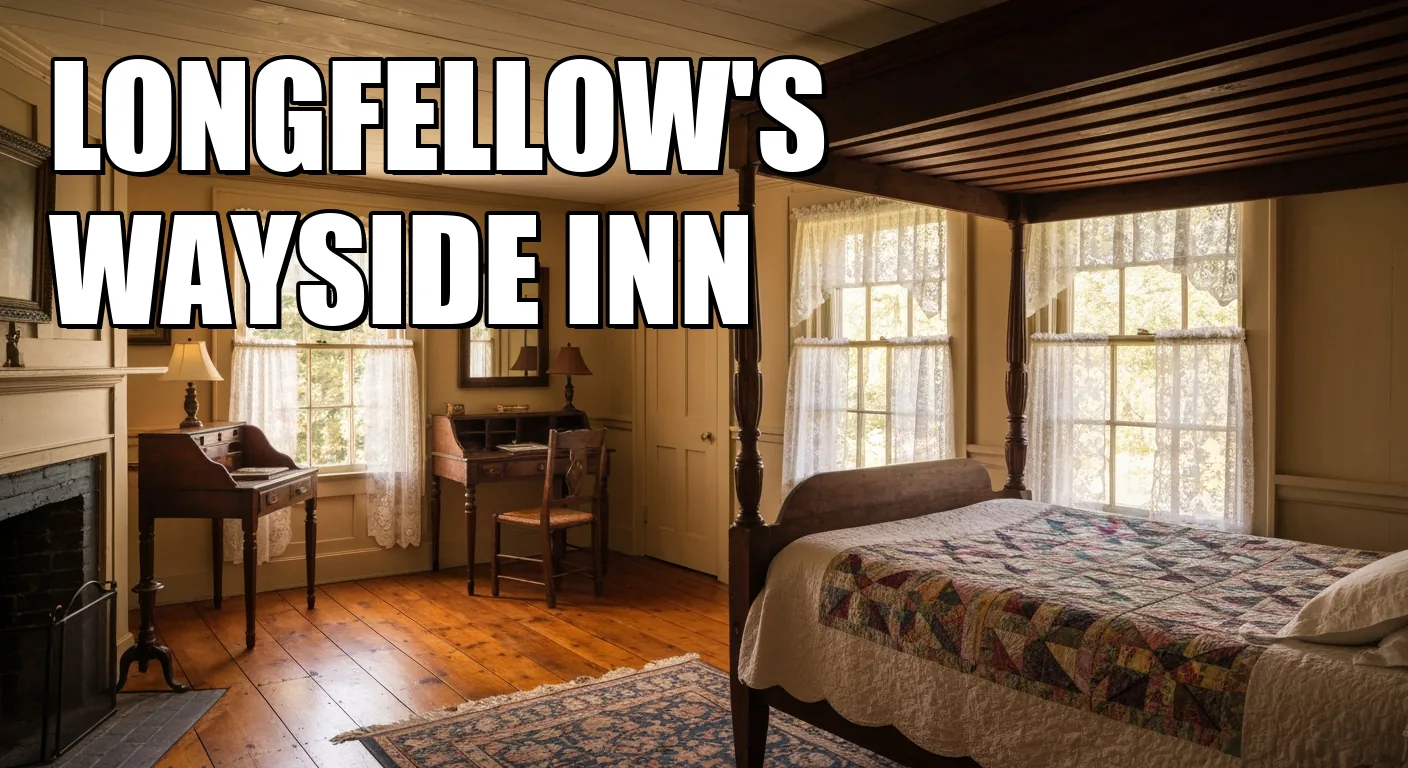
- Longfellow’s Wayside Inn (Sudbury) — town lodging license 1716; “oldest continually operating” is a qualified claim even in careful sources—not a blank check.
- Beekman Arms (Rhinebeck, NY) — strong continuous-inn claim from the mid-1700s era; 1766 rebuild/move of the family tavern to the crossroads is part of the documented story. Guests may also be placed in later annex inventory (e.g. Delamater-era stock absorbed later)—ask which building when you book.
- Fraunces Tavern / City Tavern / Green Dragon — dinner-and-legend landmarks; reconstructions (Fraunces major rebuild from 1904; City Tavern 1970s; Green Dragon not the original Sons of Liberty shell). Great for a meal stop; do not confuse with overnight B&B inventory.
Rule of thumb: build year, hotel-start year, and last major rebuild are three different dates. Brochures love the first; honest stays need all three.
Practical reality the brochure skips
Stairs: many authentic inns cannot install elevators without wrecking protected fabric. Expect luggage on narrow stairs unless you booked the rare ground-floor accessible room (Concord lists one).
Sound: thin walls, squeaky floors, quiet hours enforced. Adults-only inns exist specifically to cut hallway chaos.
Parking: often free on-site at true B&Bs—one of the few ways they beat urban boutique hotels on total trip cost.
Cancel math: a five-room inn loses 20% of inventory on one no-show. Policies are stricter; prepaid specials can be nonrefundable. Read the window before foliage deposits clear.
Climate quirks: review patterns include finicky heat, “don’t run AC in winter” house rules, rooms that run hot on the lowest radiator setting. Pack layers, not just Instagram expectations.
Who yes / who no
Yes: couples, solo travelers, remote workers who want quiet historic-district walks and innkeeper conversation; guests who will climb stairs for post-and-beam character; foliage hunters who book early and accept two-night minimums.
No: families with young kids at adults-only inns (Heart of the Village, Absecon Colonial Inn, many romantic B&Bs); elevator-dependent travelers who did not confirm accessible stock; guests who need 24-hour front desk, gym, and identical rooms; large groups wanting flexible late arrivals without calling ahead.
Bottom line: Beyond the brochures, colonial B&Bs are stairs, strict cancels, and three different “ages” of building. Book Concord or Shelburne for walkable New England character, Elk Forge for Maryland mid-range numbers, and treat “oldest continuously operating” claims as homework—not as a free upgrade to 1716.
Colonial B&Bs FAQ
What is a colonial B&B really?
Usually a small historic inn with period architecture—sometimes original 1700s fabric, sometimes a later rebuild or Colonial Revival. Check the build year, when it became a hotel, and the last major reconstruction before you book.
How much do colonial inns cost in 2026?
Wide range: mid-Atlantic midweek rooms can sit near $149–$189, New England boutique floors often from the high $200s, and foliage or premium Vermont listings can exceed $500. Always compare the all-in total with taxes and fees.
Is Concord’s Colonial Inn from 1716 as a hotel?
The building’s early fabric is often dated to 1716, but continuous hotel operation is not. Sources describe private residence and boarding-house phases, with hotel operation commonly cited from 1889.
Do colonial B&Bs have elevators?
Often no. Preservation limits elevators in many historic shells. Some inns offer a ground-floor accessible room—ask before you book if mobility is a concern.
Why are B&B cancellation policies so strict?
Small room counts mean one cancellation can wipe out a large share of nightly inventory. Inns rarely overbook like chain hotels, so deposits and short cancel windows are common—especially on prepaid or peak packages.
The Cornerstone Brief
One historic place, once a week — what it is, why it matters, whether it's worth going. No filler, no paid placements.
Coming soon. Unsubscribe any time.