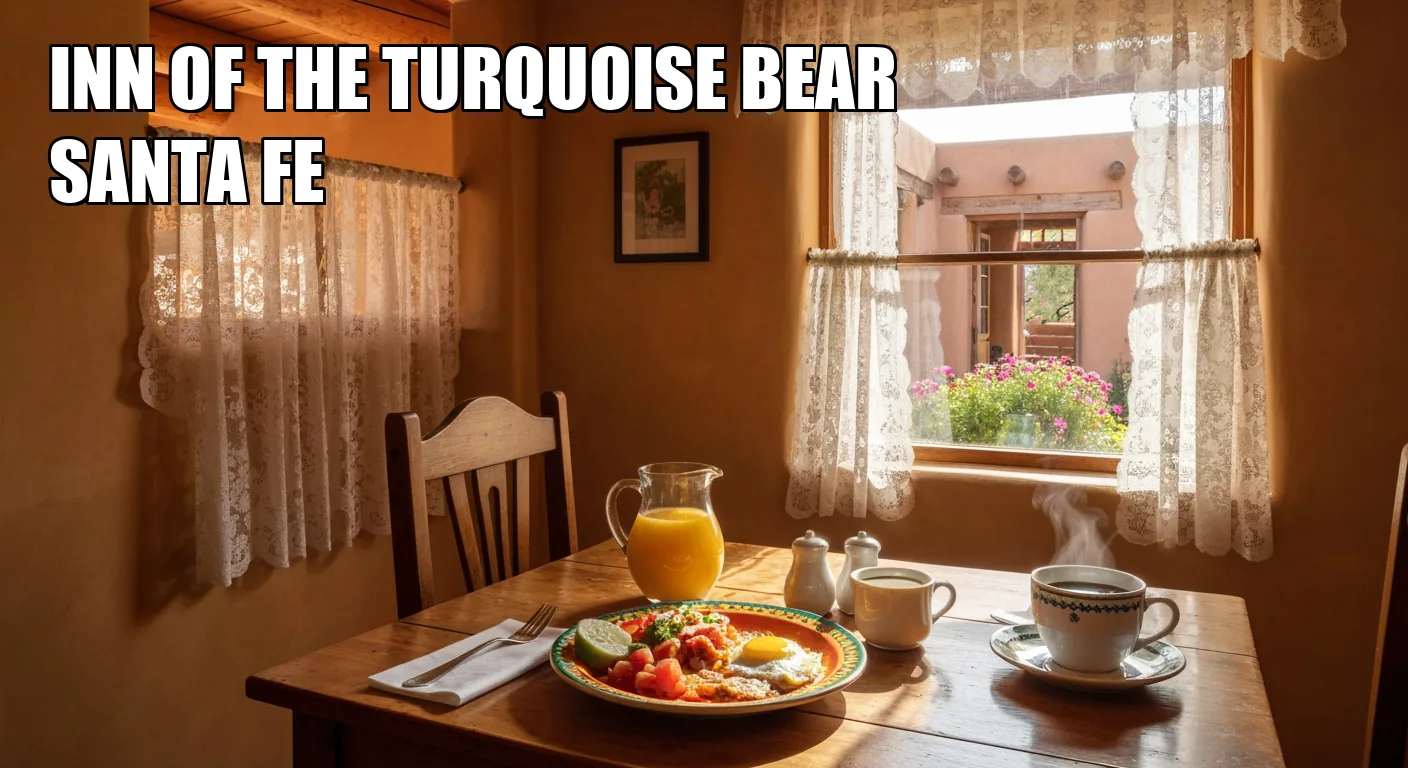
At Wisconsin’s White Gull Inn, 1896 is the age of the inn—not the proven age of its cherry-stuffed French toast. The owners’ own history says that when a new group took over in 1972, the fish boil was the only meal still being served. Breakfast returned only after a kitchen remodel, and the French toast enters the source record here as an established specialty in 2010.
That distinction is the key to reading food history at old hotels. A breakfast can inherit the age of its building, the continuity of its meal service, or the provenance of a named recipe. Those are three different histories. Separating them does not make a current breakfast less worthwhile; it tells you what, exactly, has survived.
“Culinary heritage” is broader than an old breakfast recipe
Historic Hotels of America’s own 2019 definitions make the category unusually broad. Its “culinary heritage” can include food created or first served at a hotel and still served there, but also food merely identified with the hotel for at least fifty years. A “culinary tradition” can be a dish served for twenty-five years even if it was invented somewhere else.
That is a defensible way to describe living hotel culture. It is not the same as proving that a recipe began as breakfast in the oldest part of the building. Four famous examples show why the labels should not be collapsed.
White Gull: old inn, restarted meal service, modern documented specialty
The White Gull traces its main building to Dr. Herman Welcker’s 1896 inn. The property history also records later physical layers: a dining room added in the 1940s and an Early American redesign undertaken by owners who arrived in 1959. The room in which breakfast is served is therefore part of an evolving inn, not a sealed 1896 interior.
The meal timeline is even clearer. Andy Coulson’s account says that in 1972 only the fish boil remained; breakfast, lunch and dinner were reinstated within a few years after extensive kitchen remodeling. The current breakfast operation cannot be treated as an unbroken survival from Welcker’s opening season.
The cherry-stuffed French toast has a strong modern history of its own. The inn’s blog documents it as the house breakfast specialty in May 2010, when day chef Julie Zak demonstrated it for a national television competition that White Gull won. The same source identifies Zak as a staff member since 1984, but it does not name the recipe’s creator or date its debut. The accurate claim is that this is a celebrated current breakfast in a historic inn—not that the recipe has been served since 1896.
French Lick: the only breakfast-origin story, told later
French Lick Springs Hotel illustrates the difference between a resort’s founding date and the fabric surrounding a later food story. The hotel history begins with a three-story wooden building acquired in 1845. Most of that hotel was destroyed by fire in 1897. Thomas Taggart and his investors acquired the remains in 1901, transformed the main building and added four wings through 1925.
Historic Hotels of America’s 2019 culinary account places its tomato-juice story inside that Taggart-era resort. According to the hotel tradition, chef Louis Perrin ran out of oranges while preparing the morning meal in 1917 and substituted tomatoes, sugar and a “secret sauce.” Of these four cases, it is the only origin story explicitly set at breakfast.
The evidence type still matters. The notebook’s source set contains the modern institutional retelling, not a 1917 menu, recipe card or newspaper report. The safe conclusion is not “French Lick indisputably invented tomato juice.” It is that French Lick preserves a specifically breakfast-based origin tradition, attached to the early-twentieth-century hotel rather than its lost 1845 predecessor.
The Hot Brown was born after dancing, not at breakfast
The Brown Hotel’s account begins with more than 1,200 guests attending its dinner dances in the 1920s. In the “wee hours,” dancers wanted something beyond ham and eggs, and the hotel attributes the resulting open-faced turkey, bacon and Mornay-sauce dish to chef Fred Schmidt. A Kentucky culinary history also dates the Hot Brown to 1926 and describes it as food for partygoers after an evening of dancing.
The clock causes the confusion. Food eaten after midnight is not automatically breakfast. In the origin story, the Hot Brown is a late-night alternative to breakfast food, which makes it nearly the opposite of a historic breakfast recipe. It remains genuine Louisville hotel heritage; the correct category is simply late-night hotel invention.
Palmer House: the recipe story outlived its birthplace
The Palmer House adds a fourth kind of discontinuity. Chicago History Museum separates three buildings: the first opened in 1870 and burned in the Great Chicago Fire the next year; the second opened in 1873 and stood until 1923; the third was built from 1923 to 1925 and is the hotel seen today.
The brownie tradition belongs to the second building. Historic Hotels of America says Bertha Palmer asked the hotel chef to create a dessert for the 1893 World’s Columbian Exposition and says the present hotel still serves the same recipe. The Historical Society of Sarasota County is more careful, introducing the box-lunch story with “Legend has it.” Both accounts agree on the meal category: a portable dessert, not breakfast.
Here the claimed recipe continuity is longer than the physical continuity of its kitchen. Eating the brownie in today’s Palmer House can still be a meaningful encounter with institutional memory, but it is not a visit to the room or building where the 1893 story is set.
Choose which continuity matters to you
Before treating a hotel breakfast as historic, ask three questions:
- Does the advertised year date the current building, an earlier building, or the hotel business?
- Was the named dish actually created for breakfast, or did it begin as dessert, dinner or late-night food?
- What does the source prove: an invention date, a later recipe tradition, or only that the dish was established by the time of the surviving record?
White Gull offers a distinguished modern breakfast operation inside a layered 1896 inn. French Lick offers a retrospective but genuinely breakfast-shaped tomato-juice tradition in its rebuilt early-twentieth-century resort. The Hot Brown represents late-night culinary invention, while the Palmer House brownie represents recipe memory carried into a replacement building.
None needs to borrow another timeline to be worth ordering. The useful move is to name the continuity on the plate: old room, old service, old recipe, or a newer specialty that has earned its place.
The Cornerstone Brief
One historic place, once a week — what it is, why it matters, whether it's worth going. No filler, no paid placements.
Coming soon. Unsubscribe any time.