Photo by Philip Hargrove for Cornerstone Mansion · December 10, 2025
Standing under the imposing columns of a grand antebellum mansion, it’s easy to get swept away by a curated narrative of Southern charm and opulent living. But scratch beneath that manicured surface, and you’ll find the true, often harrowing, stories of the people whose forced labor built these estates. As a travel writer who’s crisscrossed this country for decades, I’ve watched with a mix of hope and frustration as plantation museums slowly, painstakingly, grapple with their past. The good news? Many are finally moving beyond the magnolia-scented myth, choosing instead to center the experiences, resilience, and humanity of the enslaved people.
What does this seismic shift mean for the discerning traveler? It means a different kind of tour, one that demands emotional engagement and a willingness to confront uncomfortable truths. Forget the soft-focus narratives of yesteryear; these sites are challenging us to understand the foundations of American wealth and racial injustice. But which ones truly deliver on this promise? Which offer more than a superficial acknowledgment? Let's dive into some of the most compelling examples of this vital interpretive evolution.
Whitney Plantation: Confronting the Unvarnished Truth
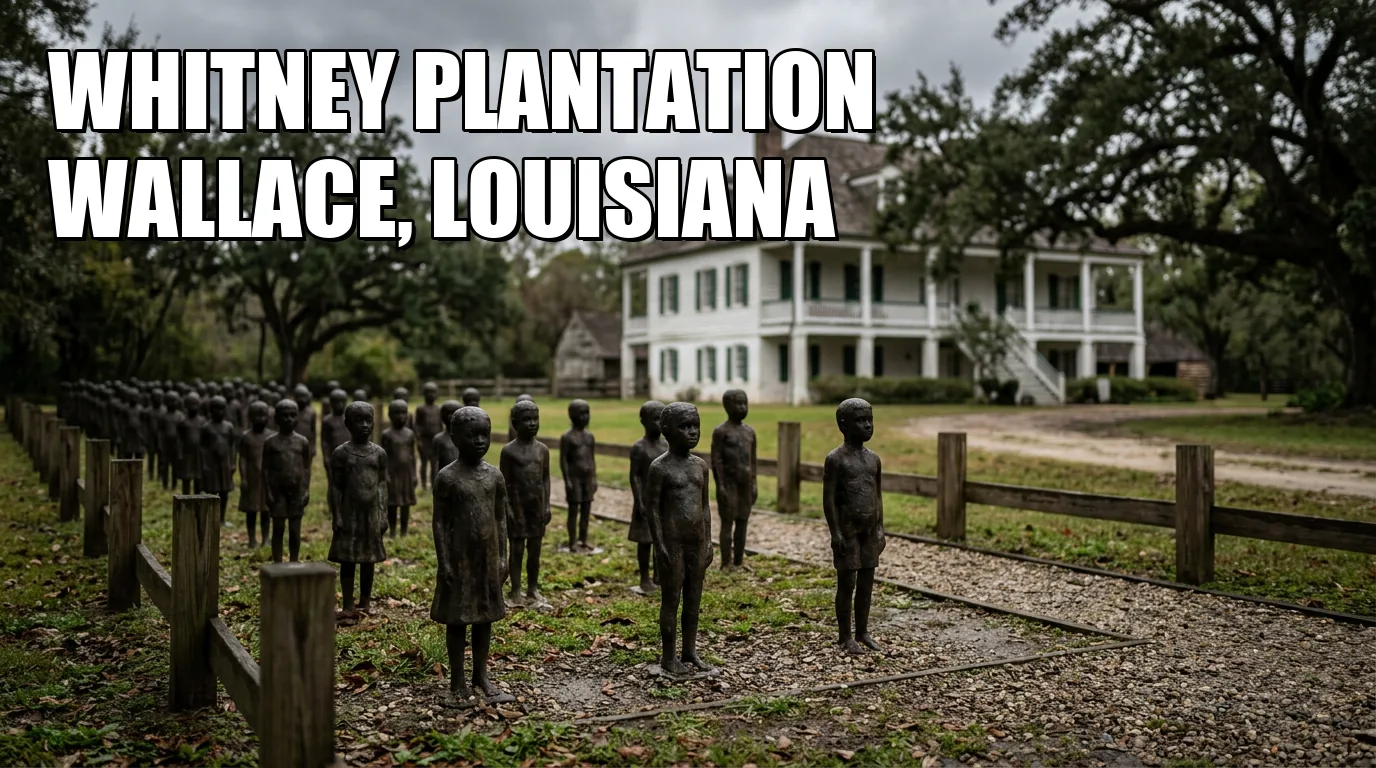
Can a museum be entirely dedicated to the history of enslaved people on a former plantation? Absolutely, and Wallace, Louisiana's Whitney Plantation proves it with unflinching clarity. Opened in 2014, this isn't just a plantation with an exhibit on slavery; it *is* the exhibit. The focus here, from the moment you step onto the grounds, is singularly on the 350 individuals who were enslaved here between 1752 and 1975. You'll find no soft-pedaling of the "master's house" here; the big house is almost secondary to the harrowing memorials that dominate the landscape.
Walking through the grounds, the weight of history presses in. Perhaps nothing captures the museum’s intent more powerfully than the 1811 Slave Revolt Memorial, a haunting installation by artist Woodrow Nash. Sixty-three ceramic heads, mounted on steel rods, rise from a pond-like structure, commemorating the participants of the 1811 German Coast Uprising—the largest slave revolt in U.S. history. Dozens of these rebels were executed, beheaded, their heads disturbingly displayed on pikes as a chilling warning to others. This memorial doesn’t just report a fact; it forces you to visualize the brutality, connecting you to the very real, very human cost of resistance. Another powerful installation, the Wall of Honor, engraves the names, origins, ages, and skills of over 350 identified enslaved individuals, restoring an identity that was systematically stripped away. What truly makes Whitney stand out is its integration of first-person narratives, oral histories collected in the 1930s from formerly enslaved people. These voices, often in their 80s or 90s, speak directly to you, making the past feel incredibly present. Prepare for an emotionally intense visit; this isn't a casual stroll. Arriving early during the week, especially in the cooler months of fall or spring, allows for a more reflective experience away from peak crowds.
Monticello's Reckoning: Jefferson's Complicated Legacy and Descendants' Voices
When one thinks of Monticello, Thomas Jefferson's iconic primary residence in Charlottesville, Virginia, images of architectural genius and Enlightenment ideals often spring to mind. Yet, for decades, the human cost of that genius—the approximately 600 enslaved people Jefferson owned—was largely relegated to footnotes. That began to change significantly in the 1990s, marking a pivotal moment in historical interpretation. The "Getting Word" oral history project, founded in 1993, has fundamentally transformed Monticello, demonstrating how vital descendant voices are to filling historical silences.
This ambitious project sought out and recorded the family histories of descendants of those enslaved at Monticello, weaving their narratives directly into the site's interpretation. Suddenly, individuals like Sally Hemings, the enslaved woman with whom Jefferson had an extended relationship and six children, moved from the periphery to the forefront. Her brother, Peter Hemings, a skilled cook, tailor, and master brewer, also gains deserved recognition. The "Getting Word" project now boasts over 200 interviews, collected from families like the Herns, Gillettes, Grangers, and multiple branches of the Hemings family, stretching their stories from the mid-18th century right up to the present day. What makes this so compelling is the active engagement: Monticello now features a dedicated interpretive center showcasing these descendant perspectives, complemented by archaeological findings and regular family reunion events. It’s a powerful acknowledgment that history isn't just about famous figures, but about the countless lives intertwined with theirs. To truly grasp the complexity, ensure you book one of the guided tours specifically focused on slavery and the enslaved community, as not all general tours delve into this as deeply. Plan for a full day; the extensive grounds and multiple interpretive centers demand ample time for exploration and reflection.
Laura Plantation: Personal Stories from Creole Country
Journeying through Louisiana's River Road, many plantations vie for attention, but Laura Plantation in Vacherie carved out a unique space early on. As far back as 1994, Laura became one of the first historic attractions in Louisiana to openly integrate stories of enslaved Africans into its regular tour, a pioneering move at a time when many sites still shied away from the topic. Its permanent exhibit, "From the Big House to the Quarters: Slavery on Laura Plantation," which opened in 2017, further solidifies this commitment by presenting biographical details of individual enslaved people across four generations.
This Creole-style plantation offers a refreshingly different perspective, largely due to its focus on the lives of specific individuals. Consider the poignant story of Lucy, an American slave purchased at age eight to serve as a companion to her Creole owner’s daughter. Her journey from the household to France with her mistress, and her eventual return to Louisiana where she married and purchased a New Orleans home, provides a rare glimpse into the agency and unexpected turns of an enslaved person's life. The plantation's 1808 "Registre des esclaves"—a slave register—even documents seventeen enslaved individuals from five distinct African ethnic groups (Canga, Congo, Minan, Moco, and Quésy), along with Créole individuals born in Louisiana. This level of detail, supported by hundreds of purchase documents, wills, and rare photographs discovered through extensive archival research, helps restore visibility to those often rendered invisible. Unlike many sites that focus on the Anglo-American South, Laura provides crucial context for understanding the French and Spanish influences on Louisiana’s peculiar institution. It’s a powerful antidote to any generalized notions of slavery, reminding visitors of its nuanced and diverse manifestations.
McLeod Plantation: Preserving Gullah/Geechee Resilience in South Carolina
Just outside Charleston, South Carolina, lies McLeod Plantation Historic Site, a place that proudly describes itself as "the only South Carolina plantation to tell the story of slavery from the perspective of the enslaved." This isn't a mere marketing tagline; it's a foundational commitment that shapes every aspect of the visitor experience. What makes McLeod truly stand apart is its profound dedication to interpreting Gullah/Geechee culture and heritage, a rich tapestry of African traditions, language, and spiritual practices that endured despite the horrors of enslavement.
Tours here delve deeply into the lives of enslaved families, examining how they maintained their cultural identity, from language patterns to spiritual practices. Central to this understanding are the praise houses—small, unadorned structures where enslaved people gathered for worship, offering a vital space for spiritual resistance and community building. Through archaeological evidence and poignant oral histories, visitors trace the lives of specific families and individuals from their enslavement through Reconstruction and into the 20th century. The site effectively demonstrates how the plantation's proximity to Charleston connected enslaved people to broader urban communities and international trade networks, offering glimpses of connections and resistance that extended beyond the fields. Archaeology, in particular, is used here not just to uncover artifacts, but to interpret daily life, family structures, and acts of resistance, revealing the ingenious strategies enslaved communities employed for survival. If you’re seeking to understand how African cultures persisted and evolved under immense pressure, McLeod offers an unparalleled, deeply moving experience. Aim for a weekday visit to fully absorb the guided tour, which is central to the experience and often runs on a set schedule.
Middleton Place: Beyond the Grand Gardens, Acknowledging the Invisible Builders
For generations, Middleton Place near Charleston, South Carolina, was renowned for its magnificent 18th-century terraced gardens, often hailed as America's oldest landscaped gardens. Visitors marveled at the horticultural artistry, often without truly contemplating the immense human effort—the forced labor—that brought such beauty into being. Thankfully, since the early 2000s, Middleton Place has significantly expanded its interpretation, culminating in the award-winning "Beyond the Fields: Slavery at Middleton Place" documentary exhibit. This exhibit strives to present the lives of enslaved people from their own perspective, emphasizing the contributions of seven generations of enslaved Africans and African Americans.
The documentary exhibit is a profound experience, but it’s the physical memorials that truly anchor the interpretation. A focal point is the powerful Memorial to the Enslaved, a panel displaying the names of over 2,800 African and African American men, women, and children enslaved by the Middleton family. This simple yet profound act restores individual identity and dignity to those systematically rendered invisible in traditional historical accounts. Additionally, the museum thoughtfully features Eliza Leach's House, a Reconstruction-era freedman's dwelling named for its last resident, which now serves as a museum itself, housing permanent exhibits that rely on extensive research-based documentation of enslaved lives. Visiting the Stableyards offers another layer of insight, with demonstrations of skills performed by enslaved specialists: blacksmiths, carpenters, textile workers, and gardeners. These were not just laborers; they possessed specialized knowledge essential to the plantation's operation and, indeed, were the very creators of those famous gardens. While the grandeur of the gardens remains undeniable, Middleton Place now successfully ensures that the legacy of those who built and maintained them is equally, if not more, prominent. Allow ample time to explore both the gardens and the interpretive exhibits; the juxtaposition of beauty and brutality is essential to the experience.
Destrehan Plantation: Echoes of Resistance in the 1811 Uprising
Driving along River Road in Louisiana, it’s easy to dismiss some plantations as merely pretty facades, but Destrehan Plantation carries a weight of history that sets it apart: it played a pivotal, and bloody, role in the 1811 German Coast Uprising, Louisiana’s largest slave rebellion. Far from glossing over this dramatic event, Destrehan’s interpretation now prominently features the experiences of enslaved people before, during, and after this audacious act of resistance.
The museum’s dedicated exhibit on the 1811 Uprising brings to life the story of Charles Deslondes, a mixed-race slave driver who led approximately 500 enslaved people in a march toward New Orleans from January 8-12, 1811. His audacious leadership challenged the very fabric of the slave society, and while the revolt was brutally suppressed, its impact reverberated for decades. Deslondes himself was captured and executed, and records show 67 enslaved people were tried at Destrehan Plantation, leading to further executions. The exhibit doesn't shy away from naming those who risked everything for freedom, including individuals like Gros and Petit Lindor, both 30, and Jasmin, 45, who were executed after trials at Destrehan. Through historical documents, paintings, and dioramas, the "1811 German Coast Slave Revolt" exhibit offers a compelling narrative, further enhanced by an audio tour narrated by actor Wendell Pierce. This focus on overt resistance, rather than just daily life, provides a crucial counterpoint to narratives that might otherwise overemphasize submission. It’s a stark reminder that the enslaved were not passive victims but active agents striving for freedom. To get the most out of your visit, prioritize the specific exhibits and audio tour related to the uprising; this is where Destrehan’s unique contribution to the historical conversation truly shines.
These evolving museums are doing more than just telling stories; they are actively reshaping our understanding of American history. They challenge the convenient myths and demand that we acknowledge the full, often painful, truth of our past. For any traveler seeking a genuine connection to the complex tapestry of the United States, these sites offer not just a destination, but a profound and necessary education. They may not always be easy to visit, but their insights are invaluable, proving that sometimes, the most beautiful and important journeys are the ones that make us think hardest.
Famous Homes, Estates, and Public Houses
Track preserved homes, estates, and place-based biographies tied to real addresses and public sites.
Discovering American Plantation Museums: A Visitor's Guide
What are the best plantation museums to visit in the United States?
Top plantation museums include Whitney Plantation in Louisiana (focused on slavery history), Drayton Hall in Charleston (oldest unrestored plantation house), Boone Hall Plantation in South Carolina (featuring Gullah culture), Oak Alley Plantation in Louisiana (famous for its avenue of oak trees), and Berkeley Plantation in Virginia (home to early American events). Each offers unique historical perspectives.
What are the typical hours of operation?
Most plantation museums operate daily from 9:00-9:30 AM to 4:00-5:00 PM, though hours vary by location. Whitney Plantation is open 9:30 AM-4:30 PM (closed Tuesdays), while Boone Hall operates 9 AM-5 PM Monday-Saturday and 12 PM-5 PM Sunday. Berkeley Plantation's seasonal hours range from 9:30 AM-4:30 PM (March-November) to 9:30 AM-3:30 PM (November-January).
How much is admission?
Admission prices vary: Whitney Plantation is $25 for adults and $11 for children; Boone Hall is $30 for adults and $12 for children (ages 6-12); Drayton Hall is $26 for adults and $10 for children (ages 8-14); Berkeley Plantation is $18 for adults and $7.50 for children (ages 6-16). Children under 5-6 are typically free.
Do I need to make reservations in advance?
Walk-ins are generally welcome at most plantations, but group visits (typically 10-20+ people) require advance reservations. For individual visitors, arriving early during peak seasons is recommended. Some tours like Whitney's self-guided audio tours operate on a first-come, first-served basis during specified time windows.
How long should I plan to spend at a plantation?
Plan for a minimum of 1.5-2 hours for basic tours and exhibits. Most visitors spend 2-3 hours including time to explore grounds and visit gift shops. Self-guided audio tours at Whitney Plantation recommend 2 hours minimum, while full estate experiences with gardens typically take 3-4 hours.
Are audio tours available?
Yes, many plantations offer audio tours. Whitney Plantation provides self-guided audio tours available 9:30 AM-3:00 PM, and Drayton Hall offers audio tours through the house. These self-paced options allow visitors to explore at their own speed.
Are plantation museums family-friendly?
Most plantations welcome families, though content dealing with slavery can be emotionally heavy and may not be suitable for very young children. Destrehan Plantation offers grade-level appropriate educational tours for K-12 students, and Boone Hall provides engaging visitor experiences for children with family-friendly presentations.
What is the best time to visit?
Spring (March-April) and fall (October-November) offer ideal weather, fewer mosquitoes, and beautiful gardens in bloom. Summer brings heat and humidity, while winter varies by region. Early spring is recommended for optimal weather and flower displays.
Is parking available?
Free parking is available at all major plantation museums. Boone Hall and others have ample free parking lots. Some plantations have designated coach parking for group tours.
How do I get to plantation museums?
Rental cars are the most practical option. Destrehan Plantation is the only Louisiana plantation accessible by Uber and Lyft. Most plantations do not have public transportation. Tour companies offer round-trip transportation packages from New Orleans and Baton Rouge.
What should I bring and wear?
Wear comfortable walking shoes, light clothing, and sun protection. Bring water, sunscreen, and insect repellent (especially for Louisiana plantations). Leave handbags and backpacks at home when possible, as some plantations restrict personal items on tours for protection of historic buildings.
Are there guided tours available?
Yes, most plantations offer guided tours led by trained historical interpreters. Whitney Plantation offers hourly guided tours on a first-come, first-served basis, while other plantations have scheduled tours or on-demand guides included with admission.
What accessibility accommodations are offered?
Most plantations are wheelchair accessible, including visitor centers, gift shops, and restrooms. Boone Hall offers wheelchair-accessible pathways and video tour options. Contact specific museums for detailed accessibility information before visiting.
Are photography and personal social media posts allowed?
Personal photography for non-commercial use is typically permitted on grounds and in outdoor areas. Flash photography is usually prohibited inside historic structures. Commercial photography, tripods, and videotaping of tours are generally not allowed. Check individual plantation policies before your visit.
Do plantations offer educational programs for students?
Yes, many plantations provide specialized educational tours for school groups. Destrehan Plantation offers grade-level appropriate Heritage Education Programs meeting state curriculum standards, with group rates typically $12-16 per student. Advance booking is recommended one month ahead.
Why This Page Exists
Maison builds place guides to help readers plan a real visit or understand a real site. When a page makes present-day access, booking, or visitor claims, those details are revised against public-facing source material and editorial review. For the wider standards behind that work, see methodology.
The Cornerstone Brief
One historic place, once a week — what it is, why it matters, whether it's worth going. No filler, no paid placements.
Coming soon. Unsubscribe any time.
We use cookies to enhance your experience. By continuing to visit this site you agree to our use of cookies.