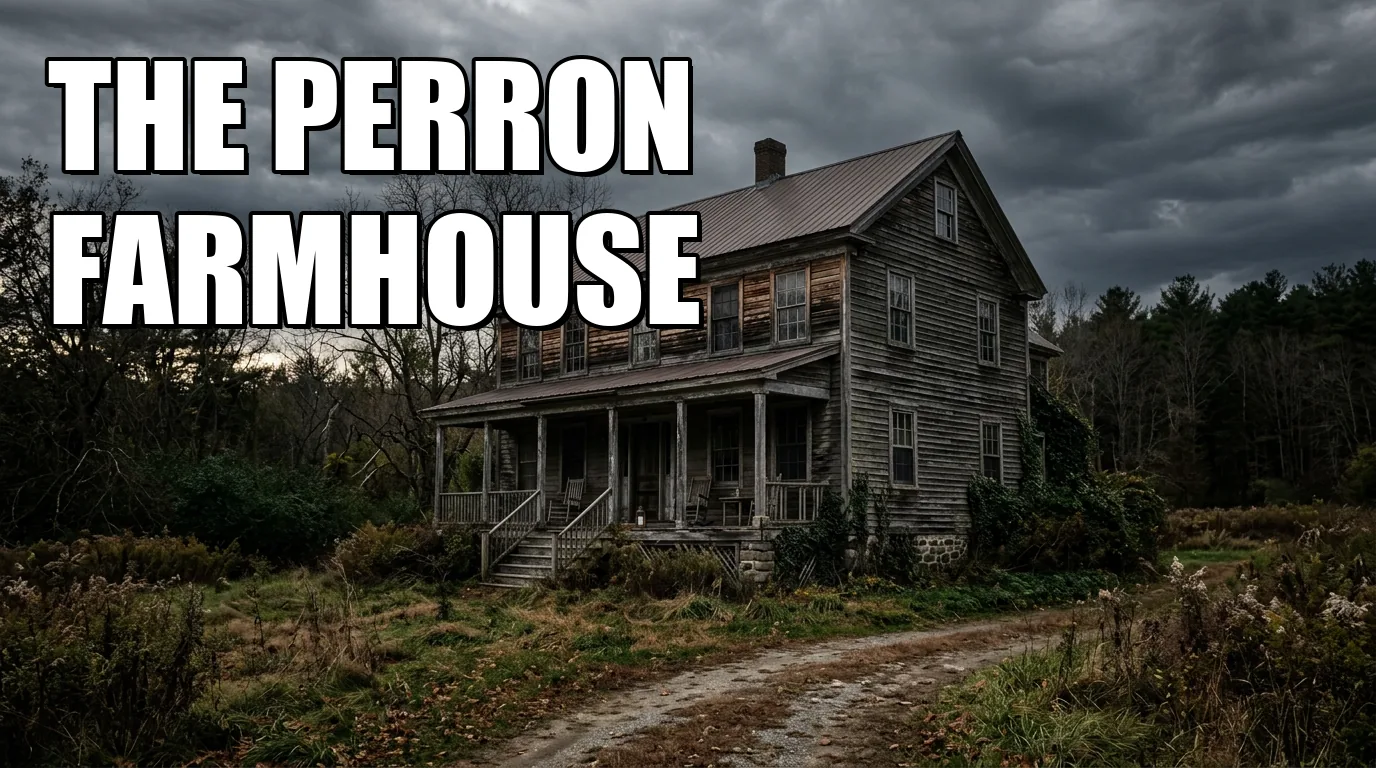
The Conjuring House has an active-looking Experiences page, but the selected records do not establish an authorized public reopening. Regional reporting says the Burrillville attraction lost its business license in November 2024 and closed in December. A regional summary of WPRI’s reporting says a state stop-work order restricted work at the property to the owner. July 2026 regional coverage said a deed had been recorded to Jason Hawes while related court battles were still active.
Those facts do not answer whether the house is haunted. They answer a more immediate question: a deed, a website and a paranormal reputation are three different things, and none substitutes for a current town entertainment license.
Current visitor rule: do not walk up, enter the drive or buy an experience solely because an old booking page is still online. Treat the property as closed to public commercial visits unless the operator can show current Burrillville authorization and ticket terms issued by the lawfully controlled business.
Three contracts keep the house story honest
| Evidence contract | What it can establish | What it cannot establish |
| Property | Recorded transactions, physical dimensions, acreage, later renovation and visible building fabric. | A settled 1736 construction date, a preserved Perron-era interior or paranormal causation. |
| Testimony | What Andrea Perron, other family members and the Warrens later said they experienced. | Contemporaneous verification of each room incident or proof that a reported event occurred physically. |
| Admission | A current municipal license, authorized operator and valid ticket terms can establish public access. | A recorded deed, fundraiser, social post or live marketing page cannot authorize tours by itself. |
No selected source proves a current public tour
The closure record begins in 2024. A Providence Journal regional summary says the property lost its business license in November and officially closed in December. A separate WPRI regional summary says the Rhode Island Department of Labor and Training issued a November 13 stop-work order after finding that required workers’ compensation coverage had lapsed.
The later ownership headlines did not automatically reverse those decisions. July 2026 regional coverage reported that Hawes had recorded a deed while legal battles continued. The deeper legal lesson is simple: a deed is not an admission ticket.
Burrillville’s July 22, 2026 council agenda shows the town considering entertainment licenses for other attractions, including a separate haunted event. It does not list 1677 Round Top Road. One agenda cannot prove that no license exists in every municipal file, but it does show that the selected official record contains no Conjuring House authorization on that date.
Meanwhile, the old Experiences page continues to advertise house tours, investigations and GHamping. That page proves that marketing copy remains online. It does not prove the town restored the license, the state cleared the business or the court dispute ended.
As of August 11, 2026, the evidence set supports no lawful current tour or overnight. A credible reopening announcement needs four things together: a current Burrillville entertainment license, ticket terms from the authorized operator, a clear explanation of who controls the property and business during the court dispute, and evidence that the state stop-work problem has been resolved.
Even the farmhouse’s construction date is disputed
The physical building is real evidence, but its most repeated date is not settled. A plaque and operator history call it the Richardson Arnold House, circa 1736. Providence Business News, reporting the 2022 sale, describes the current farmhouse as built in 1826. The selected sources do not contain the architectural survey or deed analysis needed to reconcile the 90-year difference.
The safe description is therefore narrower. PBN records a 14-room, 3,109-square-foot farmhouse on 8.5 acres, with a barn and shed. Operator materials describe a center-chimney form, while PBN counts four fireplaces. Those visible features may help read an old New England farmstead; they do not select one construction year by themselves.
The building also should not be presented as a sealed 1970s time capsule. The 2022 sale coverage calls it recently renovated, while operator materials say repairs are needed before guided tours resume. No selected source documents a preserved Perron furniture plan, unchanged bedroom arrangement or stable public floor plan.
A future visitor could examine old framing, fireplaces, additions, stone walls, fields and farm outbuildings. Paranormal props, investigation equipment or period-looking furniture would belong to the attraction layer unless an object had its own documented provenance.
The Perron account is a retrospective source
The family’s presence is not in doubt. Andrea Perron’s account places the purchase in December 1970 and the departure nearly a decade later; regional reporting also identifies the house as the family’s 1970s home.
The incident record is different. The first volume of Andrea’s House of Darkness House of Light appeared in 2011, roughly three decades after the family left. Family and Warren promotional interviews followed around the 2013 film release. The selected sources do not supply a contemporaneous 1970s diary, police report, medical record or independent room log for the old article’s graphic incidents.
That does not prove the family invented its experiences. It defines the source: decades-later testimony shaped into memoir and interview. A sentence such as “Andrea Perron later wrote that a séance went badly” is reportable. A sentence declaring that a chair physically levitated, an entity attacked Carolyn or fresh cellar blood defeated DNA testing converts testimony into verified event.
The room-by-room accumulation in the old article fails for the same reason. The selected evidence does not directly establish the dining-room man, scythe, hanger, needle wound, parents’ bedroom scratches, handless girl, soldiers, Manny, borning-room trap or cellar blood test. Repeating them with architectural confidence would make a retrospective story look like a measured building survey.
Several famous deaths belong to other addresses
The selected readable sources do not establish the old article’s claim that Prudence Arnold was murdered in the farmhouse pantry. Operator history says Edwin Arnold disappeared from the Rhode Island property in 1903, but his body was found weeks later on a neighboring farm. On this evidence, neither story documents a death inside the Conjuring House.
Bathsheba Sherman requires an even larger separation. She lived at another Burrillville property, died of natural causes in 1885 and was not the farmhouse’s documented witch-owner. The 2013 film was not filmed at the Rhode Island farmhouse. The Conjuring lore combines different places; the real building cannot verify a biography or room geography imported by the movie.
What a future lawful tour could honestly show
If public access returns, the strongest tour would not promise proof of the supernatural. It would separate the old farmstead, the Perrons’ later testimony, the Warren and movie narrative, and the modern attraction business. Each layer can be interesting without borrowing another layer’s authority.
The property contract would label disputed dates and later renovations. The testimony contract would name the speaker and the date of publication. The film contract would state that the Rhode Island farmhouse was not the shooting location. The admission contract would show the current license and operator before asking for payment.
Until those admission documents exist together, the useful visit is no visit. The real house can remain historically and culturally significant while its gate remains a private boundary. Belief is optional; municipal authorization is not.