Architecture Styles

Beyond the Facade: America's Symmetrical Colonial Gems

Find Nearby Hotels

Book Flights

There’s a certain calm, a profound sense of order, that washes over you when contemplating the perfectly balanced lines of an 18th-century colonial mansion. It’s more than just aesthetics; it’s a philosophical statement etched in brick and timber, a reflection of Enlightenment ideals transposed onto the American landscape. As a travel writer who’s spent decades chasing down the whispers of history in grand old houses, I’ve learned that the true beauty of these symmetrical masterpieces lies not just in their facades, but in the stories, the intentions, and often, the quiet subversions hidden within their very design. Many guides will point out the obvious symmetry, but what about the audacious statements, the hidden quirks, or the practical realities of visiting these monuments to balance? We're going to dive into five exceptional examples, unearthing the details others often overlook.

Drayton Hall: A Testament to Unyielding Survival

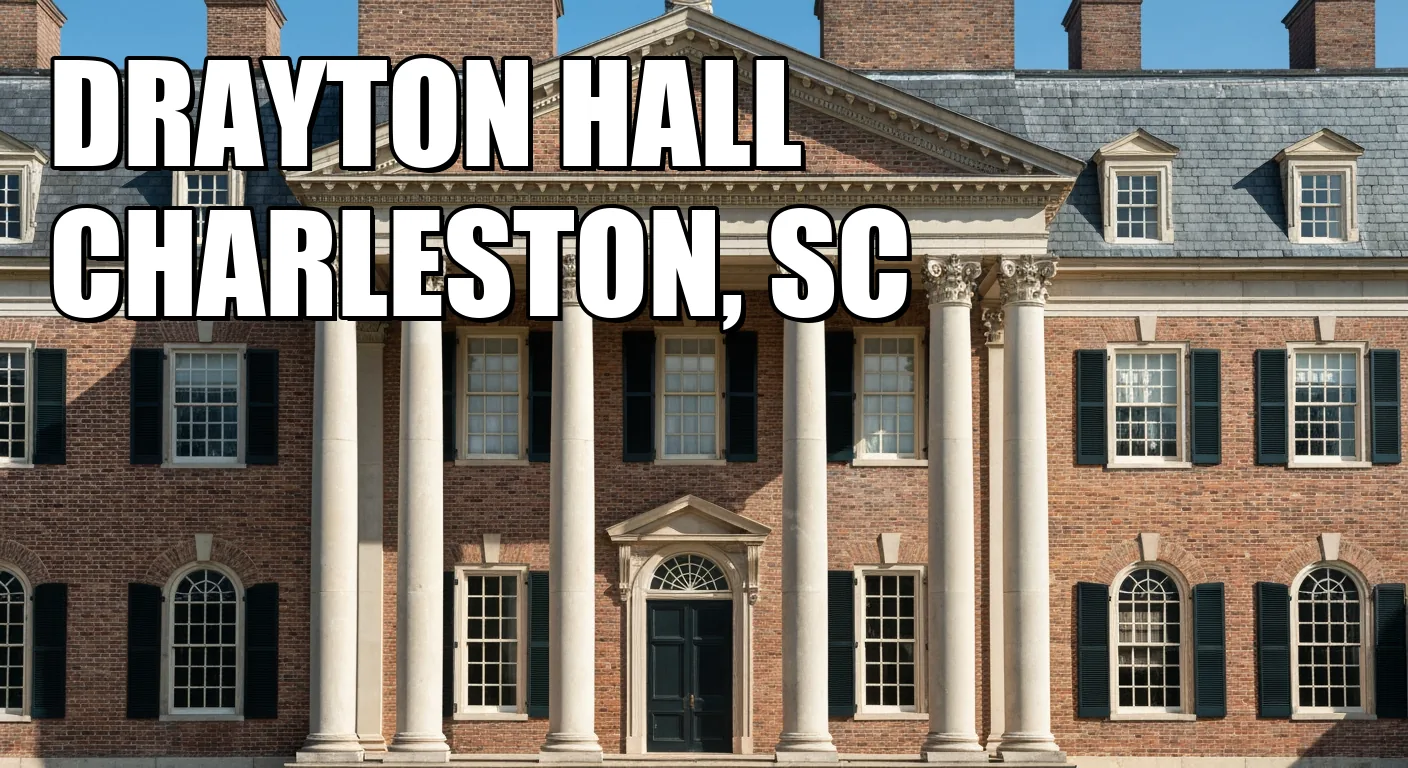
Standing on the banks of the Ashley River near Charleston, South Carolina, Drayton Hall isn't just symmetrical; it's practically defiant. Built between 1748 and 1752, this Georgian-Palladian jewel screams precision. Imagine a seven-bay facade so impeccably balanced that every window, every architectural element, mirrors its counterpart across an invisible central line. But it’s the double projecting portico on its west facade that truly sets it apart, a daring architectural flourish that was, at its completion, one of the first of its kind in the entire world. Inside, the central entrance hall boasts a divided staircase, a grand gesture of welcome, flanked by perfectly proportioned chambers—each a mirror image of the other. It’s a masterclass in axial symmetry, a design principle borrowed from ancient Rome and rendered with stunning clarity.

What makes Drayton Hall so compelling, though, isn't just its architectural prowess, but its sheer grit. This house, unlike almost every other plantation home on the Ashley River, survived both the Revolutionary War and the Civil War completely intact. Think about that for a moment: cannons roaring, armies marching, and yet this stately structure stood firm, a silent witness to centuries of upheaval. Its survival isn’t merely luck; it’s a testament to its robust construction and perhaps, a quiet deference from those who saw its undeniable beauty. Another powerful, often somber, layer to Drayton Hall's history is the country's oldest African-American cemetery still in use, with burials dating back to 1790. This isn't just a detail; it's a stark reminder that these grand homes, built by hands both free and enslaved, hold layers of narratives that demand our attention and respect.

Visiting Drayton Hall offers a distinctly different experience than many other historic homes. They’ve chosen an "unrestored" approach, meaning you won’t find period furniture staged just so. Instead, you'll see the raw bones of the house, scars and all, allowing you to truly appreciate the craftsmanship and envision its past without the gloss of modern interpretation. Expect a more contemplative visit, one where the focus is on the architecture and history itself. To truly appreciate the afternoon light on that iconic portico, aim for an afternoon visit, perhaps between 2 PM and 4 PM. Admission typically runs around $20-25 per adult, and while there’s ample parking, Charleston’s humid summers make spring (April-May) and fall (October-November) ideal for comfortable exploration.

Jefferson's Architectural Vision: Monticello's Neoclassical Embrace

Few places in America embody the intellectual spirit of the Enlightenment quite like Monticello, perched majestically atop its "little mountain" in Charlottesville, Virginia. Designed by Thomas Jefferson himself, this wasn't just a home; it was a living experiment in architecture, agriculture, and democracy, undergoing transformations from 1768 to 1809. What immediately strikes you on approach is the west garden facade: a refined neoclassical symphony of balance. Two-column deep porticos, Doric columns, and a triangular pediment pierced by a semicircular window all create a façade that’s both grand and welcoming. But it’s the unexpected octagonal Dome Room on the third floor that truly captures radial symmetry, with eight circular windows and a skylight creating a stunning, light-filled space.

Jefferson's architectural choices here were far from arbitrary. He was, after all, the only U.S. President trained as an architect, and his design for Monticello deliberately eschewed contemporary British Georgian styles in favor of French Neoclassical. This wasn't merely a matter of taste; it was a calculated diplomatic statement, a visual declaration of allegiance to France, which he saw as a revolutionary ally against British hegemony. Understanding this political context transforms Monticello from a pretty house into a tangible piece of American foreign policy, a bold assertion of national identity expressed through brick and mortar. It’s a fascinating insight that goes beyond mere architectural description, tying aesthetics directly to the nascent nation's geopolitical aspirations.

Planning a visit to Monticello requires a bit of foresight. It’s an immensely popular destination, so booking timed tickets online well in advance is essential, especially during peak seasons like spring break or fall foliage. Expect to spend around $30 per adult for general admission, which includes a house tour and access to the grounds. Parking is plentiful but can be a bit of a trek up to the visitor center. While the house tour is fantastic, don’t rush past the meticulous gardens and outbuildings; they offer crucial context to Jefferson’s vision of self-sufficiency. Arriving early in the morning (before 10 AM) often provides a more serene experience, allowing you to soak in the views from the terrace before the midday crowds swell. The interior, particularly the Dome Room, can feel a bit constrained with larger tour groups, so managing your expectations about personal space is key.

Annapolis's Hidden Gem: The Enigmatic Hammond-Harwood House

Step off the bustling streets of Annapolis, Maryland, and you might just stumble upon the Hammond-Harwood House, a five-bay brick edifice completed in 1774 that whispers secrets of colonial grandeur. This isn’t just another symmetrical building; it’s an architectural riddle, a testament to the genius of William Buckland, a brilliant architect whose untimely death prevented him from seeing his masterpiece fully inhabited by its original owner. The house’s central block is flanked by two-story end wings featuring semi-octagonal bays—a design element so rare for pre-Revolutionary America it practically shouts innovation. Observe the exact window spacing, the careful graduation from 6/9 sash windows on the first floor to 6/6 on the second, all contributing to a facade of unwavering order.

What truly elevates this home from simply symmetrical to subtly deceptive is Buckland's ingenious use of illusion inside. While many rooms appear perfectly balanced, some are actually asymmetrical in size. How did he maintain the visual equilibrium? Through strategically placed false doors. These aren’t just decorative elements; they are architectural sleight-of-hand, ensuring that the eye perceives perfect harmony even where true symmetry doesn't exist. It's a fascinating insight into the colonial obsession with appearance and order. The central entrance, framed by engaged Ionic columns and crowned with an arched fanlight, serves as a surprisingly rich focal point on an otherwise restrained brick exterior, beckoning you to discover these interior secrets.

The historical irony of the Hammond-Harwood House is captivating: owner Matthias Hammond abruptly left Annapolis for his country estate in 1776, never occupying the elegant house he commissioned. It stood rented out for years, a grand statement of wealth and taste that went largely unused by its intended residents. This peculiar backstory makes you wonder about the ambitions and dashed plans of the colonial elite. Visiting this Annapolis treasure offers a more intimate experience than larger, more crowded sites. Admission is modest, usually under $15 per person, and while parking in Annapolis can be tricky, several public garages are within walking distance. Allow yourself a good hour to an hour and a half to fully appreciate Buckland’s meticulous design and the house’s unique history. Weekday mornings are often quietest, providing a chance to truly savor the architectural nuances without feeling rushed.

Gunston Hall: The Unassuming Grandeur of a Founding Father

Down a scenic byway in Mason Neck, Virginia, you’ll find Gunston Hall, the ancestral home of George Mason, a man whose contributions to American democracy are as profound as they are often understated. Built between 1754 and 1759, Gunston Hall's compact brick exterior, laid in a meticulous Flemish bond, presents a facade of classical colonial symmetry that belies the exquisite artistry found within. The perfectly balanced proportions and a central front-to-back passageway, from which four symmetrically arranged rooms extend on the first floor, speak to a deep commitment to architectural order. An arched portico adorned with delicate dentil molding frames the main entrance, while a fan-light window above adds a decorative symmetrical flourish typical of mid-18th century Georgian style.

Yet, it’s the striking contrast between Gunston Hall’s restrained, almost austere exterior and its breathtakingly ornate interiors that makes it truly memorable. While Mason himself designed the exterior, the lavish interior woodwork was crafted by skilled artisans like William Buckland and William Bernard Sears. This dichotomy challenges the conventional wisdom that colonial homes were uniformly simple. Here, you see a deliberate choice: a public face of dignified simplicity concealing a world of intricate, private beauty. George Mason himself was a pivotal figure in the American founding, authoring the Virginia Declaration of Rights—a document that heavily influenced both the U.S. Constitution and the Bill of Rights. Thomas Jefferson visited Mason on his deathbed in 1792, a poignant testament to the profound respect among these revolutionary giants. Mason’s intellectual contributions, often overshadowed by figures like Jefferson and Washington, are as foundational to our nation as any battlefield victory.

To truly appreciate Gunston Hall, you need to understand its context as a working plantation and the home of a deep thinker. It's a bit off the main tourist routes, which often means fewer crowds and a more intimate experience. Admission typically hovers around $10-15 per adult, and parking is ample and free. I recommend dedicating a solid two hours to your visit, allowing time not only for the house tour but also for exploring the grounds, the restored gardens, and the outbuildings. The spring, when the gardens are in bloom, offers a particularly picturesque backdrop for understanding Mason's world. Don't rush through the interior; take time to study the intricate carvings in the main parlor and dining room, which are some of the finest surviving colonial woodwork in the country.

Shirley Plantation: A Legacy Cast in Perfect Squares

Among the oldest active plantations in Virginia, Shirley Plantation in Charles City County stands as a remarkable, even astounding, example of precise symmetrical colonial design. Completed around 1738, this isn't just a house; it's a cube. The main house measures exactly 48 feet square on each exterior face, a perfect 48 × 48 × 48 feet. This kind of exacting geometric balance is rare and speaks volumes about the original builders’ aspirations for order and permanence. The brick Georgian building boasts a perfectly symmetrical facade, punctuated by balanced window placement and an imposing double-tiered portico, a clear nod to Palladian design principles.

Look closely at the roofline, and you'll spot a three-foot pineapple finial, a colonial symbol of hospitality that’s charmingly repeated in the interior woodwork. This detail isn't just decorative; it’s a subtle invitation, an indication of the home’s welcoming spirit that continues to this day. The Flemish bond brickwork, with its carefully rubbed brick dressings, further emphasizes the building’s formal balance, all centered around a sophisticated interior. Here, a stunning three-story staircase with a walnut balustrade dominates the central hall, connecting fully paneled first-floor rooms that are among the finest surviving from the colonial period. It’s a testament to the wealth and taste of the Hill Carter family, who have owned and managed the property for eleven generations.

Shirley's history is deeply interwoven with seminal American events and figures. It was the birthplace of Anne Hill Carter in 1773, who married "Light Horse Harry" Lee in the mansion’s parlor in 1793 and later became the mother of Confederate General Robert E. Lee. But perhaps one of the most unexpected chapters unfolded during the Civil War. In July 1862, following the nearby Battle of Malvern Hill, Shirley served a humanitarian role, becoming a temporary hospital for Union casualties. The Hill Carter women themselves nursed and fed wounded soldiers from both sides, an act of compassion that prompted Union General McClellan to issue a federal safeguard protecting Shirley throughout the remainder of the war. This unexpected mercy preserved a national treasure, a powerful narrative that often gets overlooked in typical battlefield tours. When planning your visit, remember Shirley is still a private residence, so expect a guided tour of the main house. Admission is typically around $15 per adult, and there’s ample free parking. The plantation hosts various events throughout the year, but a quiet weekday offers the best chance to absorb the palpable sense of history and the remarkable continuity of family stewardship.

Ultimate Guide to Symmetrical Colonial Design: History, Sites, and Travel

What is symmetry in colonial architecture?
Symmetry in colonial architecture refers to the balanced, evenly-proportioned arrangement of architectural elements on both sides of a central axis, typically featuring a centered front door flanked by evenly spaced windows, columns, and decorative elements that create visual harmony and order.
What is the history of colonial architecture?
Colonial architecture in America developed from the 17th through mid-19th centuries, influenced by European styles from England, Spain, France, Holland, and Sweden, with settlers adapting designs to regional climates and local materials, creating distinct regional styles across the thirteen colonies.
What is symmetry in architecture history?
Symmetry has been a fundamental principle in architecture throughout history, reflecting European preferences for order and harmony; it became a defining characteristic of colonial, Georgian, and neoclassical styles that emphasized balanced facades and proportional designs.
What is a Colonial design?
Colonial design is an architectural and interior style characterized by symmetrical facades, rectangular floor plans, brick or wood construction, steep gabled roofs, evenly-spaced windows with functional shutters, centralized entries, and classical elements like columns and pediments reflecting European tradition adapted to American conditions.
What is the history of Southern Colonial architecture?
Southern Colonial architecture evolved in Maryland, Virginia, and the Carolinas during the 17th-18th centuries, featuring large symmetrical homes with prominent columned porticos, large projecting end chimneys, and centered hallways influenced by increasing wealth and the ideals of Greek Revival design.
What is the history of Southern architecture?
Southern architecture developed from Colonial and Spanish influences through plantation estates, antebellum designs with grand columned facades and Greek Revival elements, and is characterized by adaptations for hot, humid climates including high ceilings, large windows, wide porches, and thick walls for ventilation and insulation.
What is the history of the Southern Colonies?
The Southern Colonies (Maryland, Virginia, Carolinas, and Georgia) were established primarily between the 17th-18th centuries with English settlers who developed plantation-based economies, and their architecture reflected both European classical traditions and practical adaptations to the Southern climate and landscape.
What is the Southwest style of architecture?
Southwest style architecture blends Indigenous Pueblo and Spanish colonial influences, featuring adobe brick construction, enclosed courtyards, terracotta roofs, stucco walls, arches, and locally-inspired designs adapted to the arid climate, including Mission Revival and Pueblo Revival styles popular in Arizona, New Mexico, and parts of California.
What is symmetrical colonial design history?
Symmetrical colonial design originated from European Georgian and classical architecture principles brought to America by English, Dutch, and French settlers in the 17th century, evolving through the 18th-19th centuries as colonial, Georgian, and Federal styles that emphasized balanced proportions and mathematical order.
What is the history of architectural design?
Architectural design history includes diverse traditions from ancient civilizations through the colonial period; colonial American design specifically synthesized European medieval and classical traditions with local materials and climate adaptations, creating distinctive regional architectural styles that reflected both heritage and practical necessity.
What are the best locations to visit colonial architecture in the USA?
Top destinations include Colonial Williamsburg (Virginia) with 80+ original 18th-century buildings, Historic Jamestowne (Virginia), Yorktown Battlefield, George Washington's Mount Vernon (Virginia), Savannah Historic District (Georgia), New Orleans (Louisiana), Boston (Massachusetts), and Philadelphia (Pennsylvania), each featuring preserved colonial structures.
What is the best time to visit colonial architecture sites?
Spring (April-May) and fall (September-October) offer pleasant weather, fewer crowds than summer, and reduced admission fees; summer provides additional activities and special events including Fourth of July celebrations at Colonial Williamsburg, while winter offers quieter visits and festive Christmastide programming.
How much does it cost to visit colonial architecture sites?
Colonial Williamsburg adult admission is $35 (online discount available); Colonial Jamestowne costs $15; Yorktown Battlefield costs $15; Mount Vernon starts at $28 for adults; many museums offer free admission, and the America's Historic Triangle ticket provides access to multiple sites at discounted rates.
How do I visit major colonial architecture sites?
Most colonial sites are accessible via self-guided tours of grounds and exterior areas, with optional guided tours available; Colonial Williamsburg operates as a living history museum with interpreters, while plantation homes, battlefields, and historic districts offer varying levels of access requiring advance tickets purchased online or at the gate.
What are the key features of symmetrical colonial design to observe?
Key observable features include centered front doors with matching windows on either side, evenly-spaced fenestration with shutters, brick or wood facades, steep pitched roofs with dormers, symmetrical floor plans with central hallways, classical columns or pilasters, and decorative pediments or entablatures framing entrances.
What tours are available for colonial architecture?
Options include group tours at Colonial Williamsburg ($90-$270 for 2-3 hours), private architectural tours at various sites ($195-$1,099), self-guided walking tours in historic districts, guided tours at Mount Vernon and Jamestowne, and specialized tours focusing on specific themes like Revolutionary War history or African American colonial experience.
What requirements or restrictions apply to visiting colonial sites?
Most sites require advance online ticket purchases; children under 6 receive free admission to most venues; some areas have accessibility limitations; photography is generally permitted for personal use; guided tours have specific time slots; and many sites maintain operating hours seasonally, typically 9am-5pm during peak season.