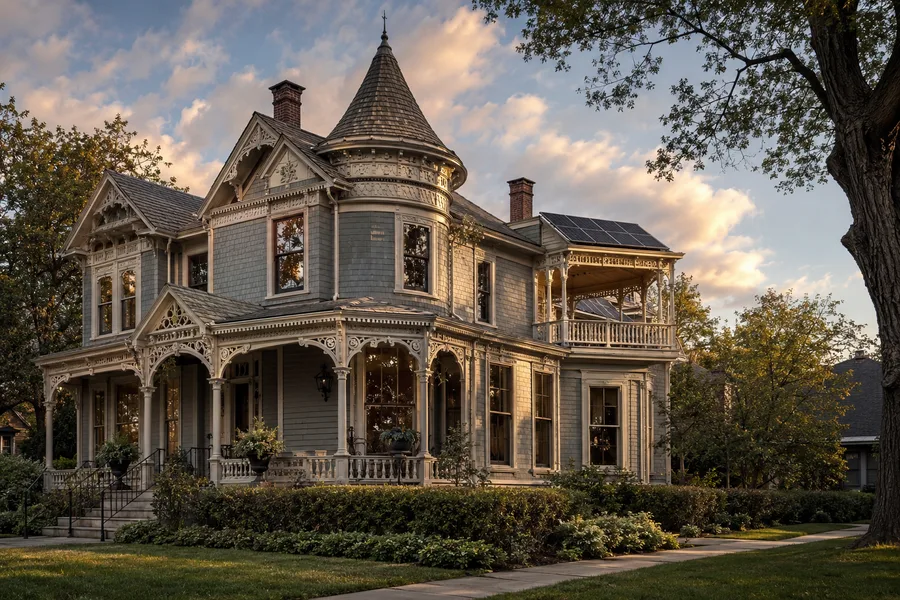
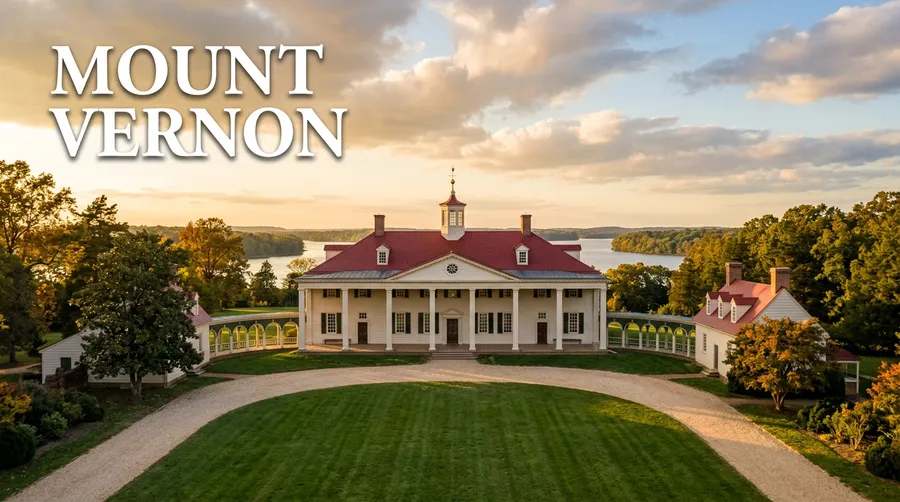
American old houses have survived more reinventions than their sentimental admirers like to admit. They have taken on plumbing, central heat, indoor wiring, elevators, fire escapes, and aluminum storm windows; additions one generation swore would ruin the romance. Some were brutal, others brilliant. That is why the current debate over balcony solar interests me more than the usual fight between preservation purists and gadget evangelists. Old houses already live in the modern world. The real question is whether a small, reversible solar setup can join that long line of adaptations without vandalizing the silhouette that made the building worth saving.
In the American context, balcony solar usually means a compact plug-in system: a modest panel array, a microinverter, and a mounting method that does not require turning a roofscape into a utility project. On a sprawling Gilded Age estate, a balcony array will never carry the whole electrical load. But for a city townhouse, a converted carriage house, a landmark apartment with a rear terrace, or a historic inn trying to trim its base load without touching its front elevation, the scale starts to make sense. While not the answer everywhere, on the right old building it may be the least visually destructive way to begin. For readers who want a current U.S.-focused overview of the category before getting lost in product jargon, Balcony Solar Audit is a useful starting point.
The Preservation Case Is Stronger Than Skeptics Admit
The National Park Service has been more nuanced on solar than many owners assume. Its preservation guidance does not treat photovoltaic equipment as heresy. It resists poorly placed equipment that becomes a new, jarring feature. Put panels across a prominent front-facing roof, punch through delicate historic materials, or let a bright modern frame dominate a mansard, and you have stopped updating the building and started arguing with it. Move the equipment to a secondary elevation, tuck it behind a parapet, or use a location that can be reversed later without maiming historic fabric.
This is why balcony solar belongs in the discussion. Traditional rooftop arrays often force a blunt choice on older houses: big visual impact for meaningful production. A balcony system, by contrast, can be installed on rear porches, service wings, and terrace railings that are outside the ceremonial facade. Good preservation is about managing change so that a building keeps telling its story with clarity. Reversible, low-profile solar can fit that ethic far better than its critics usually allow.
Where Balcony Solar Actually Works on Old American Buildings
The best candidates for balcony solar are often not postcard mansions, but more common buildings: the brick townhouse with a rear deck, an apartment carved out of a former mansion, the coach house behind the main residence, an adaptive-reuse inn with a sunny side terrace, or an urban flat roof hidden behind a decorative parapet. These are the places where a small system can do quiet work without becoming the first thing anyone notices.
Not every building wants the same kind of intervention. A castellated Victorian with a riot of turrets and cresting has very different visual tolerances than a restrained Federal row house or a 1920s brick apartment with a deep rear balcony. On some properties, even a tiny array will look clumsy. On others, especially where the equipment can be set back from the public right of way and read as a temporary layer rather than a permanent wound, it can be surprisingly discreet.
Balcony solar will not magically turn a drafty old mansion into a net-zero machine. A small plug-in system can help offset lighting, refrigeration, office equipment, routers, and other steady background loads that nibble away at a utility bill. That is a more honest goal for historic housing than the fantasy of total energy self-sufficiency. If you want to test whether the math works for your own orientation, shading, and local power costs, the Balcony Solar Audit calculator is a sensible starting point before you spend a dollar on brackets, hardware, or an electrician.
The Rules Are Local, and That Matters More Than the Marketing
In the United States, balcony solar is not one neat national category. It sits inside a patchwork of utility rules, electrical standards, landlord approvals, condominium bylaws, local preservation review, and city or county building requirements. Owners of designated historic properties already know this rhythm: the most elegant idea can die if it ignores the local commission, the lease, or the meter.
Utah offers one sign of where the conversation is headed. In 2025, the state enacted H.B. 340, creating a legal framework for portable solar generation devices and exempting qualifying systems of 1,200 watts or less from interconnection agreements under certain conditions. That does not make Utah the national rule, and it does not mean every historic building can now sprout panels without review. What it does show is that American law is beginning to recognize the difference between a compact plug-in device and a full residential solar installation.
The federal incentive picture has also changed. According to IRS instructions for Form 5695 updated in January 2026, you cannot claim the residential clean energy credit for expenditures made after December 31, 2025. The 30 percent federal credit that drove many residential solar pitches is not something a new 2026 buyer should assume is waiting in the wings. Historic-house owners, perhaps more than anyone, know how expensive wishful thinking can get.
The Historic-Home Playbook Is About Restraint
If I were evaluating balcony solar for an old American property, I would ask several questions before looking at a product page. Is the proposed location visible from the street? Does the mounting method damage historic materials that cannot be cleanly repaired? Is the installation genuinely reversible? And am I solving an actual energy problem, or just chasing a fashionable idea? These questions are the difference between thoughtful modernization and another regrettable retrofit.
Successful projects use secondary elevations, accept modest generation rather than forcing equipment onto photogenic angles, and keep conduits tidy. They respect balconies and porches as part of an architectural composition, not just scaffolding for gadgets. Old structures reward patience. On a 19th-century townhouse, a hidden rear installation may be the elegant answer. On a grand estate with a commanding front elevation, the better move might be a detached outbuilding, a carriage house, or no balcony solar at all.
Historic inns and adaptive-reuse properties may have an advantage over private residences. Hospitality buildings and converted estates often have secondary guest wings, service areas, or other less sensitive zones where a discreet solar experiment can happen without undercutting the guest experience. For them, the appeal is operational, not ideological. Trimming daytime electrical demand while keeping the property's most important views intact is a practical form of preservation.
Old Houses Have Always Negotiated with the Future
One of the lazier myths in American preservation is that authenticity means refusing every new layer. Our mansions, inns, and urban houses survived because owners kept adapting them to changing expectations of comfort, safety, and status. The real test was judgment, not purity. Did the new layer deepen the building's life, or flatten it?
This is why balcony solar is interesting. Not because every historic home should bolt a panel to the nearest railing or because every calculator result will justify the trouble. Between doing nothing and visually overwhelming a historic roofline, there is room for modest, reversible, strategically placed technology. Used carelessly, it will look as foolish as any other bad retrofit. Used well, it can let an old house participate in the energy realities of modern America without surrendering the face it presents to history.
The future of historic homes depends less on nostalgia than on our ability to keep them useful, legible, and economically alive. Balcony solar will never be right for every mansion. But in the right corner of the right property, it may be one of the more civilized compromises modern life has offered them.