Stepping onto the grounds of an American presidential home can often feel like walking into a carefully curated diorama, a perfectly preserved moment from a history textbook. But for those of us who’ve spent years digging through archives and tramping across less-traveled paths, the real stories, the ones that truly illuminate the character of these monumental figures, lie just beyond the well-worn tourist paths. These aren’t just houses; they are crucibles where nation-building decisions were weighed, where personal triumphs and devastating losses unfolded. To truly understand the men who lived within these walls, we must look past the obvious and uncover the hidden narratives.
I’ve always found it ironic that the places where our most iconic leaders once sought refuge from the public eye are now, themselves, public spectacles. Yet, a discerning eye, and a willingness to ask "why," can transform a standard tour into an intimate conversation across centuries. Let's delve into three of these foundational American residences, uncovering the ingenious architectural solutions, the family tragedies, and the pivotal moments that shaped not just their occupants, but the very fabric of our republic.
Mount Vernon: Engineering a Vision, Beyond the Portico
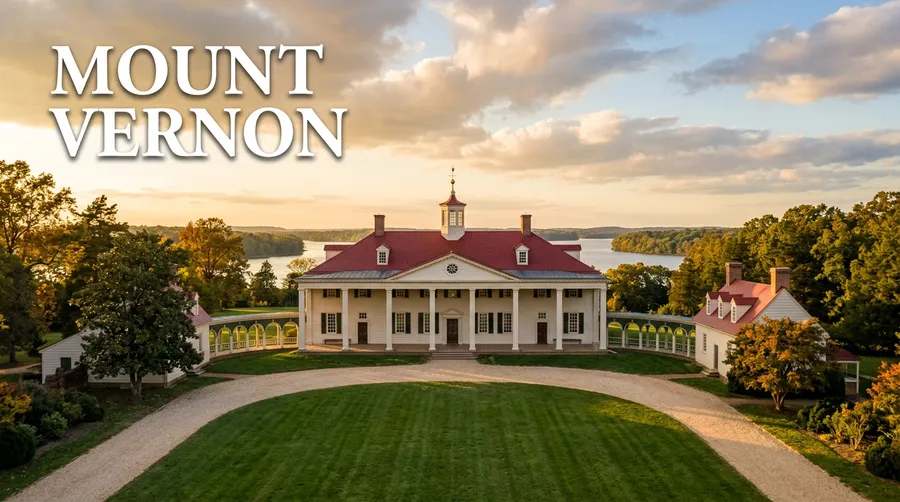
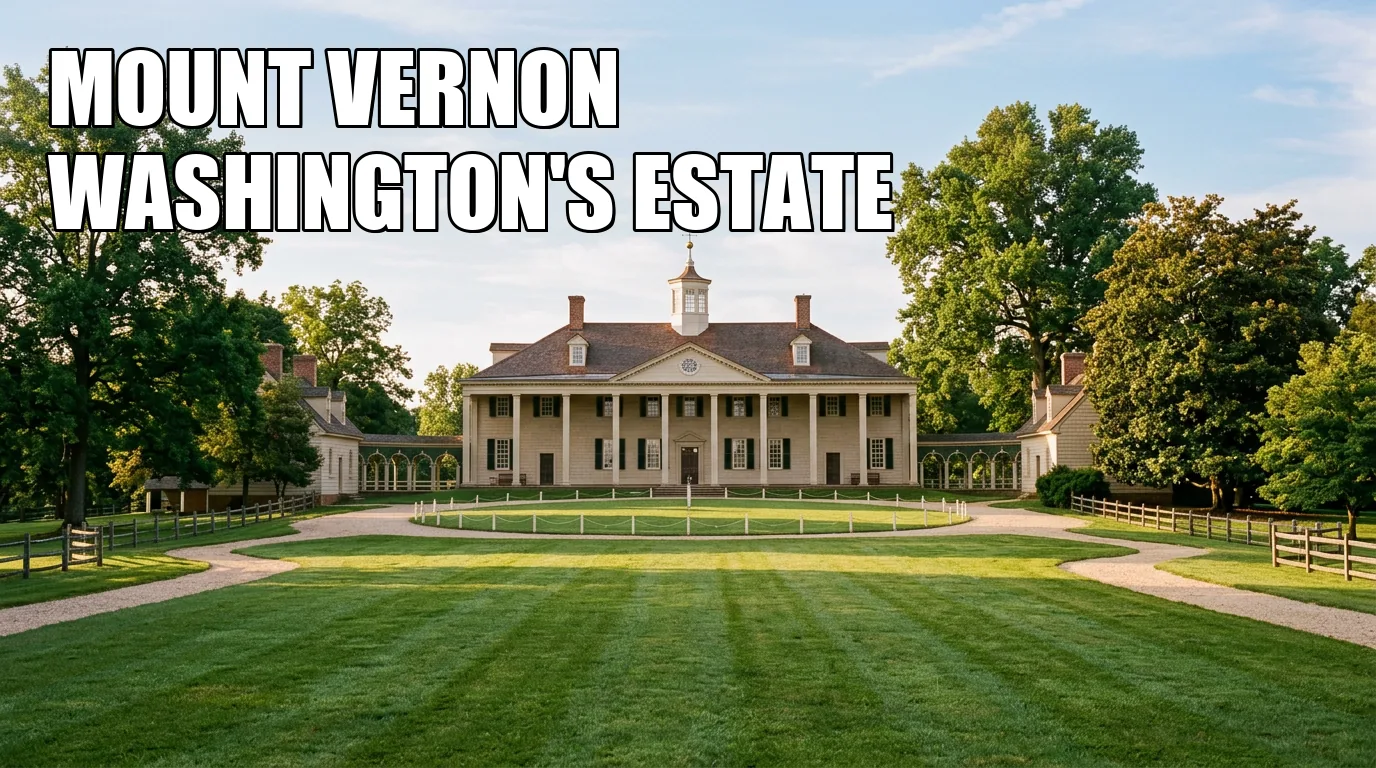
George Washington’s Mount Vernon, often pictured as the stately Palladian mansion overlooking the Potomac, is far more than just a grand estate. It’s a testament to an ambitious vision, a home that evolved dramatically from its modest origins. Started around 1734 by Washington’s father, Augustine, as a one-story structure, it was George Washington himself who orchestrated its transformation over several decades. He didn’t just live there; he designed, expanded, and continually refined it, culminating in the classical Palladian arrangement—a style emphasizing symmetry and classical proportions—we see today, complete with its iconic quadrant colonnades connecting to the main house. The finished 11,028-square-foot mansion, sprawling as it is, speaks volumes about his meticulous nature and his desire to project an image of prosperity and refinement.
Have you ever paused to truly appreciate the cupola, that octagonal tower gracing the mansion’s roofline? Most visitors admire its aesthetic charm, perhaps noting the dove-of-peace weathervane, designed by Washington himself in 1787. But here's a detail many guides gloss over: this wasn’t merely decorative. Aligned directly above the central staircase, its strategically placed windows created a powerful draft, functioning as an ingenious 18th-century air-conditioning system. Imagine the summer heat of the Potomac; this was pure practical genius, a subtle nod to Washington’s pragmatic engineering mind, even in architectural adornment.
One of the true gems of Mount Vernon, often less appreciated than it deserves, is the New Room. This isn’t merely another space; it’s the largest interior chamber in the mansion, nearly 700 square feet, added during the outset of the American Revolution. Washington intended it as a grand salon to impress and entertain, not a formal dining room as many might assume. Its neoclassical design, combined with distinctly American symbolism, tells a deeper story. Look up at the elaborate plaster ceiling, where you’ll find agricultural implements—rakes and scythes—a direct reflection of Washington's profound interest in American agriculture. The room’s centerpiece, the Vaughan Mantelpiece, a marble surround depicting pastoral life, was so intricate and costly that Washington initially objected, finding it "too elegant and costly by far." Yet, it stands as a central feature, bearing witness to a space where Washington's body lay for three days after his death in December 1799. To fully grasp Washington, linger here; it’s where his public and private aspirations converged.
Monticello: Jefferson’s Vision and its Hidden Contradictions
Thomas Jefferson’s Monticello, perched atop its "little mountain" in Virginia, is a breathtaking architectural autobiography, a physical manifestation of the polymath’s brilliant, yet often contradictory, mind. Jefferson famously designed Monticello himself, a project spanning from 1770 until its completion in 1809. What many don’t realize is how profoundly it evolved. He fused classical Palladian architecture—a style based on the principles of Venetian architect Andrea Palladio, known for symmetry and Roman temple forms—with French neoclassical influences gleaned from his time in Europe. The initial phase gave way to a dramatic reconstruction between 1793 and 1809, transforming the house’s exterior. It was during this period that Jefferson replaced the traditional two-story appearance with the illusion of a single-story residence, partly inspired by Paris’s Hôtel de Salm, creating a stark, elegant profile beneath an austere Doric entablature.
Beyond the visible grandeur, Monticello whispers tales of hidden efficiency and, disturbingly, concealed labor. Jefferson’s design employed a sophisticated system of concealed corridors and underground passageways, built for his enslaved workers. These hidden routes allowed staff to move about the house with remarkable efficiency, providing privacy for Jefferson and his guests while maintaining the illusion of a smoothly running household, seemingly unburdened by the constant presence of domestic staff. This architectural choice, while innovative, serves as a stark reminder of the uncomfortable truths embedded in the very foundations of Monticello and, indeed, the early American republic.
But let's talk about the Dome Room, Monticello's most distinctive and, frankly, most mysterious feature. This octagonal chamber on the third floor, a truly erudite space, was inspired by ancient Roman architecture as depicted in Palladio’s own books. You might not even see it on a standard tour, for good reason: it's accessed by two incredibly steep, narrow staircases, barely two feet wide. Jefferson imagined it as a lady's drawing room, a grand social space. Yet, it quickly proved "too inconvenient" and was "abandoned to miscellaneous purposes," eventually becoming little more than a storage room by his death. Painted in a striking Mars yellow distemper with an oil-based green checkered floor, and illuminated by eight circular windows and a grand oculus skylight, it’s a noble space begging for context. To truly appreciate Jefferson’s architectural ambition and its practical limitations, seek out one of the specialized behind-the-scenes tours that grant access to this often-overlooked enigma. It’s a powerful illustration of Jefferson’s ideals clashing with the realities of daily life.
Springfield's Lincoln Home: Where a Lawyer Became a President
The Lincoln Home in Springfield, Illinois, stands in sharp contrast to the sprawling estates of Washington and Jefferson. It’s not a grand, self-designed marvel, but a reflection of evolving American middle-class aspiration. Originally built in 1839 as a modest one-and-a-half-story Greek Revival dwelling—a style characterized by classical proportions and often columned porches—it was here, in 1844, that Abraham Lincoln purchased the house for a mere $1,500. His family’s growing needs soon prompted significant changes. Between 1855 and 1856, the Lincolns added a complete second story, expanding the home to accommodate three new bedrooms and a "his and hers" master suite. Mary Lincoln, ever particular, even divided the large kitchen into a formal dining room and a separate kitchen, believing her sons wouldn't learn proper manners eating in the same space where food was prepared. These personal touches, these domestic upgrades, paint a vivid picture of a family striving for respectability and comfort in an evolving frontier city.
While many visitors understandably gravitate towards the family’s private living quarters—the bedrooms, the nursery—the Front Parlor holds an extraordinary, yet often understated, historical weight. It was in this very room, on May 19, 1860, that Lincoln received the formal offer from the Republican National Committee to become their presidential candidate. Imagine the scene: the ornate furnishings, deliberately chosen for formal entertaining, perhaps the boys warned to stay clear, and then, this life-altering news delivered to a man who would soon guide the nation through its darkest hour. Four days later, from this same parlor, Lincoln penned his acceptance letter, setting in motion his journey from Springfield lawyer to the sixteenth President of the United States. It's a moment that deserves more recognition than it often gets, a pivotal turning point encapsulated within these quiet walls.
Beyond the political triumphs, the Lincoln Home also cradled profound personal sorrow. It was within these walls that the Lincolns endured the agonizing loss of their second son, Edward "Eddie" Baker Lincoln, who succumbed to illness—likely tuberculosis—in February 1850, just shy of his fourth birthday. His illness lasted fifty-two days, a period of immense grief that devastated both parents, especially Mary. Eddie’s funeral was held right there, in the family home. This deeply personal tragedy, the precursor to future heartbreaks for the Lincolns, offers a poignant glimpse into the family’s emotional life, a dimension often lost amidst the grandeur of Lincoln’s public persona. Don't let the simplicity of the home fool you; it was a stage for both monumental national decisions and intimate human suffering.
Beyond the Postcard: Seeing America’s Presidential Homes Anew
Visiting these homes isn’t just about ticking boxes on a historical itinerary; it’s about engaging with the messy, complex, and deeply human stories that shaped America. George Washington's Mount Vernon reveals a man of meticulous design and practical ingenuity, evident even in his climate control solutions. Thomas Jefferson’s Monticello, a monument to intellectual curiosity, simultaneously exposes the inherent contradictions of a republic built on enslaved labor, and the practical challenges of even a genius's grandest designs. And Abraham Lincoln’s Springfield home strips away the myth, showing us a lawyer, a father, a husband, grappling with personal loss and momentous political calls in a relatively humble setting.
Next time you plan a trip to one of these iconic sites, consider straying from the beaten path. Arrive early to avoid the peak season crowds, perhaps focusing your visit on quieter weekdays in the spring or fall. Look for those specialized tours that grant access to hidden chambers like Monticello's Dome Room, or ask your guide specifically about the less-emphasized narratives, like the true function of Mount Vernon's New Room or the profound significance of Lincoln’s Front Parlor. These small shifts in perspective can transform a standard historical visit into a profound journey, allowing you to connect with the very essence of American leadership and the human spirit that defined it. You might just find the real story is far more compelling than any textbook ever let on.