Film & TV Locations

Beyond the Hype: Timberline Lodge's True Shining Story

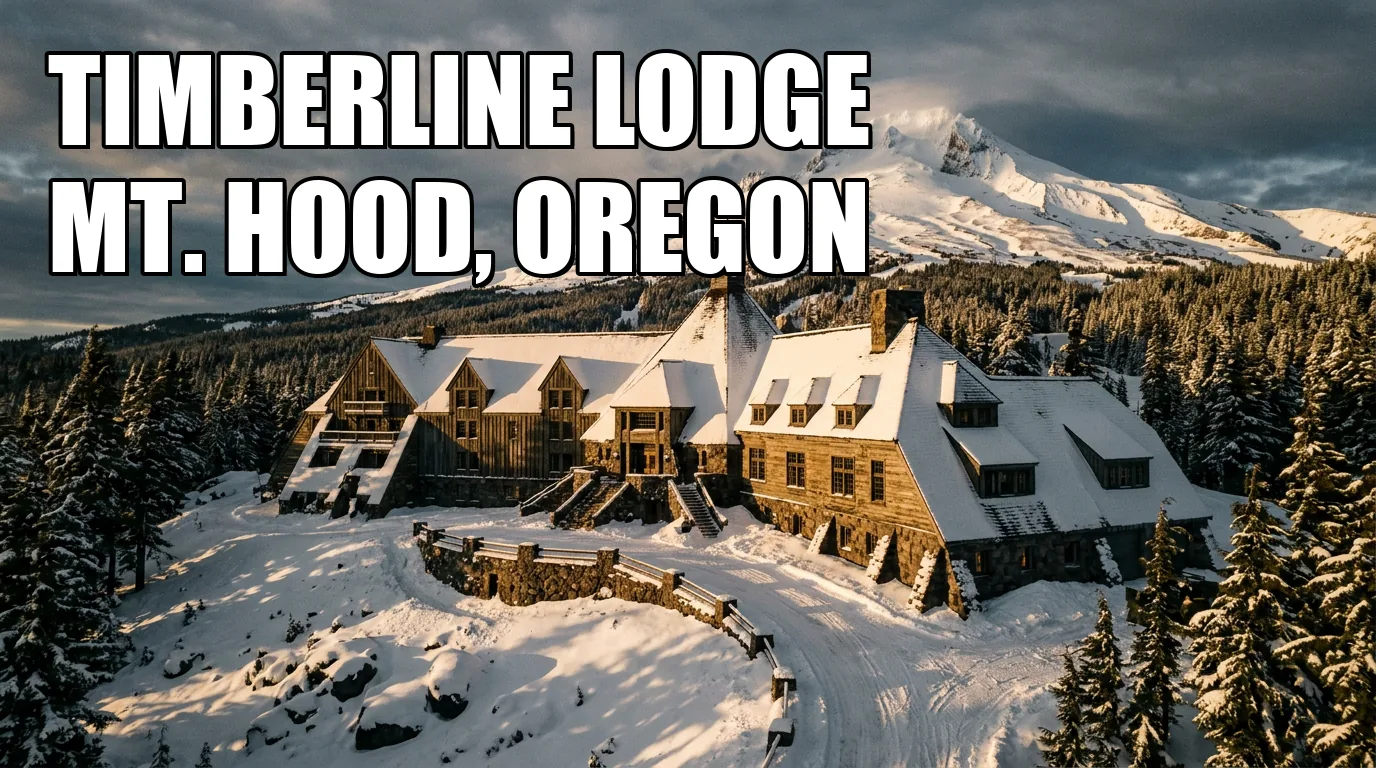
You’ve seen it, even if you don't realize it: that imposing, snow-capped edifice, a bastion of isolation clinging to a mountainside, perfectly framed in the opening sequence of Stanley Kubrick's 1980 masterpiece, *The Shining*. For many, Timberline Lodge on Mount Hood *is* the Overlook Hotel. This perception, however, is where the cinematic magic ends and the intriguing reality begins. As someone who's chased film locations and historical echoes across continents, I can tell you that few sites are as misunderstood—or as genuinely compelling—as this grand Oregon lodge.

Perched majestically at 6,000 feet in Oregon's Clackamas County, the lodge’s distinct rustic architecture and commanding presence made it an ideal stand-in for the exterior shots of the fictional Overlook. A second-unit crew, under the direction of Jan Harlan, captured those iconic aerials and establishing glimpses. But here's the crucial detail that often gets lost in the fan frenzy: only the exterior was used. Every chilling corridor, every cavernous lounge, every blood-soaked elevator was a meticulously crafted soundstage at Elstree Studios in England. Kubrick, a master of control, didn't want the logistical headaches of filming interiors on location. So, while you gaze upon the very walls that housed Jack Torrance's descent into madness in those exterior frames, remember that the true dread of the film was built, not found, within this building.

What the Room Number Controversy Really Tells Us

Walk into Timberline Lodge today, and you'll find a palpable curiosity surrounding its guest rooms, particularly one specific number. It’s a curious phenomenon rooted in a fascinating negotiation between a horror legend and a pragmatic hotel management. Stephen King’s original 1977 novel, *The Shining*, famously featured the genuinely haunted Room 217, a detail pulled directly from his own terrifying stay at the Stanley Hotel in Colorado. When Kubrick approached Timberline Lodge for filming, management, understandably wary of guests avoiding a real room associated with a horrific fictional death, requested a change. They suggested a fictional number—237, 247, or 257—that didn't actually exist within the lodge.

Kubrick, ever the iconoclast, settled on 237. Was it just a random choice? Perhaps not. The number 237 had appeared in his earlier film, the chilling Cold War satire *Dr. Strangelove*, where it represented a code for nuclear war. A subtle, almost mischievous nod from the director. The lodge's strategy, designed to protect Room 217 from its fictional notoriety, ironically backfired in the most spectacular fashion imaginable. Rather than guests shunning it, Room 217 at Timberline Lodge became the *most requested* room, a macabre badge of honor for those seeking a brush with the fictional paranormal. This isn't just a quirky anecdote; it highlights the enduring power of King's narrative and the film's influence, overriding practical concerns and even the actual facts of the location.

Don't Confuse the Mountain Lodge with King's True Muse

Any discussion of *The Shining* and its real-world inspirations must draw a sharp distinction between Timberline Lodge and the Stanley Hotel. It's a critical piece of context many casual fans overlook. Stephen King, the architect of the Overlook's terror, never once stayed at Timberline Lodge. His terrifying epiphany, the spark for his seminal novel, occurred on October 30, 1974, at the Stanley Hotel in Estes Park, Colorado. He and his wife Tabitha were the only guests that night, just before the hotel closed for the winter season. He roamed its empty corridors, shared a drink with a bartender named Grady (a name that would later become infamous), and experienced the chilling atmosphere that birthed his vision. The Stanley, with its genuine history of paranormal reports and its specific Room 217 incident (a gas lantern explosion in 1911 involving head housekeeper Mrs. Elizabeth Wilson), is the true spectral muse. Timberline Lodge, for all its cinematic fame, remains a distant, though beautiful, cousin to King's original haunted house.

Deciphering Timberline's "Hauntings": Fact vs. Folklore

Given its connection to *The Shining*, it's no surprise that Timberline Lodge has accumulated its own share of "haunted" lore. Popular culture often paints it as a genuinely spooky place, but a closer look reveals something more akin to charming campfire tales than documented spectral phenomena. While the lodge is frequently referenced as haunted, specific, well-substantiated paranormal incidents are surprisingly scarce, especially when compared to the Stanley Hotel's robust collection of stories. What you'll hear are whispers of general ghostly activity, particularly in the older sections of the building and on the second floor. Some visitors claim the First Aid Room harbors the spirits of unfortunate skiers, hikers, and climbers who perished on Mount Hood – a grim, but understandable, association given the mountain’s inherent dangers.

Other tales speak of a ghostly maid carrying linens through hallways late at night, a child's laughter echoing through corridors, or strange creaking noises emanating from the attic. One recounted incident from 1997 involved a visitor's "sensitive" wife becoming nauseated on the second floor and claiming to see a disfigured woman in a bathroom mirror. These stories, while intriguing, lack the concrete historical anchors – specific deaths, dates, or named individuals – that lend gravitas to hauntings at places like the Stanley. Timberline Lodge, built between 1936 and 1938 by hundreds of Depression-era workers as a WPA project, has a rich human history, but no widely documented construction fatalities are linked to specific ghost stories. It’s a distinction worth making: the lodge’s "hauntings" seem more a product of its cinematic fame and majestic isolation than any deeply embedded, verifiable spectral history. It's a place where the power of suggestion often outweighs documented evidence, inviting visitors to project their own fears and expectations onto its venerable walls.

Planning Your Pilgrimage: Beyond the Overlook's Shadow

So, you've decided to visit Timberline Lodge, whether to chase cinematic ghosts or simply to bask in its undeniable natural beauty and historical significance. What should you actually expect? First, understand that while *The Shining* is a significant draw, it’s far from the only reason this lodge thrives. It's a fully operational ski resort, a popular wedding venue, and a historic landmark in its own right, designated a National Historic Landmark in 1977. This means you'll encounter a diverse crowd, from avid skiers to history buffs and, yes, plenty of *Shining* fans.

If you're truly dedicated to the film connection, consider their annual Halloween Shining Event, which typically offers special rates (often around $237.00 to $272.37) that include a room, "Jack Torrance" signature cocktails, and a film screening in the Barlow Room at 10 PM. The Family Fright Night, usually held in late October (e.g., October 24, 2025), offers a more family-friendly take with scavenger hunts and costume contests. For specific bookings, especially if you're targeting that infamous Room 217, you need to be direct and book well in advance. Standard room rates generally fall between $200-$350 per night, but expect higher prices during peak ski season weekends and holidays. January 2025, for instance, saw most special packages unavailable during the "Winter Break blackout period" (December 20, 2024 - January 2, 2025), so calling the lodge directly at 503-272-3311 for real-time availability and pricing is always your best bet. Avoid showing up unannounced hoping for a deal, especially during winter months; this isn't a sleepy roadside motel. If you're staying overnight, don't miss the opportunity to request a screening of *The Shining* after 10:30 PM, a fun, if slightly unnerving, lodge tradition.

Beyond the film, take advantage of ranger-led historical tours and guided hikes available year-round. These tours offer invaluable context about the lodge’s construction during the Great Depression by the Civilian Conservation Corps (CCC) and Works Progress Administration (WPA), showcasing the incredible craftsmanship and ingenuity that went into its creation. It’s an architectural marvel, a testament to American ingenuity and public works projects, far removed from any fictional horror. The lodge's interior, while not Kubrick’s Overlook, boasts stunning timber work, enormous stone fireplaces, and intricate carvings that are a joy to discover. You’ll find details that inspire awe, not just dread. So, come for the *Shining* connection, absolutely, but stay for the history, the outdoor adventure, and the truly magnificent setting that offers panoramic views of Mount Hood's glaciers and the surrounding wilderness. You'll leave with a far richer appreciation for Timberline Lodge's multifaceted identity.

Ultimate Guide to Visiting The Shining Film Locations

Was Timberline Lodge used in The Shining?
Yes, Timberline Lodge served as the exterior filming location for the fictional Overlook Hotel in Stanley Kubrick's 1980 film adaptation of The Shining, making it instantly recognizable to fans of the movie.
What is special about Timberline Lodge?
Built in 1936-37, Timberline Lodge is a historic mountain resort at Mount Hood that combines architectural significance with its role in horror cinema; today it offers year-round activities, special Shining-themed events, and free ranger-led tours about its history and filming locations.
What happened in Room 237 at the Stanley Hotel?
The room that inspired Stephen King's novel is actually Room 217 at the Stanley Hotel; in the 1920s, a gas leak caused an explosion that damaged the second floor above the main dining hall and nearly killed a maid.
Can I visit the hotel from The Shining?
Yes, you can visit both Timberline Lodge in Oregon (exterior filming location) and the Stanley Hotel in Colorado (King's inspiration), both of which offer tours and overnight accommodations to guests.
Is The Shining Tour worth it?
The Shining Tour at Stanley Hotel costs approximately $30 per person for a 60-minute indoor/outdoor walking tour covering the film's history and inspiration, featuring visits to the Stephen King Suite and recreated bathroom scene from the movie.
Did Jim Carrey stay at The Shining hotel?
Yes, Jim Carrey stayed in Room 217 at the Stanley Hotel during the filming of Dumb and Dumber in 1994, but reportedly lasted only 3 hours before leaving the hotel in the middle of the night and has never returned.
Can you visit the Stanley Hotel without paying for a tour?
Yes, visitors can freely explore the public areas of the Stanley Hotel including the lobby, lower level, and grounds without purchasing a tour ticket, though guided tours require separate payment ($25-30).
Does the hotel in The Shining exist?
The fictional Overlook Hotel doesn't exist as a single physical structure; Kubrick used Timberline Lodge for exteriors and recreated interiors at Elstree Studios in England, drawing design inspiration from California's Ahwahnee Hotel in Yosemite.
Can you tour the Stanley Hotel on your own?
Yes, you can self-explore the lower level and public areas of the Stanley Hotel independently to view historical artifacts and timelines, though official guided tours are also available for more comprehensive information.
What is the Timberline Lodge Shining experience?
Timberline Lodge offers a special Shining Halloween Package that includes accommodations, signature Jack Torrance cocktails from the movie, and a screening of the film, allowing visitors to immerse themselves in the movie's atmosphere at the actual filming location.
How far is Stanley Hotel from Denver?
The Stanley Hotel is located approximately 65 miles from Denver, with a driving time of 1.5 to 2 hours via US-36, making it an accessible day trip or weekend destination from the Colorado capital.
What are the costs to stay at Timberline Lodge in 2025?
Room rates at Timberline Lodge start around $240-300+ per night depending on room type and season, with additional charges for extra guests over two people; special Shining-themed package rates are available during Halloween season.
How do I get to Timberline Lodge from Portland?
From Portland, Timberline Lodge is approximately 60 miles away via I-84 East to US-26 East (about 1.5 hours by car), or accessible via public transit using the MAX tram and Mt. Hood Express bus (approximately 3-4 hours total).
What is the best time to visit The Shining filming locations?
October around Halloween is ideal for themed events and atmosphere, though late spring to early fall offers pleasant weather and fewer crowds; Stanley Hotel tours operate year-round, while Timberline offers winter skiing and summer mountain activities.
Why was Timberline Lodge used for The Shining exteriors instead of the Stanley Hotel?
Director Stanley Kubrick chose Timberline Lodge's striking architecture and Mount Hood setting for exterior shots because it provided the visual impact he desired, though Stephen King's novel was inspired by his 1974 visit to the Stanley Hotel in Colorado.