Stepping into the vast, silent expanse of Death Valley or standing beneath the ancient redwoods, it’s easy to feel a whisper of the cinematic magic that once transformed these American landscapes into alien worlds. Yet, even among the most ardent fans, a surprising number of misconceptions persist about where George Lucas’s original vision actually took root. Before we delve into the tangible, breathtaking sites you *can* visit, let’s clear the sand-swept air on a couple of persistent myths.
How many times have you heard fellow fans excitedly discuss visiting "Beggars Canyon" or seeking out the "Tall Trees Grove" in Redwood National Park as Endor? I’ve lost count. Here’s the blunt truth, which might deflate a few balloons but ultimately points you toward genuine cinematic history: Beggars Canyon is entirely fictional. Luke Skywalker flew T-16s through it in dialogue, yes, and later animated series and prequels have conjured its image, but no real-world canyon ever hosted R2-D2’s solo journey or served as a backdrop for T-16s. And as for Tall Trees Grove, while undeniably stunning, it wasn't the particular slice of redwood forest that became the moon of Endor. Typical guidebooks often gloss over these finer points, perpetuating an understandable, if inaccurate, legend. My aim is to set the record straight, guiding you to the actual dirt and dust where the magic happened.
Death Valley's Gritty Debut: More Than Just a Backdrop?
January 1977. That’s the key date. While the bulk of A New Hope's Tatooine scenes were famously shot in Tunisia, a small, intrepid crew ventured into Death Valley for crucial pickup shots. These weren't the main course, mind you, but essential seasoning to flesh out the vastness of Tatooine. It’s a detail often overlooked by those who assume every desert shot was North African. Understanding this specific timeframe helps you appreciate the challenging conditions, especially given the unexpected drama that unfolded.
My first visit to Death Valley, seeking out these very spots, was a revelation. You expect heat and stark beauty, but you don't fully grasp the scale until you're there. The
Artist's Palette, with its vibrant, mineral-streaked hills, provided the arroyo north of the parking lot where R2-D2 made his lonely, rolling odyssey. It's a striking location, especially near sunset when the colors truly pop. The scene, which sees the intrepid droid trundling through a narrow desert canyon, was later expanded and enhanced for the 1997 Special Edition, making this particular spot even more iconic for its subtle yet pivotal role.
Just a short drive away, the ominous shadows and jagged formations of
Golden Canyon played host to the skulking Jawas, those diminutive scavengers peeking from beneath rocks as they tracked R2-D2. You can almost hear their chattering as you wander through the winding paths.
Desolation Canyon, remarkably, is where the infamous Tusken Raider attack—featuring Mardji the elephant in her rather cumbersome Bantha costume—unfolded. The mid-January 1977 shoot for this sequence presented its own unique challenges. Mardji, a 22-year-old Asian elephant borrowed from Marine World Africa U.S.A., endured a heavy, foam-sprayed chicken wire head mask and a tail that proved quite problematic to drag. Despite the heat and her unwieldy attire, she remained good-natured, often rewarded with apples between takes. It’s a testament to the animal actors, and the crew's ingenuity, that such a fantastical creature could be brought to life so convincingly with such practical effects. This scene, particularly the "bantha" encounter, is one of those delightful production anecdotes that a standard location guide would never bother to include.
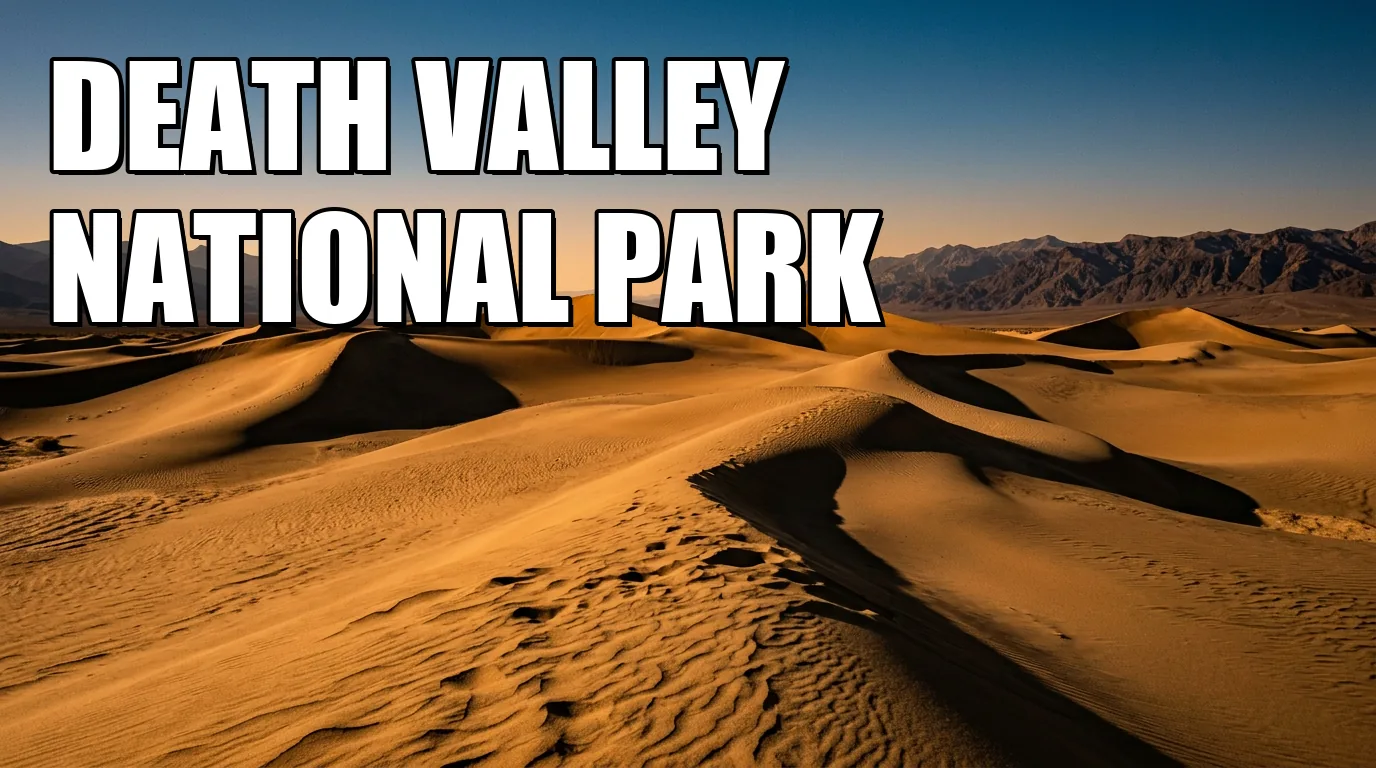
Venturing further, the vast, undulating
Mesquite Flat Sand Dunes at Stovepipe Wells became the desolate expanse traversed by R2-D2 and C-3PO after their escape pod crash. Standing atop these dunes, particularly at dawn, offers a genuine sense of alien isolation that makes you understand why Lucas chose it. Finally, the panoramic vista from
Dante's View served as the Mos Eisley overlook, providing the sweeping, bird's-eye perspective of Luke’s home planet that framed the spaceport’s fictional grandeur. It's a breathtaking spot regardless of its cinematic connection, but knowing you're looking out over "Tatooine" adds a layer of sublime wonder.
Tragically, the Death Valley shoot for A New Hope wasn't without its harrowing real-world drama. Just days before the crew was to depart, on January 11, 1977, Mark Hamill (Luke Skywalker) was involved in a severe car accident, suffering a fractured nose and cheekbone that required reconstructive surgery. Driving himself to the location, he lost control on an off-ramp at high speed. The gravity of his injuries meant producer Gary Kurtz visited him in Mount Sinai Hospital after a grueling seven-hour surgery, where Hamill, perhaps still disoriented, reportedly said, "I'm sorry I got delayed. As soon as I get out of here this morning, we can go." This forced George Lucas to continue without his star, relying on a double for landspeeder shots and losing crucial close-ups. It’s a stark, often forgotten reminder of the fragile balance between moviemaking ambition and human vulnerability.
Endor's Shifting Ground: What Remains of the Redwood Forests?
Fast forward to Return of the Jedi, and the forested moon of Endor. Filming commenced between January and May of 1982, primarily within the ancient redwood forests of Northern California. What many fans don't realize, however, is that one of the most significant Endor locations has, sadly, been irrevocably altered. The
Miller-Rellim Redwood Company Property, near Morrison Creek Road in Smith River, California, hosted the bulk of the forest battle sequences and many of the Ewok village scenes. Today, this specific area has been clearcut. Standing at its former coordinates (41°54'49.2"N, 124°07'31.4"W), one can only imagine the towering giants that once stood, a sobering reminder of how fleeting even cinematic immortality can be when faced with industrial logging. It’s a poignant juxtaposition: the pristine alien world of Endor, now a ghost of its former self, a silent monument to what was.
Fortunately, one crucial piece of Endor remains wonderfully accessible:
Owen R. Cheatham Grove in Grizzly Creek Redwoods State Park, near Carlotta, California. This is where the iconic speeder bike chase sequences were filmed, a true masterpiece of cinematic illusion and physical endurance. This grove stands as the only publicly accessible Endor forest location that still retains its original, majestic state. Visiting this specific grove offers a rare opportunity to literally walk in the footsteps of rebels and Imperial scouts, feeling the scale of the trees that dwarfed even the most intimidating Imperial technology.
The Impossible Chase: Deconstructing Endor's Speeders
The speeder bike chase through Endor's dense forests is arguably one of the most thrilling action sequences in cinematic history, a visceral, dizzying ballet of speed and precision. Yet, the reality of its creation, which few guides bother to explain, is far more painstaking and ingenious than most imagine. No, they didn't just strap cameras onto dirtbikes and speed up the footage; that would have produced an unwatchable, jostling mess. Instead, cinematographer Garrett Brown, the inventor of the Steadicam, performed what he described as one of the most demanding Steadicam shots ever. He walked through the dense undergrowth of Owen Cheatham Grove, not at a run, but at an excruciatingly slow pace – approximately 3/4 of a frame per second. Think about that for a moment: every thousand feet of precise, measured walking yielded only sixteen feet of finished film. It's a level of dedication that beggars belief, transforming agonizing slowness into breakneck speed on screen.
Brown’s own recollections paint a vivid picture of the sheer mental and physical strain involved. "My left hand is slippery with sweat. Legs tired. Brain hurts most of all," he recounted, detailing the five simultaneous tasks he had to master for each take: navigating the forest, framing distant targets, maintaining camera level and height, and staying aligned with guide threads. To achieve the illusion, he wore two gyroscopes, while visual effects supervisor Dennis Muren and assistant cameraman Michael Owens provided constant, real-time directional feedback. This wasn’t simply filming; it was a grueling, balletic performance in itself, a testament to human ingenuity transforming the slow, deliberate effort into cinematic exhilaration. When you re-watch that chase, you're not just seeing actors, but the ghost of Brown’s almost meditative, agonizingly slow walk, a process that makes the final result all the more miraculous. It challenges the conventional wisdom that all movie magic is digital trickery; sometimes, it's just pure, unadulterated human effort.
Death Valley's Unexpected Return: A Second Act for the Droids
Death Valley wasn't done with Star Wars after A New Hope. On December 11, 1982, Director Richard Marquand, George Lucas, and actor Anthony Daniels (C-3PO) returned to the desert's stark beauty. This time,
Twenty Mule Team Canyon served as the backdrop for the droids' journey towards Jabba's palace in Return of the Jedi. The palace itself, of course, was a matte painting, seamlessly composited using the "original negative" matte method—an early, ingenious technique that married live-action droids with artwork directly in-camera. It’s a remarkable example of pre-CGI wizardry, showcasing how early filmmakers layered reality and fantasy with meticulous precision.
Daniels himself recalled the excitement of relying on R2-D2's reliable radio-controlled performance by David Schaeffer during this shoot, though a momentary panic ensued when military jets from nearby Edwards Air Force Base interfered with the signal. The playful dynamic between Lucas and Marquand, who jokingly disagreed on "Cut" calls, offers a glimpse into the camaraderie of the crew, even amidst the desert's harsh demands. A deleted scene from this location, showing Luke completing his lightsaber in a cave, is now inaccessible as the park service has closed the cave for safety reasons—a practical issue that often goes unmentioned in general tourist guides. It's a reminder that even cinematic landscapes are subject to the real-world concerns of preservation and safety.
Planning Your Pilgrimage to a Galaxy Not So Far Away
Visiting these iconic American Star Wars locations demands planning, especially if you want to avoid the crowds and the harshest conditions. For Death Valley, I wholeheartedly recommend visiting between November and March. The summer months, with temperatures regularly soaring past 120°F (49°C), are not just uncomfortable, but genuinely dangerous for extended outdoor activity. Expect some crowds, particularly during holiday weekends, so an early morning start is always best to capture the serene beauty and beat the rush to popular spots like Dante's View. There are entrance fees for Death Valley National Park (currently around $30 per vehicle for 7 days), but parking is generally plentiful and free at specific trailheads and overlooks.
For the Redwood forests, particularly Owen R. Cheatham Grove in Grizzly Creek Redwoods State Park, late spring or early fall (April-May or September-October) offers the most pleasant weather, with fewer visitors than the peak summer season. Admission fees for California State Parks vary, often around $8-$10 per vehicle for day use. Weekday visits will always provide a more tranquil, immersive experience, allowing you to truly appreciate the towering stillness of Endor without a constant stream of fellow pilgrims. While one significant Endor location is lost to logging, the remaining grove is a powerful, tangible link to cinematic history, a place where the lines between fiction and awe-inspiring nature wonderfully blur. It's a journey not just for fans, but for anyone who appreciates the monumental effort behind movie magic and the enduring power of America's wild landscapes.