For those of us who’ve spent a lifetime wandering the backroads and byways of this nation, the true heartbeat of America often isn't found in the grand monuments or the polished museum wings of our celebrated metropolises. It emerges, instead, from the quieter corners, from sites that challenge our preconceptions and force us to reckon with a past far more complex than any textbook might suggest. As the nation gears up for its Semiquincentennial – that looming 250th anniversary – the real work, I think, lies not just in commemorating the familiar, but in actively seeking out the undercurrents, the struggles, and the often-uncomfortable truths that shaped our shared story. It’s an exercise in humility and a deeply rewarding pursuit for any curious traveler.
Near Philadelphia, a region teeming with historical resonance, I recently revisited a trio of sites that, while distinct in their narratives, collectively paint a richer, more textured portrait of the American experience. They speak to industrial might and its human cost, to the relentless pursuit of justice, and to the unwavering fight for equality. What’s particularly fascinating is how their stories are told, or perhaps, what’s left unsaid, revealing a compelling interplay between federal oversight and local passion.
Paterson's Roar: Where Industry Forged Fortunes and Fractured Lives
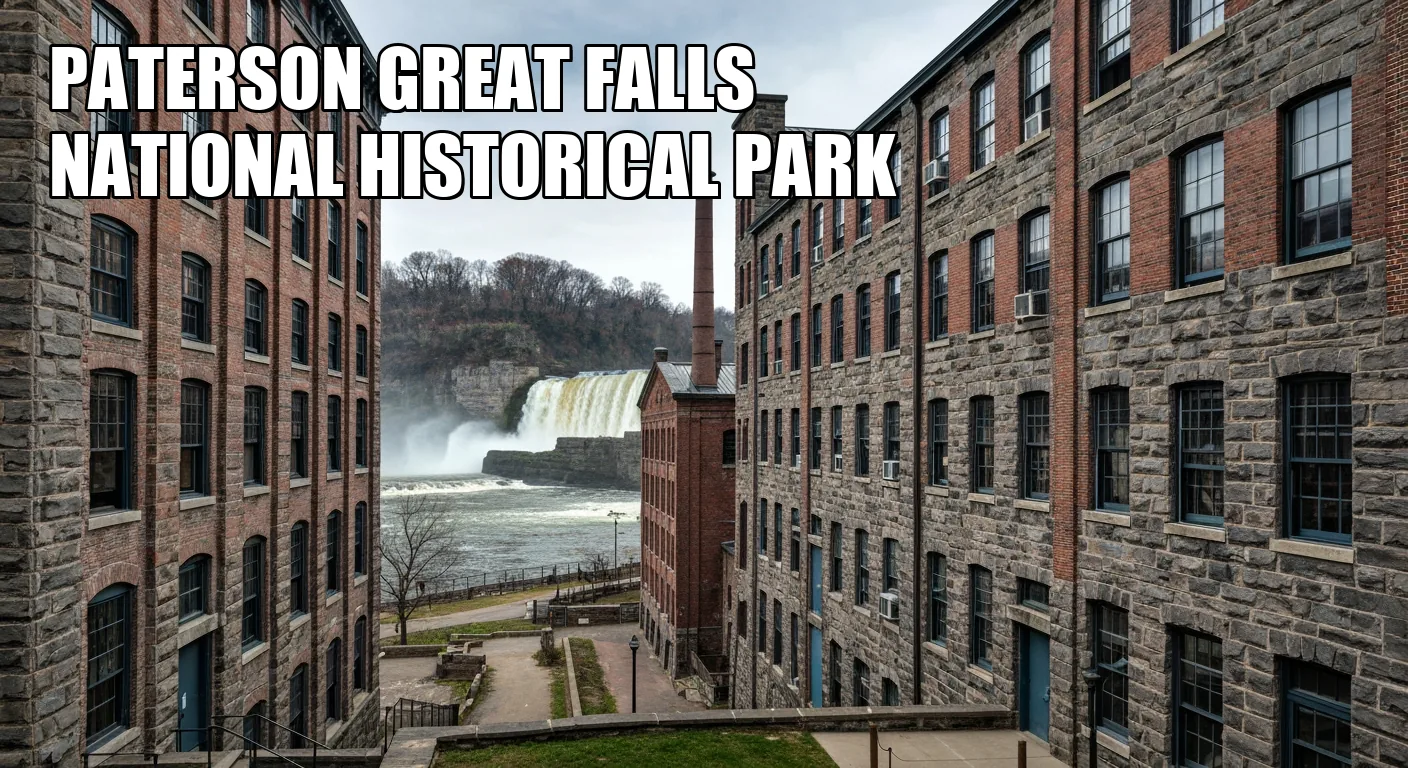
Imagine the audacious vision of Alexander Hamilton: a planned industrial city, powered by one of nature's marvels. That's the genesis of Paterson Great Falls National Historical Park in New Jersey, a mere 90-minute drive northwest of Philadelphia. It’s a place where the thundering power of the Passaic River’s Great Falls, a truly spectacular natural phenomenon, was harnessed to fuel America's first planned industrial city under Hamilton’s Society for Establishing Useful Manufactures. Here, in the late 18th century, waterpower became the engine of capitalism, sparking a revolution that transformed the very fabric of American society.
Walking through the remnants of the mill raceways, canals, and brick factories, you can almost hear the clamor of the looms and the shouts of the workers. This isn’t just a story about innovation; it’s profoundly about labor and immigrant histories. Paterson became a melting pot, drawing waves of immigrants who toiled in the mills, often under grueling conditions. The federal stewardship here, under the National Park Service, offers a robust and refreshingly candid narrative. Ranger-led programs don’t shy away from discussing the exploitation of these early industrial workers or the significant environmental impacts of unchecked industry – a nuance often glossed over in more sanitized versions of history.
What really sets Paterson apart in terms of interpretation is its embrace of technology. While the sheer scale of the falls and the preserved industrial architecture are powerful enough on their own, the park is rolling out some truly forward-thinking digital tools. As of early 2025, you can already access Virtual Ranger Talks and interactive 3-D maps online, which are invaluable for remote learning or as pre-visit context. They're also piloting an augmented reality (AR) app, which promises to overlay historic mill operations onto your live view of the physical site. Picture seeing the ghostly gears turning, the bustling workers, right there on your smartphone screen. It's a game-changer for bringing history to life, transforming static ruins into dynamic windows to the past. This level of digital engagement, especially one so thoughtfully designed to contextualize a complex history, isn't something you find everywhere.
Crucially, the preservation here is top-notch, benefiting from stable National Park Service funding. A substantial $5.8 million Service Corps investment recently supported infrastructure and accessibility, ensuring these significant structures stand for future generations. Ongoing masonry stabilization and waterpower raceway conservation efforts are meticulous, maintaining the integrity of the site's original purpose. This comprehensive approach, funded at a national level, allows for a broader, more inclusive historical lens, integrating multiple stakeholder voices from capital to labor, from innovation to environmental justice.
The Ghost of Jim Thorpe's Jail: A Handprint, A Legend, and Lingering Doubts
Just a bit further afield, about a two-hour drive north of Philadelphia, lies Jim Thorpe, Pennsylvania – a picturesque town with a decidedly grim heart: the Old Jail Museum. This isn't your typical historical society; it’s the imposing stone structure where, in 1877, members of the Molly Maguires, a secret society of Irish coal miners, were imprisoned and ultimately executed. Their story is central to Irish-American labor history and, more poignantly, to the enduring question of justice. Was their conviction fair, or were they martyrs sacrificed to break the burgeoning power of organized labor?
Stepping inside, you're immediately struck by the raw, unvarnished nature of the place. The stone walls feel heavy with history, but it’s the legendary handprint on a cell wall – said to belong to one of the Mollies, who swore his innocence with a defiant slap – that truly arrests you. It's a stark, visceral emblem of contested trial fairness, a smudge of history that screams injustice more loudly than any placard. This potent symbol anchors the entire experience, drawing visitors into a narrative steeped in local lore and fierce community pride. Yet, it also highlights a critical difference in historical interpretation: what happens when a local legend, however compelling, overshadows the broader historical context?
The digital interpretation here is, frankly, sparse. You’ll find a self-guided audio tour available via QR code, which is helpful, but it's a far cry from the immersive experiences offered at federally funded sites. There's no AR/VR, no interactive overlays beyond the audio track telling you where to look next. While occasional docent-led ghost tours dramatize the miners' experiences, they tend to lean into the romanticized heroism of the Mollies, sometimes glossing over the legal complexities and historical ambiguities that surround their trials. This often leaves visitors with a powerful emotional experience, but perhaps less critical analysis than the story deserves.
Preservation at the Old Jail is a constant uphill battle. Operated by a local historical society with limited budgets, the exterior stone walls are admirably maintained, but the interior exhibits show noticeable wear. Artifact conservation relies heavily on seasonal grants and volunteer labor, and crucially, climate control is inadequate for archival materials, posing a real risk to delicate documents and textiles. This paints a vivid picture of the challenges smaller, community-run sites face: passion and dedication are abundant, but resources often fall short, impacting the depth and breadth of their storytelling. It’s a sobering reminder that history itself needs constant, well-funded care.
Dover's Quiet Resolve: Unearthing Women's Voices on the Suffrage Trail
Journeying southwest of Philadelphia, roughly a 130-mile trek, brings you to Dover, Delaware, and its unassuming Old State House. While not as dramatic as Paterson’s falls or Jim Thorpe’s jail, this elegant building played an absolutely crucial role in the Mid-Atlantic’s struggle for women's suffrage. Between 1909 and 1920, it served as a primary venue for early Delaware Woman Suffrage Association meetings, making it a key, albeit under-recognized, site in the national campaign for enfranchisement. It's a testament to the fact that monumental change often begins in quiet, local gatherings, not always on grand national stages.
The Old State House's approach to digital interpretation is thoughtful and accessible. They've installed QR-coded panels that link directly to a mobile-friendly website featuring oral histories of Delaware suffragists and interactive timelines. This allows visitors to delve deeper into the personal stories and political machinations of the movement, right on their smartphones. While not yet as visually immersive as Paterson's AR plans, these digital resources provide invaluable context, connecting the physical space to the voices of those who walked its halls. They are also developing an AR overlay to show period photographs on the building’s façade, which will undoubtedly enhance the visual narrative and transport visitors back in time.
Unlike the Old Jail, the Old State House benefits from state management and recent refurbishment thanks to Historic Preservation Fund grants. The interior plasterwork and original gallery have been meticulously restored, and more importantly for archival materials, robust climate control is maintained for fragile suffrage pamphlets and textiles. This meticulous care underscores the importance of institutional backing in preserving not just structures, but the delicate evidence of past struggles. It means that future generations will have access to the physical artifacts that directly link us to the suffragists’ unwavering fight.
State curators here navigate a delicate balance. Their exhibits foreground Delaware-specific stories, including the often-overlooked roles of Black women in the local movement. However, they must also contend with frustrating gaps in surviving documentation – a common challenge when trying to reconstruct marginalized histories. The narrative successfully balances celebratory milestones of suffrage with an honest acknowledgment of the exclusionary practices prevalent in early 20th-century organizing, particularly concerning race and class. This nuanced approach, acknowledging both triumph and imperfection, makes for a more honest and ultimately more powerful historical experience.
Beyond the Brochure: Navigating Narratives and Practicalities for Your Visit
What becomes strikingly clear when visiting these three sites is the profound difference in how history is not just preserved, but *interpreted*, depending on who's telling the story. Federal management, like at Paterson Great Falls, tends toward a broader, more inclusive narrative, often confronting difficult truths about environmental justice or exploitation head-on. They have the resources for cutting-edge digital tools and meticulous preservation. Local stewardship, exemplified by the Old Jail Museum, often prioritizes community identity and a powerful, singular narrative – sometimes at the expense of critical historical analysis or diverse perspectives. Their digital tools are often more basic, and preservation relies on more precarious funding. This isn't a critique of local passion, but an observation of resource disparity and its impact on historical storytelling.
For your own journey through these fascinating locales in 2025, some practical advice: If you're heading to Paterson Great Falls, make sure to download the Virtual Ranger Talks from the NPS website *before* you arrive. They’ll enrich your on-site experience immensely. Anticipate crowds on summer weekends; arriving early, perhaps by 9 AM on a weekday, will give you the best chance for a reflective visit. Admission to the park is generally free, though parking costs can vary.
At the Old Jail Museum in Jim Thorpe, prepare for a decidedly analog experience, despite the audio tour. Bring your smartphone and earbuds, and be sure to check their seasonal hours – they’re often more limited outside of peak summer. The admission fee is typically around $10-15 per person. I’d recommend combining your visit here with a trip to Paterson for a truly layered understanding of 19th-century labor struggles – comparing the grand industrial narrative with the gritty, personal fight for justice.
For the Old State House in Dover, the experience is generally calmer. The QR-coded panels are easily accessed, but having a fully charged phone is key. State museums often have more consistent hours, but it’s always wise to confirm before you set out. Admission to the State House is usually free, though nearby street parking might incur a small fee. What I find particularly compelling about Dover is how it challenges the perception that significant history only happens in "big" cities; here, a seemingly modest state house holds a powerful story of grassroots activism.
As you explore these sites, make a conscious effort to engage critically. Notice the nuances in how federal and local stewards frame complex histories. Observe what narratives are emphasized, and perhaps more importantly, what might be omitted. Question the neatness of any story. Are you hearing multiple voices, or just one dominant interpretation? This critical engagement is, in my opinion, the true reward of historical travel – it forces you to think, to compare, and to form your own holistic, more accurate view of America's vibrant, often messy, past.
These under-recognized sites offer vital perspectives as we approach the Semiquincentennial, reminding us that America's story is a tapestry woven from countless threads of struggle, innovation, and unwavering human spirit. They are not merely places to observe history, but to truly feel it – to understand the immense forces that shaped a nation, one waterfall, one jail cell, one quiet meeting at a time.