Beyond the Myth: American Plantation Cinema's Legacy
Standing at the precipice of American cinematic history, one cannot ignore the sprawling, often toxic, landscape of plantation films. My travels have taken me through countless historical sites, yet few narratives have proven as stubbornly pervasive and deeply etched into the national psyche as those spun by Hollywood about the antebellum South. It's a genre that demands more than casual viewing; it requires a critical eye, a willingness to confront uncomfortable truths, and an understanding of how these stories, whether intentional or not, shaped public perception for generations. Forget what the marketing posters told you; what really happened on screen, and how did it warp reality?
### How Did Early Cinema Forged a Racist National Myth?
The very foundation of American cinematic storytelling about the South, a narrative still struggling for daylight, was laid by D.W. Griffith's deeply troubling The Birth of a Nation (1915). To call this film influential is a gross understatement; it was, for better or worse, a seismic event that detonated upon the cultural landscape. Featuring Lillian Gish in a leading role, its technical prowess was undeniable for its era, yet its narrative was an unapologetic, venomous glorification of the Ku Klux Klan and a grotesque dehumanization of African Americans. Many contemporary viewers, especially those steeped in modern sensibilities, find it nearly unwatchable, a testament to its raw, unadulterated racism.
The film's impact wasn't merely controversial; it incited real-world violence and a furious backlash from Black activists and civil rights organizations, pushing them to organize against its pervasive hate. What few popular historical accounts mention is that this hate wasn't unchallenged; within five years, the brilliant Black filmmaker Oscar Micheaux directly responded with *Within Our Gates* (1920), crafting an explicit counter-narrative to Griffith's white supremacist vision. This established a pattern of artistic resistance, a call and response that would persist throughout cinema history, even if mainstream audiences rarely heard the counter-melody. Griffith's racist ideology, sadly, became the insidious template that influenced virtually all subsequent plantation cinema for decades, a poisoned well from which many later productions would draw.
### The Problematic Allure of "Gone with the Wind"
Decades later, in the twilight of the Great Depression, came another behemoth that would cement the romanticized image of the Old South: Gone with the Wind (1939). Starring the incandescent Vivien Leigh, this film swept the nation, garnering unprecedented acclaim and box office success. For many, it remains *the* definitive Southern epic, a sweeping tale of love and loss amidst the ashes of the Confederacy. Yet, beneath its epic romance and technical grandeur lay a more subtle, arguably more dangerous, form of historical distortion.
Black dramatist Carlton Moss incisively argued that while *The Birth of a Nation* was a "frontal attack" on Black history, *Gone with the Wind* was a more insidious "rear attack"—a subtle lie that millions, both Black and white, would internalize as truth. The film relentlessly perpetuated the "happy slave" stereotype, glossing over the brutal realities of bondage with a veneer of paternalistic contentment. While Hattie McDaniel made history as the first Black Academy Award recipient for her role as Mammy, her groundbreaking achievement was tragically overshadowed by the indignity of segregated seating at the ceremony and subsequent accusations from NAACP leadership that she had perpetuated damaging stereotypes. Her triumph was a bittersweet, complicated victory, a stark reminder of the deeply entrenched racism even within Hollywood's celebratory moments.
### Why Disney's "Song of the South" Became a Hidden Shame
Perhaps no other film in this lineage embodies the industry's conflicted relationship with its own problematic past quite like Song of the South (1946). This Disney production, featuring James Baskett as Uncle Remus, became a severe flashpoint for controversy almost immediately upon its release. The NAACP officially condemned the film, citing its portrayal of a "dangerously glorified picture of slavery" and an "idyllic master-slave relationship which is a distortion of the facts." Congressman Adam Clayton Powell Jr. vociferously labeled it an "insult to American minorities," with journalists widely denouncing it as "propaganda for white supremacy."
What's truly astonishing, and often overlooked in casual discussions of Disney's catalogue, is the severity of this controversy. It wasn't just a minor blip; it was so profound that Disney ultimately made the extraordinary decision to withhold the film from theatrical and home video release in the United States for decades. You won't find it on Disney+, nor will you easily encounter it on physical media. This isn't merely an artistic decision; it's a testament to the lasting cultural damage the film caused, acknowledging, implicitly, that its idyllic portrayal of the post-Civil War South—with its happily singing former slaves—was simply indefensible. It stands as a stark warning: sometimes, even the most beloved studios create content so deeply flawed it must be buried.
### Unflinching Brutality: How "Mandingo" Forced a Reckoning
By the 1970s, the cultural tide had shifted, and a new wave of cinema was willing to confront the horrors of slavery with an unvarnished brutality that earlier Hollywood had meticulously avoided. Mandingo (1975), starring Perry King, proved to be a profoundly divisive film, a cinematic hand grenade tossed into the polite discourse surrounding historical representation. Critical reactions were sharply polarized, exposing deep ideological tensions that still ripple through cinema criticism today.
Eminent critic Robin Wood controversially hailed it as "the greatest film about race ever made in Hollywood," a bold claim that surely raised eyebrows then and now. Conversely, the legendary Roger Ebert viciously denounced it as "racist trash," awarding it a zero-star rating and calling the film "obscene in its manipulation of human beings and feelings" and "excruciating to sit through." This wasn't merely a difference of opinion; it was a chasm. Yet, despite these ferocious critical divisions, *Mandingo* became a major box office hit, making it the eighteenth highest-grossing film of 1975. This commercial success, in stark contrast to its critical reception, powerfully demonstrated that audiences were, perhaps surprisingly, willing to engage with unflinching depictions of slavery's brutality in ways that mainstream critics found deeply troubling. It revealed a societal hunger, however morbid, for a more graphic, less sanitized version of history.
### The Miniseries That Re-Educated a Nation: The Enduring Power of "Roots"
If *Mandingo* was a jolt, then Roots (1977) was a cultural earthquake, fundamentally transforming American consciousness around slavery in an unprecedented way. This groundbreaking miniseries, featuring LeVar Burton in his iconic role, wasn't just a television event; it was a national phenomenon. Its finale drew an estimated 140 million viewers, making it one of the most-watched television events in American history. For many, it was the first time they truly grappled with the institution of slavery on a deeply personal, human level.
LeVar Burton later reflected on the series' unparalleled achievement: it "put a face on the institution of slavery" and "made it impossible to think of the institution of slavery without considering the human cost." This dramatic, multi-generational saga ripped through the veil of euphemism and romanticism, exposing the systematic cruelty and profound human suffering inherent in bondage. *Roots* didn't just entertain; it sparked immediate national discussions about racism and inspired widespread genealogical research among both Black and white Americans, reshaping how the nation processed its relationship to slavery. To truly understand the shift in American historical understanding, one must grasp the seismic impact of this miniseries—it’s not merely a show, it’s a milestone in the nation's reckoning with its past.
### Following in Provocative Footsteps: "Drum" and the Blaxploitation Era's Raw Vision
Riding the coattails of *Mandingo*'s controversial success, Drum (1976) emerged as a provocative sequel, further pushing the boundaries of what Hollywood dared to show. Starring the formidable Ken Norton, this film delved deeper into the explicit depiction of sexual violence and plantation brutality, elements that had long been sugarcoated or entirely omitted from mainstream narratives. It was a product of the blaxploitation era, a period often characterized by its raw, sometimes exploitative, approach to storytelling, yet also by its willingness to tackle difficult subjects with a confrontational realism.
While *Drum* certainly drew its share of criticism for its graphic nature, it underscored the genre's commitment to portraying slavery with an intensity earlier Hollywood had shied away from. Its commercial success, achieved despite (or perhaps because of) its controversial elements, signaled a broader cultural shift toward unvarnished representations of slavery. Unlike the earlier plantation epics that had meticulously romanticized the South, *Drum* presented a vision of the moral and physical disintegration of slave society, effectively reversing the mythologies that had dominated the genre since *Gone with the Wind*. Watching it today, one might still recoil at its excesses, but its historical significance lies in its uncompromising, often brutal, challenge to the established, sanitized narrative.
Navigating this treacherous cinematic terrain requires more than just popping popcorn. As you approach these films, whether for academic study or personal understanding, remember their historical context. Expect to be uncomfortable with some of the earlier works, as their racist foundations are undeniable. When engaging with *Gone with the Wind*, view it not as historical fact, but as a lens into Hollywood's complex relationship with racial narrative. For the later films like *Mandingo* and *Drum*, prepare for graphic content, and approach them as attempts, however flawed, to finally strip away the romantic veneer. And with *Roots*, be ready for an emotional journey that redefined a nation's understanding of its darkest chapter. These aren't just movies; they are crucial historical artifacts, demanding our critical attention to fully grasp their profound and often troubling legacy.
Essential Guide to Plantation Movies: America's Most Haunted & Historic Film Locations
What is the history of plantation movies in the United States?
Plantation movies have depicted American Southern history since the early 20th century, evolving from romantic 'Lost Cause' narratives like Gone with the Wind (1939) to more historically accurate depictions of slavery like 12 Years a Slave (2013) and Glory (1989). Contemporary films examine plantation complexes as filming locations and paranormal hotspots, with many major productions using iconic Louisiana plantations like Oak Alley and Evergreen.
What movies take place on plantations in the United States?
Notable films include 12 Years a Slave, Glory, Django Unchained, Amistad, The Autobiography of Miss Jane Pittman, Mandingo, and The Beguiled. More recently, Netflix's Files of the Unexplained features the Myrtles Plantation, while paranormal documentaries explore haunted plantation sites across Louisiana and South Carolina.
What is the most famous plantation in America?
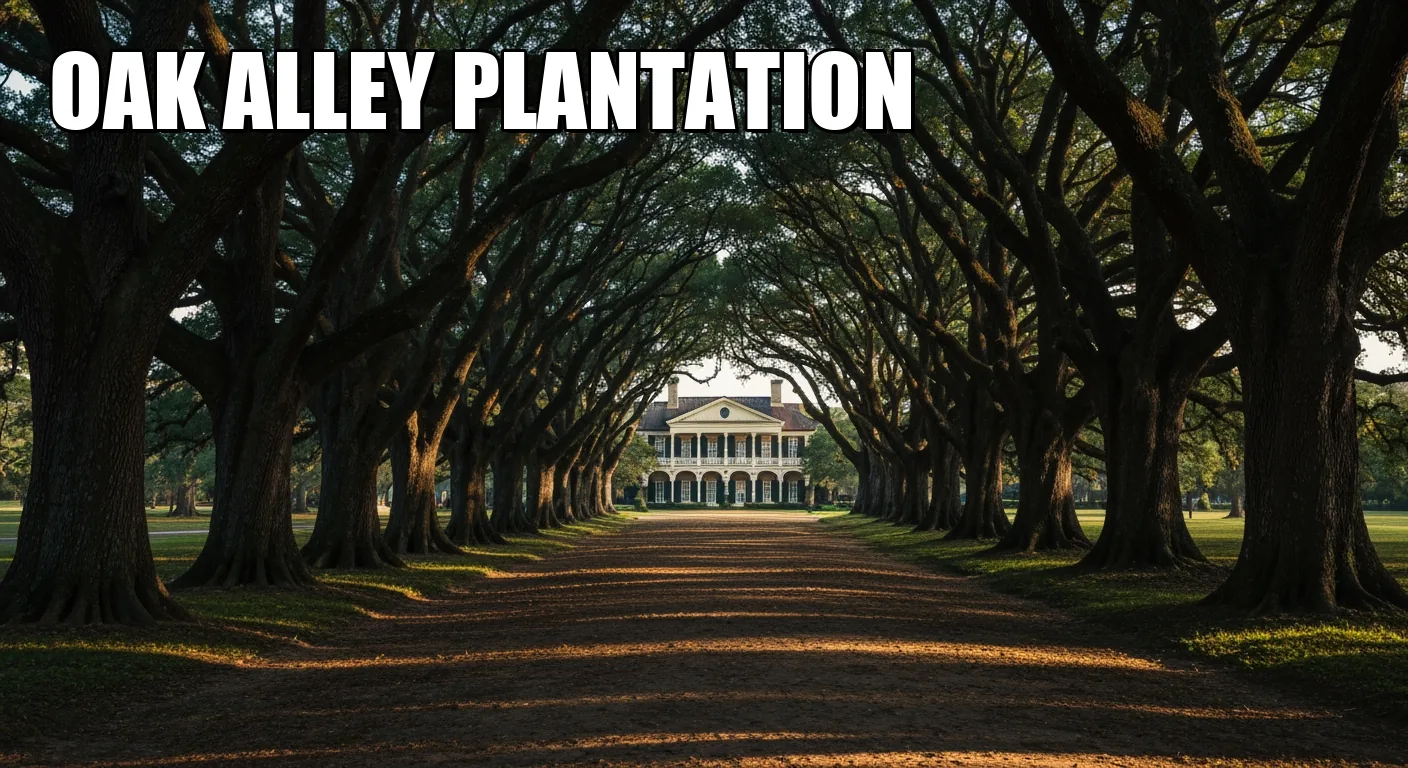
Oak Alley Plantation in St. Francisville, Louisiana, is one of the most iconic, known for its distinctive 28-oak tree-lined avenue and numerous film productions including Midnight Bayou and Beyoncé's music videos. Evergreen Plantation is the most intact plantation complex with 37 National Historic buildings, while Boone Hall in South Carolina is ranked #1 by USA TODAY 10BEST for its Avenue of Oaks and historical significance.
What is the most historically accurate slavery movie?
12 Years a Slave (2013) is widely regarded as the most historically accurate, based faithfully on Solomon Northup's 1853 autobiography and praised by historians for its brutal realism. Glory (1989), though slightly fictionalized regarding the 54th Massachusetts regiment composition, is also highly respected for depicting the African American Civil War experience.
Is there a movie about the Myrtles Plantation?
Yes, multiple productions feature Myrtles Plantation including Haunted History: The Myrtles Plantation (1998 TV movie), The Myrtles Plantation: Murder, Mystery, and Magic (2022), and an episode on Netflix's Files of the Unexplained with paranormal investigations and historical accounts.
What is the most haunted plantation in the world?
Myrtles Plantation in St. Francisville, Louisiana, is considered one of the 10 most haunted sites globally and is renowned as the most haunted home in America, with over 200 years of documented paranormal activity, including accounts of hauntings by enslaved individuals and tragic deaths on the property.
What is the number one scariest movie ever?
According to 2025 scientific studies measuring heart rate responses, Sinister (2012) ranks as the scariest with a scare score of 96/100. However, The Exorcist (1973) remains the most recognized scariest film ever by critics and audiences, known for inspiring mass hysteria upon its 1973 release.
What is the Myrtles Plantation story on Netflix?
Netflix's Files of the Unexplained features an episode on the Myrtles Plantation where visitors and tour guides share chilling paranormal accounts about this historic site, documenting its haunted reputation and the darker aspects of its slavery-era past.
Is the Nefarious movie based on a true story?
No, Nefarious (2023) is not based on a true story. The Christian horror-thriller is based on Steve Deace's 2016 novel The Nefarious Plot and uses psychological horror elements rather than factual events.
Is the movie 6-5=2 a real story?
No, 6-5=2 is not based on a true story. This 2013 Kannada/Hindi horror film presented in found footage format was inspired by The Blair Witch Project, though audiences initially believed it depicted real events due to its realistic presentation style.
How much do plantation tours cost in 2025?
Plantation tour prices vary by location and tour type: Rosedown Plantation grounds-only tours start at $7/adult, house tours $12/adult; Whitney Plantation tours from New Orleans are $84; Myrtles Plantation daytime tours start at $20; group tours from New Orleans range $20-$100+ depending on duration and inclusions.
What are the best plantation locations to visit for movie filming sites?
Top movie plantation sites include Oak Alley Plantation (Midnight Bayou, music videos), Evergreen Plantation (Django Unchained), Houmas House (Hush...Hush Sweet Charlotte, The Butler), and Laurel Valley Plantation (The Highwaymen, Nickel Boys). Each offers guided tours showcasing their film and television production history.
Which plantation museum best explores slavery history?
Whitney Plantation is Louisiana's only plantation museum exclusively focused on slavery history, featuring 14 educational stops, audio tours, and detailed accounts of enslaved individuals' experiences. Boone Hall in South Carolina offers comprehensive Gullah Geechee cultural education alongside its historic restoration.
When is the best time to visit plantations for tours?
Most plantations operate year-round with standard hours 9 AM-5 PM, though closed on Thanksgiving and Christmas. Spring (March-May) and fall (October-November) offer comfortable weather for outdoor plantation grounds exploration, while summer visits require early morning tours to avoid heat.
Can you stay overnight at haunted plantation locations?
Yes, Myrtles Plantation operates as a bed and breakfast offering overnight stays, and many other historic plantations like Oak Alley provide overnight accommodations. Visitors report experiencing paranormal activity at Myrtles, making it popular for ghost hunting enthusiasts.