Most people imagine a single, monolithic "colonial style" when they think of America's early buildings: a neat, symmetrical structure, perhaps with white clapboard siding and green shutters. After decades exploring these foundational sites, I can tell you that notion couldn’t be further from the truth. The story of colonial architecture isn't just one story; it's a tapestry woven from wildly different climates, available materials, cultural inheritances, and, often, sheer desperation. Each region, from the frigid North to the humid South, developed its own distinct architectural language, a fascinating testament to human ingenuity under pressure.
What makes these structures truly compelling isn't merely their age, but the profound pragmatism and occasional audacity embedded in their very bones. These weren't grand, preconceived designs in most cases; they were organic responses to immediate needs. To truly appreciate them, you need to look beyond the surface, understand the "why" behind the "what," and occasionally, endure a crowd or two to get the real sense of a place.
Why New England’s Homes Bent to the Wind (and the Taxman)
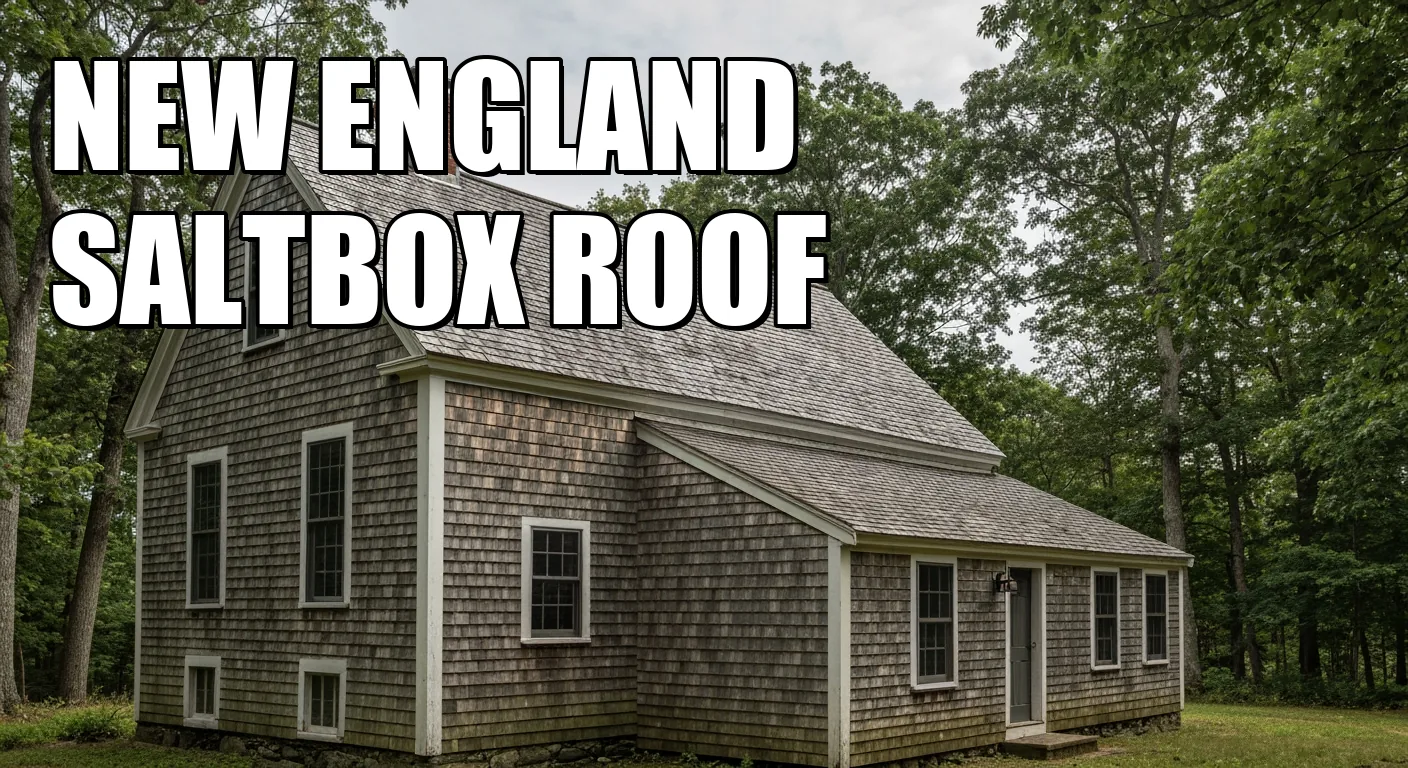
Head to Massachusetts or Connecticut, and you'll inevitably encounter the iconic saltbox roof. With its steeply pitched front, often two stories high, giving way to a dramatic, single-story slope at the rear, it's become an almost cartoonish symbol of early American life. But there’s a surprising practicality to this distinctive shape. Early colonists, particularly in the mid-17th century, were expanding their families and needed more space, but local property tax laws often levied higher rates on two-story structures. What’s an ingenious settler to do? Build a lean-to addition on the back and simply extend the existing roofline down, creating what appeared from the front to be a modest, taxable two-story home, while effectively gaining a substantial, untaxed ground-floor addition for kitchens or storage.
This wasn't just about tax evasion; the design proved remarkably functional for New England's harsh winters. That long, low slope on the rear shed rain and heavy snow more efficiently than a standard gable, and when positioned correctly, allowed icy winter winds to flow *over* the house rather than buffet its walls and windows directly. The Jonathan Corwin House in Salem, Massachusetts, often called "The Witch House" (a name that draws hordes, particularly around Halloween), stands as an excellent example. Built between 1665-1675, it perfectly embodies the First Period colonial style with its dramatically sloped saltbox roof and massive central chimney. If you brave a visit, especially during the peak season of October, be prepared for crowds and expect to pay a nominal admission fee – around $10-12 – which is well worth it to step inside one of the few surviving structures directly linked to the infamous Salem Witch Trials. My advice? Go in January. You might freeze, but you’ll have the place largely to yourself, allowing the quiet gravitas of its ancient timbers to truly sink in.
The Heart of the Home: A Massive Central Stack
Another hallmark of New England colonial design, one that truly defined the interior layout and daily life, was the enormous central chimney. These aren't just flues; they are monumental brick stacks, often several feet wide, that form the literal and metaphorical heart of the home. Anchored squarely in the center of the structure, they connect multiple fireplaces across all floors, radiating heat outward into every room. Contrast this with southern colonial homes, where chimneys are typically relegated to the exterior ends to dissipate heat. This difference speaks volumes about the priorities and climatic realities of each region.
The sheer mass of these brick chimneys was not accidental. They absorbed and retained heat energy throughout the day, slowly releasing it during the long, frigid New England nights. Colonial homes were, quite literally, built *around* these chimneys; staircases often spiraled up their sides, and room configurations were dictated by their placement. The central chimney in the Corwin House, for instance, is a silent testament to the daily struggle against cold, an engineering marvel born of necessity. Walking into these homes, you immediately feel the presence of this central element, a tangible connection to the constant human need for warmth and security.
The Unseen Strength in Philadelphia’s Brick Walls
Venturing south to the Mid-Atlantic, particularly around Philadelphia, a different architectural story unfolds. Here, brick wasn't just a material; it was a statement. While simpler colonial homes used common bond, the more sophisticated structures, like Independence Hall, boast a meticulous technique called Flemish bond brickwork. This isn't just an aesthetic choice; it’s a masterclass in structural integrity and a symbol of wealth and status. It involves alternating "stretchers" (the long side of a brick) with "headers" (the short end) in each course. The headers often appear darker, a deliberate effect created by using bricks taken from hotter parts of the kiln.
This intricate pattern was incredibly labor-intensive and therefore costly. More importantly, those header bricks weren't just decorative; they served a crucial structural function, tying the outer and inner layers of brick together, creating incredibly strong, load-bearing walls that didn't require internal wooden bracing. When you stand before Independence Hall in Philadelphia, initiated in 1732, take a moment to truly *see* its brickwork. The precision of the Flemish bond, the subtle variations in brick color – it all speaks to a level of craftsmanship that elevated building to an art form. Visitors often rush through, captivated by the historical events within, but the building *itself* is a monument to colonial engineering. Timed tickets are required for entry, but the exterior, which you can freely admire, provides an unparalleled lesson in colonial masonry. Aim for a weekday morning in spring or fall to avoid the thickest crowds and enjoy the tranquil beauty of the surrounding Independence National Historical Park.
Travel into the Upper South, and you'll find a truly anomalous survivor that challenges every preconception of colonial design. Bacon's Castle in Surry County, Virginia, built in 1665, stands as North America's oldest brick dwelling, and its style is utterly distinct. It’s a remarkable example of Jacobean architecture, a high-style English aesthetic rarely seen in colonial America. The most striking features are its "curvilinear or Flemish gables"—elaborate, decorative curves at the roofline that look almost like sculpted icing. These are accented by robust, *offset triple chimney stacks* arranged diagonally, a bold departure from the symmetrical, central chimneys of New England.
This building is a profound historical anomaly. While New Englanders were building for survival and expansion, Arthur Allen, the wealthy tobacco merchant who built Bacon’s Castle, was clearly aiming to replicate English gentry standards, perhaps even outdo them, on the colonial frontier. The cruciform (cross-shaped) floor plan and the sophisticated masonry of those diagonal chimneys, joined only at their caps, demonstrate an advanced architectural ambition that simply didn't last. The simpler, more symmetrical Georgian style would soon replace such ornate Jacobean flourishes. Visiting Bacon's Castle, typically open Friday-Sunday with a modest admission fee of about $8, feels like stepping into a forgotten corner of history. It's often less crowded than more famous sites, offering a chance to truly ponder how different colonial America could have looked, and what ambitions were ultimately left behind. Expect the drive to be scenic but somewhat remote, so plan your route carefully.
Shell Shock: How Coquina Redefined Coastal Fortifications
Shifting gears dramatically to the Lower South, specifically Spanish Florida, we encounter a building material unique in its composition and utterly pivotal in colonial defense: coquina. This wasn't quarried stone in the traditional sense; coquina is a soft limestone composed entirely of compressed shells and marine organisms, literally a beach solidified over millennia. It became the definitive construction material for Spanish Florida, offering remarkable durability despite its seemingly delicate origins.
The most iconic example, and a must-see for any history buff, is the Castillo de San Marcos in St. Augustine, Florida. Completed in 1695, it's the oldest masonry fort in the United States, its walls a formidable 14 feet thick, constructed from coquina quarried on Anastasia Island. But here’s the unexpected insight: during the 1702 British siege, cannon fire revealed coquina's astounding property. Unlike brittle stone or brick, which would shatter under bombardment, coquina's porous, shell-rich composition allowed cannonballs to *embed* themselves. The material literally absorbed the shock, transforming what should have been a devastating attack into little more than a pockmark. This unexpected resilience fundamentally altered colonial defensive strategies and underscored the value of local material adaptation. It’s also crucial to remember that its construction relied heavily on the specialized knowledge and grueling labor of enslaved and free African workers, who mastered the complex process of quarrying, mixing with lime mortar (made from oyster shells), and building with this challenging material. The Castillo is a National Monument, so expect a reasonable entrance fee (around $15 for adults) and plan for crowds, especially during spring break or summer. Arrive early, right at opening, to experience the scale and unique texture of its walls without being jostled.
The Hidden Elegance of a Colonial Window: Embrasured Shutters
Finally, let's consider a detail often missed but revelatory in its sophistication, found predominantly in the Mid-Atlantic and Upper South's brick homes: embrasured shutters. This wasn't just a simple shutter; it was a deeply integrated architectural element. These raised panel shutters, often in a distinctive triple panel configuration, were designed to fold into specially constructed pockets within the incredibly thick window jambs of solid brick walls. When open, they became virtually invisible, tucked away within the wall itself.
This detail, seen in grand examples like the George Wythe House in Colonial Williamsburg, Virginia, exploited the exceptional thickness (often 12-14+ inches) of brick construction prevalent in these regions. The deep window jambs, a structural necessity, were cleverly adapted to house the shutters without encroaching on interior living space. When closed, they provided security, insulation against the elements, and crucial privacy. When folded open into their embrasures, they allowed the symmetrical exterior facades, so critical to the Georgian aesthetic emphasizing proportional balance, to remain uninterrupted by visible hardware. Visiting Williamsburg, which requires a multi-day pass for full access (expect to pay upwards of $50-60 for a multi-day ticket), allows you to see countless examples of this detail. Spend time in the homes, not just on the main street. Touch the heavy shutters, imagine them unfolding, and you’ll gain a new appreciation for the ingenious ways colonial architects turned structural constraints into elegant, multi-functional details.
These six details, disparate as they are, collectively tell a richer story than any single architectural style could. They speak of regional identities forged from necessity, of ingenuity born of scarcity, and of a quiet determination to build not just shelters, but homes that reflected ambition, status, and an unshakeable connection to the land and its resources. Understanding them isn't just a lesson in history; it’s a journey into the very soul of early America.
Exploring America's Colonial Architectural Heritage: A Complete Visitor's Guide
What are the key characteristics of colonial architecture?
Colonial architecture is distinguished by symmetry, rectangular shapes, evenly spaced windows, central doorways, and a blend of European design with local adaptation. Key features include double-hung windows, brick or wood siding, steep pitched roofs, decorative moldings, and multiple chimneys, reflecting both European sophistication and practical regional adaptations for climate and available materials.
What is the difference between colonial and craftsman style?
Colonial homes emphasize symmetry and balance with clean lines and formal proportions, while Craftsman homes showcase handcrafted details, nature-inspired character, and visible construction elements like exposed rafters and beams. Colonial style reflects timeless elegance with minimalist ornamentation, whereas Craftsman style prioritizes artisan craftsmanship and cozy, individualistic design.
What were the buildings in a colonial town?
Colonial towns typically featured a meetinghouse (serving as both church and civic center), a courthouse or town hall, taverns, shops (blacksmith, carpenter, weaver, tobacconist), a gaol (jail), a magazine (arms storage), a post office, and residential homes. These public buildings were strategically centered around the town square or green, forming the social and economic heart of colonial communities.
What defines a colonial style house?
A colonial style house is typically rectangular or square-shaped, usually two stories tall, with a central front door flanked by evenly spaced windows, steep pitched roofs, and constructed from brick, wood, or stone. These homes embody symmetry, formal proportions, and clean lines, often featuring multiple chimneys, double-hung sash windows, and shutters.
What's the history behind colonial architecture?
Colonial architecture emerged from the 17th to 18th centuries (approximately 1600-1800) when settlers from England, Spain, France, and the Netherlands established colonies in America, blending their European building traditions with local materials and climate needs. Regional styles developed based on settler origins and environmental conditions, including New England saltbox and Cape Cod styles, Southern Colonial, Dutch Colonial with gambrel roofs, and Spanish Colonial with adobe and stucco construction.
What are the common problems with colonial houses?
Common issues in older colonial homes include poor insulation in walls, outdated electrical systems, plumbing concerns, foundation problems, pest damage (termites and ants), moisture and water damage, rotting wood sills and floor joists, settling foundations causing structural shifts, and inefficient mechanicals. Many historic colonial homes also feature original small-pane windows with poor energy efficiency.
What is the difference between colonial and Victorian style?
Colonial homes display minimalist design with symmetry, rectangular shapes, and reserved ornamentation, while Victorian homes feature asymmetrical facades, ornate decorative details, towers, steep rooflines, and elaborate trim work. Colonial style appears crisper and more formal, whereas Victorian architecture is more decorative, complex, and visually ornate.
What is the least desirable style house?
According to 2024-2025 research, shipping container homes and tiny homes are among the least desired architectural styles in the U.S. real estate market, with ranch-style homes being the most admired home layout in 19 states.
How does a colonial house look?
Colonial houses appear as rectangular or square, typically two-story structures with symmetrical facades featuring a centered front door, evenly distributed windows with shutters, multiple chimneys, and steeply pitched roofs. The exterior is usually clad in brick, wood siding, or stone, with clean lines, formal proportions, and decorative elements like crown molding and dentil trim, creating a balanced and orderly appearance.
What are the main regional types of colonial architecture in America?
Major regional colonial styles include New England colonial (saltbox and Cape Cod homes built from wood), Southern Colonial (characterized by central-passage house types with large chimneys), Dutch Colonial (featuring gambrel roofs with flaring eaves, built in the Hudson Valley and New Jersey), Spanish Colonial (adobe structures with flat roofs in the Southwest), French Colonial, and Pennsylvania colonial with Georgian influences.
What is the difference between colonial and Federal style architecture?
Federal style (1780-1830) emerged after the Revolutionary War as a refined evolution of colonial architecture, featuring more gracefully elongated proportions and Neoclassical details, while colonial homes emphasize stricter symmetry and simpler designs. Federal homes became more accessible to average homeowners, whereas colonial homes were initially designed primarily for wealthy families.
What is the difference between colonial and Georgian architecture?
Georgian homes feature strict symmetry, balanced proportions based on classical principles, larger windows with larger panes, grand ornamented entryways with pediments and pilasters, and clean rooflines without dormers. Colonial architecture is broader and more flexible, incorporating local adaptations and sometimes lacking the rigid formality and ornamental detail of Georgian design.
Where can visitors see the best examples of colonial architecture in the USA?
Colonial Williamsburg in Virginia is the premier destination, featuring dozens of 18th-century British colonial buildings including the Governor's Palace and Bruton Parish Church. Other must-visit historic cities include Savannah, Georgia; Charleston, South Carolina; Boston, Massachusetts; Philadelphia, Pennsylvania; and Santa Fe, New Mexico, each showcasing distinct regional colonial styles.
What is the best time of year to visit colonial historic sites?
Spring (late March to late May) and fall (September-October) offer ideal weather and fewer crowds than summer, with spring featuring blooming gardens and full programming, while fall provides beautiful foliage. Winter (January-March) offers the quietest experience with smaller crowds, though with unpredictable weather and reduced evening programs.
How much does admission cost to Colonial Williamsburg in 2025?
As of January 2, 2025, single-day adult admission is $35 (30% reduction from previous pricing), youth ages 6-12 is $10, children under 6 are free, and school groups are $10 per student. Online purchases receive an additional 10% discount, and admission to the Art Museums of Colonial Williamsburg is now free.
What architectural details characterize colonial homes?
Signature colonial details include double-hung windows with multiple panes (historically 12-over-12), central front doors often with decorative transoms, crown molding with dentil trim, shutters (often functional), multiple exterior chimneys, gabled or hipped roofs, brick or stone foundations, and paneled interior doors with classical proportions.
We use cookies to enhance your experience. By continuing to visit this site you agree to our use of cookies.