For decades, I’ve trekked across the United States, chasing the ghosts of history, from Civil War battlefields cloaked in fog to the sun-baked adobe of forgotten missions. Each journey has taught me something crucial: the most profound insights often aren’t found in the glossy brochures or the crowded visitor centers. They emerge in the quiet corners, in the places few bother to seek, where the past isn't merely preserved but actively fighting for its future. And nowhere is this more apparent, more urgent, than among the ancient Pre-Columbian sites scattered across the American Southwest, particularly those outliers and lesser-known marvels that conventional guides barely acknowledge.
It’s easy to feel as though you’ve “done” the Southwest after a tour of popular spots like the main complexes of Chaco Canyon or the more accessible cliff dwellings at Mesa Verde. But what about the sprawling network of communities that supported these centers, the remote habitations clinging to rock faces, or the monumental earthworks of cultures less understood by the casual visitor? These are the places where the story truly expands, where the challenges of preservation become starkly real, and where cutting-edge technology is now racing against the relentless march of climate change. We’re talking about a focused, multi-million dollar effort, kicking off in 2025, to safeguard places like a specific Chaco Canyon outlier community, some truly off-trail Mesa Verde cliff dwellings, and a particular Hohokam platform mound – sites that embody incredible history but are acutely vulnerable.
Unearthing Chaco's Distant Echoes: Beyond the Main Canyon
Everyone knows Pueblo Bonito. It’s magnificent, sprawling, and undeniably the crown jewel of Chaco Culture National Historical Park. But Chaco wasn’t just one big building; it was the gravitational center of a vast, interconnected civilization, linked by hundreds of miles of ancient roads to dozens of smaller, yet equally complex, “outlier” communities. Visiting one of these, say, a site west of the main canyon that might have functioned as a key transit point or resource hub, offers a radically different perspective. You won't find interpretive signs or paved paths here; you'll find silence, space, and a monumental sense of scale that only truly sinks in when you realize how far-flung these connections were.
What makes these outliers unique—and often overlooked—is their subtle grandeur. They lack the immediate "wow" factor of the main canyon's multi-story ruins, yet they hold clues to Chaco's broader influence and eventual decline. For years, these sites were understood largely through surface surveys or limited excavation. Now, thanks to biannual drone-mounted LiDAR flights during the dry season, we're seeing these landscapes with unprecedented clarity. LiDAR, essentially a remote archaeological X-ray, can penetrate vegetation and map subtle architectural features and erosion patterns with 10-cm vertical accuracy, revealing buried walls and ancient agricultural features that were invisible even to the most experienced ground teams. This isn't just cool tech; it's rewriting our understanding of Chacoan sprawl, telling us *why* these seemingly remote communities were so integral.
Expect a challenge in accessing these specific sites. They're often remote, requiring permits and a deep respect for their fragility. The real value isn't a quick photo op, but in understanding the sheer logistical and social genius of the Chacoans. When you stand on a plaza floor that's being meticulously mapped by GPR – which profiles the ground in a 1x1 meter grid to detect buried structural elements and hearths without a single shovel stroke – you're witnessing history being discovered and protected simultaneously. It’s a stark contrast to the almost theme-park feel some popular sites can develop, pushing visitors to truly engage with the ongoing scientific effort rather than just passively consume a curated past.
Mesa Verde's Hidden Retreats: Where Ancestors Cling to Rock
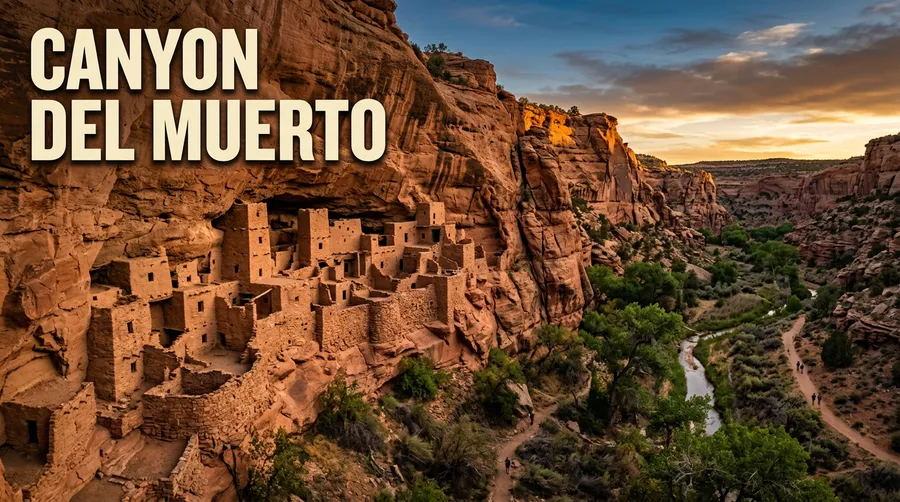
Everyone leaves Mesa Verde National Park amazed by Cliff Palace or Balcony House. And rightly so; they are extraordinary. Yet, for a traveler seeking true insight into the Ancestral Puebloan world, the real magic—and the real peril—lies in the park’s lesser-known, off-trail cliff dwellings, places like Step House, tucked away in alcoves that defy easy access. These dwellings, often smaller, more intimate, and precariously situated, offer a glimpse into the everyday resilience and spiritual connection to the land that defined life here a millennium ago. They also face a disproportionate threat from the elements, a reality many visitors never consider.
These remote alcove structures, while breathtaking, are incredibly vulnerable. They're exposed to extreme heat, flash flooding during intense monsoon seasons, and the constant threat of wildfire. Unlike their more popular counterparts, which benefit from extensive stabilization, these hidden gems require innovative, often subtle, climate adaptation. Imagine micro-berms, carefully constructed low-impact structures designed to divert sudden runoff away from fragile wall foundations, or passive cooling shelters with shade-canopy meshes strategically placed above vulnerable masonry to reduce thermal stress. These aren’t grand construction projects; they’re surgical interventions designed to allow the dwellings to breathe and endure, reinforcing key wall foundations with geogrid mesh anchored into bedrock where erosion threatens to undermine centuries of craftsmanship.
What does this mean for a visitor? It means that even if you can't physically enter these specific protected alcoves (many are closed to the public precisely because of their fragility and the ongoing preservation work), understanding *why* they are being protected this way changes your entire perspective on Mesa Verde. It shifts from mere appreciation of architecture to a profound respect for the ancestors who built them and the descendants and preservationists now fighting to keep them from disappearing. The effort to install permeable infiltration trenches upslope to reduce peak flows after heavy rains isn't just engineering; it's a testament to the enduring value of these places, a silent battle waged on behalf of collective heritage.
The Hohokam's Desert Monuments: Reimagining La Ciudad
When most people think of ancient Southwestern cultures, the Anasazi (Ancestral Puebloans) or the Mogollon often come to mind. But south of these, in the scorching desert of what is now central Arizona, a remarkable civilization known as the Hohokam thrived for over a thousand years, mastering canal irrigation to transform an arid landscape into a verdant agricultural powerhouse. Their most distinctive architectural legacy? Platform mounds – large, ceremonial earthworks often topped with structures, akin to the great temple mounds of Mesoamerica but constructed of desert soil and stone. A site like La Ciudad, a significant Hohokam platform mound, offers a window into this sophisticated, often overlooked, culture.
These mounds are unique because they represent a significant investment of labor and community organization in a challenging environment. They were central to ceremonial life and possibly political power, acting as focal points for vast irrigation networks. Yet, their very composition – earthen construction in a desert prone to flash floods and extreme heat – makes them incredibly fragile. Unlike stone pueblos, they can erode rapidly, their features blurring with time. The strategic plan for 2025 specifically targets such a mound, implementing measures like planting native drought-tolerant vegetation belts upslope for microclimate buffering and establishing 30-meter defensible perimeter zones, cleared of invasive grasses and ladder fuels, to combat the escalating wildfire risk. These are practical, immediate concerns that dictate the future of these sites.
Here, perhaps more than anywhere, the blend of physical preservation and digital interpretation truly shines. Because of their delicate nature, extensive physical access to these particular mounds is often restricted. Instead, a new initiative focuses on co-developing virtual reality (VR) experiences with descendant communities, like the Tohono O'odham. Imagine being able to virtually “walk” through a reconstructed La Ciudad, witnessing ceremonial dances, guided by tribal narrators, understanding daily life scenarios reconstructed from GPR-validated ground points. This isn't a mere substitute for seeing the real thing; it’s a way to access the spiritual and cultural depth of a site without contributing to its physical degradation, allowing for narratives and insights that traditional archaeology alone might miss.
The Unseen Battle: Climate Change and Cultural Heritage
It’s tempting to view these ancient sites as timeless, immutable monuments. The grim reality, however, is that they are on the front lines of climate change. Extreme heat, increasingly severe wildfires, and unpredictable flash flooding aren't abstract threats; they are actively eroding, burning, and washing away irreplaceable history. What a typical guide won't tell you is the desperate, often unsung, struggle being waged by preservationists, archaeologists, and descendant communities to keep these places from disappearing.
Consider the ingenuity behind these efforts: installing high-reflectance geo-textiles around plaza floors at a Chaco outlier to reduce thermal loading, thereby slowing the expansion and contraction that cracks ancient masonry. Or embedding buried thermal-resistant barriers – ceramic-enhanced sand layers – to shield substructures from radiant heat during a wildfire. These aren't just technical fixes; they are acts of profound stewardship, born from a deep understanding of both ancient architecture and modern climatology. The integrated monitoring dashboard, constantly fed real-time data from LiDAR and GPR, sending automated alerts for ground subsidence or moisture anomalies, is less about "monitoring" and more about an early warning system for cultural catastrophe.
The scale of the problem is immense, often overwhelming, making the focused $1.25 million budget for this pilot program a mere drop in the bucket for the entire Southwest, yet it's a critical investment. This isn't about saving a few old stones; it's about preserving the human story, the ingenuity, the spiritual beliefs, and the very identity of descendant communities whose heritage is bound to these landscapes. The conventional wisdom often focuses on grand, sweeping views; I’d argue the true marvel lies in these micro-interventions, in the careful placement of a geogrid or the clearing of invasive grasses to protect a thousand-year-old wall from an encroaching wildfire.
Stepping into a Digital Past: Community, Tech, and the Future of Exploration
The future of experiencing these remote, fragile sites isn't just about physical access; it's increasingly about thoughtful, respectful digital engagement. The strategic plan's emphasis on co-developing virtual and augmented reality experiences with descendant communities—like the Hopi, Pueblo of Acoma, and Tohono O'odham—is a paradigm shift. Why does this matter so profoundly? Because it ensures that the narratives, the sacred stories, and the knowledge protocols are guided by those whose ancestors built these places, rather than being solely interpreted through an archaeological lens. This isn't merely adding a cultural overlay; it's embedding the authentic voice of heritage into the very fabric of the experience.
Imagine using a mobile AR app at a Chaco outlier vantage point, holding up your phone, and seeing 3D ghost reconstructions anchored to exposed wall footings, overlaid with audio commentary in native languages, explaining the function of a room or the significance of a ceremony. Or, at a Hohokam mound, triggering water-flow visualizations that explain the genius of their ancient irrigation systems. By late 2026, we might see the beta testing with public pilots of these very tools. This approach doesn't just make history accessible; it makes it resonate. It respects the fact that some places are too sacred or too fragile for constant physical visitation, offering a powerful alternative that educates without disturbing.
Does a virtual experience replace standing physically among the ruins? Of course not. But for these specific, vulnerable sites—many of which will remain largely inaccessible to the general public due to their remote nature and ongoing preservation needs—these digital interpretations offer a vital bridge. They provide context, explanation, and an immersive journey into daily life scenarios and spiritual practices that no amount of static signage could convey. It’s about democratizing access to a deeper understanding of our shared human story, without compromising the integrity of the original, irreplaceable heritage itself.
The American Southwest is a place of profound beauty and ancient mystery, a landscape that whispers stories of civilizations past. But it’s also a place of urgent stewardship. The efforts to preserve sites like the Chaco outliers, remote Mesa Verde dwellings, and Hohokam platform mounds aren't just about protecting old stones from the elements; they’re about a profound commitment to understanding and honoring the complex tapestry of human history. As a traveler, knowing about these struggles and innovations adds an entirely new layer to your journey. It transforms a simple visit into an engagement with the ongoing narrative of resilience—both human and archaeological—in the face of a rapidly changing world. Seek out these stories; they are the true treasures of the Southwest.