Film & TV Locations

Beyond the Scream: The Real Story of the Murder House

What truly defines a place as "haunted"? Is it a genuine spectral presence, an architectural echo of past lives, or simply the potent storytelling power of a cultural phenomenon? For a seasoned traveler like myself, who's seen more than my share of "spooky" sites, the Alfred Rosenheim Mansion in Los Angeles, forever branded as the "Murder House" from the inaugural season of *American Horror Story*, presents a fascinating, almost frustrating, case study. It’s a location where history, cinematic fame, and genuine local lore collide, leaving you to sift through the rubble of expectation versus reality.

Unveiling the Architect's Dream: Far More Than a Filming Set

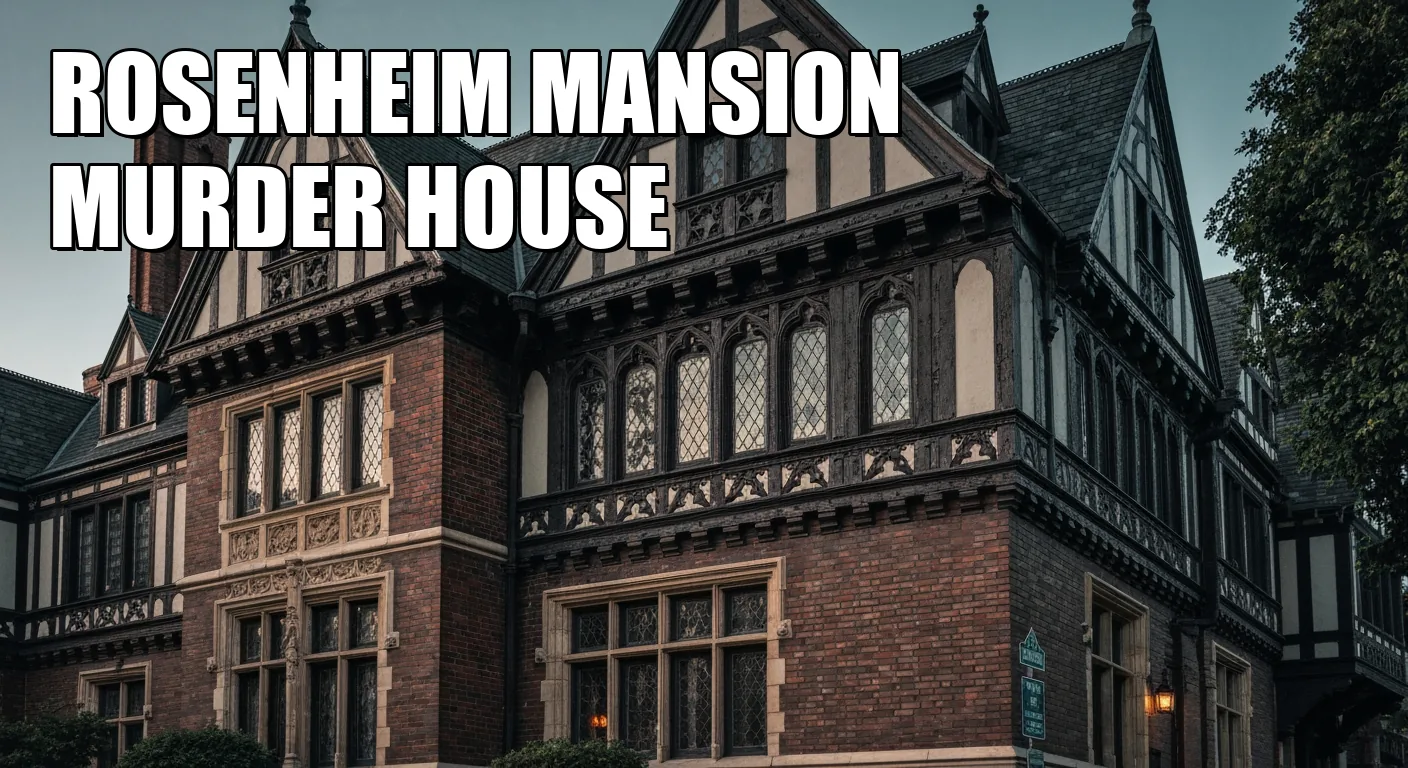
Before the cameras rolled, before the screams echoed across millions of screens, this sprawling estate at 1120 Westchester Place was simply a testament to the ambition and talent of its original owner and designer. When Alfred Rosenheim completed this grand dame of a dwelling in 1908, he wasn't merely constructing a house; he was laying down a testament to early 20th-century Los Angeles ambition and a master architect's vision. Rosenheim, a German-American who brought his considerable talents from St. Louis, Missouri, shaped a significant portion of early Los Angeles's architectural identity. His portfolio includes the formidable Hellman Building downtown, the colossal Hamburgers/May Company Department Store, and the robust North Broadway Bridge—structures that anchored a burgeoning metropolis. To see his personal residence, then, is to glimpse a private masterpiece, a kind of architectural autobiography in brick and mahogany.

Walk past the imposing facade, and you'll immediately grasp the blend of Tudor Revival and Gothic Revival styles. These weren't mere stylistic choices; they spoke to a particular period's fascination with historical European grandeur. Tudor Revival, characterized by its steeply pitched gable roofs, half-timbering (though less pronounced here), and tall, narrow windows, evokes the stately country homes of England. Gothic Revival, in turn, adds an element of dramatic, almost ecclesiastical, flair with its pointed arches and overall sense of verticality. The mansion, spanning an impressive 10,440 square feet on a generous 30,000-square-foot lot, isn't just large; it’s meticulously detailed. The Italian bricks, shipped across continents, speak to a commitment to quality, while the extensive Peruvian mahogany paneling inside would have been a staggering expense, creating a rich, dark interior that feels both luxurious and, yes, a touch foreboding. Six distinct Batchelder fireplaces, known for their artisanal, often narrative ceramic tiles, are scattered throughout, adding unique artistic touches that typical guides rarely dwell upon. And then there are the Tiffany stained glass windows, not just windows but luminous art installations, casting colored light that shifts with the day, transforming the mood of every room. These details aren't just decorative; they tell the story of a specific era's wealth, taste, and dedication to craft, long before Hollywood ever thought to cast it in a macabre role.

A Century of Shifting Occupants and Evolving Ambience

The Rosenheim family's tenure in their self-designed marvel lasted a mere decade before the property changed hands. In 1918, A.J. McQuatters, the president of the Alvarado Mining and Milling Company, took the reins, imbuing the estate with the wealth of the Gilded Age. The mansion continued to attract notable residents; by the early 1930s, it housed actor Edward Everett Horton, a prolific character actor whose cinematic career spanned silent films to television. Imagine the dinner parties, the quiet rehearsals, the sheer human drama unfolding within these walls, entirely separate from any later, fictionalized horror.

Perhaps the most unexpected chapter in the mansion's life began in 1930 when the Sisters of Social Service acquired the property, transforming it from a private residence into a convent. This wasn't merely a change of ownership; it was a profound shift in purpose and atmosphere. The addition of a chapel, a soaring 56-foot-tall space (though sources vary on whether it was 1932 or 1954), solidified its new identity, infusing the home with a spiritual gravitas. For over six decades, the quiet hum of prayer, the measured footsteps of nuns, and the sanctity of service replaced the boisterous echoes of family life. This era ended abruptly in 1994, when the devastating Northridge earthquake rendered the building uninhabitable for the nuns, forcing their departure. This structural trauma, quite literally shaking the foundations of the home, perhaps marked a turning point, leaving behind not just physical damage but an energetic residue that many now attribute to its haunting lore. After passing through various investor hands, the mansion found its current owners in 2015, cardiologist Dr. Ernst von Schwarz and Angela Oakenfold, who purchased it for $3.2 million, unknowingly inheriting a legacy intertwined with both real history and pop culture infamy.

Whispers and Warnings: Dissecting the Mansion's Alleged Hauntings

For many, the mansion's true allure lies not in its architectural prowess but in its chilling reputation. Reports of paranormal activity here predate *American Horror Story*, yet the show undoubtedly amplified the legend, blurring the lines between fiction and supposed fact. So, what genuinely unnerving accounts have emerged from 1120 Westchester Place? The basement, famously depicted in the series as a site of unspeakable acts, is consistently cited as the epicenter of disquiet. Visitors describe an oppressive atmosphere, a feeling that "the air is extra heavy," almost physically pushing in on you. Utility workers, often the most pragmatic and least superstitious among us, have reported truly disturbing experiences down there. One claimed something touched him directly while working, while another fled outright, declaring, "it's evil down there. I can't work." These aren't the dramatic pronouncements of ghost hunters; these are mundane professionals, genuinely unsettled by an unseen force. Is it the residual energy of past tenants, or does the architectural design of a century-old basement, with its inherent darkness and isolation, simply play tricks on the mind?

Another focal point of alleged activity is a specific blue-painted bedroom on the second floor, reportedly where a nun once jumped from an adjoining balcony. This tragic narrative imbues the room with a palpable sense of sorrow, and visitors frequently claim to feel a distinct, heavy energy there. It raises a fascinating question about how much our knowledge of a location's history influences our perception of its "haunting." Does knowing a tragic event occurred amplify the perceived paranormal energy, or does the energy itself draw us to uncover the tragedy? The chapel, now converted into a ballroom and recording studio, strangely elicits less paranormal response, with visitors reporting "didn't really feel any strange energy" compared to other areas. This specific detail is a telling counterpoint; it challenges the assumption that every old, significant room must be equally "active," suggesting perhaps a more localized, specific nature to whatever phenomena are at play.

The current owners, Dr. von Schwarz and Ms. Oakenfold, have had their own documented, unsettling experiences. On their very first night in 2015, both were jolted awake at 1:00 AM by what they described as "a huge banging in the room below" and a "really strange like dragging noise." This wasn't a subtle creak; it was loud enough to rouse them instantly. A subsequent police report, filed after officers found all doors and windows locked with no discernible source for the disturbance, officially documented the incident as "ghost activity"—a rare and intriguing detail for a public record. Dr. von Schwarz himself recounted witnessing a female apparition: "It just floated in front of me. It wasn't like anything evil. It was just like a shadow, like a mist and he said it was a female and after about five seconds it just sort of evaporated." Beyond these personal encounters, classic paranormal tropes abound: a woman in white seen wandering hallways, a young boy playing in the gardens, disembodied voices, self-opening doors, and pervasive cold spots. While skeptics might attribute some of these to an overactive imagination fueled by the house's fame, the sheer volume and consistency of reports, particularly from individuals with no prior expectation of such things, demand a pause for reflection. This isn't just a house with a story; it's a house that seems to *insist* on telling its own.

The Illusory Allure of Access: What Fans Don't Realize

So, you’re intrigued. You’ve read the history, pondered the hauntings, and now you want to experience it for yourself. Here's where the hard truth hits: this iconic landmark is a private residence, not a theme park attraction. Most typical travel guides omit the crucial, often frustrating, reality of visiting the "Murder House" in 2025: you can't go inside. What you'll find is a drive-by photo opportunity, at best. For a brief, tantalizing moment in 2016, the mansion was listed on Airbnb for a hefty $1,450 per night, promising fans a chance to sleep in a piece of horror history. The listing, accommodating 16+ guests with 9 bedrooms and 4.5 bathrooms, vanished without explanation within 24 hours. It was a fleeting dream for many, a stark reminder that even the most famous homes remain, first and foremost, someone's private space.

The only significant public access event since then was a unique three-day, 24-hour paranormal livestream held from October 29 to November 1, 2020. For a modest $25 ticket price, fans gained virtual access to 15 cameras throughout the mansion, an experience that featured paranormal investigations, séances, and expert discussions. In a truly audacious move, six lucky ticket holders even won the chance to spend a night in the basement, with their vital signs and psychological condition monitored by a doctor—an extreme form of experiential tourism that speaks volumes about the mansion's enduring draw. But these were exceptions, not the rule. Today, the owners have expressed considerable frustration with uninvited visitors and trespassers, leading to a 2018 lawsuit against the brokers who sold them the property for allegedly failing to disclose its status as a filming location and its resulting tourist magnet status. This legal battle underscores the significant practical issues that arise when a private home becomes a global icon. So, if you plan to visit, understand that your interaction will be limited to a respectful drive-by or a quick photograph from the street. Any attempt to go further will likely result in confrontation, disappointment, or worse.

More Than Just a Facade: The Enduring Mystery of 1120 Westchester Place

The Alfred Rosenheim Mansion, irrespective of its Hollywood fame, stands as a testament to Los Angeles's rich and often overlooked architectural heritage. Declared a Los Angeles Historic-Cultural Monument (Monument #660) in 1999, its value extends far beyond jump scares and fictional narratives. It embodies a particular historical period, showcases exquisite craftsmanship, and has witnessed a century of human stories, from the grand aspirations of its architect to the solemn vows of its monastic residents. Its "haunting," whether a product of genuine spectral activity or the powerful collective imagination of millions, only adds another layer to its complex identity.

For the discerning traveler, what makes this site truly worthwhile isn't the fleeting glimpse of a celebrity house, but the opportunity to reflect on the interplay between history, popular culture, and the intangible forces we sometimes call "spirit." It challenges us to question what we expect from a historic site, and what we actually find. While you can't walk its mahogany-paneled halls or feel the cold breath of its rumored inhabitants, standing outside 1120 Westchester Place offers a different kind of experience: a silent contemplation of a home burdened by its own beauty, history, and the indelible mark of a story that has transcended its original purpose. It remains, in essence, a beautiful, enigmatic question mark on the landscape of Los Angeles, perpetually inviting us to wonder: what *really* goes on inside?

The Ultimate Guide to the American Horror Story Murder House Experience

Where is the Murder House from American Horror Story located?
The Murder House is located at 1120 Westchester Place in the Country Club Park neighborhood of Los Angeles, California. The building is the historic Rosenheim Mansion, built in 1908 by German-American architect Alfred Rosenheim and designed in Tudor and Gothic Revival styles.
What is the Murder House address and how can I visit?
The address is 1120 Westchester Place, Los Angeles, CA 90019. The Rosenheim Mansion is a private residence with no official tours available, but fans can view the exterior from the public street and take photographs.
Murder House AHS location history - when was it built?
The Rosenheim Mansion was constructed in 1908 and has been a Los Angeles Historic-Cultural Monument since 1999. It has been featured in numerous films and television shows before becoming famous as the Murder House filming location for AHS Season 1.
Where did AHS Murder House take place in the storyline?
In the series, the Murder House is located in Los Angeles, California, and serves as the primary setting for Season 1, where the Harmon family moves in after a personal tragedy. The house is portrayed as being haunted by the spirits of its previous residents.
When did Murder House take place?
American Horror Story: Murder House Season 1 takes place during the year 2011, following the Harmon family's move to Los Angeles after dealing with personal tragedy.
Why did AHS become so bad?
Many viewers and critics attribute AHS's decline in quality starting around Season 10 to the loss of centralized locations that were crucial to earlier seasons, convoluted plots that fail to engage audiences, and the shift toward adapting existing books rather than original ideas. Seasons like Double Feature (Season 10) were particularly criticized for poor writing and storytelling.
Is Briarcliff Asylum based on a real place?
Yes, Briarcliff Asylum from AHS: Asylum (Season 2) was heavily inspired by the real Willowbrook State School, a facility for intellectually impaired children in Staten Island, New York that operated from 1947 to 1987 and was known for horrific conditions and abuse.
Is James Patrick March based on a real person?
Yes, James Patrick March from AHS: Hotel is based on serial killer H.H. Holmes (Herman Mudgett), an early American serial killer who designed and built the infamous 'Murder Castle' hotel in Chicago during the 1893 World's Fair and used it to lure and murder victims.
Was Lana Winters based on Nellie Bly?
Yes, Lana Winters from AHS: Asylum was directly inspired by the real-life journalist Nellie Bly, who in 1887 feigned insanity to be admitted into an asylum on Blackwell's Island to expose the conditions and subsequently reported on her experiences as an investigative journalist.
Is Gonjiam Asylum based on a true story?
Yes, the movie Gonjiam: Haunted Asylum is based on the real Gonjiam Psychiatric Hospital in Gwangju, South Korea, which closed in 2000 and has been surrounded by urban legends about patient deaths, mysterious phenomena, and a locked room where visitors allegedly encounter supernatural occurrences.
Where is the Briarcliff asylum located?
In AHS: Asylum, Briarcliff is set near Framingham, Massachusetts, but the exterior was actually filmed at the Old Orange County Courthouse at 211 West Santa Ana Boulevard in Santa Ana, California, while interior scenes were shot on a sound stage set.
Is AHS Roanoke actually based on a true story?
Yes, AHS: Roanoke (Season 6) is inspired by the real historical mystery of the Lost Colony of Roanoke Island, where 115 English colonists mysteriously disappeared in 1587 in what is now North Carolina, though the show adds supernatural and fictional horror elements to the true historical event.
Can I take photos at the Murder House?
Yes, visitors can photograph the exterior of the Rosenheim Mansion from the public street, though it is important to respect the privacy of the current residents and avoid trespassing on the private property.
What other AHS filming locations are in Los Angeles?
Besides the Murder House at 1120 Westchester Place, Los Angeles has served as a filming location for other AHS seasons with various historic buildings and locations throughout the city, making it a hub for the series' production.
Are there guided tours to the Murder House and other AHS locations?
While the Murder House itself does not offer official tours, several Los Angeles tour companies offer true crime and haunted location tours that include viewing the exterior of the Rosenheim Mansion and other AHS filming locations as part of their itineraries.